How to Study Chess Openings: 2026 Guide by Rating

Table of contents
Disclosure: ChessAtlas is our product. This guide works with any tool (Lichess Studies, Chessable, Anki with FSRS, ChessBook, ChessAtlas); we just happen to build one. Readers should weigh the perspective accordingly.
Two habits cause most opening problems at the club level: late development and unsafe kings. With 15-30 minutes of focused study per day, you can turn those habits around and reach playable middlegames in your own openings within a month. The key is not memorizing engine lines, it is building a small repertoire you actually understand, drilling it with spaced repetition, and patching gaps with your real games.
This guide is a senior-coach-level walkthrough of how to study chess openings, from absolute beginner (under 1200) to club expert (2000+). It is the sister pillar to How to Build a Chess Opening Repertoire That Actually Sticks. Use both together: this article tells you how to study, the other tells you what to build.
Prerequisites: What You Need
Free tools
- Opening explorers: most major play sites include a built-in opening explorer you can filter by rating band.
- Engine analysis: free Stockfish 18 (released January 2026), available directly in most online analysis boards.
- Repertoire storage + drilling: Lichess Studies + Chessdriller (open-source SRS) or ChessAtlas's free FSRS-powered opening trainer (with automatic game import).
Paid or subscription tools
- ChessBase 18 with the yearly Mega collection (millions of annotated games). Best at 2000+ ELO for research and opponent prep, more than most club players need.
- Chessable for GM-authored courses with SM-2 spaced repetition. See Chessable alternatives and why FSRS beats SM-2 for retention.
- Chessify for cloud engine analysis of sharp lines (2200+ only, usually).
For a complete tool landscape see our 2026 chess opening trainer comparison.
The 4-Layer Model of Opening Study
Opening study is not one activity but four, and the mix changes with rating. Any hour of study should allocate across these layers based on your current level.
Layer 1: Opening principles
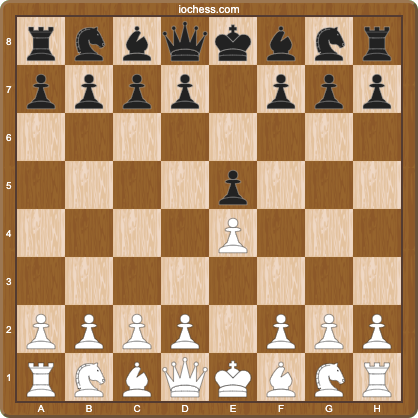
Center control, rapid development, king safety, connected rooks, no premature attacks. These are universal, documented since Steinitz and Tarrasch, and they carry you to roughly 1500 ELO on their own. For deeper drills see 7 common opening mistakes that cost you games.
Layer 2: Plans and pawn structures
What does this opening want to achieve? What are the typical pawn breaks? Where do the pieces want to go? A London player aims for Ne5 and a kingside attack with Bd3+Qc2. A Caro-Kann player wants to free the light-squared bishop with ...Bf5 and break with ...c5. Studying structures beats memorizing move orders.
Layer 3: Move-order memorization
Just enough specific moves to reach your understood structures. Depth depends on rating (see below). See our rating-by-rating depth guide, how to memorize chess openings and actually remember them, and how to handle transpositions in your opening repertoire.
Layer 4: Opponent preparation
Specific choices based on who you are playing. Relevant from roughly 2000 ELO onward, and only in tournaments where you know opponents in advance.
How Much Time Per Layer by Rating Band
| Rating | Layer 1 (principles) | Layer 2 (plans) | Layer 3 (moves) | Layer 4 (opponent prep) |
|---|---|---|---|---|
| Under 1200 | 90% | 10% | 0% | 0% |
| 1200-1600 | 40% | 40% | 20% | 0% |
| 1600-1900 | 20% | 40% | 40% | 0% |
| 1900+ | 10% | 30% | 40% | 20% |
If you are 1400 and spending 80% of your study time memorizing move orders, you are on the wrong layer for your rating. The fix is not more theory, it is plans and understanding.
The 6 Study Methods, Ranked by ROI for Club Players
- Playing through annotated master games (highest ROI under 1800). Two or three games per opening, with written annotations explaining plans. Structure recognition compounds faster than any other method. Load them into Lichess Studies and step through at 3-5 seconds per move.
- Spaced repetition drilling. 10-15 minutes daily. FSRS-based tools (ChessAtlas, Anki 23.10+, Chessbook) schedule reviews to your forgetting curve. See why spaced repetition is the most effective method for chess openings and our complete FSRS guide for chess openings.
- Post-game deviation analysis. The closed loop: every real game tells you which position was the gap. See the deviation detection workflow.
- Tactical puzzles filtered by opening structure. Many puzzle trainers let you drill tactics specific to your openings. 15 minutes daily, low overhead, high practical return.
- Explainer videos. Good for first exposure to an opening's ideas. Strong signal-to-noise channels: Hanging Pawns, Saint Louis Chess Club lectures, and GothamChess speedrun series. Diminishing returns after the first 30 minutes per opening.
- Reading opening books cover-to-cover (lowest ROI). Old-school approach. Useful for sampling, rarely for retention. Replace with model games + SRS.
Build Your Repertoire First (Then Study It)
Before any study method, you need a repertoire to study. One White opening, one Black defense against 1.e4, one against 1.d4; no more for your first 30 days. See our beginner guide to building a first repertoire and the 30-day Pick-Learn-Drill-Improve framework. For color-specific picks, see best response to 1.e4 by rating and best response to 1.d4 by rating.
Rating-band quick picks
- Under 1500 (positional style): London System · Caro-Kann · QGD. See also best openings for beginners: 5 simple systems.
- Under 1500 (tactical style): Italian Game · 1...e5 + KID against 1.d4. If you are choosing between the two main 1.e4 e5 paths, see Italian Game vs Ruy Lopez: which to play.
- 1500-1800: same picks, plus one anti-sideline response for each main opponent choice. See 5 best openings for club players.
- 1800+: add a second option per color, start learning one sharp system (Sicilian Najdorf, Nimzo-Indian)
Typical Tactical Patterns by Opening
Part of Layer 2 study is recognizing the tactics your structure enables. A few real examples:
- Italian Game: Bxf7+ sacrifice when Black's king is stuck in the center, typically after an early ...Nxe4 blunder. Also the Fried Liver pattern (see our Fried Liver page).
- French Defense Advance: Milner-Barry Gambit themes (sacrificing on e6 or d4 for kingside attack); thematic Nxe6 sacrifices appear in specific variations when Black weakens e6 or delays development.
- French Winawer: White's Qg4 attack on g7 after the bishops trade with ...Bxc3+ bxc3, often forcing ...Kf8 or ...g6 weakening Black's kingside.
- Caro-Kann: the classical exchange with ...Bf5 followed by ...e6, ...Nd7, and ...Ngf6 setting up a solid structure where Black aims for ...c5 at the right moment to challenge the center.
- Queen's Gambit Declined, Carlsbad structure: the minority attack (b4-b5, bxc6) creates a weak c-pawn; on the kingside the classic Bxh7+ sacrifice in the Pillsbury setup.
- London System: Ne5 outpost paired with Bd3 and Qc2 aiming for Bxh7+ sacrifice motifs when Black castles kingside without preparing ...g6 or ...h6.
- Sicilian Defense Open: Nd5 sacrifice to open the e-file, and the thematic f5-f6 pawn break for White in the English Attack.
Each opening has maybe 5-10 recurring patterns. Learning those is worth more than memorizing 20 extra moves of theory.
Common Mistakes to Avoid
Memorizing without the plan
The number one reason repertoires fail to stick. If you cannot explain in one sentence why move 7 is what it is, the memory collapses the first time your opponent plays move 6 differently. See how to memorize chess openings and actually remember them.
Studying five openings at once
Coverage is not the goal, recognition is. A player who knows the Italian Game and the Caro-Kann deeply tends to outperform one who has dabbled in ten openings to move 5. Pick three openings, stay there for at least three months.
Chasing engine top-moves at club level
Stockfish 18 will recommend a move 0.2 pawns better than yours, but it takes 15 moves of precise play to realize the advantage. At club level, the move you understand beats the engine's favorite you cannot execute. Use engines to validate, not to choose.
Skipping the feedback loop
Most club players stall here - studying a repertoire in a vacuum has no feedback loop. Your real games are your ground truth: every rated game tells you which positions you actually face, and which ones you misremember. See how to analyze your games to improve your opening repertoire.
Mistakes by rating band
Under 1200: Studying specific opening moves before understanding development principles. The classic mistake is memorizing 8 moves of the Italian Game while missing simple tactical patterns. Spend 90% of your time on tactics and one general system.
1200-1800: Repertoire bloat. Trying to learn five openings instead of three because each one feels insufficient. Your problem isn't coverage, it's depth. Pick three openings and ignore the rest until you have one full year of consistent results with them.
1800+: Skipping opponent preparation. At this level your repertoire is solid, but you face the same club opponents repeatedly. A 30-minute pre-tournament check of your next opponent's recent games often unlocks several rating points per event.
When to switch openings
Most players switch openings too often. The signals that you should actually consider a switch:
- You've lost 5+ games in a row in the same line against opponents at your rating, even when you played the moves you intended.
- The plans no longer fit your style. You enjoyed the London at 1200 because it was simple. At 1800 you may want sharper Sicilian or King's Indian play.
- Your engine eval is consistently negative by move 8 in your main lines, even when you play accurately. The opening choice itself is the problem.
- You stopped studying it for 3+ months. If you can't drill it daily, your retention will collapse. Either commit again or pick a simpler system.
If none of these apply, your problem isn't the opening. It's the middlegame.
A Sample Study Week
| Day | Focus | Time |
|---|---|---|
| Mon, Wed, Fri | 10 min SRS + 1 game + 10 min deviation review | 30-40 min |
| Tue, Thu | 15 min model-game study + 15 min SRS | 30 min |
| Sat | 30-60 min deep dive on one problem line + 2-3 test games | ~90 min |
| Sun | Weekly review: tag games by opening, set next week's focus | 45 min |
Five days is enough. Seven works if you hold the volume. Missing a day is not a reset, just pick up where you left off.
How to Know You've Studied Enough
Concrete signals that your current round of study is done:
- You reach a position you recognize by move 10 in at least 70% of your games in the studied opening
- You can state the plan in one sentence for every position in your repertoire
- Your clock usage on moves 1-15 drops noticeably (typical: under 5 minutes in a 15+10 game)
- Opponent deviations within your covered sidelines no longer surprise you
When those four signals are green, stop adding theory. Play, import games, patch the gaps that appear. That is where the next rating points come from.
Your Micro-Action Today
Pick one opening for White and one Black defense against 1.e4. Open an opening explorer filtered by your rating band. Play through one master game in each. Write the plan in one sentence. Drill it tomorrow in a 15+10 rapid. The framework only works if this first step happens today.
For the complete ecosystem: the repertoire framework, the 30-day execution plan, and all 21 opening landing pages with variations, traps, and ELO tips. Or create a free ChessAtlas account and start drilling with our free FSRS-powered opening trainer in two minutes.
Sources and Further Reading
Last updated Jul 24, 2026