How to Build a Complete Black Repertoire from Scratch

Table of contents
Disclosure: ChessAtlas is our product. This guide is a practical walkthrough for building a Black repertoire; it works with any platform. Readers should weigh the perspective accordingly.
Two well-chosen defenses cover about 90% of your games as Black: one against 1.e4, one against 1.d4, and transpositions handle 1.c4 and 1.Nf3. This guide walks from choosing your core defenses to building, drilling, and maintaining a complete Black repertoire. Expect 2–4 weeks to build the framework, then ongoing maintenance as your games feed back.
For the broader framework on why repertoires actually stick, see How to Build a Chess Opening Repertoire That Actually Sticks. For execution see the 30-Day Framework. This article is a practical step-by-step.
Step 1: Pick Your Defense Against 1.e4
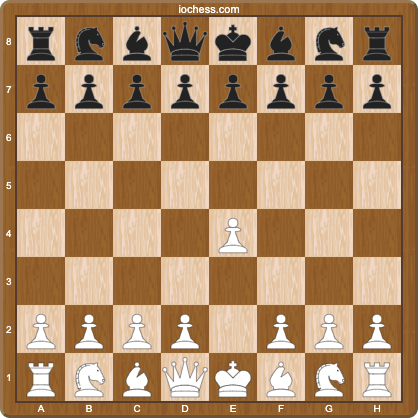
Pick based on style and theory budget:
- Caro-Kann (1...c6): solid and forgiving, with a lower theory load than the Sicilian and a long record at the top level (the Caro-Kann Defence on Wikipedia notes its use by multiple world champions). Best for positional players 1200–2200. See our Caro-Kann guide.
- Sicilian (1...c5): the sharpest reply to 1.e4 and statistically Black's most successful at master level (see the Sicilian Defence on Wikipedia), but it requires deep theory. 1600+ and up. See Sicilian complete guide.
- French Defense (1...e6): rich strategic play with counterattacking chances. Medium theory. See French Defense guide.
- 1...e5 (Classical): the most principled. Lets you learn into Italian, Ruy Lopez, Scotch structures. Reward: clear classical positions. Cost: you must face all White's options.
- Scandinavian (1...d5): easiest to learn, minimal theory. Great starter defense. Surprise value drops above 1800.
Step 2: Pick Your Defense Against 1.d4
- Queen's Gambit Declined (1...d5 + ...e6): rock-solid classical, one of the oldest and most respected defenses to 1.d4 (the Queen's Gambit Declined on Wikipedia traces it to the 15th century). Pairs naturally with Caro-Kann (similar ...d5+...c6/...e6 structures). See Queen's Gambit guide.
- Slav Defense (1...d5 + ...c6): keeps the light-squared bishop mobile. Low-theory version of the QGD.
- Nimzo-Indian (1...Nf6 + 2...e6 + 3...Bb4): theoretically most ambitious. Best at 1800+. See our Nimzo-Indian article.
- King's Indian Defense (1...Nf6 + 2...g6): most combative, aimed at kingside attacks. Heavy theory. Best for tactical players 1600+.
Recommended pairings
- Positional starter repertoire: Caro-Kann (vs 1.e4) + QGD (vs 1.d4). Both have similar ...d5 structures, reducing total theory. Works at any rating from 1200.
- Classical starter: 1...e5 (vs 1.e4) + QGD (vs 1.d4). Clean principles, educational, minimal surprise tactics.
- Tactical ambitious: Sicilian (vs 1.e4) + King's Indian (vs 1.d4). Both play for a win. Theory-heavy, rewarding for 1600+.
- Strategic ambitious: French (vs 1.e4) + Nimzo-Indian (vs 1.d4). Rich middlegames, counterattacking themes, 1800+.
Step 3: Handle 1.c4 and 1.Nf3 via Transposition
Both 1.c4 and 1.Nf3 usually transpose into your existing 1.d4 structures. Two consistent responses:
- ...d5 + ...e6 (QGD setup): after 1.c4 e6 2.Nc3 d5 or 1.Nf3 d5 2.c4 e6, you reach QGD-like positions.
- ...e5 (Reversed Sicilian): 1.c4 e5 puts the Sicilian in reverse with an extra tempo for Black. Active play.
Pick the one that matches your 1.d4 repertoire. You do not need a separate "anti-English" or "anti-1.Nf3" system.
Step 4: Build Your Tree
Use Lichess Studies, ChessAtlas, or Chessable. Organize by White's first move, then Black's response, then the critical branches.
For each line, record:
- Main line 8–12 moves deep for 1400–1800; deeper for higher ratings (see the rating-depth guide)
- The core plan in one sentence
- Key pawn breaks and piece placements
- Your response to the 2–3 most common sidelines
Filter the Lichess Opening Explorer by your rating band, not 2400+ masters, to see what your actual opponents play.
Step 5: Drill with Spaced Repetition
15–20 minutes daily with FSRS spaced repetition (ChessAtlas, Chessdriller, or Anki 23.10+). See why spaced repetition works for chess and our FSRS vs SM-2 guide.
Priority order:
- Week 1: your main defense against the White first move you face more often (usually 1.e4 at club level)
- Week 2: your defense against the other main first move
- Week 3: transpositional responses to 1.c4 / 1.Nf3 / rare moves
- Week 4: patch gaps from your actual games
Step 6: Close the Loop with Real Games
Play rated games with your new defenses. After each, import the PGN and find the first move outside your preparation. Decide if it was your deviation (forgotten) or the opponent's (new sideline). Patch accordingly.
Full workflow in our deviation detection article. ChessAtlas Deviation Finder automates the PGN import and repertoire comparison.
Sample Starter Repertoire (Under 1600)
| White plays | Black plays | Core idea |
|---|---|---|
| 1.e4 | Caro-Kann (1...c6 2.d4 d5) | Solid structure, ...Bf5 freeing the bishop, ...c5 break |
| 1.d4 | QGD (1...d5 2.c4 e6) | Classical development, ...Nf6, ...Be7, O-O, ...Nbd7, ...c5 |
| 1.c4 or 1.Nf3 | Transpose via ...d5 + ...e6 | Reach QGD-like structures without new theory |
This compact repertoire handles the large majority of your games with consistent pawn structures. Upgrade to Nimzo-Indian or French once you pass 1800.
Common Mistakes
Studying too many defenses
One defense per first move is enough. Adding a second "for variety" means you know neither at depth. Commit 3–6 months to one repertoire before expanding. See how to memorize chess openings.
Memorizing moves without plans
Every line needs a one-sentence plan. If you cannot explain why move 7 is what it is, the memory fails at move 6 when your opponent deviates.
Learning lines above your rating band
The Najdorf main line exists, but at 1400 ELO no one plays the critical 20-move continuations against you. Learn what your actual opponents play, not what GMs play.
Never analyzing your own games
Every rated game is data. Skipping post-game review means repeating the same mistakes forever. See how to analyze your games.
Repertoire Maintenance
Monthly: review the last 20 games, note which White first moves you faced and which positions gave trouble. Patch accordingly. Prune lines you never see.
Every 3 months: extend depth in frequent lines, remove unused branches. A lean file stays drillable; a bloated one decays.
Tools
ChessAtlas for repertoire building + FSRS + game import. Chessdriller for a free workflow. See Best Chess Opening Trainers 2026 for the full landscape.
Your Micro-Action Tonight
Pick one defense against 1.e4 and one against 1.d4. Write the first 10 moves of each. Drill them tomorrow. Next week, add transpositional lines. In 30 days, test the full repertoire in 10 rated games.
For the complete ecosystem see the repertoire framework pillar, the 30-day execution plan, and our opening landing pages. Or create a free ChessAtlas account and start building your Black repertoire with automatic game import and FSRS drilling.
Sources and Further Reading
Last updated Jul 24, 2026