
How to Analyze Your Games to Improve Your Opening Repertoire

Analyzing your own games can teach you more than generic theory drills. Spend 2-4 hours on your last 200-1000 rated games to rebuild lines that actually score for you. This guide shows how to use PGNs from Lichess or Chess.com, a study tool, and a free engine. You will spot weak variations, compare results to master data, and replace losing branches. The result is fewer early mistakes, positions that fit your style, and openings you remember under pressure. For the tools that make this possible, see 7 Best Chess Opening Repertoire Tools in 2026, and for the strategic layer beneath game analysis, our pillar on how to build a chess opening repertoire that actually sticks.
Lichess and Chess.com are the main platforms ChessAtlas imports from - connecting your account takes one click, after which every new game feeds the analysis loop described below automatically.
Prerequisites
Collect enough data and the right tools. Aim for 200-1000 recent rated games (last 6-12 months), a study tool, and a reliable engine like Stockfish.
- Access to your game history: Download PGNs from Lichess or Chess.com, focusing on the last 200-1000 rated games (most platforms cap exports at 6-12 months by default, which is the right window for repertoire decisions).
- Analysis software: ChessBase, SCID vs. PC, Chess Assistant, OpeningTree, or ChessAtlas. ChessBase and ChessAtlas are among the more reliable long-term options.
- Chess engine: Free Stockfish (via Lichess browser or downloaded), to evaluate positions consistently.
- Basic chess knowledge: Know opening principles and names like Sicilian Defense and Queen's Gambit.
- Optional training tools: Chess Position Trainer, Chessdriller, or ChessAtlas for spaced repetition.
Step 1: Export and Import Your Games
- Log into Lichess or Chess.com and go to your profile or game archive.
- Export PGNs. On Lichess, click Games then Export games. On Chess.com, open Archive and click Download.
- Use only rated games, and export the last 200-1000 for meaningful statistics. Fewer than 200 produces noisy per-line averages; more than 1000 buries recent style changes under old games.
- Import the PGN into your analysis tool. In ChessBase, File > New > Database, then drag the PGN. In SCID, Tools > Import PGN game. In ChessAtlas, it is automatic after connecting your accounts.
- Filter for the first 15-20 moves to isolate opening issues from middlegame errors.

Step 2: Identify Patterns in Your Opening Performance
- Open the Opening Tree or Explorer. In ChessBase, use Reference. In SCID, Windows > Tree Window.
- Set the reference source to your own games so the tree shows only your games.
- Review stats per branch, including win, draw, loss rates and total games.
- Flag branches scoring noticeably worse than your overall result (a 5-10 percentage point gap in a branch with 20+ games is the practical threshold).
- Find opponent replies where your score drops sharply and examine those branches.
- Note equal positions that feel uncomfortable, signaling a style mismatch worth fixing.
What to Look For: Common Patterns by Opening
Here are typical weak spots for each opening family:
- Italian Game players: Often struggle with 3...Bc5 vs. 3...Nf6 - are you prepared for the Two Knights Defense? Check if your score drops specifically against 4.Ng5 lines or the solid 4.d3 systems.
- French Defense players: Do you struggle against the Exchange Variation (3.exd5)? Many French players dislike symmetric positions. Check if opponents play the Exchange specifically to take you out of theory.
- London System players: The main challenge is an early ...Qb6 attacking b2. White's best responses include 4.Qb3 (challenging the queen), 4.Nc3 (ignoring and developing, accepting a pawn-structure concession for activity), or 4.Qc1 (tucking the queen to keep the position tidy). Drill whichever one fits your style.
- Caro-Kann players: Watch for Fantasy Variation results (3.f3) and rare Advance gambit sidelines. In the Advance Variation, main-line theory after 3.e5 is 3...Bf5; only in offbeat Advance gambit lines (where Black plays ...c5) can White even try 4.dxc5. These sidelines are surprise weapons at club level - check how you score against each.
If your game tree shows the same tactical losses repeating, cross-check them against our catalog of 7 common opening mistakes that cost you games - many "weak branches" are actually one of those patterns in disguise.
Step 3: Analyze Your Losses and Critical Positions
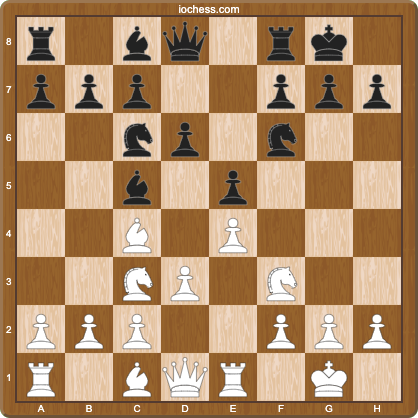
- Sort by result and select losses or disappointing draws from favorable openings.
- Run engine checks with Stockfish to depth 20 or higher through the opening.
- Mark critical positions where evaluation swings or where you left the main path.
- Annotate what failed - forgotten prep, surprise moves, or misread plans.
- Check style fit. If you prefer initiative but reach passive structures, reconsider the line.
- Ignore rare opponent moves seen once or twice; prepare against common replies first.
The single most important moment to investigate in every losing game is the exact move where you or your opponent left prep - our step-by-step deviation detection workflow walks through the exact process for identifying that move, tagging it, and feeding it back into your training queue so the same breakdown does not repeat next week.
A Real-World Example
A player reviewing Italian Game positions might find they consistently reach unclear positions after 1.e4 e5 2.Nf3 Nc6 3.Bc4 Nf6 4.d4 exd4 in the Two Knights Defense. The critical moment comes after 5.e5 d5 6.Bb5 Ne4 7.Nxd4, which leads to sharp positions where Black's central pawn and active pieces give counterchances - both 7.Nxd4 and 7.O-O are theory, and which one you play should depend on how deep your prep goes. Switching to the quieter 4.d3 Giuoco Pianissimo and drilling those branches often leads to better practical results against unprepared club opponents who do not know the sharp Two Knights subtleties.
Expect patterns to emerge - trouble with IQP positions, same-color bishop trades in the Caro-Kann, or aggressive sidelines like the Grand Prix Attack against the Sicilian. For a deeper walkthrough of turning these patterns into fixes inside ChessAtlas, see Chess Opening Mistakes: Analysis Using ChessAtlas.
Step 4: Research Solutions and Build Your Repertoire
Once you have a list of losing branches, invest 20-40 minutes per branch researching a replacement. This is where most players skip ahead and regret it later - a half-researched fix becomes its own losing branch three months from now. Be deliberate:
- For each weak branch, filter master games in that line, limiting to players rated 2500+.
- Study model games and record typical plans, key moves, and common pawn structures. Note what middlegame structure each choice leads to - the Two Knights with 4.Ng5 reaches very different positions than 4.d3, and one may fit your style better than the other.
- Cross-check with master games (filter by rating and year) to confirm the line still scores well in 2020-2026 games, not just historical classics.
- Create separate repertoire files for White and Black.
- Save variations - not full games - keeping 1-2 main lines and 1-2 practical sidelines per opening.
- Annotate ideas, strategic plans, and must-know replies so the moves make sense six months from now. A bare move list ages poorly; annotated plans do not.
- Keep it lean - under 80 variations per color within 3-5 main opening systems.
Step 5: Train Your Updated Repertoire

A new repertoire line is only real once you can recall it under a ticking clock. The training phase is not optional - it is where your research becomes muscle memory. Plan 2-3 weeks of drilling before expecting the fix to show up in rated results.
- Use spaced repetition with Chess Position Trainer, Chessdriller, or ChessAtlas to drill moves from random positions in your new branches. FSRS-based tools schedule each position individually, so your hardest lines surface daily until stable.
- Practice against master games or similar tools that test common sidelines.
- Play focused blitz or rapid sessions (3-5 games per day) to reach your prepared structures on both colors. Force the opening - do not let clock pressure push you back into the old line.
- After each game, analyze deviations immediately and add sound responses to your files while the decision point is still fresh in your mind.
- Keep a training journal tracking hard positions and frequent opponent surprises, reviewed weekly. One paragraph per session is enough.
- Repeat Steps 2-3 monthly, comparing opening results before and after training. The key metric: has the specific branch you replaced moved from below your average to at least neutral?
Step 6: Update and Iterate Regularly
Game analysis is not a one-time project. Theory shifts, your opponents shift, your own style shifts. The players who keep improving treat their repertoire like a living document - never finished, just more accurate this month than last month.
- Schedule weekly or biweekly 30-60 minute reviews of your newest games. Block the time on your calendar; if you do not, it will not happen.
- Run repertoire reports against updated master collections to catch theoretical shifts. The major opening references update frequently.
- Track results by line. Replace a branch that underperforms after 20-30 tries despite work - persistence beyond that point usually signals the line is a poor fit for your style, not a matter of more practice.
- Add breadth slowly - one new variation at a time - after you master your core. Quality beats coverage: a repertoire you actually remember trumps a wider one you half-know.
- Document every change and the reason in your training journal to avoid cycling through the same "fixes" repeatedly. A one-line note ("switched to 4.d3 Italian because scoring poorly against the Two Knights") saves you from re-litigating the decision in six months.
Common Mistakes to Avoid
Mistake 1: Trusting engines without understanding plans. Players often import engine top moves without grasping ideas or plans, then collapse after small deviations or transpositions.
Solution: First study annotated master games in your line, noting plans, pawn breaks, and piece placement. Use engines afterward to verify and catch tactics.
Mistake 2: Ignoring the middlegame. Memorizing 20 moves means little if you do not know model endgames, typical exchanges, and standard maneuvers from your structure.
Solution: For each main line, study 3-5 annotated master games into the middlegame. Record recurring plans, standard pawn breaks, and key maneuvers. And because plenty of those games are decided long after the opening, practice converting the endings your structures lead to against real resistance with the best chess endgame practice tools.
Mistake 3: Building a repertoire too wide to remember. Preparing for every reply balloons into 200+ branches, causing confusion, time trouble, and forgotten ideas.
Solution: Limit to 1-2 main replies per major opening and 1-2 sidelines. Keep under 80 variations per color.
Key takeaways:
- Analyze 200-1000 recent rated games and filter to the first 15-20 moves.
- Use your Opening Tree to flag branches scoring noticeably below your average and problem replies.
- Replace weak branches with master-approved lines, annotated with plans.
- Drill with spaced repetition and recheck results monthly to track improvement.
- Keep the repertoire lean - under 80 variations per color across 3-5 systems.
Micro-action: Export your last 200 rated games today, then list your three worst-scoring openings and one common reply that causes trouble in each. Once you have those positions identified, use spaced repetition to drill the corrections. For guidance on how deep your repertoire should go at your level, see How Deep Should You Learn Your Openings?
Automate Your Game Analysis
ChessAtlas connects to your Lichess and Chess.com accounts and the deviation finder (included on the Plus and Premium plans) automatically detects where you left your repertoire. No more manual PGN exports - your opening mistakes are flagged instantly, fed into your training queue with FSRS, and re-tested next session. The full analysis loop (import, deviation detection, drill) runs in the background while you keep playing.
Sources and Further Reading
- Chess opening (Wikipedia)
- Stockfish (Wikipedia)
- Spaced repetition (Wikipedia)
Last updated: Jul 24, 2026


Comments