Learn Chess Openings in 30 Days: Pick-Learn-Drill-Improve

Table of contents
Disclosure: ChessAtlas is our product. This framework works with any tool (a free repertoire builder plus a spaced-repetition trainer, flashcard apps, or your own notes); we just happen to build one. Readers should weigh the perspective accordingly.
Most club-level games are decided in the opening or early middlegame. Without a working repertoire, you spend the opening guessing. With one, you reach middlegames where you already know the plan. This guide is a structured 30-day chess opening study plan to go from zero repertoire (or a scattered one) to 8-12 confident moves per line, for one White opening and two Black defences.
The framework is Pick, Learn, Drill, Improve, one phase per week. If you have read our beginner's guide to building a first repertoire, this is the day-by-day program for executing it.
Prerequisites
- Accounts: a free account on your online chess account of choice, for casual games, an opening explorer, and free engine analysis. A second account on another games platform widens the opponent pool you can study.
- Basic chess knowledge: piece movement, pins, forks, skewers, basic mates, center + development + king safety principles
- Time: 30 to 60 minutes per day, five to seven days per week, for four weeks
- Rating range: this plan is optimal for rapid players in the 800 to 1800 range. Below 800, spend more time on tactics. Above 1800, see how deep to study by rating
- Why this range: below 1800, the bottleneck is rarely deep theory; it is reaching a familiar middlegame with a plan. That is exactly what a narrow, well-drilled repertoire delivers.
Week 1, PICK: Choose Your Openings (Days 1-7)
The goal this week is to commit to a narrow repertoire: one White opening, plus one Black defence against 1.e4 and one against 1.d4. Three openings, no more. Breadth comes later.
Pick by style, not by fashion
Two quick heuristics:
- If you like long, strategic games with small edges: London System as White, Caro-Kann against 1.e4, Queen's Gambit Declined against 1.d4. Low theory, clear plans, forgiving. If you are brand new, start from the best openings for beginners.
- If you prefer open games and tactics: Italian Game as White, 1...e5 (Ruy Lopez / Italian territory) against 1.e4, King's Indian Defence against 1.d4. More tactical, slightly more theory but rich middlegames.
Neither path is objectively better. Pick the one where you find yourself wanting to reach the resulting positions, that is what keeps you studying.
Landing pages with full plans, variations, and traps for each:
Map the common replies (Days 2-4)
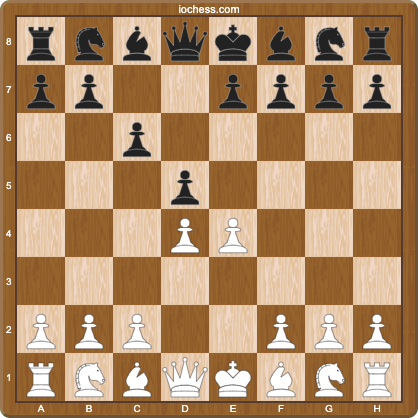
Open an opening explorer filtered by your rating band, not the master games. Top players reach lines you simply will not face for hundreds of points yet. Record the top three opponent replies at your level. That is all the coverage you need to start.
Watch one orientation video per opening (Days 5-6)
One 15 to 30 minute video per opening, explaining ideas rather than 20-move move dumps. Prioritise channels like GothamChess ("speedrun" series), Hanging Pawns, or Saint Louis Chess Club.
Play 3 games to test the waters (Day 7)
Rapid (10+5 or 15+10) or against a bot around your level. After each game, note one position where you did not know what to do. That is tomorrow's study.
Week 1 outcome: 3 openings selected. First 5 to 8 moves known in each. Two plans and one pawn break per opening written down.
Week 2, LEARN: Understand the Ideas (Days 8-14)
Week 2 builds the why. If you skip this, you will memorise lines that collapse the first time your opponent plays move order 3 instead of move order 1.
Core plan per opening
For each opening, answer in one sentence:
- Main pawn break, the move you want to play to transform the position (e.g., ...c5 in the Queen's Gambit Declined, e4 in the London after Nbd2+Ne5, ...f5 in the King's Indian Mar del Plata).
- Best squares for minor pieces, where do the knights and bishops want to go after development?
- One typical middlegame structure, Carlsbad, IQP, Maroczy, King's Indian center-lock, etc.
Play through 5 master games per opening
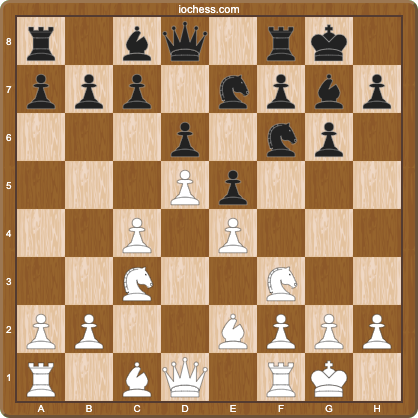
Pull up a collection of master games. Pick games from players rated 2200+ (not super-GM, you want executable plans, not engine-era preparation). Pause on move 10, ask yourself "what is the plan?", then compare with what actually happened.
Daily tactics and one game
10 to 15 minutes of tactics per day (any puzzle trainer, ideally filtered by your openings' structures), plus one rapid game with self-annotation before any engine check.
Week 2 outcome: You can explain the main plan in each opening in one sentence. You recognise the typical middlegame structures when they appear on the board.
Week 3, DRILL: Lock It In (Days 15-21)
Now you put it to memory. The tool does not matter as much as the consistency, but the method does: spaced repetition is what turns a one-week burst of study into a year-long retention curve. FSRS in particular tends to outperform older schedulers for chess position retention. For the mechanics, see our complete FSRS guide for chess openings. Tool options:
- Free open-source stack: a repertoire builder paired with an open-source spaced-repetition drill tool. Free, no friction, but you stitch the pieces together manually and game import is PGN-based.
- ChessAtlas: free FSRS-powered opening trainer with automatic game import and Deviation Finder. Free tier covers 200 variations.
- General flashcard app with FSRS: works if you already use one for other subjects. Requires manual position card creation.
- Course platform: buy one pre-built course per opening. Often built on an older SM-2 scheduler.
10 to 15 minutes of drilling per day
For each position in your deck, ask three questions: what does my move do, what does it prevent, what is my opponent's best response? Positions you miss twice in a week get shorter intervals automatically (with FSRS) or go into a "leech" folder (with SM-2).
Play longer games and annotate
One 15+10 or 30+0 game per day. Verbalise your plan before moves 3 to 10 ("finish development, prepare ...c5, avoid weakening the light squares"). Annotate after.
Week 3 outcome: you play the first 8 to 12 moves of your main lines without thinking. Common opponent sidelines get familiar. Tactical shocks in the opening drop.
Week 4, IMPROVE: Close the Feedback Loop (Days 22-30)
This is the week that separates players who improve from players who plateau. Your new repertoire has gaps. Your real games will find them. This is deliberate practice in action - find the leak, fix the leak, retest. The cycle of focused error correction is what separates effective study from passive review.
Deviation detection after every game
After each rated game, import the PGN. Find the first move outside your repertoire. Decide: did you deviate (forgot the line) or did your opponent (new sideline)? Add the correction with a one-line plan note, and drill it the next day.
Full workflow: How to Turn Every Chess Game Into Opening Improvements.
Add only the sidelines you actually face
If a reply appears twice in your games in the same week, add the correct response. If it appeared once and never again, leave it in notes without a full line. Most players over-study rare sidelines and under-study the replies they see weekly.
Play one long tournament-style game at the end of Day 30
30+20 or 45+15. Use your longest time control of the month, follow your pregame checklist (review main lines, check opponent's recent games if applicable), manage time on moves 1 to 15. Analyse deeply afterward. Write three repertoire edits.
Week 4 outcome: your repertoire reflects your real opponents, not textbook GM lines. You know what to do in the first 15 moves of every game in your openings.
Daily Routine Template
| Block | Time | What |
|---|---|---|
| Warmup | 10 to 15 min | Tactical puzzles filtered by your opening's structures |
| Opening work | 10 to 20 min | Video / master-game review (Week 2), drilling (Week 3+) |
| Play | 15 to 30 min | One rapid game (10+5 or 15+10) |
| Review | 5 to 10 min | Self-annotate, then engine check, log one lesson |
Five sessions per week is enough. Seven works if you can hold consistent volume. Missing a day is not a reset, just pick up where you left off. If you miss a full week (especially Week 3 drilling), go back two phases - Week 1 and Week 2 hold without daily review, but Week 3 spaced-repetition gains decay quickly without active reps.
Realistic 30-Day Expectations
You will not gain hundreds of rating points in 30 days. What you can reasonably expect, measured on a consistent rapid rating pool (10+0 or 15+10 on whichever games platform you use):
- Under 1200: the largest improvement, mostly from reduced opening blunders and consistent development out of the opening.
- 1200 to 1600: meaningful progress concentrated in the openings you studied, and noticeably fewer "I have no idea what to do" positions by move 10.
- 1600 to 2000: cleaner opening phases in tournament games and lower clock spend on moves 1 to 15, even when rating gains plateau.
The faster gains come from removing specific leaks, not from "knowing more theory." Track your rating on Day 1, Day 15, Day 30. Also track: how often you reach a position you recognise by move 10, and how much clock time you use on moves 1 to 15. Those two are stronger signals than rating noise.
Common Mistakes
Memorising without the plan
Lines you cannot explain vanish the first time your opponent plays move order 3 instead of move order 1. For every new repertoire line, write one sentence: "the idea is...". If you cannot, you do not know the position well enough yet.
Over-drilling, under-playing
Drill time is preparation. Playing time is performance. Both matter, neither replaces the other. A rough ratio: 1 game for every hour of drilling. If you are drilling 3 hours a week and playing 1 game a week, you are out of balance.
Studying five openings superficially
A player who knows the Italian Game and the Caro-Kann cold tends to outperform one who has watched 40 hours of every opening on YouTube. Restrict yourself to three openings for 30 days. See how to memorize chess openings and actually remember them for why this matters.
Chasing engine top-moves at club level
A move that is slightly worse but that you understand often beats the engine's top choice you cannot execute. Use the engine to validate, not to choose.
Tools
Free workflow: a repertoire builder for your lines plus an open-source spaced-repetition drill tool plus an opening explorer for research. All free, no account friction, but you stitch three tools together manually and game import is PGN-based.
All-in-one workflow: ChessAtlas for repertoire building, FSRS drilling, automatic game import from your online chess accounts, and automatic Deviation Finder. Free tier supports 200 variations.
Course workflow: a GM-authored course platform if you prefer structured pre-built content. Best when you want a single author's complete repertoire and do not mind paying per course.
Your Micro-Action Right Now
Pick one White opening and one Black defence against 1.e4, from the lists above. Bookmark the two landing pages. Schedule your first 30-minute session for tomorrow. Set a recurring reminder for 28 more days. Write the three openings on a sticky note where you will see it daily. The rest of the framework only works if this first step happens today.
30-Day Action Plan Summary
- Days 1-7 PICK: Choose three openings (one White, two Black). Map top three opponent replies at your rating. Watch orientation videos. Play three test games.
- Days 8-14 LEARN: For each opening write down the main pawn break, ideal piece squares, and one typical middlegame structure. Play through five master games per opening.
- Days 15-21 DRILL: Build SRS decks (FSRS preferred). Drill 10-15 minutes daily. Play one annotated 15+10 game per day.
- Days 22-30 IMPROVE: Import every rated game, find the first deviation, add the correction, drill it. Play one tournament-length game on Day 30.
- Day 31 onward: Reassess. If you have hit 8-12 confident moves per line, expand depth or add a fourth opening. If not, repeat Week 3 + Week 4 with the same three openings.
For the complete ecosystem: how to build your first repertoire, why spaced repetition works for chess, and the 5 best openings for 1200 to 1800 players.
Sources and Further Reading
- Chess opening (Wikipedia)
- Spaced repetition (Wikipedia)
- London System (Wikipedia)
Last updated Jul 24, 2026