
5 Best Chess Openings for Club Players

Choosing the best chess openings for club players in the 1200-1800 ELO range comes down to three things: reliable piece development, manageable theory, and clear middlegame plans. The five openings below - Italian Game, Scotch Opening, Caro-Kann Defense, Vienna Game, and French Defense - tick all three boxes. They punish slow development, expose weak king safety, and give you a concrete plan from move one. Whether you play White or Black, you will find an opening here that fits your style. For a full White-side shortlist filtered by beginner-friendliness, browse our curated openings for White landing page, or for the broader strategic framework see our best chess openings for White 2026 guide.
New to chess or still under 1200 ELO? Our best chess openings for beginners guide covers 5 simpler systems designed for the first 1,000 rated games. Start there, then come back to this article once the basics feel automatic.
TL;DR, Quick picks:
A reliable all-rounder: Italian Game. Fast attacks: Scotch Opening. Solid for Black: Caro-Kann Defense. Surprise weapon: Vienna Game. Strategic counterattack: French Defense.
Why These Five Openings?
These five openings are reliable choices for a wide range of club-level experience because they pair clear plans with limited theory and they punish the two most common ways games are decided at 1200-1800: slow development and weak king safety. The Italian Game in particular is one of the oldest and most-played e4 openings, documented as far back as the 16th century, and remains effective as ratings rise. For a broader framework on choosing openings, see our guide on building your first chess opening repertoire, and our pillar guide on how to build a repertoire that actually sticks for the long-term study framework.
- The Italian Game: reliable development and tactical bite targeting f7
- The Scotch Opening: active central control from move 3
- The Caro-Kann Defense: solid Black positions with the free light-squared bishop
- The Vienna Game: creative attacking chances in an underestimated system
- The French Defense: counterattacking from a solid structure
1. The Italian Game: Master the Fundamentals with Tactical Bite
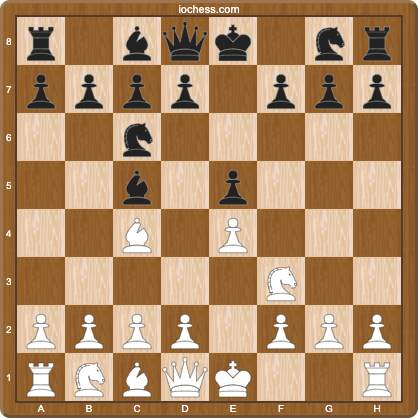
The Italian Game starts 1.e4 e5 2.Nf3 Nc6 3.Bc4. It is one of the oldest recorded openings, with analysis dating to the 16th century, and stays effective well into the 1800s. The bishop on c4 targets f7, knights jump to f3 and c3, and White often castles early. These patterns create threats without deep theory. Train the full set of Italian lines on our Italian Game training page.
Typical setups: c3 and d4 (Giuoco Piano) or quieter d3 with Re1 and h3. The Giuoco Piano main line runs: 1.e4 e5 2.Nf3 Nc6 3.Bc4 Bc5 4.c3 Nf6 5.d4 exd4 6.cxd4 Bb4+ 7.Bd2, after which White has a strong center with d4 and e4. Key tactical theme: the Bxf7+ sacrifice, always lurking when Black neglects king safety.
The Fried Liver Attack, 4.Ng5 d5 5.exd5 Nxd5 6.Nxf7, is a sharp try that scores well for White at club level because many Black players mishandle the defense, while stronger replies like 5...Na5 still leave White with lively play.
ELO advice: Under 1400, just develop and castle quickly. 1400-1600: learn the d3 system (slow Italian) for solid, positional play. 1600+: add the Giuoco Piano main line with d4 and the Fried Liver as a surprise weapon. See our detailed comparison in Italian Game vs Ruy Lopez, and when you are ready to graduate to the deeper Spanish system see our complete Ruy Lopez guide for club players (1200-2000).
2. The Scotch Opening: Seize the Initiative with Direct Play
The Scotch arises after 1.e4 e5 2.Nf3 Nc6 3.d4, creating central contact on move three. According to its Wikipedia entry, Garry Kasparov brought the Scotch back to elite attention in the early 1990s, including in his 1990 World Championship match against Anatoly Karpov, and it has remained a respected anti-Spanish weapon since. After 3...exd4 4.Nxd4, files open fast and White's pieces enter the game with tempo. To train Scotch lines with a dedicated repertoire, use the Scotch Game training page, and read our deep-dive in The Scotch Game: A Dynamic Alternative to the Ruy Lopez.
Common continuations include Nc3, Bc4 or Be3, and O-O, producing a harmonious setup. In the main branches 4...Nf6 and 4...Bc5, watch for:
- Forks from centralized knight on d4
- Discovered attacks with Nd5 or Nf5
- Pins along the e-file against the uncastled king
- Hits on e6 or f7 with the bishop pair
A critical position after 1.e4 e5 2.Nf3 Nc6 3.d4 exd4 4.Nxd4 Nf6 5.Nxc6 bxc6 6.e5 is one Black players often misplay at club level. White gains central space and Black must find 6...Qe7 to fight back. White's space advantage and active piece play give lasting pressure in this structure.
ELO advice: Under 1400, stick to the simple 4.Nxd4 recapture and focus on quick development with Nc3 and Be3. 1400-1600: learn the Classical with 4...Bc5 and the Schmidt Variation 4...Nf6. 1600+: study Kasparov's main line with 5.Be3 against 4...Bc5 to maintain pressure into the middlegame.
3. The Caro-Kann Defense: Build Solid Positions Against 1.e4
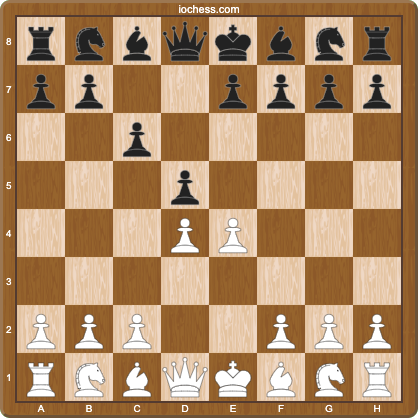
The Caro-Kann starts 1.e4 c6. After the most common continuation 2.d4 d5, Black challenges the center immediately while keeping the structure sound against early assaults. The critical structural advantage over the French Defense: the light-squared bishop escapes to f5 before the pawns close up - a long-recognized practical benefit covered in every Caro-Kann textbook. Read the full guide to the Caro-Kann Defense, or jump straight into our Caro-Kann training page to start drilling key lines.
Key ideas: develop with ...Bf5, prepare ...e6 to fortify d5, complete development with ...Nd7, ...Ngf6, and ...Qc7, then strike with ...c5 or ...e5 based on White's setup.
The three main variations to know:
- Advance Variation (3.e5): Play 3...Bf5 (the modern main line) to develop the bishop before ...e6 closes it in, then ...e6, ...Nd7, and ...c5 to challenge the d4 pawn.
- Classical (3.Nc3 dxe4 4.Nxe4): Play 4...Bf5 for active piece play, 4...Nd7 (Karpov Variation) for solidity, or 4...Nf6 (Tartakower Variation) for natural development.
- Exchange (3.exd5 cxd5): Develop with ...Nc6, ...Bf5, and c-file pressure.
ELO advice: Under 1400, pick the Classical with 4...Bf5; the plan is the easiest to remember. 1400-1600: add the Advance Variation with 3...Bf5 and the typical ...c5 break. 1600+: explore the Karpov 4...Nd7 for endgame mastery and learn the Panov-Botvinnik Attack (an IQP structure) as a defender.
4. The Vienna Game: Surprise Opponents with Flexible Aggression
The Vienna begins 1.e4 e5 2.Nc3 and has gained traction among club players seeking to dodge heavy Italian and Spanish theory. It keeps options open against both 2...Nc6 and 2...Nf6, and frequently puts opponents in unfamiliar positions by move three. You can study every main Vienna response on our Vienna Game training page.
White can choose 3.f4 (Vienna Gambit) or develop with Nf3 and Bc4 for a calmer game. The Vienna Gambit main line 1.e4 e5 2.Nc3 Nf6 3.f4 offers rapid development and open lines. If Black accepts with 3...exf4, typical attacking ideas include e5, Nf3, and d4, chasing the knight and opening lines toward the Black king.
A classic trap in the Frankenstein-Dracula line: 1.e4 e5 2.Nc3 Nf6 3.Bc4 Nxe4 4.Qh5!, White simultaneously pressures f7 and attacks the e4-knight. Black's best is 4...Nd6 5.Bb3 Nc6 6.Nb5, leading to a chaotic game where White's active pieces give lasting initiative. Many club players panic and drop material trying to defend.
ELO advice: Under 1400, play the quiet system with 3.Bc4 and 4.d3; it resembles the Italian and is easy to handle. 1400-1600: add the Vienna Gambit 3.f4 for attacking chances. 1600+: study the Frankenstein-Dracula and the 3.g3 fianchetto system to surprise better-prepared opponents.
5. The French Defense: Counterattack from a Solid Foundation
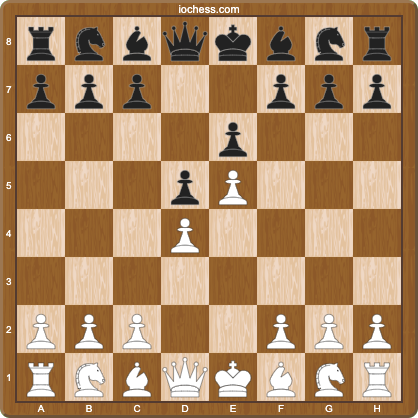
The French starts 1.e4 e6, then 2.d4 d5, and is a popular choice at club level. Black challenges the center at once and steers play into structures unlike 1...e5. These positions reward players who handle pawn chains and timed counterbreaks. Read the complete guide to the French Defense, or go straight to our French Defense training page to drill every main line.
Typical plans: ...c5 to hit d4, ...Nc6 for piece pressure, and the freeing break ...f6 to dent e5. The key system for beginners: the Advance Variation with 3.e5 c5 4.c3 Nc6 5.Nf3 Qb6. Black immediately creates pressure on b2 and d4 with the classic French queenside counterplay.
Study the Advance (3.e5), Tarrasch (3.Nd2), and Exchange (3.exd5) systems, and learn when to play ...c5 early versus ...f6 later.
ELO advice: Under 1400, play the Advance Variation with ...c5 and ...Qb6; the plan is the most forcing and easiest to execute. 1400-1600: add the Tarrasch with 3...c5 to handle White's flexible knight development. 1600+: study the sharp Winawer 3.Nc3 Bb4 for unbalanced games where deep preparation pays off.
Summary: Which to Choose?
A reliable all-rounder for White: the Italian Game for clean development and frequent tactics on f7.
For fast White attacks: the Scotch or the Vienna Gambit, especially against uncastled kings.
For Black if you want safety first: the Caro-Kann, with early ...Bf5 and sturdy endgames.
For Black counterplay: the French, aiming for ...c5, ...f6, and queenside pressure.
If you want to round out your White repertoire against 1.d4 too, see The London System for a low-maintenance White option that pairs naturally with any of these 1.e4 setups.
Pick one opening from this list and play 50 rapid games this month. Track results in your three most common middlegame structures, then drill the tactical motifs that decided those games.
Start Learning These Openings Today
Ready to master these five openings? ChessAtlas lets you build your repertoire for each opening, then train with FSRS spaced repetition so you never forget a line in a rated game. Connect your game account to flag every real-game deviation automatically and feed it back into your training queue.
Sources and Further Reading
- Italian Game on Wikipedia covers the opening's 16th-century origins and its main Giuoco Piano and Two Knights branches.
- Scotch Game on Wikipedia documents the opening's history and Garry Kasparov's elite-level revival.
- Caro-Kann Defence on Wikipedia details the Advance, Classical, and Exchange variations referenced above.
- French Defence on Wikipedia explains the pawn-chain structures of the Advance, Tarrasch, and Winawer lines.
Last updated: Jul 24, 2026


Comments