
The London System: Low-Maintenance 1.d4

Train the London System with spaced repetition
Train the full setup (Bf4, e3, c3, Bd3, Nbd2), the Ne5 plan, common traps, and ELO-specific tips on our London System training page, built for players who want to actually remember their lines.
One opening works against almost any defense and takes hours, not months, to learn. That matters when you have limited study time and real games to play. The London System gives you a repeatable setup, strong middlegame plans, and a solid record from club level to elite events, including high-profile wins by Magnus Carlsen. This guide shows the core setup, key plans, and how to start using it now. For players building a complete White repertoire, see also The 5 Best Chess Openings for Club Players. If you face the London as Black, read the mirror perspective in How to Beat the London System.
Core Setup and Ideas
The London System for White starts with 1.d4 and an early Bf4, then e3, c3, Nf3, Bd3, and Nbd2. This creates a flexible pawn pyramid on c3, d4, and e3 that holds firm against common counters like ...c5. You can reach similar structures versus the Queen's Gambit Declined, King's Indian setups, or fianchetto systems, which cuts prep drastically.
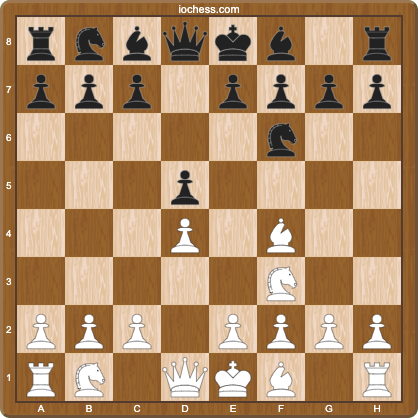
The light-squared bishop goes to f4 before e3, avoiding the typical d4-opening problem of a blocked bishop. Development is simple and thematic: Nf3, Bd3 aiming at h7, Nbd2 to keep the c-pawn flexible, and short castling.
Why Busy Players Choose It
The London System is one of the more popular White openings at club level because it yields a steady practical score for relatively little study time. The key benefit: instead of preparing separately against the French, Caro-Kann, Slav, and King's Indian, you study a single structure that you can reach against most of them. Learning focuses on ideas you will use every game:
- Controlling e5 with Ne5
- Timing the e4 break after c3 and e3
- Coordinating bishops on f4 and d3 to target h7
- When to push h3 and g4 for kingside space
Psychological Edge
Because the structure is stable across Black's options, surprises lose sting. You steer the game toward positions you know, which reduces anxiety and time pressure. The London is scheme-based and prioritizes understanding over theory, a useful approach when playing long events or stacked online sessions.
How the London System Works

The Setup Phase: Exact Move Order
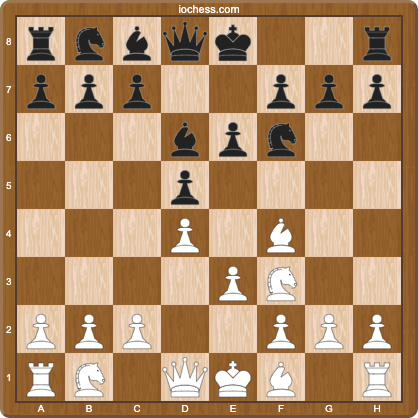
Typical moves: 1.d4, 2.Bf4, e3, c3, Nf3, Bd3, Nbd2, O-O. The critical move order: Bf4 before e3 to keep the diagonal open, then c3 supports d4 against ...c5 while preparing e4. Use Nbd2 (not Nc3) to preserve the c-pawn for c3 or c4. The bishop on d3 eyes h7: the classic motif Bxh7+ is always in the background if Black is careless.
Middlegame Plans
The London has three main attacking ideas depending on Black's setup:
- Ne5 anchor: Put a knight on e5, support it with f4 or c4. Against a kingside-castled king, follow with Qh5 and rook lifts to create mating threats.
- e4 break: After Re1 and Qe2, play e4 to open the center when Black is unready. This creates open lines for your well-placed bishops.
- Kingside pawn storm: Push h3 and g4 to gain space, reroute knight via Nf3-e5-g4 to build pressure on h6 and f6.
Main Move Order and Ne5 Plan
The main line of the London begins 1.d4 d5 2.Nf3 Nf6 3.Bf4, with White continuing e3, c3, Bd3, Nbd2, and short castling. In a typical game, after 1.d4 d5 2.Nf3 Nf6 3.Bf4 e6 4.e3 Bd6 5.Bg3 O-O 6.Bd3, White preserves the f4-bishop by retreating to g3 before Black can trade dark-squared bishops cheaply. If Black instead plays 3...c5 4.e3 Nc6 5.c3 Qb6 6.Qb3, White offers the queen trade and moves into a favorable middlegame, benefiting from the bishop pair and a robust structure.
Because the London sidesteps so much Black preparation, it pairs especially well with players who just want one tool that handles every 1.d4 reply. If you are weighing your choice as the Black side facing 1.d4, our roundup of the best response to 1.d4 by rating level shows which defenses the London typically steers into.
Adapting to Black's Responses
Versus a King's Indian structure (...g6 and ...Bg7): play for queenside space with c4 and b4 after completing development. Against Queen's Indian ideas (...b6 and ...Bb7): prepare e4 with Qe2 and Re1 to seize the center. If Black chooses ...e6 and ...Bd6, consider trading dark-squared bishops with Bxd6, then squeeze the light squares with Ne5 and f4.
The ...Qb6 Problem
A common challenge for London players: after 1.d4 d5 2.Bf4 Nf6 3.e3 e6 4.Nf3 Bd6, Black plays ...Qb6 targeting b2. The cleanest solution: Qb3, offering the queen trade and reaching an endgame where White's bishop pair and c-file pressure give lasting advantages. If you prefer to keep queens on, Nc3 ignores the threat and accepts a structural concession for fast development. Drill whichever fits your style; both are theory.
Use at Top Events
The London System has appeared in top-level events across generations. Magnus Carlsen has employed the London System, notably the setup with 1.Nf3 d5 2.d4 Nf6 3.Bf4, in elite events including the Tata Steel tournament, using the c3-d4-e3 chain plus Ne5 to build pressure. The London's pragmatic appeal (steady setup, low theory, playable middlegames) is part of why it endures at the top level. While elite players still favor more theoretically ambitious 1.d4 systems in their classical preparation, London-style setups with Bf4 show up regularly in elite rapid and blitz events where prep time per game is tight.
ELO-Specific Advice
- Under 1000: Just remember the move order: 1.d4, 2.Bf4, then e3, c3. Develop your knights and bishop to d3. Castle early. The opening alone will stop most early disasters at this level.
- 1000-1500: Learn the Ne5 plan and when to play e4. Study the Bxh7+ tactic so you recognize when it is available, and the typical follow-up (Ng5+ then Qh5).
- 1500+: Add the Qb3 reply to ...Qb6, learn c4 vs. King's Indian structures, and study the timing of g4 pawn storms. Review London System games from elite events for detailed plans, and consider adding the Jobava attack (1.d4 d5 2.Nc3 Nf6 3.Bf4) as an alternative when you want sharper play.
Myths, Debunked

"The London Is Boring"
The opening is solid, but the middlegames are rich. Elite-level London games have featured active Ne5 and kingside play. Carlsen's London games showed harmonious development leading to real winning pressure, not passivity. If you play for space with e4 or a kingside pawn storm, you get decisive winning chances.
"It Doesn't Teach Real Chess"
The London teaches core lessons: square control, coordinated piece play, timing pawn breaks, and long-term planning. You practice converting small advantages and handling equal positions, both essential skills that transfer to other openings.
"It Only Works at Low Levels"
Repeated elite use suggests otherwise. Strong opponents may equalize, but equal positions still offer plans for both sides. The London reliably reaches those playable middlegames, which is exactly what you want when time is tight.
Related 1.d4 Articles
If you play White with 1.d4, these articles cover the broader 1.d4 landscape:
- The Queen's Gambit complete guide, the theoretical heavyweight alternative to the London
- How Deep Should You Learn Your Openings?, to calibrate how much London theory you need at your rating
- How to build an opening repertoire that actually sticks, the pillar guide for turning these London lines into long-term memory
- Best Chess Openings for White (2026 Guide), to compare the London with other low-theory White options
Build Your London System Repertoire
Train the core setup with spaced repetition so Bf4, e3, c3, and typical piece squares become automatic. Use the repertoire builder to study common Black replies, such as ...g6 with ...Bg7 or ...e6 with ...Bd6, and practice typical breaks like e4 and c4 with model games.
- Use a consistent setup: 1.d4, Bf4, e3, c3, Nf3, Bd3, Nbd2, and castle, aiming at h7 and the e5 square.
- Know your breaks: prepare e4 with Re1 and Qe2, or play c4 and b4 versus fianchetto and King's Indian structures.
- Exploit patterns: Ne5 supported by f4 or c4, h3 and g4 for space, and Bxd6 ideas to weaken light squares.
- Study models: review top-level London games from elite events to copy move orders and middlegame plans.
- Train efficiently: drill key positions with spaced repetition and analyze your own London games for recurring fixes.
Micro-action: Tonight, play three games starting 1.d4 2.Bf4, always reach c3-d4-e3 with Bd3 and Nbd2, then aim for Ne5. Afterward, compare one game to a model game and write down one plan you will repeat.
The London System is a strong fit for busy players, and ChessAtlas makes it even easier. Train the London System move by move, then retain every line with spaced repetition training.
Sources and Further Reading
- London System (Wikipedia)
- Magnus Carlsen (Wikipedia)
- Queen's Pawn Game (Wikipedia)
Last updated: Jul 24, 2026


Comments