
How to Beat the Sicilian Defense: White's Complete Toolkit for Club Players

Disclosure: ChessAtlas is our product. This is a White-perspective repertoire article against the Sicilian Defense; it works with any platform. Readers should weigh the perspective accordingly.
The Sicilian Defense (1.e4 c5) is Black's most ambitious answer to 1.e4 and is among the most popular replies at every level (Wikipedia). The honest assessment for club players: the Open Sicilian (2.Nf3 + 3.d4) requires more theory than the practical results justify for most amateurs. Anti-Sicilians are often the more efficient choice below 2200, and four systems in particular give White a practical, easier-to-learn setup without memorising hundreds of moves of Najdorf or Dragon theory.
This guide covers what tends to work well below 2200, then briefly outlines the Open Sicilian for the small minority of players who want to commit. For Black's perspective see our Sicilian Defense landing page and the complete Sicilian guide.
Four Anti-Sicilian Weapons, Ranked for Club Players
1. Alapin Variation (2.c3): most versatile, lowest theory
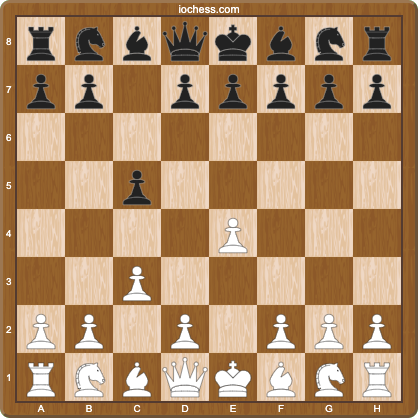
Main line: 1.e4 c5 2.c3 Nf6 3.e5 Nd5 4.d4 cxd4 5.Nf3 (or 5.Qxd4) with a French-style or central push game. After 2...d5, White plays 3.exd5 Qxd5 4.d4 and reaches a pseudo-Scandinavian where White's development is faster.
Pros: Universal against any Black Sicilian system. No distinction between Najdorf, Dragon, Sveshnikov needed - the Alapin handles everything. Low theory: roughly 15 to 20 key positions cover the whole repertoire. Played at every level including by grandmasters as a surprise weapon.
Cons: Black equalises with precise play via 2...d5 and accurate development. You give up White's theoretical opening edge in exchange for practical simplicity, but in club practice that is often the right trade.
Recommended for: Most players 1200 to 2100 who want one Anti-Sicilian to rule them all.
2. Rossolimo (2.Nf3 Nc6 3.Bb5): strategic, used at elite level
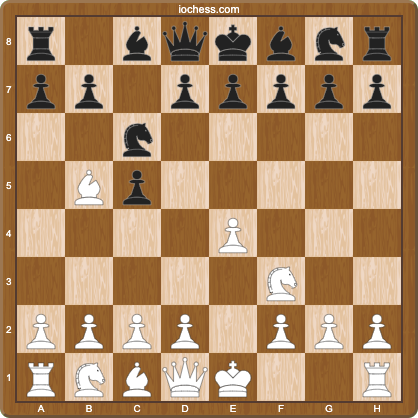
Main line: 1.e4 c5 2.Nf3 Nc6 3.Bb5 (and against the Najdorf move-order 2...d6 3.Bb5+, the Moscow Variation, which is the close cousin). Trade on c6 to double Black's pawns, then pressure the dark squares and play for endgame advantages.
Pros: Strategic rather than tactical. Trades into positions where White's better structure matters. Magnus Carlsen uses the Rossolimo and Moscow regularly at the elite level. Fabiano Caruana chose the Rossolimo (3.Bb5 vs 2...Nc6) in Game 1 of the 2018 World Championship to avoid the deepest Open Sicilian theory (Wikipedia) - the Bb5 family is a serious tournament weapon, not just a club shortcut.
Cons: Requires patience. The edge is small and long-term. Tactical players may find it less to their taste.
Recommended for: Positional players 1500+ who enjoy small-edge endgames.
3. Grand Prix Attack (2.Nc3 Nc6 3.f4): aggressive kingside attack
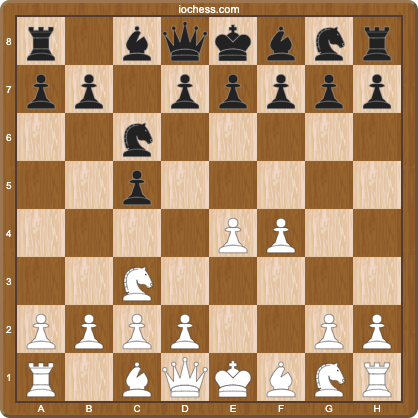
Main line: 1.e4 c5 2.Nc3 Nc6 3.f4 g6 4.Nf3 Bg7 5.Bc4 (or 5.Bb5 versions) with a setup aiming for Qe1-h4 and f4-f5 kingside attack.
Pros: Direct attacking weapon. Scores well at club level because Black often does not know the cleanest defensive setup (which is to play ...d5 early to equalise in the centre). Fits aggressive tactical players.
Cons: Well-prepared Black plays ...d5 early and equalises. Above 2000 ELO it is less respected than the Alapin or Rossolimo. Use it as a club weapon, not as a long-term repertoire choice.
Recommended for: Attackers 1400 to 1900 who prefer a clear kingside plan.
4. Closed Sicilian (2.Nc3 with g3+Bg2)
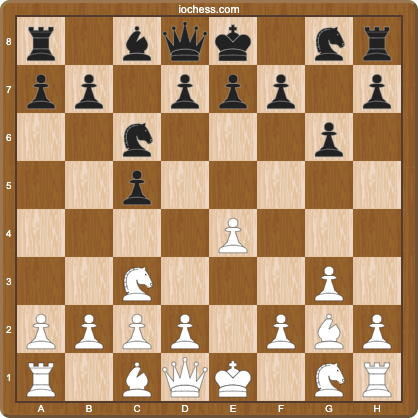
Main line: 1.e4 c5 2.Nc3 Nc6 3.g3 g6 4.Bg2 Bg7 5.d3 d6 6.f4 (or 6.Be3) with a slow manoeuvring game and eventual kingside expansion.
Pros: Avoids all Open Sicilian theory. Clear strategic plan (kingside attack with f4-f5, knight reroutes via Nh3-f2 or Nge2-d4). Boris Spassky employed the Closed Sicilian at the World Championship level, including against Efim Geller (Wikipedia).
Cons: Slower than the Grand Prix. Less aggressive than the Open Sicilian. Black gets a comfortable position with ...e6 and ...Nge7 setups.
Recommended for: Strategic players who want to avoid both mainline theory and sharp tactics.
What to Play Against Each Sicilian Variation (Quick Reference)
| Black's setup | First 3 moves | Best Anti-Sicilian response |
|---|---|---|
| Najdorf | 2...d6 3.d4 cxd4 then ...a6 | Moscow (2.Nf3 d6 3.Bb5+) avoids it entirely |
| Dragon / Accelerated Dragon | 2...Nc6 + ...g6 | Maroczy Bind (2.Nf3 Nc6 3.d4 cxd4 4.Nxd4 g6 5.c4) or Rossolimo |
| Sveshnikov | 2...Nc6 + ...e5 on move 5 | Rossolimo (3.Bb5) avoids it entirely |
| Taimanov / Kan | 2...e6 | Alapin (2.c3) sidesteps both |
| Hyperaccelerated Dragon | 2...g6 (skipping ...Nc6) | Alapin (3.c3) - Black's ...g6 is slightly misplaced here |
| Anything | Any Sicilian setup | Alapin (2.c3) is the universal answer |
The logical recommendation: play the Alapin as your default. Add Rossolimo (and its Moscow twin) if you want a second weapon against 2...Nc6 specifically (Sveshnikov avoiders). Keep the Open Sicilian for after 2200 ELO when you have time to study.
The Open Sicilian (For Serious Students Only)
If you want to commit 2 to 3 months of study to the Open Sicilian, the main weapons are:
- vs Najdorf (5...a6): English Attack (6.Be3 + f3 + Qd2 + O-O-O) or the Classical 6.Bg5
- vs Dragon (5...g6): Yugoslav Attack (6.Be3 Bg7 7.f3 O-O 8.Qd2 Nc6 9.Bc4) with opposite-side castling race
- vs Sveshnikov (5...e5): Main line 7.Bg5 a6 8.Na3 b5
- vs Taimanov (5...Nc6): English Attack (6.Be3) or classical 6.Be2
- vs Classical (5...Nc6 main): Richter-Rauzer (6.Bg5)
Each of these requires deep preparation per sideline. That is why the Anti-Sicilian path is usually more efficient below 2200: you spend considerably less study time for a comparable practical result.
Common White Mistakes Against the Sicilian
3.Bc4 too early (the Bowdler Attack)
After 1.e4 c5 2.Nf3 Nc6 3.Bc4, the bishop is exposed to ...e6 (preparing ...d5 with tempo) and the d-pawn is not defended. This is not a recommended weapon. Use 3.Bb5 (Rossolimo) or 3.d4 (Open Sicilian) instead.
Queenside castling without following through
In English Attack lines (Najdorf, Dragon, Taimanov), White castles long and launches a kingside pawn storm (g4-g5, h4-h5). If the storm stalls or Black's ...b5-b4 counterattack arrives first, the White king is in trouble. Speed matters: h4-h5 without delay, g4 before Black consolidates.
Recapturing on c6 with the wrong pawn
If Black plays ...e5 in a Sicilian (Sveshnikov or some Najdorf lines) and White's Nd4 gets hit, the move Nb5 attacks d6 usefully, but retreating Nf3 or Nf5 requires careful evaluation. Generic knight retreats lose the thread. Study the specific tabiyas.
Playing the Smith-Morra Gambit seriously at 1800+
The Smith-Morra (1.e4 c5 2.d4 cxd4 3.c3) is fun in blitz but theoretically dubious. Black declines with 3...Nf6 or accepts with 3...dxc3 and neutralises with careful play. Use it as a surprise weapon, not as a main repertoire.
Rating-Specific Recommendation
- Under 1500: Alapin only. One opening, universal against all Sicilians. Spend one focused month on the 15 main positions and you are done.
- 1500 to 1900: Alapin + Rossolimo combination. Rossolimo against 2...Nc6, Alapin against 2...d6 or 2...e6. Add the Moscow (3.Bb5+) for the Najdorf move order.
- 1900 to 2200: Continue Anti-Sicilians, or commit to one Open Sicilian line (Yugoslav vs Dragon or Richter-Rauzer vs Classical) as a second weapon.
- 2200+: Full Open Sicilian repertoire. Budget 2 to 3 months of study per major Black system.
Tools to Drill Your Anti-Sicilian
10 to 15 minutes daily with FSRS spaced repetition (ChessAtlas, Anki 23.10+, or Chessdriller) covers the 15 to 20 key Alapin or Rossolimo positions in about three weeks. After that, daily maintenance is 5 minutes - and the algorithm flags any deviation if your opponent plays a move you have not yet drilled, so your repertoire grows automatically. For the full tools landscape see Best Chess Opening Trainers 2026.
Your 4-Step Anti-Sicilian Action Plan
- Pick the Alapin (2.c3) as your default - it is a safe bet for any rating up to 2100.
- Memorise the main line: 1.e4 c5 2.c3 Nf6 3.e5 Nd5 4.d4 cxd4 5.Nf3 - this is the position you will reach in a large share of your Anti-Sicilian games.
- Drill 5 times today on a board or with a spaced-repetition trainer.
- Try it in your next 3 rapid games - by week's end the Sicilian stops being a problem.
For broader context see How to Build a Chess Opening Repertoire That Actually Sticks, how deep to study by rating, and our Sicilian landing page with all variations covered. Or create a free ChessAtlas account and drill your chosen Anti-Sicilian with FSRS from day one.
Sources and Further Reading
Last updated: Jul 24, 2026


Comments