
Best Chess Openings for White: Complete 2026 Guide

Disclosure: ChessAtlas is our product. We've aimed for a fair guide. Readers should weigh our perspective accordingly.
The best chess openings for White depend on your style, rating, and how much time you have to study. There is no single "best" first move; the right answer changes whether you are a 1200-rated tactician with two hours a week, an 1800 club player who enjoys long strategic battles, or a beginner who just wants a setup that plays itself. This guide is a hub: it walks you through the five most reliable White openings (Italian Game, Ruy Lopez, Scotch Game, London System, and Queen's Gambit), shows you how to pick by rating band and style, and links out to the dedicated deep-dive article for each one. You can also browse all White openings in our trainable opening library.
Use this page as a decision tree. Read the short summary for each opening, follow the link that matches your situation, and skip the rest. By the end you should have one clear pick, because as we discuss below, owning one White opening well beats dabbling in five.
How to choose your White opening
Three filters narrow the field quickly:
- Time available to study. A heavy mainline opening like the Ruy Lopez rewards 30+ minutes per day of focused work. A system opening like the London plays itself with an almost identical setup against most Black responses, freeing your study time for tactics and endgames.
- Playing style. Tactical attackers thrive in open 1.e4 positions where the king is exposed early. Positional grinders prefer the slower, structurally rich middlegames that come from 1.d4. If you do not yet know your style, default to 1.e4; the tactical patterns teach you faster.
- Rating band. Below 1500, almost every game is decided by a tactical blunder, not opening theory. Above 1800, your opponent has prep and you need a real repertoire. Match the depth of your opening to the depth of your opposition.
The five openings below cover the great majority of competitive White repertoires from beginner to expert level. You only need to pick one.
The Italian Game (1.e4 e5 2.Nf3 Nc6 3.Bc4)
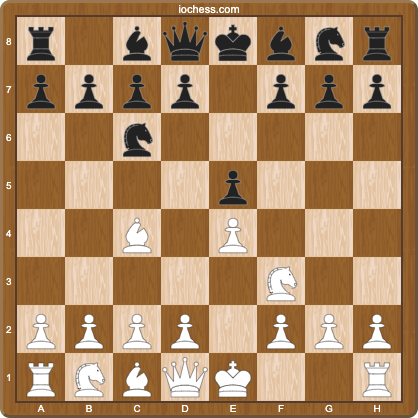
The Italian Game is one of the oldest recorded king's-pawn openings: develop a knight, develop a bishop, eye f7. White aims at the weakest square in Black's camp from move three. Main lines split into the modern Giuoco Pianissimo with 4.d3 (slow, positional, popular at the top level today) and the sharp Evans Gambit with 4.b4. ECO codes C50 to C59.
It is a common textbook recommendation for beginners and tactical players because the plans are explicit, the pieces go to natural squares, and the Fried Liver Attack pattern is one of the first attacking ideas many club players learn. Theory is shallow enough to learn in a few weeks but deep enough to last to expert level.
Pick this if: you are 1200 to 1800, you like attacking, or you want one opening you can play for life without a major rebuild.
Read the head-to-head with its main rival: Italian Game vs Ruy Lopez: which opening should you play?
The Ruy Lopez (Spanish Opening, 1.e4 e5 2.Nf3 Nc6 3.Bb5)
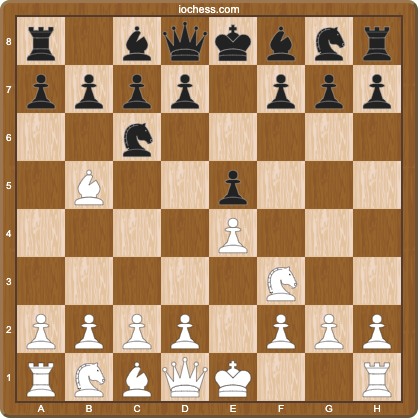
The Ruy Lopez pins the c6 knight that defends e5 and asks Black a long, structural question. It is one of the most-played openings at the World Championship level and has been a strategic battleground for grandmasters for over a century. Main branches include the Closed Ruy, the Berlin Defence (used to notable effect by Vladimir Kramnik against Garry Kasparov in their 2000 World Championship match), the Marshall Attack, and the Open Variation. ECO codes C60 to C99.
The Ruy rewards study disproportionately: the deeper you learn it, the more dangerous it becomes. That is why it remains a staple of strong club players and titled players to this day. It demands more theory than the Italian or the London but pays you back with rich, multi-phase middlegames.
Pick this if: you are 1800+, you enjoy long strategic battles, and you have at least 30 minutes per day to study openings.
Read the dedicated deep-dive: The Ruy Lopez: Complete Guide for Club Players (1200-2000). Or compare with its rival: Italian Game vs Ruy Lopez.
The Scotch Game (1.e4 e5 2.Nf3 Nc6 3.d4)
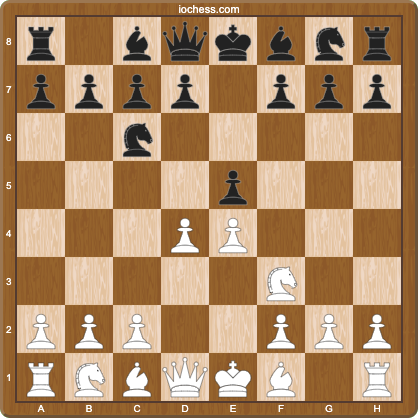
The Scotch Game breaks the centre on move three with 3.d4, exchanges pawns, and aims for an open, tactical middlegame where piece play matters more than long-term structure. Garry Kasparov helped revive it at the very top level in the early 1990s, and it has stayed in elite practice since. ECO C45.
The Scotch is the natural answer to "I like 1.e4 but I do not want to memorise 30 moves of Ruy Lopez theory." You get sharp, principled play, less theoretical baggage, and immediate central tension. Main lines include the Scotch Mieses with 4.Nxd4 Nf6 5.Nxc6 bxc6 6.e5 and the Classical Scotch with 4...Bc5.
Pick this if: you want an open 1.e4 game with less theory than the Ruy and more tactical bite than the Italian.
Read the full guide: The Scotch Game: A Dynamic Alternative to the Ruy Lopez
If you face the Sicilian as White, see How to Beat the Sicilian Defense for a complete club-level toolkit (Alapin, Rossolimo, Grand Prix, and Closed Sicilian) - the Sicilian shows up in a large share of 1.e4 games, so a prepared anti-Sicilian repertoire is just as important as your main 1.e4 opening choice.
The London System (1.d4 followed by 2.Nf3, 3.Bf4)
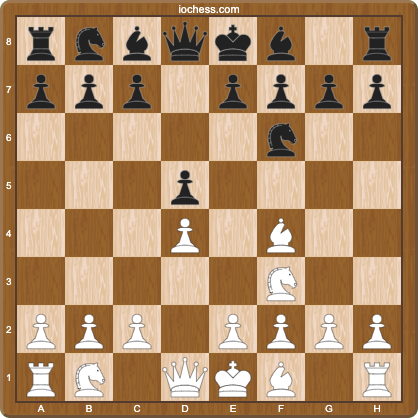
The London System is a system opening: White plays the same setup (Nf3, Bf4, e3, c3, Nbd2, Bd3, O-O) in nearly every game, regardless of how Black plays. ECO D02. The middlegame plans are well known, the king is safe, and you almost never face a forced theoretical line where a single slip loses on the spot.
Magnus Carlsen has played it at World Championship level, which gave the London a reputation upgrade from "lazy person's opening" to "respected weapon." It is a strong pick for time-poor club players because the time you save on opening theory goes directly into tactics, endgames, and game review, which is where club-level games are often won.
Pick this if: you have less than 15 minutes a day to study, you want a setup that works against any Black response, or you prefer slow positional play.
Read the full guide: The London System: The Perfect Low-Maintenance Opening for Busy Players. If you face the London with Black, see How to Beat the London System.
The Queen's Gambit (1.d4 d5 2.c4)
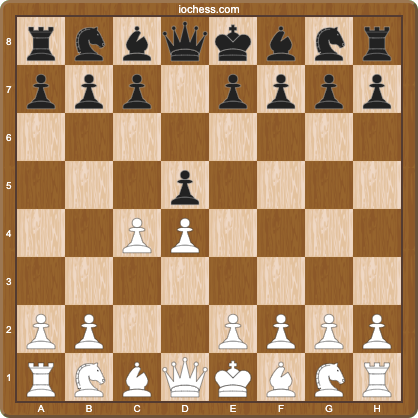
The Queen's Gambit offers the c4 pawn to deflect Black's d5 pawn and seize the centre with e2-e4 later. It is the deepest positional opening in this list. ECO codes D06 to D69. The two main directions are the Queen's Gambit Declined (Black plays 2...e6, the most theoretically important line) and the Queen's Gambit Accepted (Black takes with 2...dxc4 and gives back the pawn later).
The Queen's Gambit teaches positional concepts (minority attack, isolated queen pawn play, the Carlsbad pawn structure) that transfer to every other 1.d4 opening you might play later. It is the natural pick for a player who wants to play 1.d4 and is willing to study real theory.
Pick this if: you are 1500+, you enjoy slow positional play, and you want an opening with deep strategic ideas you can study for years.
Read the full guide: The Queen's Gambit: A Complete Guide to 1.d4 d5 2.c4
Best chess opening for White by rating band
| Rating | Recommended White opening | Why |
|---|---|---|
| Under 1200 | Italian Game or London System | Low theory, clear plans, pieces go to natural squares |
| 1200-1500 | Italian Game or Scotch | Tactical patterns develop fast; punishes opening blunders |
| 1500-1800 | Scotch, Queen's Gambit, or London | Balance theory, structure, and creativity |
| 1800-2000 | Ruy Lopez or Queen's Gambit | Reward deep study; opponents have prep |
| 2000+ | Any major mainline | Match repertoire to opponent prep and your style |
Below 1500 the choice barely matters; what matters is that you pick one and play it for at least three months. For more on rating-specific recommendations see our 5 best chess openings for club players guide.
Best chess opening for White by playing style
- Aggressive attackers: Italian Game (with the Fried Liver Attack and Evans Gambit), Scotch Gambit, King's Gambit. Open lines, exposed kings, sacrifices on f7.
- Positional grinders: Ruy Lopez Closed, Queen's Gambit Declined, London System. Long-term structural ideas, minority attacks, slow squeezes.
- Time-poor club players: London System, Italian Giuoco Pianissimo. Same setup against everything; review your games instead of memorising lines.
- Theory enthusiasts: Ruy Lopez, Queen's Gambit Declined. Deep, multi-branch trees that reward serious study.
- Universal-system players: London (vs 1...d5 / 1...Nf6), King's Indian Attack (vs anything). Same plan, every game.
If you have not played 1.d4 before but you suspect you are a positional player, start with the London; it is by far the easiest 1.d4 opening to learn. If you find yourself enjoying the structures, graduate to the Queen's Gambit later.
How to study your White repertoire
Picking the opening is 10% of the work. Studying it correctly is the other 90%. Three principles separate players who actually retain their lines from players who relearn the same variation every six weeks:
- Pick depth by rating. 8 to 10 moves of main line is enough at 1200 to 1500. 12 to 15 at 1500 to 1800. 20+ only above 1800.
- Drill with spaced repetition. Re-reading lines does not work. Active recall under spaced intervals (FSRS, SM-2) is the only method that puts opening lines into long-term memory.
- Review your own games. Every loss in the opening phase reveals a hole in your repertoire. Patch the hole, drill the patch, do not move on.
For step-by-step playbooks, see:
- How to Build Your First Chess Opening Repertoire - the absolute beginner's playbook.
- How Deep Should You Learn Your Openings? - what to do at each rating band.
- Spaced Repetition for Chess Openings - The Complete FSRS Guide - the technical depth on the algorithm and tools.
- How to Memorize Chess Openings - chunking and recall under pressure.
- How to Handle Transpositions in Your Repertoire - the discipline that keeps White repertoires lean.
Want to drill your White repertoire with spaced repetition? Create a free ChessAtlas account to import your games, build your White repertoire, and have ChessAtlas flag the exact moves you forget so you can drill them before your next tournament. Or explore the repertoire builder to see how it works.
Sources and Further Reading
Last updated: Jun 13, 2026


Comments