
Italian Game vs Ruy Lopez: Which Opening Should You Play?

Train either opening with spaced repetition
Once you've picked a side, train it line by line: the Italian Game training page covers fast tactical attacks on f7, while the Ruy Lopez training page structures the deep strategic lines. Every variation, common trap, and ELO-specific plan is trainable with FSRS spaced repetition.
Disclosure: ChessAtlas is our product; we've aimed for a neutral comparison of the two openings themselves.
After 1.e4 e5 2.Nf3 Nc6, your choice between 3.Bc4 and 3.Bb5 shapes center tension, theory load, and middlegame plans. Both openings are fully sound at every level; the right pick depends on your style and study time, not on objective superiority. This guide compares structure, memorization, and practical results with concrete lines so you can choose with confidence. For broader context, see The 5 Best Chess Openings for Club Players and the best response to 1.e4 by rating level.
Quick Overview
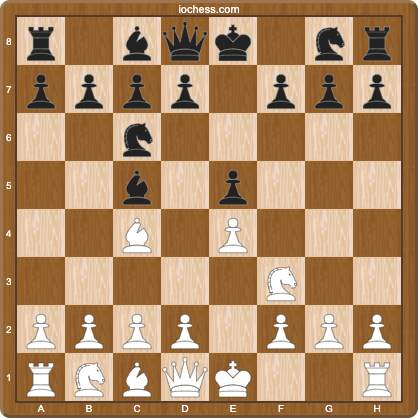
The Italian Game (1.e4 e5 2.Nf3 Nc6 3.Bc4) is one of the oldest recorded openings, with analysis traced to the 16th century. It develops quickly, hits f7 from move three, and often features early d4 to open the center. Typical games become active and tactical without heavy memorization, which is why beginners and many intermediates favor it for practical attacking chances. For a structured introduction you can train move by move, visit the Italian Game training page.
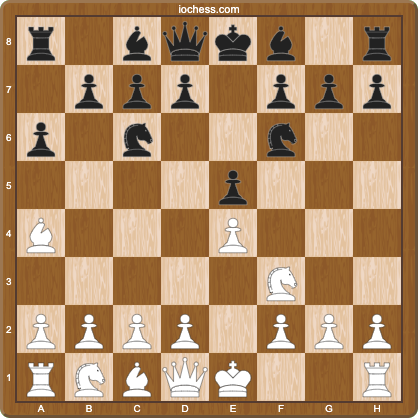
The Ruy Lopez (1.e4 e5 2.Nf3 Nc6 3.Bb5), named after the 16th-century Spanish priest Ruy Lopez de Segura, applies long-term pressure on e5 and the c6 knight. Its theory is deep, covering the Berlin Defense, Marshall Attack, and many closed systems. Plans rely on maneuvering, central tension, and precise move orders, and the opening rewards focused study over many games.
Concrete Move Comparison
Italian Game: The Giuoco Piano Main Line
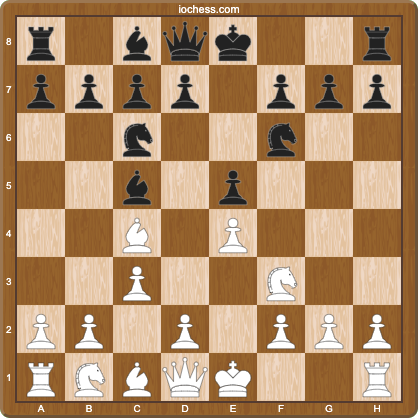
After 1.e4 e5 2.Nf3 Nc6 3.Bc4 Bc5 4.c3 Nf6, White plays 5.d4, the classic Giuoco Piano. After 5...exd4 6.cxd4 Bb4+ 7.Bd2 Bxd2+ 8.Nbxd2, White has a strong center with d4 and e4. The key middlegame plan: castle kingside, play Re1, and prepare e5 to gain space. The broad center and semi-open d-file give White long-term pressure, though Black usually equalizes with the freeing break ...d5.
Ruy Lopez: The Closed Variation
After 1.e4 e5 2.Nf3 Nc6 3.Bb5 a6 4.Ba4 Nf6 5.O-O Be7 6.Re1 b5 7.Bb3 d6 8.c3, White prepares the typical d4 advance. Black's typical plans in the Closed include the Breyer System (...Nb8-d7 rerouting), the Chigorin (...Nc6-a5 attacking the Bb3 bishop, which retreats to c2, after which Black continues with ...c5, ...Qc7, and queenside expansion), and the Zaitsev (...Bb7). White aims for d4, Nbd2, Nf1-g3 maneuvering, and eventually f4 or kingside pressure.
Feature Comparison
| Feature | Italian Game | Ruy Lopez |
|---|---|---|
| Theory Depth | Low to moderate; beginner-friendly with fewer forced lines | Extensive; multiple defensive systems require deep preparation |
| Center Type | Open or semi-open; early d4 pushes common | Tense or closed; maintains d4-e5 tension for long-term pressure |
| Tactical vs Positional | Balanced with tactical emphasis; traps and attacks on f7 | Strategic priority; subtle maneuvering and pawn structure |
| Learning Curve | Gentle; principles-based play possible from day one | Steep; defensive variety demands significant preparation |
| Beginner Popularity | Common entry-point opening at club level | Less common at beginner level due to theory load |
| Elite-Level Usage | Occasional; tactical specialists and rapid/blitz games | Top choice at grandmaster level; White's primary 1.e4 e5 weapon |
| Typical Plans | Attack f7, control center with d4, quick piece activity | Pressure e5, knight rerouting (Nbd2-Nf1-Ng3), queenside expansion |
| Black's Main Defenses | Two Knights Defense, Giuoco Piano, Hungarian Defense | Marshall Attack, Berlin Defense, Closed Variation, Breyer System |
| Memorization Required | Moderate; understand key ideas and tactical patterns | Heavy; prepare for several major defensive systems |
Theory and Memorization Requirements

The Italian Game demands less memory. Sound play follows principles: develop quickly, eye f7, and time d4 breaks when Black has not completed development. Against common setups like the Giuoco Piano and Two Knights Defense, you can rely on typical ideas such as c3 plus d4, or castling early and targeting f7 and the center.
The Ruy Lopez requires targeted preparation. Main Black choices include the Berlin Defense (3...Nf6 4.O-O Nxe4), Marshall Attack (5.O-O Be7 6.Re1 b5 7.Bb3 O-O 8.c3 d5!?), Closed systems with Be7, and the Breyer. Success hinges on handling move-order subtleties: when to play h3, how to execute Nbd2-Nf1-Ng3, and which pawn structure you are aiming for.
The Berlin Wall Problem
Many Ruy Lopez players are surprised when Black plays the Berlin Defense (3...Nf6 4.O-O Nxe4 5.d4 Nd6 6.Bxc6 dxc6 7.dxe5 Nf5 8.Qxd8+ Kxd8), reaching a queenless middlegame that requires deep endgame technique. The line gained prominence after Vladimir Kramnik used it to neutralize Garry Kasparov in their 2000 World Championship match, and elite players have relied on it since. If you are under 2000, prepare a non-Berlin White system, such as the Italian or the lively Scotch Game course, to sidestep this demanding endgame while keeping a direct attacking style.
Performance at Club Level
Large collections of recorded games show both openings are objectively sound and the margin between them is narrow. At club level, the Italian tends to yield sharper, more imbalanced positions where opponents with less theoretical knowledge make more mistakes. The Ruy Lopez Closed tends to be better mastered by higher-rated players, where White's subtle pressure over many moves is more likely to be converted into wins. Practical results also depend on your familiarity: a player who has drilled 50 Italian positions deeply will tend to outperform one who memorized 200 Ruy Lopez positions superficially. Both openings are fully viable, and the choice should reflect your style and available study time.
Pros and Cons

Italian Game Pros
- Low theory demands: Play principled chess without long lines, ideal for limited study time.
- Flexible plans: Immediate f7 pressure, early d4 breaks, and quick piece activity.
- Clear attacking chances: Common traps and themes convert at club level.
- Quick development: Fast, natural moves teach core 1.e4 e5 patterns.
Italian Game Cons
- Smaller edge at elite level: Well-prepared Black equalizes more easily.
- Sharp branches: Two Knights lines (Fried Liver 4.Ng5 d5 5.exd5 Nxd5 6.Nxf7) can be very tactical and require care.
- Less long-term pressure: Once Black equalizes, winning chances often depend on tactics rather than positional grind.
Ruy Lopez Pros
- Elite strength: Trusted at top level and remains White's main 1.e4 e5 weapon.
- Lasting pressure: Targets e5 and c6 for long-term winning chances.
- Strategic training: Learn structures and reroutes like Nbd2-Nf1-Ng3 that transfer to other openings.
Ruy Lopez Cons
- Heavy theory load: Berlin, Marshall, Closed, Breyer, and many sidelines.
- Time cost: Study demands can delay work on tactics and endgames.
- Berlin problem: The queenless endgame requires deep technique to convert any small advantage.
When to Choose Each Opening
Choose the Italian if you are under 2000 or short on study time. It rewards tactical players, works well in rapid and blitz, and builds pattern knowledge around f7 and d4. Many club opponents misplay the Two Knights and Giuoco Piano, which creates practical winning chances. The Italian also pairs naturally with active middlegame study because positions arise where calculation matters more than theory.
Choose the Ruy Lopez if you are 2000+ or want to invest in deep opening study. It suits positional players who enjoy maneuvering, endgame-heavy battles, and preparing answers to Berlin, Marshall, and Closed systems. The study pays off most in longer time controls where your opponent cannot easily wing it. Ruy Lopez study also strengthens your general understanding of pawn structures with d4-e5 tension, which carries over to many other 1.e4 systems. For the broader White repertoire decision (Scotch, London, Queen's Gambit alternatives), see our Best Chess Openings for White 2026 Guide.
Practical Considerations for ChessAtlas Users
For the Italian, start with a small repertoire file. Add core lines against the Two Knights, Giuoco Piano, and Hungarian, plus model games showing f7 attacks and timely d4 breaks. Use spaced repetition to drill typical positions and tactical motifs rather than dense move trees.
For the Ruy Lopez, build separate branches for Berlin, Marshall, Closed, and Breyer. Use the repertoire builder to sequence your study, then space-rep key move orders, h3 timing, and the Nbd2-Nf1-Ng3 reroute. For guidance on how deep to go at your level, see How Deep Should You Learn Your Openings?, and for the overall study framework, our pillar guide How to Build a Chess Opening Repertoire That Actually Sticks.
- Key takeaways: The Italian offers faster returns with less theory; the Ruy Lopez offers higher ceilings with more study.
- Both openings are fully viable at all levels; choice should match your style and available study time.
- Preparation focus: Italian, drill f7 themes and d4 timing; Ruy, prepare Berlin, Marshall, Closed, and Breyer.
- Rating guide: Under 2000, prefer Italian; 2000+, the Ruy Lopez scales better.
- Time control: Italian excels in rapid/blitz; Ruy thrives in classical games.
Micro-action: Choose one opening today and add three core lines to your repertoire. Drill 10 key positions, then play three games to test them.
Start Building Your Repertoire
Whether you choose the Italian Game or the Ruy Lopez, the key is consistent practice. ChessAtlas lets you build your opening repertoire, import your games from Lichess and Chess.com, and train with spaced repetition, so every line sticks. Prefer a more direct alternative to the Ruy Lopez? Try the Scotch Game course for open, tactical positions with far less theory. For the matching deep-dive on the Spanish, see The Ruy Lopez: A Complete Guide for Club Players (1200-2000 ELO).
Sources and Further Reading
- Italian Game (Wikipedia) documents the opening's history, the Giuoco Piano, and the Two Knights Defense.
- Ruy Lopez (Wikipedia) covers the main defensive systems referenced above.
- Berlin Defence (Wikipedia) details the queenless endgame and its use at the elite level.
Last updated: Jun 13, 2026


Comments