Best Response to 1.e4: Opening Recommendations by Rating Level

Table of contents
1.e4 appears in more games than any other first move at master and club level, and it steers play into open, tactical positions. Choose the wrong reply and you face prepared lines by move five. This guide is a decision framework by rating band, pick a defense here, then follow the linked deep-dive article to learn the mainlines, traps, and model games. If you want to zoom out before picking a defense, our pillar framework for building a repertoire that sticks covers how this fits into full opening prep, and you can also browse all Black openings against 1.e4 in our trainable opening library.
Quick Recommendations by Rating Level
- Under 1500 Elo, Caro-Kann (1...c6) or French (1...e6). Low theory, reliable pawn structures, fewer early tactical landmines. You'll reach playable middlegames without deep memorization, which frees your time for tactics and endgames, the skills that actually decide games at this level.
- 1500 to 2200 Elo, 1...e5 (Open Games) for classical development and pattern mastery, or the Sicilian (1...c5) for asymmetric positions and better winning chances with Black. Pick based on temperament: classical vs. combative.
- 2000+ Elo, specialize in Najdorf or deep Ruy Lopez / Italian mainlines with targeted preparation. At this level your opponents are prepared, depth and novelty matter more than breadth.
Why Your Rating Level Matters

Beginners improve fastest with openings that punish fewer small mistakes and reinforce sound principles. A 1000-rated player memorizing 20 Najdorf moves will still drop material without basic tactics or piece coordination. A French or Caro-Kann setup teaches solid development and healthy pawn structures on every move, which transfers to other openings you will play later.
Higher-rated players, on the other hand, need openings that generate asymmetry and winning chances against prepared opponents. This is where the Sicilian and sharper 1...e5 lines (Ruy Lopez, Italian mainlines) reward deeper preparation and model-game study.
Under 1500: Solid Choices That Build Structural Understanding
At this level, your goal is to reach a playable middlegame without being punished for memory gaps. The Caro-Kann and French excel because they teach you what a good pawn structure looks like, a skill you'll keep using long after you change repertoires.
The Caro-Kann Defense (1...c6)
The Caro-Kann emphasizes structure and clean development over forcing tactics. After 1.e4 c6 2.d4 d5, Black challenges the center immediately and keeps a compact pawn formation. Our Caro-Kann opening page collects the mainlines, plans, and model positions for all the main White tries.
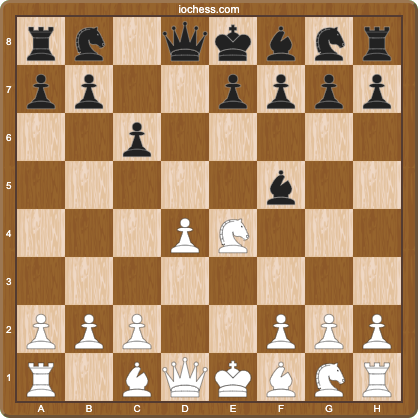
In the Classical line, 3.Nc3 dxe4 4.Nxe4 Bf5, Black solves the light-squared-bishop problem that plagues the French and keeps the king safe. The resulting middlegames reward patient maneuvering rather than forcing calculation. Full Caro-Kann guide.
The French Defense (1...e6)
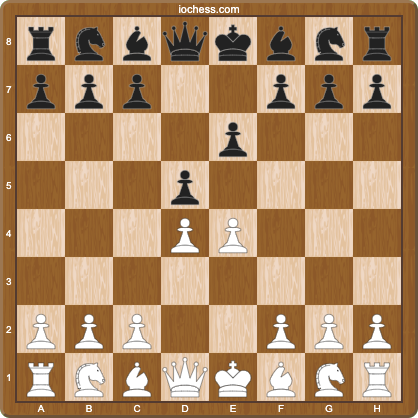
The French Defence trades some piece activity for a rock-solid pawn chain. After 1.e4 e6 2.d4 d5, Black commits to attacking the base of White's pawn chain with ...c5. In the Advance (3.e5), Tarrasch (3.Nd2), and Winawer (3.Nc3 Bb4), Black's plans revolve around the ...c5 and ...f6 breaks. See the full variation list on our French Defense opening page, and the deep-dive guide at the French Defense article.
The Scandinavian Defense (1...d5)
The Scandinavian simplifies learning while keeping chances to strike. After 1.e4 d5 2.exd5 Qxd5 3.Nc3 Qa5, Black develops fast and sets practical traps. Common ideas include ...Nb4 hitting c2 and queen jumps that create discovered attacks. Patterns repeat across sidelines, so improving players see familiar setups even when White varies early, ideal for busy club players with limited study time. Our Scandinavian Defense opening page lays out the mainlines and Gubinsky-Melts (3...Qd6) branches side by side.
1500-1800: Balance Between Classical and Combative
Here you need openings that teach deeper middlegame ideas without demanding master-level preparation. 1...e5 and the Sicilian both qualify, pick by temperament.
1...e5: Classical Fundamentals That Scale
1...e5 remains a mainstay from beginner to world champion, it teaches classical development, center control, and king safety, the same principles that underpin every other opening. The resulting Ruy Lopez and Italian Game positions have stood up to more than a century of theoretical scrutiny and still appear in elite events. If you want the ultra-solid 1...e5 option, the Petrov Defense (1.e4 e5 2.Nf3 Nf6) offers immediate symmetry and a well-mapped equalizing path. Italian Game vs Ruy Lopez comparison.
The Sicilian Defense (1...c5): for Intermediate Players
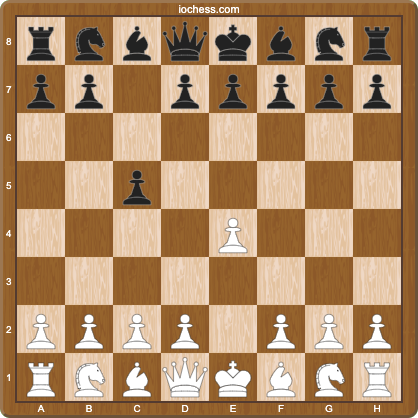
The Sicilian Defence creates asymmetry from move one and is, by recorded master practice, the most popular reply to 1.e4 across levels from club play to world championships. At club level, the Dragon runs 1.e4 c5 2.Nf3 d6 3.d4 cxd4 4.Nxd4 Nf6 5.Nc3 g6, the kingside fianchetto leads to thematic ...Bg7, ...O-O, ...Nc6, and ...Be6 with ...Rc8 and ...Qa5 ideas. Alternatively, the Kan (5...a6 without ...Nf6) and Taimanov (...e6, ...Nc6, ...Qc7) offer flexible setups with less theory than the Najdorf. See the full variation tree on our Sicilian Defense opening page, and the deep-dive guide at the Sicilian Defense article. If you play 1.e4 yourself, see also How to Beat the Sicilian Defense for the mirror perspective on what the Sicilian must contend with.
1800+: Principled Aggression and Deep Preparation
At this level, you face players who've done homework. Your openings must either surprise or out-prepare. The Najdorf and Ruy Lopez mainlines are among the most heavily analysed choices.
The Najdorf Sicilian
The Najdorf, 1.e4 c5 2.Nf3 d6 3.d4 cxd4 4.Nxd4 Nf6 5.Nc3 a6, offers Black flexible setups against 6.Bg5 (Main Line), 6.Be3 (English Attack), 6.Be2 (Classical), and 6.Bc4 (Fischer-Sozin). The theory load is high, but the positions consistently offer counterplay. Specialize in one or two White responses rather than trying to cover everything.
The Ruy Lopez (1...e5 specialist)
After 1.e4 e5 2.Nf3 Nc6 3.Bb5, the Ruy Lopez offers both Closed (Morphy with 3...a6 4.Ba4 Nf6 5.O-O Be7) and Open (5...Nxe4) systems. The Berlin Defense (3...Nf6) remains a drawing weapon at elite level but requires exact endgame technique. Pick a specific Black response and drill its tabiyas, the Marshall Attack or the Breyer Variation are popular specialist choices.
Common Misconceptions About Opening Choice
Misconception: Higher-Rated Players' Openings Are Always Better
Copying the Najdorf or Dragon without understanding typical middlegames usually backfires. A 1200-rated player who memorizes 15 Dragon moves often collapses on move 16. The same player in the Caro-Kann reaches playable middlegames by move 10 and an endgame they can actually plan. Appropriate complexity beats imitation.
Misconception: You Need to Learn Every Response
Spreading prep across three or four replies to 1.e4 dilutes results. One or two trusted defenses, learned to move 12 to 15 with plans and key tactics, win more games and make post-game review faster. For depth guidance see How Deep Should You Learn Your Openings?
Misconception: Solid Openings Mean Boring Games
The Caro-Kann and French create rich structures with clear pawn breaks, ...c5 in most French lines and ...c5 or ...e5 in Caro-Kann middlegames. These plans produce decisive results while teaching strategy that transfers to other openings.
Building Your 1.e4 Response Repertoire
Match the opening to your rating and study time, then go deep on one defense before adding a second. Under 1500, favor the Caro-Kann or French for structure and low theory. Between 1500 and 2200, build around 1...e5 fundamentals or the sharper Sicilian. Above 2000, specialize, pick a Najdorf variation or a deep Ruy Lopez tabiya and learn it well. For the broader Black-side picture across both 1.e4 and 1.d4, see our complete Black openings guide by rating.
- Under 1500 Elo, Caro-Kann or French. Structure first, theory second.
- 1500 to 2200 Elo, 1...e5 or Sicilian. Richer winning chances, more pattern work.
- Above 2000 Elo, specialize in Najdorf, Ruy Lopez mainlines, or Italian Giuoco Pianissimo with targeted prep.
- 1...e5 scales from beginner to world champion, the classical option never goes out of style.
Micro-action: pick one line and drill it for 10 minutes today. For example, Caro-Kann Classical, 1.e4 c6 2.d4 d5 3.Nc3 dxe4 4.Nxe4 Bf5, then practice common replies in ChessAtlas's spaced-repetition trainer to lock in the ideas. Create your free ChessAtlas account and load your chosen defense into the trainer today.
Want to decide which side to play? See also Best Response to 1.d4 by rating level for your Black repertoire against queen-pawn openings.
Sources and Further Reading
Last updated Jun 13, 2026