
Best Chess Openings for Black (2026)

Disclosure: ChessAtlas is our product. This guide is a balanced, Black-perspective decision tree across the major Black openings; the recommendations work with any platform or trainer. Readers should weigh our perspective accordingly.
The best chess openings for Black depend on three things: what White plays (1.e4 or 1.d4 changes everything), your rating, and how much study time you have. There is no universal answer. A 1300-rated tactical player who hates memorising deep theory wants a different repertoire than a 1900 strategic player preparing for tournaments. This guide is a hub: it walks you through the six most reliable Black openings (Caro-Kann, French, Sicilian, Queen's Gambit Declined, King's Indian, Nimzo-Indian), shows you how to pick by rating band and style, and links to the dedicated deep-dive article for each one. You can also browse all Black openings in our trainable opening library.
Use this page as a decision tree. Read the short summary for each opening, follow the link that matches your situation, and skip the rest. By the end you should have one clear pick for each White opening, because as we discuss below, owning two Black defenses well (one against 1.e4, one against 1.d4) beats dabbling in five.
How to choose your Black openings
Three filters narrow the field quickly:
- What does White play? Black needs one defense against 1.e4 (Caro-Kann, French, or Sicilian) and one against 1.d4 (QGD, King's Indian, or Nimzo-Indian). These are independent choices. Some players try to use a "universal" defense (like the Modern 1...g6) against both, but that almost always means giving up theoretical equality somewhere.
- Playing style. Tactical attackers thrive in sharp asymmetric positions where Black plays for the win, not just for equality (Sicilian, King's Indian). Positional grinders prefer solid, structurally rich middlegames where Black equalises first and then outplays the opponent (Caro-Kann, QGD). Hybrid players who want flexibility lean toward systems with both options (Nimzo-Indian, French).
- Rating band. Below 1500, almost every game is decided by a tactical blunder, not opening theory. Above 1800, your opponent has prep and you need a real repertoire. Match the depth of your opening to the depth of your opposition.
The six openings below cover the great majority of competitive Black repertoires from beginner to expert level. You only need to pick one against 1.e4 and one against 1.d4. For deeper move-by-move recommendations, see our best response to 1.e4 by rating level and best response to 1.d4 by rating level.
Best Black defenses against 1.e4
The Caro-Kann Defense (1.e4 c6)
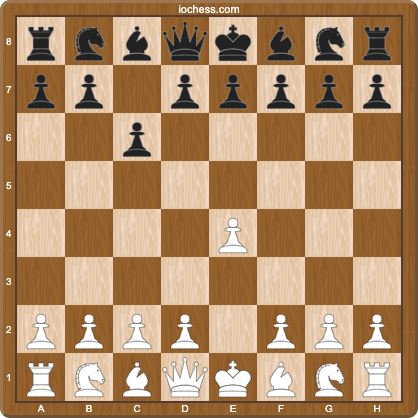
The Caro-Kann is a textbook positional defense against 1.e4. Black builds a Slav-like structure with ...c6 and ...d5, develops the light-square bishop actively to f5 (the main difference from the French), and aims for a long, technical middlegame where Black's solid pawn structure outlasts White's initiative. ECO codes B10 to B19. Tigran Petrosian, Anatoly Karpov, and Viswanathan Anand have all used the Caro-Kann at the World Championship level, and Petrosian defended his title against Boris Spassky with it in their 1966 match.
Pick this if: you are 1200 to 2000, you prefer positional play to tactics, and you want a low-theory defense that holds up under pressure.
Read the dedicated guide: The Caro-Kann Defense: A Solid Choice Against 1.e4.
The French Defense (1.e4 e6)
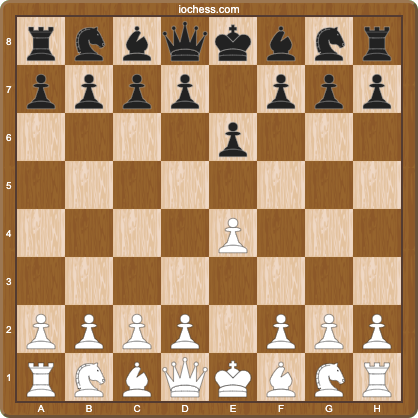
The French Defense is the Caro-Kann's strategic cousin: same idea (challenge the centre with ...d5), different trade-off. Black accepts a passive light-square bishop in exchange for a stronger, more flexible pawn structure. Main lines split into the Advance (3.e5), Tarrasch (3.Nd2), and the sharp Winawer (3.Nc3 Bb4) where Black willingly damages the kingside pawn structure for piece activity. ECO codes C00 to C19.
Pick this if: you are 1400+, you enjoy strategic complexity, and you do not mind defending a slightly cramped position in exchange for a clear long-term plan.
Read the dedicated guide: The French Defense: A Solid and Strategic Choice Against 1.e4.
The Sicilian Defense (1.e4 c5)
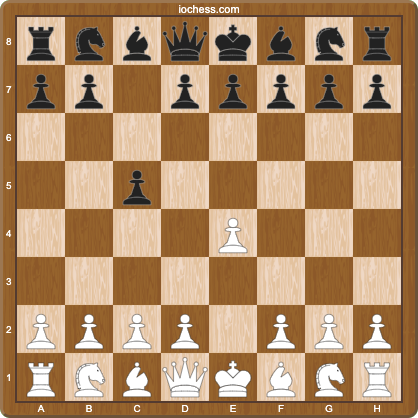
The Sicilian is the most popular reply to 1.e4 at every level, accounting for a large share of all 1.e4 games in major game collections. It refuses to mirror White and aims for dynamic, asymmetric counter-attack rather than equality. Main systems include the Najdorf, Dragon, Sveshnikov, Taimanov, and Classical, each with its own deep theory. ECO codes B20 to B99. Garry Kasparov made the Najdorf a lifelong weapon, and many leading players use multiple Sicilian systems.
Pick this if: you are 1700+, you have 30+ minutes a day to study openings, and you want to play for the win as Black instead of just equalising. Below 1700, the theory load usually exceeds the practical benefit.
Read the dedicated guide: The Sicilian Defense: A Complete Guide for Intermediate Players. If you face the Sicilian as White, see How to Beat the Sicilian Defense.
Best Black defenses against 1.d4
Queen's Gambit Declined (1.d4 d5 2.c4 e6)
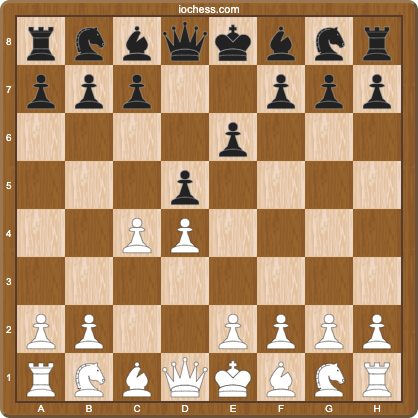
The Queen's Gambit Declined is a textbook positional defense against 1.d4. Black declines the c-pawn, builds a solid central structure with ...d5 and ...e6, and aims for a slow, manoeuvring middlegame. The strategic concepts (minority attack, isolated queen pawn, Carlsbad pawn structure) transfer to every other 1.d4 opening. ECO codes D30 to D69. It has been a staple of championship-level chess for over a century: the 1927 World Championship match between Alexander Alekhine and Jose Raul Capablanca opened with the Queen's Gambit in most of its games, and it remained a respected reply through the 2010s.
Pick this if: you are 1300+, you prefer slow positional play, and you want an opening with deep strategic ideas you can study for years. The QGD is the natural starting point for any 1.d4 defense.
Read the dedicated guide: The Queen's Gambit: A Complete Guide to 1.d4 d5 2.c4.
King's Indian Defense (1.d4 Nf6 2.c4 g6)
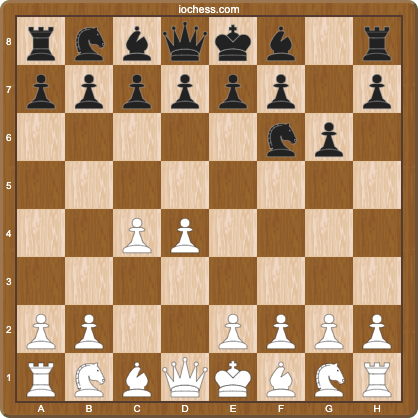
The King's Indian Defense is the hypermodern, attacking response to 1.d4. Black willingly cedes the centre to White, fianchettos the king's bishop on g7, then launches a kingside pawn storm with ...e5, ...f5, ...g5, ...g4 in the most ambitious Mar del Plata lines. ECO codes E60 to E99. Bobby Fischer and Garry Kasparov used it as a winning weapon for Black, and it remains popular among attacking players.
Pick this if: you are 1500+, you love attacking, and you accept that Black can lose quickly when the kingside attack stalls. The KID is high-variance: huge wins or painful losses, rarely a draw.
Read the dedicated guide: The King's Indian Defense: An Aggressive System Against 1.d4.
Nimzo-Indian Defense (1.d4 Nf6 2.c4 e6 3.Nc3 Bb4)
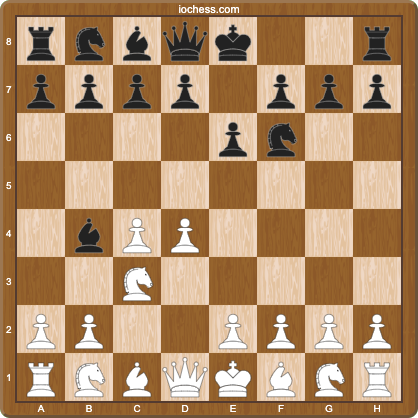
The Nimzo-Indian is widely regarded as one of Black's most theoretically respected replies to 1.d4. Black pins the c3 knight, denies White an easy e4 push, and creates long-term structural imbalances (doubled c-pawns, weak light squares) that Black can exploit. ECO codes E20 to E59. Aron Nimzowitsch popularised it in the 1920s, and Anatoly Karpov used it as a primary 1.d4 weapon for two decades.
Pick this if: you are 1600+, you enjoy positional manoeuvring, and you want an opening that has stood at the top of GM theory for a hundred years. Below 1600, the strategic ideas (managing doubled pawns, exploiting weak light squares) are too subtle to extract value. Note that you also need a companion against 3.Nf3, where the ...Bb4 pin is not available: the Queen's Indian (3...b6) or the Bogo-Indian (3...Bb4+) are the standard choices.
Read the dedicated guide: The Nimzo-Indian Defense: Black's Best Weapon Against 1.d4.
Other Black defenses worth knowing
The six openings above are the core recommendations, but four more systems deserve a mention - each is the right pick for a specific kind of player:
- Scandinavian Defense (1.e4 d5) - the lowest-theory reply to 1.e4. Black trades the d-pawn immediately and sidesteps White's Italian Game and Ruy Lopez preparation entirely; the cost is an early queen sortie that gives White development tempo. A strong club-level weapon for players who refuse to memorise 15-move lines. Read the guide: The Scandinavian Defense: A Solid Black Weapon Against 1.e4.
- 1...e5 (Open Game) - the classical, principled reply. Ideal for beginners because pins, forks, and the classic tactical patterns appear in their natural habitat - but you need answers to the Italian, Ruy Lopez, Scotch, Vienna, and King's Gambit. See Italian Game vs Ruy Lopez for the two systems you will face most.
- Slav Defense (1.d4 d5 2.c4 c6) - the QGD's low-maintenance sibling. Black supports d5 with ...c6 and keeps the c8 bishop free to develop to f5 or g4 before it gets locked in. Noticeably less theory than the QGD or Nimzo, especially in the Exchange and Slow lines - a fine pick for time-poor players.
- Grunfeld Defense (1.d4 Nf6 2.c4 g6 3.Nc3 d5) - Black's most ambitious hypermodern reply to 1.d4: invite the big White centre, then dismantle it with ...c5 and concrete piece pressure. Like the Najdorf, it demands real preparation and regular updates; best suited to players above 2000.
What about anti-system openings (London, Trompowsky, Colle)?
White can sidestep the main 1.d4 defenses with system openings like the London System (1.d4 + 2.Bf4), the Trompowsky (1.d4 Nf6 2.Bg5), or the Colle (1.d4 + 2.Nf3 + 3.e3). These are increasingly common at club level because they avoid theoretical battles. Black's best answer is the same regardless of which system you usually play: ...c5 + ...Qb6 targeting the b2 pawn, or a King's Indian fianchetto if you already play the KID.
For a complete refutation toolkit see How to Beat the London System. Most anti-system openings fall to similar treatment: attack the centre with ...c5 before White finishes harmonious development.
Best chess openings for Black by rating band
| Rating | vs 1.e4 | vs 1.d4 | Why |
|---|---|---|---|
| Under 1200 | Caro-Kann or 1...e5 | QGD or Slav | Solid, low-theory, hard to lose quickly |
| 1200-1500 | Caro-Kann or French | QGD or Slav | Pattern-recognition develops fast; few losing tabiyas |
| 1500-1800 | Caro-Kann, French, or Scandinavian | QGD or King's Indian | Add one ambitious system if you want winning chances as Black |
| 1800-2200 | Sicilian or Caro-Kann | Nimzo-Indian or KID | Reward deep study; opponents have prep |
| 2200+ | Any major mainline | Nimzo + Grunfeld or KID | Match repertoire to opponent prep and your style |
Below 1500 the choice barely matters; what matters is that you pick one defense against 1.e4 and one against 1.d4 and play them for at least three months. For more on rating-specific recommendations see our how deep should you learn your openings - a guide by rating level.
Best chess openings for Black by playing style
- Aggressive attackers: Sicilian (Najdorf or Dragon), King's Indian. Sharp, asymmetric, play for the win as Black.
- Positional grinders: Caro-Kann, Queen's Gambit Declined, Nimzo-Indian. Equalise first, then outplay.
- Time-poor club players: Caro-Kann (vs 1.e4) + QGD or Slav (vs 1.d4). Same structural ideas across both, low theory burden, very few losing variations.
- Theory enthusiasts: Sicilian Najdorf, Nimzo-Indian, Grunfeld. Deep, multi-branch trees that reward serious study.
- Universal-system players: Modern (1...g6) against everything. Same plan vs 1.e4 and 1.d4. Slightly worse theoretically, but the simplicity is real.
If you have not picked your Black defenses before but you suspect you are a positional player, start with Caro-Kann + QGD. They are among the easiest pairs to learn and the hardest to lose with. If you find yourself enjoying complex middlegames, graduate to Sicilian + Nimzo-Indian later.
How to study your Black repertoire
Picking the openings is 10% of the work. Studying them correctly is the other 90%. Three principles separate players who actually retain their lines from players who relearn the same variation every six weeks:
- Pick depth by rating. 8 to 10 moves of main line is enough at 1200 to 1500. 12 to 15 at 1500 to 1800. 20+ only above 1800.
- Drill with spaced repetition. Re-reading lines is inefficient. Active recall under spaced intervals (FSRS, SM-2) is a well-documented method for moving information into long-term memory, an application of the spacing effect. Modern open-source benchmarks of the spaced-repetition algorithm FSRS report meaningfully fewer reviews than older schedulers like SM-2 for a comparable retention target.
- Review your own games. Every loss in the opening phase reveals a hole in your repertoire. Patch the hole, drill the patch, do not move on.
For step-by-step playbooks, see:
- How to Build a Chess Opening Repertoire That Actually Sticks - the master pillar.
- How to Build Your First Chess Opening Repertoire - the absolute beginner's playbook.
- Spaced Repetition for Chess Openings - The Complete FSRS Guide - the technical depth on the algorithm and tools.
- How to Memorize Chess Openings - chunking and recall under pressure.
- How to Handle Transpositions in Your Repertoire - the discipline that keeps Black repertoires lean.
If you also need a White repertoire
Most players need both colours covered. For the symmetric White-perspective hub see our Best Chess Openings for White: 2026 Guide. The principles transfer directly: pick one main opening per White first move, study it to the depth your rating demands, drill with spaced repetition, patch from real games.
Your 4-Step Black Repertoire Action Plan
- Pick one defense against 1.e4 based on your style: Caro-Kann (positional), French (strategic), or Sicilian (attacking, only if 1700+).
- Pick one defense against 1.d4: QGD (positional), King's Indian (attacking), or Nimzo-Indian (strategic, 1600+).
- Memorise the first 8 moves of each main line using a board or a spaced-repetition trainer. That is roughly 30 minutes of focused study per opening.
- Try them in your next 5 rapid games and patch any deviation you encounter. By week's end your Black repertoire is functional.
Want to drill your Black repertoire with FSRS-powered spaced repetition? Create a free ChessAtlas account to import your games, build your Black repertoire, and have ChessAtlas flag the exact moves you forget so you can drill them before your next tournament. Or explore the repertoire builder to see how it works.
Sources and Further Reading
- Caro-Kann Defence (Wikipedia) covers the structures and World Championship history referenced above.
- Sicilian Defence (Wikipedia) documents its popularity at master level and its major systems.
- Spaced repetition (Wikipedia) explains the memory science behind the FSRS and SM-2 study methods.
Last updated: Jul 24, 2026


Comments