
The French Defense: Solid Answer to 1.e4

Train the French Defense with spaced repetition
Train every variation, common traps, and ELO-specific tips on the French Defense training page and in our repertoire builder, built for players who want to actually remember their lines.
1.e4 leads most master databases and appears in a large share of club games, forcing Black to answer sharp central play. Many players find themselves torn between risky gambits and more passive strategies. The French Defense starts with 1...e6 and 2...d5, striking e4 and d4 while keeping a firm structure. Black aims for breaks with ...c5 and ...f6 to fight back. This guide shows the main lines, key plans, and practical traps so you can play the French with confidence. For a broader overview of how the French fits into a complete repertoire, see The 5 Best Chess Openings for Club Players, and for help picking your main reply, the best response to 1.e4 by rating level.
Core Structure and Origins
The French typically begins 1.e4 e6 2.d4 d5, then Black targets White's center with ...c5 at an early moment. The opening is known for its solid structure and active counterplay, which is why the French often leads to semi-closed positions where maneuvering, not immediate tactics, decides the game.
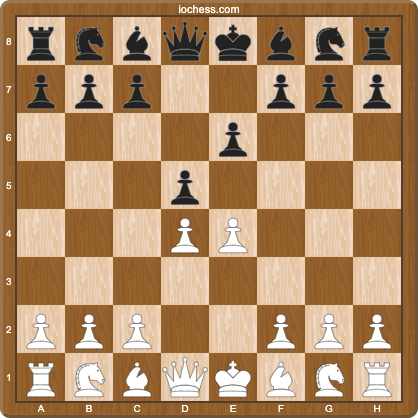
The opening takes its name from the 1834 London-Paris correspondence match, though the theory matured later with analysis of structures from the Advance, Tarrasch, Winawer, and Exchange Variations. These lines produce different pawn chains and piece placements, giving both sides clear, tested plans that have held up from club level to modern grandmaster practice.
Key Structural Elements
Black accepts a slightly cramped setup to gain a stable pawn chain and long-term targets. The c8 bishop can be restricted by the e6 pawn, so French players prioritize freeing it with early development (Winawer's ...Bb4), rerouting (Fort Knox's ...Bd7-c6), or timely pawn breaks like ...c5 and ...f6 to open lines.
The main branches are concrete and well-mapped:
- Advance Variation (3.e5): White builds a kingside-pointing pawn chain
- Tarrasch (3.Nd2): aims for easy development and less theory
- Winawer (3.Nc3 Bb4): creates sharp imbalances with doubled c-pawns
- Exchange (3.exd5): can lead to symmetrical but tricky middlegames
The Advance Variation: 3.e5
In the Advance Variation (1.e4 e6 2.d4 d5 3.e5), White's chain c2-d4-e5 points at Black's kingside. The standard pawn-chain principle (attack the chain at its base) tells Black to play ...c5 to hit d4, then follow with ...Nc6 and ...Qb6 targeting both d4 and b2.
If you're deciding between the French and other fellow 1.e4 responses (Caro-Kann, Sicilian, 1...e5), our overview of opening recommendations against 1.e4 by rating level can help you pick a setup that matches your style before you sink study time into the sharp Advance lines below.
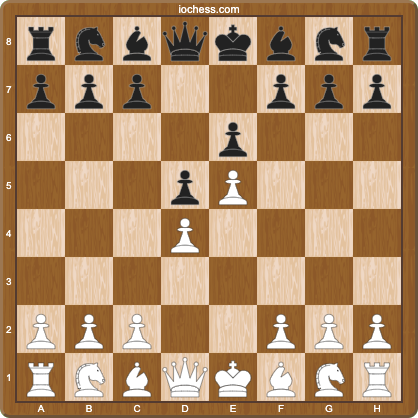
The main theoretical battleground after 1.e4 e6 2.d4 d5 3.e5 c5 4.c3 Nc6 5.Nf3 Qb6 is well-tested at all levels. Black aims for ...cxd4, ...Bd7, and then ...Nge7-f5 to maintain pressure on d4 and reach the dark squares around White's king. The knight on f5 is a key positional anchor in many Advance structures.
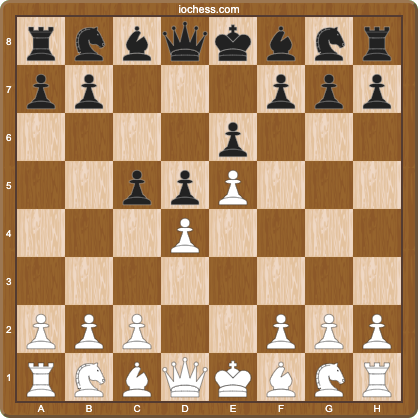
Milner-Barry Gambit, the central tactical battleground. After 1.e4 e6 2.d4 d5 3.e5 c5 4.c3 Nc6 5.Nf3 Qb6 6.Bd3, White voluntarily offers d4 to lure Black into grabbing the pawn while White develops with tempo. The accepted line runs 6...cxd4 7.cxd4 Bd7 8.O-O Nxd4 9.Nxd4 Qxd4. White hopes the bishop on d3, the open c-file, and the e5 wedge generate enough kingside attack to compensate. Modern theory holds that Black is fine with accurate defense, but you must know the precise move order before you accept the pawn.
ELO advice: Below 1400, just learn the plan: ...c5, ...Nc6, ...Qb6, and attack d4. Above 1600, study the Milner-Barry critical line above and the modern 10.Nc3 Qxe5 11.Re1 Qb8 12.Nxd5 attacking try in detail.
The Tarrasch Variation: 3.Nd2
After 1.e4 e6 2.d4 d5 3.Nd2, White avoids the Bb4 pin and prepares a flexible central structure. Black has two main replies. The Open Tarrasch with 3...c5 attacks the center immediately and usually leads to 4.exd5 Qxd5 5.Ngf3 cxd4 6.Bc4 Qd6 7.O-O Nf6 8.Nb3 with isolated queen pawn play after Black recaptures on d4. The Closed Tarrasch with 3...Nf6 4.e5 Nfd7 5.Bd3 c5 6.c3 Nc6 7.Ne2 reaches a French Advance-style structure but with White's knight rerouting via e2 to the kingside.
Black's plan in the Open Tarrasch revolves around quick development: ...Nc6, ...Be7, castle short, then ...b6 and ...Bb7 to activate the light-squared bishop. In the Closed Tarrasch, Black mirrors Advance plans with ...Qb6 and ...f6 breaks at the right moment.
The Winawer Variation: 3.Nc3 Bb4
The Winawer (1.e4 e6 2.d4 d5 3.Nc3 Bb4) is among the most theoretically rich and strategically double-edged French lines. Black pins the knight on c3 and provokes structural changes. After 4.e5 c5 5.a3 Bxc3+ 6.bxc3, White gets the bishop pair and a strong center; Black gets an attack on White's compromised pawn structure with doubled c-pawns and the open b-file.
The McCutcheon Variation (3.Nc3 Nf6 4.Bg5 Bb4) is another fighting system, offering excellent practical chances with 5.e5 h6 6.Bd2 Bxc3 7.bxc3 Ne4, as seen in grandmaster practice.
The Exchange Variation: 3.exd5
After 1.e4 e6 2.d4 d5 3.exd5 exd5, both sides get a symmetrical pawn structure. This often leads to a "boring draw", but only if you don't know the plans. Black should fight with ...Nc6, ...Bd6, ...Nge7-f5, and ...Bf5, activating the light-squared bishop before White can clamp down.
The key setup: 4.Nf3 Bd6 5.Bd3 Ne7 6.O-O O-O 7.Re1 Nbc6 8.c3 Bf5 gives Black a fully harmonious position with the bishop ideally placed on f5, pressuring d3 and controlling key central squares.
Common Traps in the French
Traps favor the player who knows them. Three concrete sequences come up repeatedly at club level:
Trap 1, Milner-Barry Gambit accepted (Advance Variation). After 1.e4 e6 2.d4 d5 3.e5 c5 4.c3 Nc6 5.Nf3 Qb6 6.Bd3 cxd4 7.cxd4 Bd7 8.O-O Nxd4 9.Nxd4 Qxd4, Black has won a pawn and White's compensation is the bishop on d3 and the open c-file. The trap is for White: the natural 10.Nc3 a6 stops Bb5+ and Black consolidates with ...Ne7, ...Nc6 and ...Be7. Know this line before entering the Advance from either side.
Trap 2, Winawer poisoned pawn. After 1.e4 e6 2.d4 d5 3.Nc3 Bb4 4.e5 c5 5.a3 Bxc3+ 6.bxc3 Ne7 7.Qg4 Qc7 8.Qxg7 Rg8 9.Qxh7 cxd4 10.Ne2 Nbc6 11.f4 Bd7, Black accepts the pawn loss to get fast queenside play with ...O-O-O, open g-file, and threats against c3 and e5. If White grabs material without precise follow-up moves, Black's attack breaks through first. Don't enter this line as White without preparation.
Trap 3, Greek Gift in the Tarrasch. After 1.e4 e6 2.d4 d5 3.Nd2 Nf6 4.e5 Nfd7 5.Bd3 c5 6.c3 Nc6 7.Ngf3 cxd4 8.cxd4, if Black castles with 8...O-O? too early without the right defenders, White has the classical Greek Gift sacrifice 9.Bxh7+! Kxh7 10.Ng5+ Kg8 (or Kg6) 11.Qh5 with a dangerous attack (the kingside knight must be on f3, not e2, for Ng5+ to be available). Black must keep the king flexible until the c8 bishop is developed; 8...Qb6 or 8...f6 are safer move orders before castling.
Solving the Light-Squared Bishop Problem
The c8 bishop is a known challenge, but there are reliable fixes:
- Fort Knox setup: ...Bd7-c6 activates the bishop before the center closes
- Winawer: 3...Bb4 develops the bishop immediately, outside the pawn chain
- Exchange line: After 3.exd5 exd5, the bishop comes out on f5 with no problems
- Later fianchetto: ...b6 and ...Bb7 in some Tarrasch structures
Creating Counterplay: The Two Key Breaks
Two breaks carry most of the French's bite:
- ...c5, hits d4, opens the c-file, frees Black's pieces. This is Black's primary weapon in the Advance and Tarrasch.
- ...f6, challenges e5, can open f- and e-files for rooks. Time this after completing queenside development.
Concrete example: After 1.e4 e6 2.d4 d5 3.e5 c5 4.c3 Nc6 5.Nf3 Qb6 6.Bd3 Bd7, Black's plan is ...cxd4, ...Nxd4, then ...Bc5 to threaten ...Nxf3+ followed by ...Qxb2. This queenside pressure, combined with the threat to undermine d4, creates real winning chances.
Grandmaster Practice in the Advance
In Advance Variation games at the top level, Black counters 3.e5 with the typical 3...c5 4.c3 Nc6 5.Nf3 Qb6, then regroups a knight to f5 to hit key dark squares. The standard plan is to activate the light-squared bishop while targeting the d4 base, converting long-term pressure into a favorable endgame. In the sharpest lines after 6.Bd3 cxd4 7.cxd4 Bd7 8.O-O Nxd4 9.Nxd4 Qxd4, Black takes the pawn and uses the active queen plus long-term structural targets to compensate White's piece activity. Both setups remain standard tests of the Advance in modern grandmaster play.
For players who prefer an even sharper fellow 1.e4 defense with similar counterattacking spirit, compare with our guide to the Sicilian Defense for intermediate players, another battle-tested weapon that, like the French, creates imbalanced positions from move one.
Common Misconceptions

"The French Is Passive"
The French often starts with less space, but its counterplay is real. Winawer positions can become highly tactical with opposite-side castling and open c- and g-files. Well-timed ...c5 and ...f6 turns defense into attack when White overextends.
"The Bad Bishop Decides the Game"
The c8 bishop is a challenge, not a fatal flaw. Plans like Fort Knox's ...Bd7-c6, the immediate Winawer ...Bb4, or a later ...b6-...Bb7 activate it reliably. In many games, Black trades that bishop for a key defender or opens lines with ...c5 or ...f6, neutralizing any long-term drawback.
"You Must Memorize Endless Theory"
The French rewards understanding more than deep lines. Knowing how to attack pawn-chain bases, when to play ...c5 or ...f6, and where your pieces belong often beats long memorized sequences. Model games plus a few traps cover a large share of practical decisions.
Practice and Takeaways
Anchor your French repertoire with a clear plan against each major line:
- Vs. 3.Nc3: Play 3...Bb4 (Winawer) for sharp play, or 3...Nf6 4.e5 Nfd7 for positional chess
- Vs. 3.Nd2: Play 3...c5 and fight for the center from move 3
- Vs. 3.e5 (Advance): Learn the ...Qb6 line with ...cxd4 and target d4 aggressively
- Vs. 3.exd5 (Exchange): Develop with ...Bd6, ...Ne7-f5, and ...Bf5
- Play 1...e6 and 2...d5, then hit d4 with ...c5 in Advance and Tarrasch structures.
- Fix the c8 bishop early: Winawer ...Bb4 or Fort Knox ...Bd7-c6 development.
- Use ...f6 to challenge e5, opening lines for rooks and the queen when prepared.
- Study model games to learn standard maneuvering plans in the Advance Variation.
- Below 1400: focus on the Advance line plans. Above 1600: add the Winawer theory.
Micro-action: Pick one main line you face most, load three model games, and play five training games starting from that position against a sparring partner or engine. For a longer-term framework to actually make these lines stick, see our pillar guide on how to build a chess opening repertoire that actually sticks. Once you've nailed the French, zoom out with our complete Black-side decision tree to see how it pairs with your 1.d4 defense.
Want more structure-first openings? Train a repertoire that pairs the French with the Caro-Kann Defense to cover most 1.e4 systems using similar plans and breaks. You can also learn how to retain these lines long-term with spaced repetition for chess openings.
Start building your French Defense repertoire free → Already set up? Jump straight into the French Defense course in the ChessAtlas library to train every main line with FSRS scheduling.
Sources and Further Reading
- French Defence on Wikipedia documents the opening's origin in the 1834 London-Paris match and its main variations.
- Pawn structure on Wikipedia explains the pawn-chain principle of attacking the base, central to French strategy.
- Greek gift sacrifice on Wikipedia covers the Bxh7+ sacrifice that appears in the Tarrasch trap above.
Last updated: Jul 24, 2026


Comments