
The Sicilian Defense: Complete Guide

Train the Sicilian Defense with spaced repetition
Train every variation (Najdorf, Dragon, Sveshnikov, Scheveningen), common traps, and ELO-specific tips on our Sicilian Defense training page, built for players who want to actually remember their lines.
In short
The Sicilian Defense (1.e4 c5) is documented as Black's most popular reply to 1.e4 because it fights for asymmetry and full-point chances from move one. The five major systems are the Najdorf (5...a6), Dragon (5...g6), Sveshnikov (5...e5), Scheveningen (5...e6) and Taimanov (4...Nc6). Najdorf and Dragon suit tactical players, Scheveningen and Taimanov suit maneuvering players, Sveshnikov rewards active piece play. Pick one, learn its plans, and drill it daily.
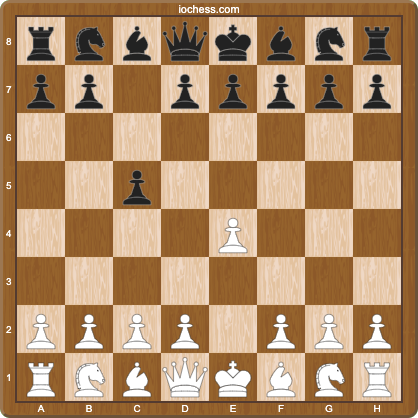
Facing 1.e4 and tired of equal positions with Black? The Sicilian Defense begins with 1...c5, immediately creating an asymmetrical pawn structure that gives Black an unbalanced fight rather than a symmetric, equalizing position. The Sicilian plays for the full point rather than settling for equality. According to the Wikipedia entry on the Sicilian Defence, it is the most popular and best-scoring response to 1.e4 at the highest levels of play. This guide shows you the structure, plans, and variations behind those results. For broader context, see The 5 Best Chess Openings for Club Players and the best response to 1.e4 by rating level.
Why 1...c5? The Strategic Logic
When Black plays 1...c5, the key strategic point is: the c5 pawn controls d4 without helping White build an ideal center with e4 and d4. This forces White to choose between:
- The Open Sicilian (2.Nf3 and 3.d4 cxd4 4.Nxd4), the main battleground, leading to sharp tactical fights
- Anti-Sicilian systems: the Alapin (2.c3), the Grand Prix Attack (2.Nc3 and 3.f4), the Closed Sicilian (2.Nc3 and 3.g3), and the Rossolimo (2.Nf3 Nc6 3.Bb5)
Not sure the Sicilian is right for your style? Two more approachable 1.e4 alternatives worth comparing are the French Defense (1...e6 and ...d5), which offers similar counterattacking chances with less theory, and the Caro-Kann Defense (1...c6), the more solid structure-first alternative. Both reach rich middlegames without the Sicilian's memorization burden. If you want a complete repertoire that prepares answers to every White system, see How to Beat the Sicilian Defense for the mirror perspective.
Core Ideas and Structures
The defining feature of the Sicilian is asymmetry that resists simplification. Typical structures feature White's pawn on d4 versus Black's pawn on d6, and a half-open c-file for Black. This setup often encourages opposite-side castling, where White advances f4-f5 or g4-g5 and Black counters with ...b5-b4 or ...a5-a4, creating fast attacks that reward accurate calculation.
The Open Sicilian: 2.Nf3 followed by 3.d4
After 1.e4 c5 2.Nf3 Nc6 (or d6 or e6) 3.d4 cxd4 4.Nxd4, the game becomes highly tactical. Black's plan depends on the system chosen:
- Najdorf (4...Nf6 5.Nc3 a6): the most popular Sicilian, named after Miguel Najdorf and, as documented in its Wikipedia entry on the Najdorf Variation, employed extensively by Bobby Fischer and Garry Kasparov throughout their careers. The ...a6 move prepares ...e5 or ...b5 and gives Black maximum flexibility.
- Dragon (5...g6): Black fianchettoes the g7 bishop on the long diagonal. Against the Yugoslav Attack (6.Be3 Bg7 7.f3 O-O 8.Qd2 Nc6 9.O-O-O), it becomes a race between White's kingside attack and Black's queenside counterplay.
- Classical (5...Nc6): solid and flexible, leading to rich strategic battles.
- Scheveningen (5...e6): positional system where Black builds a solid ...d6-e6 pawn structure and fights for ...d5 later.
- Sveshnikov (5...e5): Black accepts a backward d6 pawn and a weak d5 square in exchange for active piece play and central space. White targets the d5 outpost while Black pursues queenside counterplay.
- Kan (2...e6 3.d4 cxd4 4.Nxd4 a6): Black plays ...a6 before developing knights, keeping maximum flexibility. Follow-up typically involves ...Nf6, ...Qc7, ...Bd6 (or ...Bb4) with a hedgehog-style setup.
- Taimanov/Paulsen (2...e6 3.d4 cxd4 4.Nxd4 Nc6): Black develops the c6 knight before committing the king's knight, aiming for ...Qc7, ...a6, ...Nge7 or ...Nf6 with flexibility between hedgehog and active central play.
Why the Sicilian Defense Matters for Intermediate Players

The Sicilian is known for giving Black unbalanced winning chances rather than mere equality. As the Wikipedia overview of the Sicilian Defence documents, the opening produces asymmetrical positions in which both sides keep winning chances, and it has the best statistical results for Black among replies to 1.e4. The half-open c-file, the asymmetric pawn structure, and the lack of early exchanges all preserve the tension that lets a stronger player outplay a weaker one. The Najdorf in particular is a frequent choice at club level, and per the Najdorf Variation reference it is one of the most respected and deeply analyzed of all chess openings, offering competitive chances for both colors and opportunities for active play rather than passive defense.
Competitive Advantages for Intermediate Players
The Sicilian builds tactical vision through forcing lines and typical breaks like ...d5 and ...e5 that must be timed precisely. It also fits many styles:
- Attacking players: Dragon, Najdorf with ...e5
- Positional players: Scheveningen, Taimanov, Classical
- Universal players: The Kan (2...e6 3.d4 cxd4 4.Nxd4 a6) works against most setups
How the Sicilian Defense Works
Phase 1: Development
After 1.e4 c5 2.Nf3, Black often plays ...d6, ...Nf6, and either ...Nc6 or ...e6. Black can look slower to develop, but the semi-open c-file compensates by offering long-term targets. The c-file pressure via rooks on c8 is one of Black's most consistent weapons throughout the game.
Phase 2: Central Tension
In Open lines after 3.d4 cxd4 4.Nxd4, the d4-square becomes a focal point. Black pressures the d4 knight and prepares breaks:
- ...d5 in one move (usually after preparation), the typical pawn break that levels the position
- ...e5 to gain space and push the d4 knight, used in Sveshnikov and Najdorf structures
- ...b5 queenside expansion, prepares further ...b4 and ...a5-a4 pressure
Phase 3: Wing Attacks
With opposite-side castling common, pawn storms begin. White pushes f4-f5 or g4-g5, while Black hits with ...b5-b4 supported by ...a5-a4 and rooks on c8 and b8. Against the Najdorf, one of White's sharpest attacking systems is the Sozin Attack (6.Bc4), popularised by Bobby Fischer on the White side. Black must understand its idea (Bc4 eyes f7, then f4 and a kingside storm) to neutralise it, typically with accurate ...e6 and ...Be7 development. Timing these pawn thrusts decides the race.
The Sveshnikov in Depth: Active Piece Play for the d5 Square
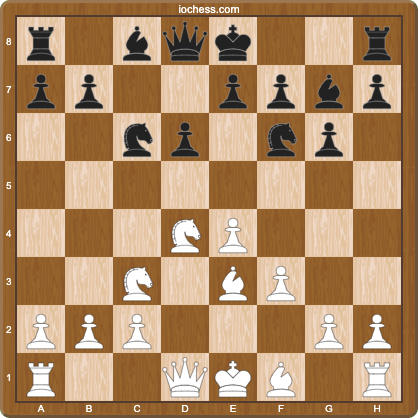
The Sveshnikov (1.e4 c5 2.Nf3 Nc6 3.d4 cxd4 4.Nxd4 Nf6 5.Nc3 e5) deserves its own breakdown because it inverts the usual Sicilian trade-off. After 6.Ndb5 d6 7.Bg5 a6 8.Na3 b5, Black accepts a permanent backward d6-pawn and a weak d5-square in exchange for active piece coordination and the bishop pair after the typical 9.Bxf6 gxf6 exchange.
The strategic question is: can White exploit the d5 outpost faster than Black can roll the queenside with ...b5-b4, ...a5, and ...Bb7 pressure? At club level (1400 to 1900) the answer is usually no, because exploiting d5 requires a precise plan with Nc4, Nbd5, and tactical accuracy that most opponents miss. The Sveshnikov is therefore one of the more pragmatic Sicilians under 2000 Elo: it converts to a strategically rich middlegame where Black's plan is concrete (queenside pawns, ...f5 break, ...Bg7 fianchetto) and White's plan requires deeper opening study to execute.
Magnus Carlsen has used the Sveshnikov in World Championship play, including the 2018 match against Fabiano Caruana documented in the World Chess Championship 2018 record, demonstrating that even at the 2800 level the system holds up structurally. For club players, that translates to: pick the Sveshnikov when you want active piece play, are willing to live with one weak pawn, and want to force White into a concrete plan.
Practical Examples
The Dragon: Winning the Race
After 1.e4 c5 2.Nf3 d6 3.d4 cxd4 4.Nxd4 Nf6 5.Nc3 g6 6.Be3 Bg7 7.f3 O-O 8.Qd2 Nc6 9.O-O-O d5!, Black launches the critical counterattack. This ...d5 break is the Dragon's main weapon against the Yugoslav Attack. If White takes 10.exd5 Nxd5 11.Nxc6 bxc6, Black's active rooks and piece activity give compensation. The race between White's h-pawn storm and Black's queenside attack decides the game.
The Closed Sicilian in Practice
The Closed Sicilian (1.e4 c5 2.Nc3 followed by g3, Bg2, and f4-f5) has been employed by many grandmasters seeking to avoid heavy Open Sicilian theory. Plans with g3, Bg2, and f4-f5 restrict Black's central breaks and support a safe kingside buildup. This approach forces Black to solve long maneuvering tasks rather than immediate tactics.
ELO-Specific Advice
- Under 1200: Learn the Scheveningen structure (...e6, ...d6), it's the safest and teaches fundamental plans.
- 1200-1600: Add the Dragon or Classical. Study the key ...d5 break timing and typical rook placements (...Rc8, ...Rd8).
- 1600+: Invest in the Najdorf. Learn the Poisoned Pawn variation (6.Bg5 e6 7.f4 Qb6!?) and the English Attack (6.Be3 e5).
Common Traps in the Sicilian
Trap 1, Smith-Morra Siberian Trap. After 1.e4 c5 2.d4 cxd4 3.c3 dxc3 4.Nxc3 Nc6 5.Nf3 e6 6.Bc4 Qc7 7.O-O Nf6 8.Qe2 Ng4 9.h3?? Nd4!, White is already lost: the threat is 10...Nxf3+ followed by ...Qh2#, and 10.Nxd4 runs into 10...Qh2# at once. The lesson: in the Smith-Morra (an Anti-Sicilian gambit), Black's queen on c7 combines with the ...Ng4-d4 leap to generate a sudden mating attack on h2 - the careless 9.h3?? loses on the spot.
Trap 2, Najdorf Bxe6 sacrifice trap. In the English Attack (1.e4 c5 2.Nf3 d6 3.d4 cxd4 4.Nxd4 Nf6 5.Nc3 a6 6.Be3 e5 7.Nb3 Be6 8.f3 h5), an unprepared Black who plays a careless ...Nbd7 instead of ...Be7 can be hit by 9.Nd5! Nxd5 10.exd5 and the Bb6 manoeuvre with permanent positional pressure on the queenside. Always know your move order in the English Attack: ...Be7 before any knight move covers the dark squares.
Trap 3, Dragon h-pawn quick attack. In the Yugoslav Attack, if Black delays castling with ...Nc6 before ...O-O, White can play 9.O-O-O Bd7 10.h4! and the h-pawn storm starts before Black is castled. Black is then forced into ...h5 on move 10 to slow it down, conceding the dark squares. The fix: in the Dragon, castle immediately on move 7 with ...O-O, then play ...Nc6.
Trap 4, Open Sicilian opposite-side castling tempo trap. When you castle queenside in any Open Sicilian and the opponent has castled kingside, every single tempo matters in the pawn race. A common club-level mistake on the White side is O-O-O Nbd7 Kb1? (a slow prophylactic king move) when the immediate g4! would have started the attack one tempo earlier. The lesson: in opposite-side castling, count tempi for the pawn storm before any "useful" move.
Common Misconceptions About the Sicilian Defense

Misconception 1: You must memorize thousands of moves
Concepts matter more than deep theory at club level. Learning the c-file pressure, typical breaks (...d5, ...e5, ...b5), and piece activity covers most positions you will face. Model games and structure-based plans are more valuable than engine lines from deep Najdorf sidelines. For a broader study framework, see our pillar guide on how to build a chess opening repertoire that actually sticks.
Misconception 2: It is only for tactical players
Positional systems exist and thrive. The Scheveningen uses ...e6 and ...d6 to control key squares and delay commitment. The Taimanov (1.e4 c5 2.Nf3 e6 3.d4 cxd4 4.Nxd4 Nc6) aims for a later ...d5 break with flexible development. These systems give Black a solid foundation without sacrificing practical winning chances.
Misconception 3: You will always be attacked
Variation choice sets the tone. The Closed Sicilian and Classical lines often give Black a solid setup. The Kan (2...e6 3.d4 cxd4 4.Nxd4 a6) is one of the most flexible and safest Sicilians. The c5 pawn disrupts White's ideal pawn center, a defensive function that buys time for counterplay on the c-file and queenside.
Key takeaways:
- 1.e4 c5 creates an asymmetrical structure, a semi-open c-file for Black, and frequent queenside play against White's kingside plans.
- As documented in the Sicilian Defence reference, the opening has the best statistical results for Black among replies to 1.e4.
- Pick systems that fit your style: Dragon and Najdorf for tactics, Scheveningen and Taimanov for maneuvering, Sveshnikov for active piece play.
- Time central breaks like ...d5 and ...e5 precisely, and use the c-file to support middlegame activity.
- In opposite-side castling races, every tempo counts. Avoid slow prophylactic moves when the pawn storm is the priority.
Micro-action: choose one variation today, such as the Scheveningen or Dragon. Study three annotated model games and practice key positions with spaced repetition. You can also use game analysis to identify which Sicilian lines you are struggling with in practice. To see how the Sicilian fits next to the Caro-Kann, French, and the major Indian defenses, browse our Black openings hub by rating.
Master the Sicilian with Spaced Repetition
The Sicilian Defense rewards deep preparation and precise recall - exactly what spaced repetition is built for. ChessAtlas helps you train your Sicilian repertoire line by line, then lock it in with FSRS spaced repetition so you remember even the rare sidelines a year later. Import your games to find where you deviate from your prep, and turn each deviation into a new training position. For the deeper "why" behind this study method, see the complete FSRS guide for chess openings.
Sources and Further Reading
The historical, statistical, and biographical claims in this guide are drawn from the following authoritative, openly verifiable references:
- Sicilian Defence - Wikipedia: the opening's status as the most popular and best-scoring reply to 1.e4, and its asymmetrical winning chances for both sides.
- Sicilian Defence, Najdorf Variation - Wikipedia: the history of the Najdorf and its extensive use by Bobby Fischer and Garry Kasparov.
- World Chess Championship 2018 - Wikipedia: Magnus Carlsen's repeated use of the Sveshnikov against Fabiano Caruana.
Last updated: Jul 24, 2026


Comments