
How to Beat the Caro-Kann Defense: White's Best Weapons in 2026

Disclosure: ChessAtlas is our product. This guide is a White-perspective repertoire article against the Caro-Kann; it works with any platform. Readers should weigh the perspective accordingly.
The Caro-Kann Defence (1.e4 c6) is among the most reliable defenses Black has. Magnus Carlsen, Anatoly Karpov, Vladimir Kramnik, and Fabiano Caruana have all used it at the highest level, in part because the structure is forgiving, Black's bishop escapes the pawn chain via ...Bf5, and plans stay clear. For White, this means patient positional play often converges to a balanced position.
That does not mean there is no weapon. Three main systems give White real practical chances at club level. The correct choice depends on your style, your theory budget, and how often you face the Caro-Kann. This article walks through all three.
If you want Black's perspective first, see our Caro-Kann landing page and the Caro-Kann complete guide.
White's Three Real Weapons
1. Advance Variation (3.e5): the practical club-level choice
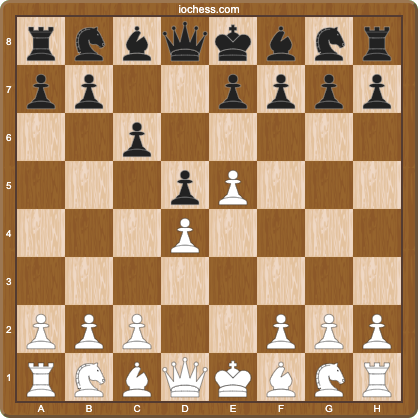
Main line: 1.e4 c6 2.d4 d5 3.e5 Bf5 4.Nf3 e6 5.Be2 (or 5.Bd3 inviting the bishop trade) and White plays a slow maneuvering game with plans like Nbd2-b3 or the Nf1-g3-e2 knight reroute.
Pros: easy to understand, low theory (10 to 12 moves of key tabiyas cover most lines), clear plans (kingside space, pressure on f5, eventual c4 break). Fits any style.
Cons: Black equalizes with accurate play, especially with the modern 3...c5 hitting d4 immediately. Expect draws against well-prepared opponents.
Recommended for: 1200 to 1900 ELO players who want a single reliable system.
2. Classical Variation (3.Nc3 dxe4 4.Nxe4): maximum theoretical ambition
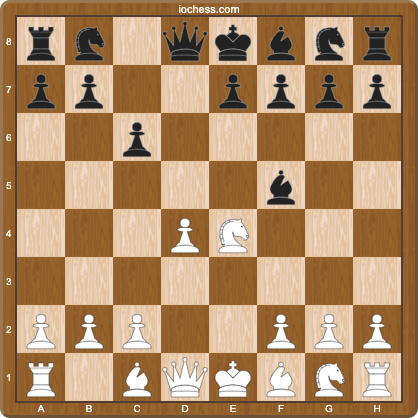
Main line: 1.e4 c6 2.d4 d5 3.Nc3 dxe4 4.Nxe4 Bf5 5.Ng3 Bg6 6.h4 h6 7.Nf3 Nd7 8.h5 Bh7 9.Bd3 Bxd3 10.Qxd3. White has a small but persistent spatial edge, the better bishop after the light-squared trade, and kingside attacking potential.
Pros: One of the strongest tries for a White advantage. The Classical Variation has long been a mainstay at top level, including in Karpov's praxis with both colors.
Cons: Heavy theory. Expect 10 to 15 moves of memorization per Black sideline (Karpov Variation with ...Nd7, Classical with ...Bf5, the Accelerated Panov via ...Nf6).
Recommended for: 1800+ with time and interest to study.
3. Panov-Botvinnik Attack (3.exd5 cxd5 4.c4): transpose to IQP
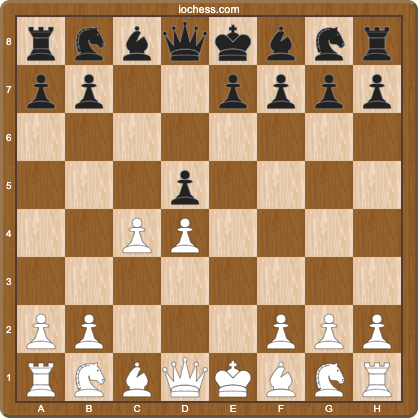
Main line: 1.e4 c6 2.d4 d5 3.exd5 cxd5 4.c4 Nf6 5.Nc3 e6 6.Nf3 Bb4 7.Bd3 0-0 8.0-0 dxc4 9.Bxc4 and White has Isolated Queen's Pawn (IQP) dynamics. The Panov-Botvinnik Attack is named after Vasily Panov and Mikhail Botvinnik.
Pros: Avoids pure Caro-Kann solidity. Typical IQP themes (Ne5, Bxh7+ sacrifices, rook lift Re3-h3) produce sharp tactical games that suit attacking players. The opening bypasses most of the Caro-Kann specialist's home preparation.
Cons: IQP can go wrong if White plays passively. Requires understanding IQP middlegames, not just move orders.
Recommended for: 1500 to 2200 tactical players.
What to Avoid
The plain Exchange Variation (3.exd5 cxd5 without 4.c4). After 1.e4 c6 2.d4 d5 3.exd5 cxd5 4.Bd3 and quiet development, Black equalizes easily with ...Nc6 and ...Bg4. No advantage, no fun. Either play the Panov (4.c4) or choose a different system.
The Two Knights with 2.Nc3 + 3.Nf3. Flexible but rarely better than the mainlines, and invites transpositions into positions you may not want.
Obscure gambits like 3.Nc3 dxe4 4.Bc4. Exists as a surprise weapon, contains the trap 7.Ne5!? Bxd1?? 8.Bxf7# if Black blunders, but objectively dubious against accurate play. Keep it as a backup, not a main line.
Typical Black Plans to Prepare Against
- ...c5 break (Advance): the modern line starting with 3...c5 or an early ...c5 in all structures hits the d4 pawn chain at its base. White must be ready with c3 or dxc5 plans.
- ...Bf5 + ...e6 + ...Qb6: the Caro-Kann's "hit b2" plan. White needs a concrete reply (often Qb3 offering a trade, or Rb1 + b3).
- ...Nd7-f6 regrouping (Karpov Classical): Black delays the bishop development for flexibility. Plays slowly, aims for ...e6, ...Bd6, ...Qc7, eventually ...e5.
- ...b6 + ...Ba6 in the Panov: trade the light-squared bishops to simplify the IQP position.
Common White Mistakes
Drifting in the Advance
If you pick the Advance and then play Bd3, O-O, c3, Nbd2 without a kingside plan, Black equalizes via ...c5, ...Nc6, ...Qb6 and you end up defensively cramped on the queenside. Commit to the kingside expansion (f4 later, rook lifts via Re1-e3-g3, knight reroute to g3 via Nf1) or switch systems.
Playing the Exchange without 4.c4
Pure Exchange without c4 is the weakest third option for White. Either commit to the Panov (4.c4) or choose the Advance / Classical.
Hanging onto Bishops in the Classical
After 5.Ng3 Bg6 6.h4 h6 7.Nf3 Nd7 8.h5 Bh7 9.Bd3, trade bishops with 9...Bxd3 10.Qxd3 is standard. Refusing the trade (White plays Bc4 instead of Bd3) forfeits the main idea of the line. Stick to Bd3.
Rushing the Panov's d4-d5 break
In IQP positions, d4-d5 is a key idea but only when piece activity supports it. Premature d5 exchanges the IQP for no compensation. Wait until Black misplaces a piece or the d-file opens.
Which System to Pick
- Under 1500: Advance (3.e5). Simple plans, low theory.
- 1500 to 1800 tactical players: Panov-Botvinnik (3.exd5 cxd5 4.c4). IQP dynamics, active piece play.
- 1500 to 1800 positional players: Advance with kingside expansion.
- 1800+: Classical (3.Nc3 dxe4 4.Nxe4) for best objective chances. Takes theory investment.
- Backup surprise: 3.Nc3 dxe4 4.Bc4 gambit for online blitz. Only as a one-time trick.
Tools to Drill Your Anti-Caro-Kann
Once chosen, drill with FSRS-based spaced repetition (ChessAtlas or Chessdriller). 10 to 15 minutes daily on the 15 to 20 key positions is usually enough to have the first 10 moves automatic. For the full tools landscape see Best Chess Opening Trainers 2026.
Your Micro-Action Today
Pick one system from above. Write the first 10 moves down on paper. Play through a Lichess master database game in the line. Drill those 10 moves tomorrow. In two weeks the Caro-Kann stops being a problem.
For broader preparation context, see How to Build a Chess Opening Repertoire That Actually Sticks and our rating-by-rating depth guide. Or create a free ChessAtlas account and start drilling your anti-Caro-Kann lines immediately.
Sources and Further Reading
Last updated: Jul 24, 2026


Comments