Best Response to 1.d4 by Rating Level

Table of contents
At master level, 1...Nf6 and 1...d5 are by far the most common replies to 1.d4, yet those two moves branch into very different systems with different study commitments. Picking the right response to 1.d4 depends on your rating, study time, and style. This guide is a decision framework by rating band, pick one here, then follow the linked deep-dive article for mainlines, model games, and traps. For the broader system, how this fits into choosing and drilling a complete repertoire, see How to Build a Chess Opening Repertoire That Actually Sticks. You can also browse all Black openings against 1.d4 in our trainable opening library.
Quick Recommendations by Rating Level
- Under 1500 Elo, Queen's Gambit Declined (1.d4 d5 2.c4 e6). Classical center, easy development, few early tactical landmines.
- 1500 to 2200 Elo, Slav (1.d4 d5 2.c4 c6) or flexible 1...Nf6 moving toward Nimzo-Indian or Queen's Indian.
- 2200+ Elo, specialize in the Nimzo-Indian and related Indian defenses for winning chances against prepared opponents.
Why Does Choosing the Right Response Matter?
Opening choice affects results differently at different rating bands. In practice, complex systems that reward masters tend to punish club players, because they collapse on small inaccuracies the moment the opponent leaves book. For a newer player, a solid structure with clear plans is worth more than a theoretically sharper line.
The Queen's Gambit Declined with 1.d4 d5 2.c4 e6 3.Nc3 Nf6 reinforces center control and king safety without early tactical blowups. Typical plans, ...c5 against the Exchange, ...e5 in certain lines, build pattern recognition that transfers to other openings.
As ratings rise, opponents prepare deeper and equalize faster. The Nimzo-Indian is a frequent choice at master level because it creates concrete imbalances, doubled c-pawns for White versus activity and the bishop-pair trade for Black, while keeping risk manageable and preparation meaningful. For the deep dive, see the Nimzo-Indian Defense complete guide.
How These Defenses Work by Rating

For Beginners (Under 1500 Rating): Queen's Gambit Declined
Main line: 1.d4 d5 2.c4 e6
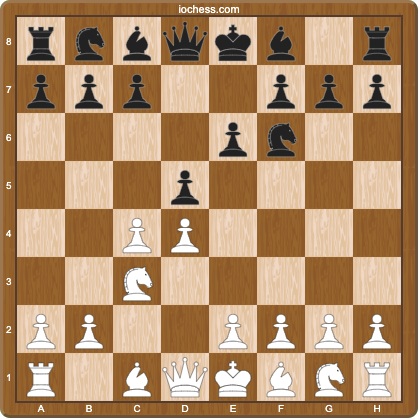
The QGD leads to familiar development, 3.Nc3 Nf6 4.Bg5 Be7 5.e3 O-O. The c8 bishop typically emerges via ...b6 and ...Bb7, or after ...c5 opens the position. Learn two core pawn breaks, ...c5 against the Exchange and ...e5 in select structures, and you will consistently reach safe, playable middlegames. Our Queen's Gambit Declined opening page collects the Orthodox, Lasker, Tartakower, and Cambridge Springs variations side by side.
Common early traps are limited, which protects beginners from quick disasters. The structure teaches useful themes including minority attacks after 3.cxd5 exd5 and typical knight routes to e4 or f5 once the center clarifies. In the Exchange model, Black learns ...Re8, ...Bd6, and timely ...Ne4 to trade minor pieces and relieve pressure. If White instead allows 2...dxc4, see our Queen's Gambit Accepted opening page for a sharper equalizing route that also wins club-level points against imprecise White play. Full Queen's Gambit guide.
For Intermediate Players (1500 to 2200 Rating): Slav Defense
Main line: 1.d4 d5 2.c4 c6
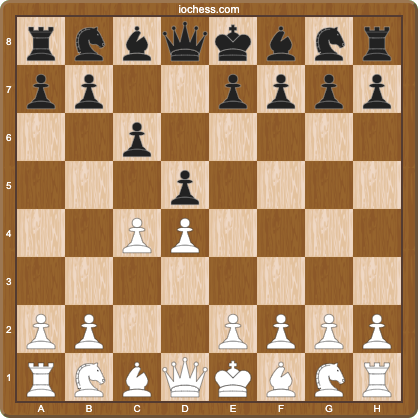
The Slav Defense keeps the c8 bishop's diagonal open and offers multiple plans. After 3.Nf3 Nf6 4.Nc3 dxc4, Black can hold the pawn with ...b5 and expand with ...a5, or play ...e6 and ...c5 for central counterplay. The bishop often develops to f5 or g4, creating quick piece activity.
The Chebanenko Slav (3.Nc3 a6) is a modern favorite: the little pawn move supports ...b5 and targets the c4 pawn early. In practice, unprepared White players drop c4 after ...b5 or get hit by ...b4 attacking the c3 knight. Black also has resources like ...Bg4 and ...e6, reaching structures where queenside space gains matter in the middlegame.
Another strong option is the Nimzo-Indian setup via 1...Nf6 and 2...e6, meeting 3.Nc3 with 3...Bb4. It pressures e4 and d5 while avoiding early commitments. Starting with 1...Nf6 preserves flexibility for Nimzo-Indian, Queen's Indian, or even King's Indian setups based on White's choices. For players wanting sharper counterplay with ...g6 and ...e5 ideas, our King's Indian Defense opening page maps the Classical, Sämisch, and Fianchetto branches.
For Advanced Players (2200+ Rating): Nimzo-Indian
Main line: 1.d4 Nf6 2.c4 e6 3.Nc3 Bb4
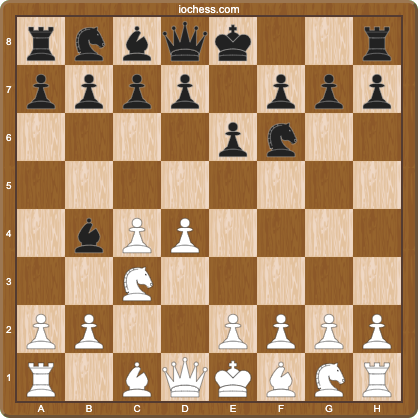
The Nimzo-Indian Defence is a workhorse at elite level. After 4.e3 O-O 5.Bd3 d5, Black aims for activity with ...c5 and a well-timed Bxc3, trading bishops for structural targets on c3 and c4. These positions feature precise move orders and many transpositions to Queen's Indian and Ragozin structures. Our Nimzo-Indian Defense opening page organizes the Rubinstein, Classical, Leningrad, and Sämisch into side-by-side branches, and our long-form Nimzo-Indian Defense complete guide walks through the plans, model games, and traps for both colors.
In the Rubinstein line 4.e3 O-O 5.Bd3 d5 6.Nf3 c5, Black plays for central tension and piece activity. Model plans include ...dxc4 followed by ...b6 and ...Bb7, or doubling rooks on the c-file against c3 and c4 weaknesses. Typical assessments hover around equality, with winning chances for both sides depending on whose plan lands first.
Preparation depth is essential at this level. Serious prep with engines and master games lets you specialize in Rubinstein, Karpov, or Kasparov systems and uncork novelties in known lines. The resulting middlegames keep winning chances against well-prepared opponents.
A Note on the London System
Many 1.d4 players also need to know how to meet the London System when they face it from the other side. Our London System opening page covers the main Black setups (...c5, ...Qb6, the King's Indian setup with ...g6) so you have a concrete response ready when White avoids mainline theory. For a complete anti-London toolkit, see How to Beat the London System.
Common Misconceptions About Responses to 1.d4
Misconception: You Must Play the "Best" Opening
Aggregate scoring statistics can mislead if you ignore rating effects. Some openings score well for masters but only moderately for club players due to complexity. Choose the line you understand, with clear plans and pawn breaks you can explain to yourself.
Misconception: Simpler Openings Won't Work at Higher Levels
Sound structures scale with knowledge. The Queen's Gambit Declined appears regularly in elite events, where Black uses ideas like the Lasker Defense and well-timed ...c5 to equalize. What changes is depth of preparation and precision, not the opening's validity.
Misconception: You Should Learn Multiple Defenses Immediately
Splitting study across three systems delays progress. Master one defense first, then add a second once the patterns are automatic. For depth guidance by rating, see How Deep Should You Learn Your Openings?
Building Your 1.d4 Response Repertoire
Match your choice to rating and goals. Under 1500, prefer the Queen's Gambit Declined for structure and safety. Between 1500 and 2200, play the Slav or a flexible 1...Nf6 repertoire with Nimzo-Indian options. Above 2200, specialize in mainline Nimzo-Indian theory to create winning imbalances. Both 1...Nf6 and 1...d5 are trusted territory, master games are full of them. For the broader Black-side decision tree across both 1.e4 and 1.d4, see our complete Black openings guide by rating.
- Under 1500, Queen's Gambit Declined. Learn ...c5 and ...e5 breaks and practice the Exchange structure.
- 1500 to 2200, Slav or 1...Nf6. Study ...dxc4 and ...b5 plans, and develop the c8 bishop early.
- 2200+, specialize in the Nimzo-Indian. Prepare Rubinstein structures and target c-pawn weaknesses with active pieces.
- Track results by line, note problem positions, and update your files after each serious game.
- Study model games for each structure, focusing on pawn breaks, typical piece trades, and endgame targets.
Micro-action: Pick one defense today and save a five-line file with the main moves, two key plans, and three model games. Drill five tactics from those games and play two rapid tests. Create your free ChessAtlas account to load your chosen defense into the trainer and schedule daily reviews.
For your Black repertoire against 1.e4, see Best Response to 1.e4 by rating level. To keep whichever lines you choose from fading between games, set them up in spaced-repetition training.
Sources and Further Reading
Last updated Jul 24, 2026