Orthodox Defense
1.d4 d5 2.c4 e6 3.Nc3 Nf6 4.Nf3 Be7 5.Bg5
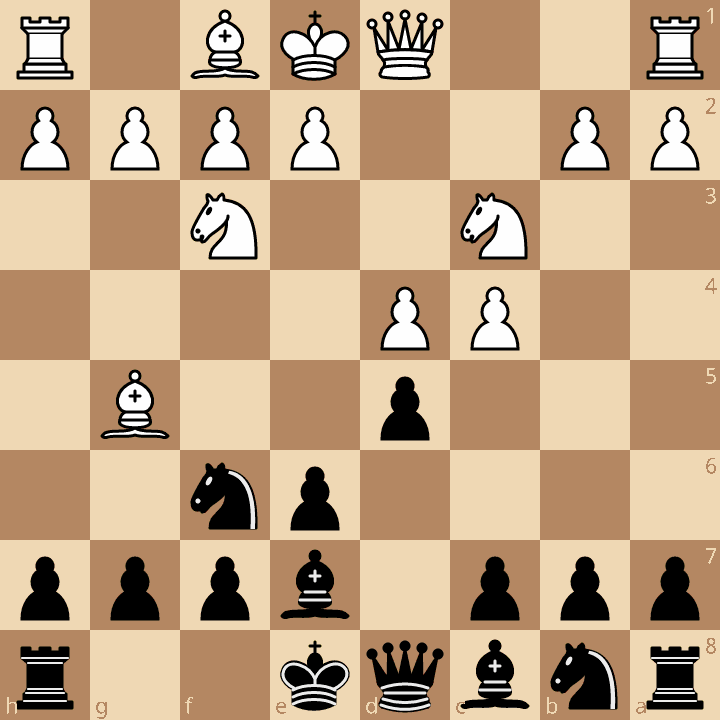
The main line. After 5...O-O 6.e3 h6 7.Bh4, Black plays ...b6 (Tartakower) or ...Nbd7 (Orthodox main). Classical and solid.
The bulletproof answer to 1.d4. Rock-solid structure and World Championship pedigree.
1.d4 d5 2.c4 e6
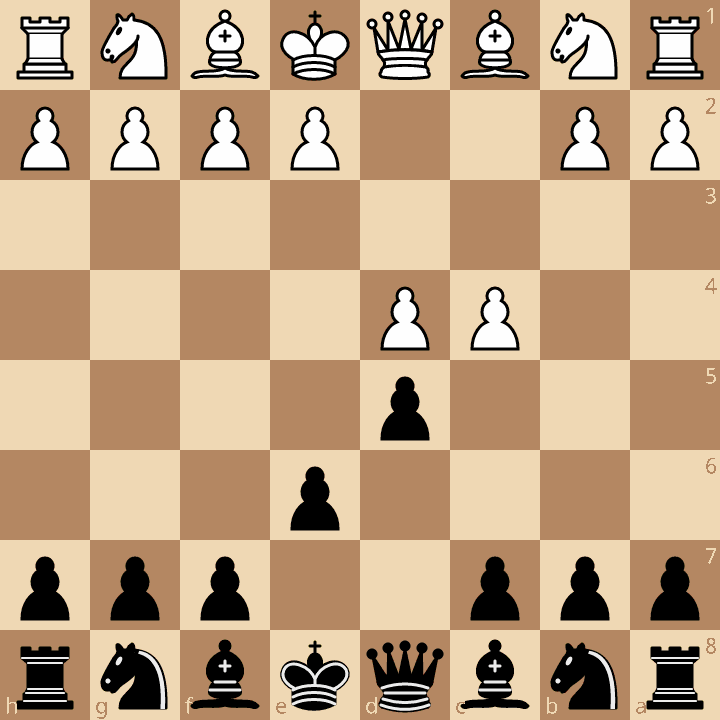
The Queen's Gambit Declined (1.d4 d5 2.c4 e6) is one of Black's most reliable defenses. By supporting d5 with e6, Black maintains a central foothold and avoids the Queen's Gambit Accepted complications. The QGD has been a staple of World Championship chess since the very first title match (Steinitz-Zukertort 1886), from Capablanca to Carlsen — Alekhine-Capablanca 1927 had 32 of 34 games in the QGD. Main lines include the Orthodox Defense, Tartakower Defense, Cambridge Springs, and the rock-solid Lasker Defense. Perfect for players who want structure over chaos against 1.d4.
Each variation below comes with a diagram and the main plan. Click "Train this opening" to drill every line with spaced repetition.
Want to drill the Queen's Gambit Declined from memory? Practice your openings move by move in the free opening trainer, then come back to the variations you missed.
1.d4 d5 2.c4 e6 3.Nc3 Nf6 4.Nf3 Be7 5.Bg5
The main line. After 5...O-O 6.e3 h6 7.Bh4, Black plays ...b6 (Tartakower) or ...Nbd7 (Orthodox main). Classical and solid.
1.d4 d5 2.c4 e6 3.Nc3 Nf6 4.cxd5 exd5
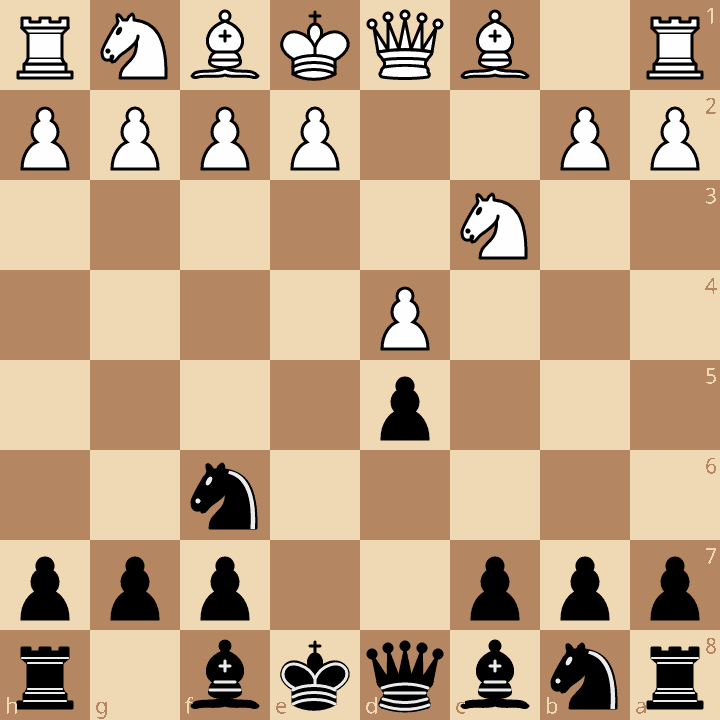
White aims for the minority attack (b2-b4-b5-bxc6). Black must counter with kingside activity...f6 and ...e5, or a rook lift ...Re8-e6.
1.d4 d5 2.c4 e6 3.Nc3 Nf6 4.Nf3 Be7 5.Bg5 h6 6.Bh4 O-O 7.e3 Ne4
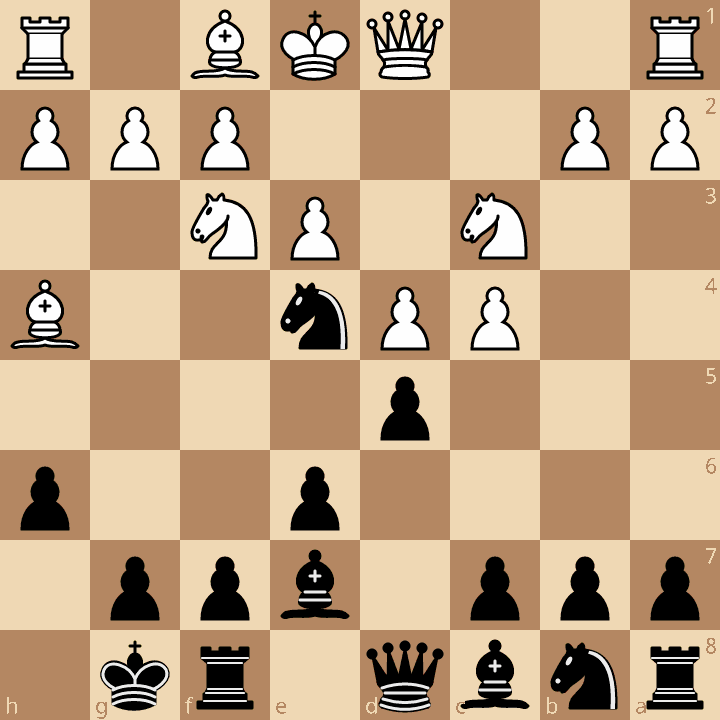
Black simplifies by exchanging bishops on e7. After 8.Bxe7 Qxe7 9.Qc2 Nxc3 10.Qxc3, Black has traded pieces and eased the position.
The QGD is one of the easiest defenses to learn, just develop pieces to their natural squares. Focus on the Orthodox Defense main line.
Add the Lasker Defense for simplification. Against the Exchange Variation, learn the minority attack defense with ...f6-...e5 or rook lifts.
Study the Cambridge Springs and Tartakower for flexibility. Choose your QGD subsystem based on White's move order.
Yes, one of the most beginner-friendly Black defenses. Natural piece development, clear plans, and lower theory than the King's Indian or Grünfeld. A lifetime defense for many players.
After the Exchange Variation (4.cxd5 exd5), White plays b2-b4-b5 to attack Black's c6 pawn, creating a weak isolated c-pawn. Petrosian and Karpov were model practitioners of this plan. Black counters with kingside activity.
QGD for solid structure and slower strategic play. QGA for active pieces and faster development (at the cost of giving up the center temporarily). Both are fully playable at every level.
The Orthodox keeps pieces on the board with ...Nbd7 and prepares ...c5. The Lasker Defense exchanges pieces early with ...Ne4, simplifying the position. Lasker = drawing tendency; Orthodox = rich middlegame play.
Constantly, at every World Championship. Carlsen, Anand, Kramnik, and Caruana have all used it. The Tartakower Defense (6...h6 7.Bh4 b6) and Orthodox main lines remain fixtures of elite chess.
Accept the gambit pawn and get an open, playable middlegame. A reliable Black defense.
The ultimate low-maintenance opening. One setup against everything.
Aron Nimzowitsch's hypermodern masterpiece. Control the center with pieces, not pawns.
Every variation above is a drill on ChessAtlas. Spaced repetition schedules each move so you never forget a line again. Free to start, no credit card.