Orthodox Defense
1.d4 d5 2.c4 e6 3.Nc3 Nf6 4.Nf3 Be7 5.Bg5
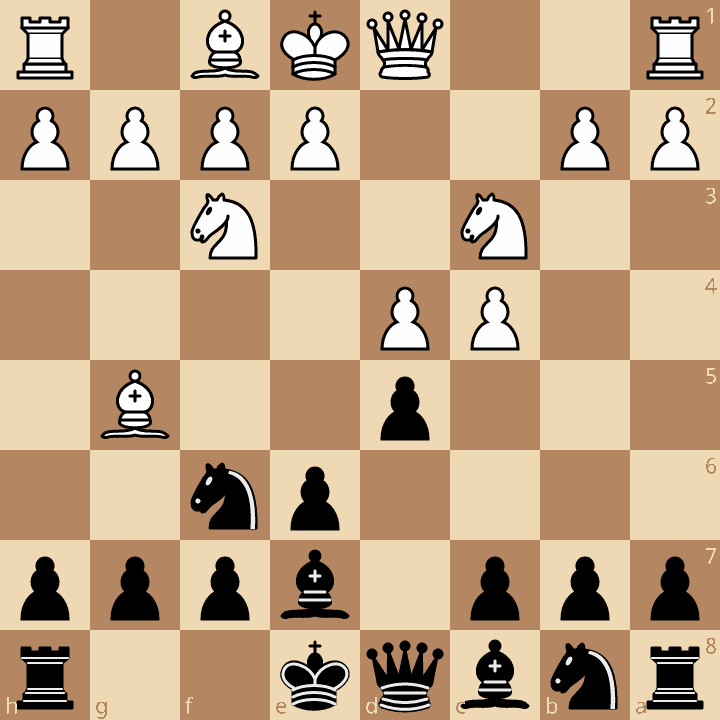
The main line. After 5...O-O 6.e3 h6 7.Bh4, Black plays ...b6 (Tartakower) or ...Nbd7 (Orthodox main). Classical and solid.
Die soliteste und am häufigsten gespielte Verteidigung gegen 1.d4, klassische Strategie in ihrer besten Form.
1.d4 d5 2.c4 e6
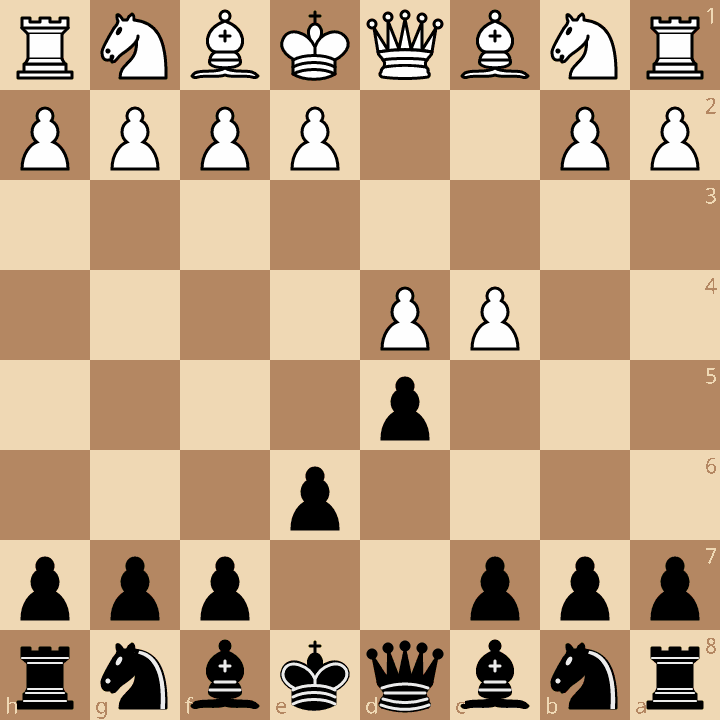
Das Abgelehnte Damengambit entsteht nach 1.d4 d5 2.c4 e6. Schwarz lehnt den c4-Bauern ab, um das eigene Zentrum zu stützen, und akzeptiert einen leicht eingeengten weißfeldrigen Läufer im Austausch für eine felsenfeste Struktur. Das QGD definierte die klassische Strategie: langsame Manöver, Kampf ums Zentrum über ...c5 oder ...e5 und klare Pläne basierend auf der Bauernstruktur. Von jedem Weltmeister seit Lasker gespielt, bleibt es die bevorzugte Wahl für Spieler, die eine Verteidigung gegen 1.d4 wollen, ohne taktisch überrollt zu werden. Die Hauptvarianten Orthodox, Lasker, Tartakower und Cambridge Springs bieten jeweils einen eigenen strategischen Plan.
Jede Variante unten kommt mit einem Diagramm und dem Hauptplan. Klicken Sie auf „Diese Eröffnung trainieren“, um jede Variante mit Spaced Repetition zu trainieren.
Möchten Sie Abgelehntes Damengambit aus dem Gedächtnis spielen? Im kostenlosen Eröffnungstraining üben Sie Zug für Zug und kehren dann zu den Varianten zurück, bei denen Sie Fehler gemacht haben.
1.d4 d5 2.c4 e6 3.Nc3 Nf6 4.Nf3 Be7 5.Bg5
The main line. After 5...O-O 6.e3 h6 7.Bh4, Black plays ...b6 (Tartakower) or ...Nbd7 (Orthodox main). Classical and solid.
1.d4 d5 2.c4 e6 3.Nc3 Nf6 4.cxd5 exd5
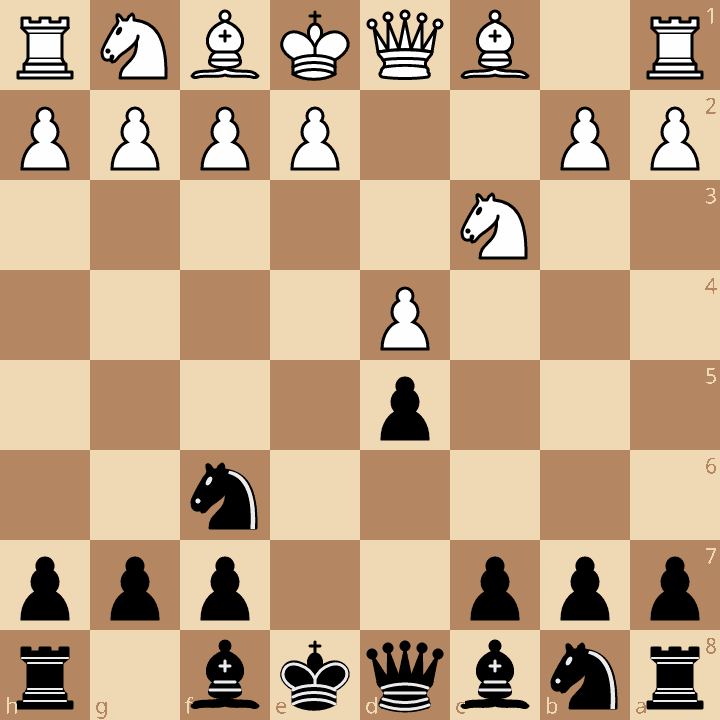
White aims for the minority attack (b2-b4-b5-bxc6). Black must counter with kingside activity...f6 and ...e5, or a rook lift ...Re8-e6.
1.d4 d5 2.c4 e6 3.Nc3 Nf6 4.Nf3 Be7 5.Bg5 h6 6.Bh4 O-O 7.e3 Ne4
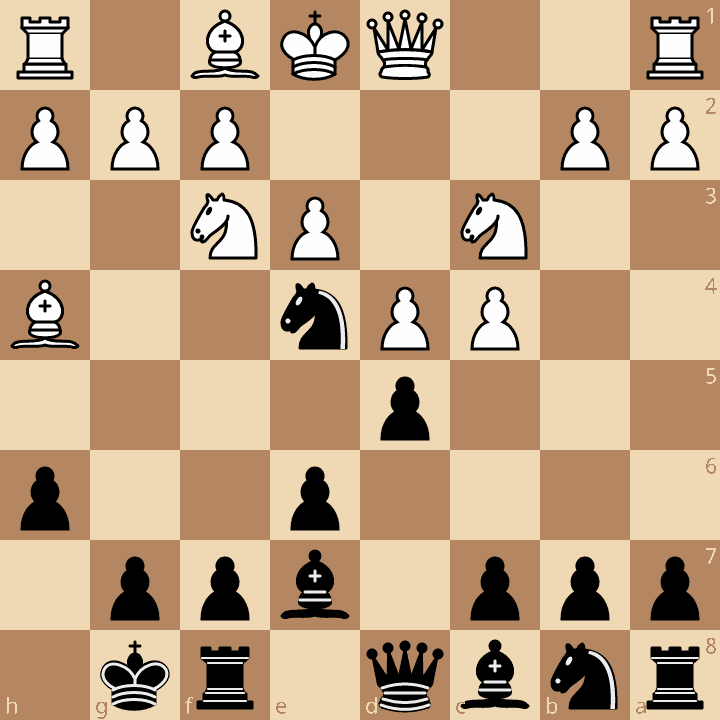
Black simplifies by exchanging bishops on e7. After 8.Bxe7 Qxe7 9.Qc2 Nxc3 10.Qxc3, Black has traded pieces and eased the position.
The QGD is one of the easiest defenses to learn, just develop pieces to their natural squares. Focus on the Orthodox Defense main line.
Add the Lasker Defense for simplification. Against the Exchange Variation, learn the minority attack defense with ...f6-...e5 or rook lifts.
Study the Cambridge Springs and Tartakower for flexibility. Choose your QGD subsystem based on White's move order.
Yes, one of the most beginner-friendly Black defenses. Natural piece development, clear plans, and lower theory than the King's Indian or Grünfeld. A lifetime defense for many players.
After the Exchange Variation (4.cxd5 exd5), White plays b2-b4-b5 to attack Black's c6 pawn, creating a weak isolated c-pawn. Petrosian and Karpov were model practitioners of this plan. Black counters with kingside activity.
QGD for solid structure and slower strategic play. QGA for active pieces and faster development (at the cost of giving up the center temporarily). Both are fully playable at every level.
The Orthodox keeps pieces on the board with ...Nbd7 and prepares ...c5. The Lasker Defense exchanges pieces early with ...Ne4, simplifying the position. Lasker = drawing tendency; Orthodox = rich middlegame play.
Constantly, at every World Championship. Carlsen, Anand, Kramnik, and Caruana have all used it. The Tartakower Defense (6...h6 7.Bh4 b6) and Orthodox main lines remain fixtures of elite chess.
Den c4-Bauern schlagen und den weißfeldrigen Läufer befreien: aktive Verteidigung gegen 1.d4.
Ein universelles Schema gegen alle schwarzen Verteidigungen: wenig Theorie, wiederverwendbare Pläne, moderne Waffe Ding Lirens.
Die Elite-Verteidigung gegen 1.d4: Fesselung des c3-Springers für sofortige strukturelle Ungleichgewichte.
Jede Variante oben ist eine Übung auf ChessAtlas. Verteilte Wiederholung plant jeden Zug so, dass Sie nie wieder eine Variante vergessen. Gratis zum Starten, keine Kreditkarte.