Orthodox Defense
1.d4 d5 2.c4 e6 3.Nc3 Nf6 4.Nf3 Be7 5.Bg5
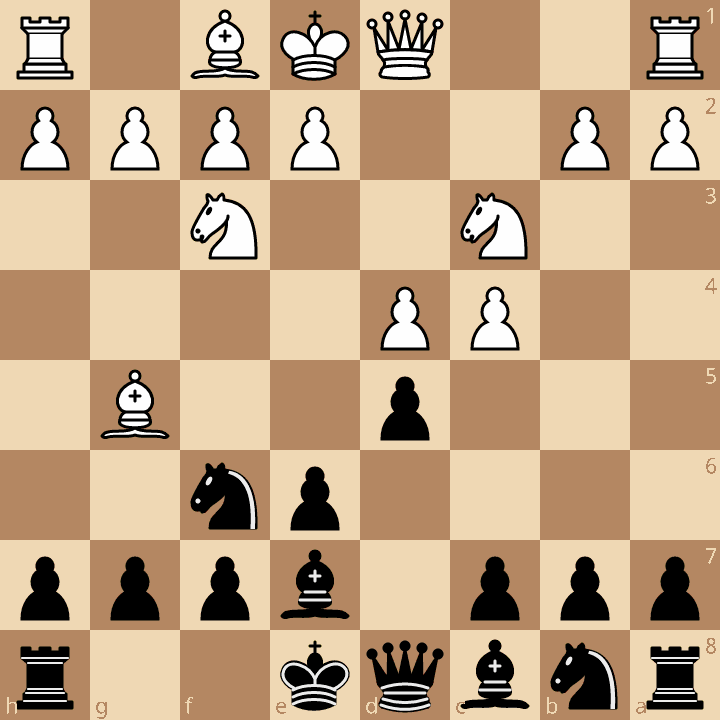
The main line. After 5...O-O 6.e3 h6 7.Bh4, Black plays ...b6 (Tartakower) or ...Nbd7 (Orthodox main). Classical and solid.
La defensa más sólida y jugada contra 1.d4, estrategia clásica en su mejor versión.
1.d4 d5 2.c4 e6
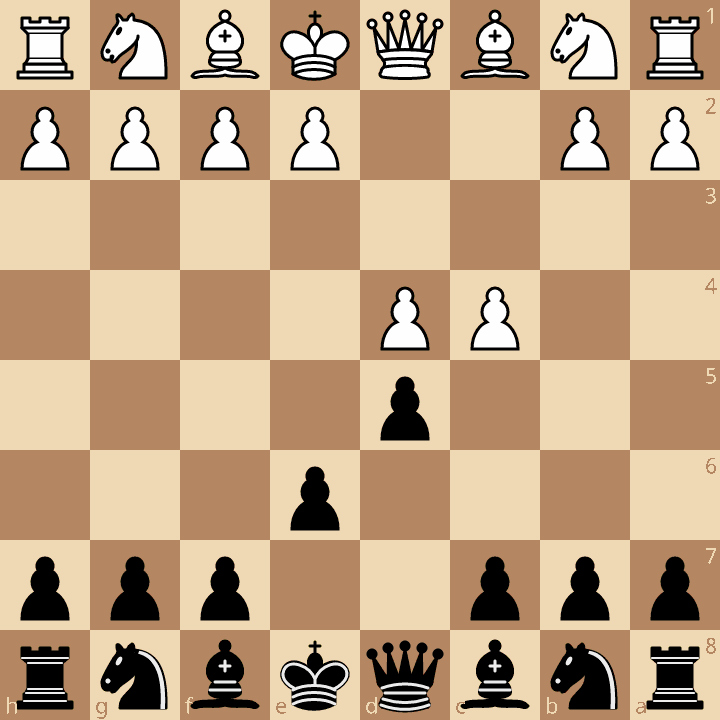
El Gambito de Dama Rehusado surge tras 1.d4 d5 2.c4 e6. Las negras rehúsan el peón de c4 para reforzar su centro, aceptando un alfil de casillas blancas ligeramente encerrado a cambio de una estructura rocosa. El QGD es la apertura que definió la estrategia clásica: maniobras lentas, lucha por el centro vía ...c5 o ...e5 y planes claros basados en la estructura de peones. Utilizada por todos los campeones del mundo desde Lasker, sigue siendo la elección preferida de los jugadores que quieren una defensa contra 1.d4 sin riesgo de ser arrollados tácticamente. Las variantes principales, Ortodoxa, Lasker, Tartakower y Cambridge Springs, ofrecen cada una un plan estratégico distinto.
Cada variante incluye un diagrama y el plan principal. Haga clic en «Entrene esta apertura» para trabajar cada línea con repetición espaciada.
¿Quiere repasar Gambito de Dama Rehusado de memoria? Practique sus aperturas jugada a jugada en el entrenador gratuito y vuelva luego a las variantes que falló.
1.d4 d5 2.c4 e6 3.Nc3 Nf6 4.Nf3 Be7 5.Bg5
The main line. After 5...O-O 6.e3 h6 7.Bh4, Black plays ...b6 (Tartakower) or ...Nbd7 (Orthodox main). Classical and solid.
1.d4 d5 2.c4 e6 3.Nc3 Nf6 4.cxd5 exd5
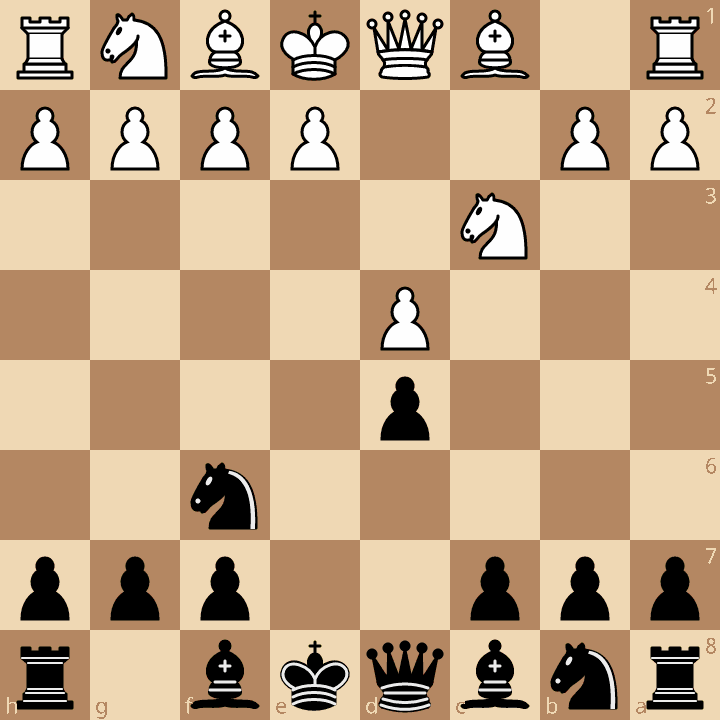
White aims for the minority attack (b2-b4-b5-bxc6). Black must counter with kingside activity...f6 and ...e5, or a rook lift ...Re8-e6.
1.d4 d5 2.c4 e6 3.Nc3 Nf6 4.Nf3 Be7 5.Bg5 h6 6.Bh4 O-O 7.e3 Ne4
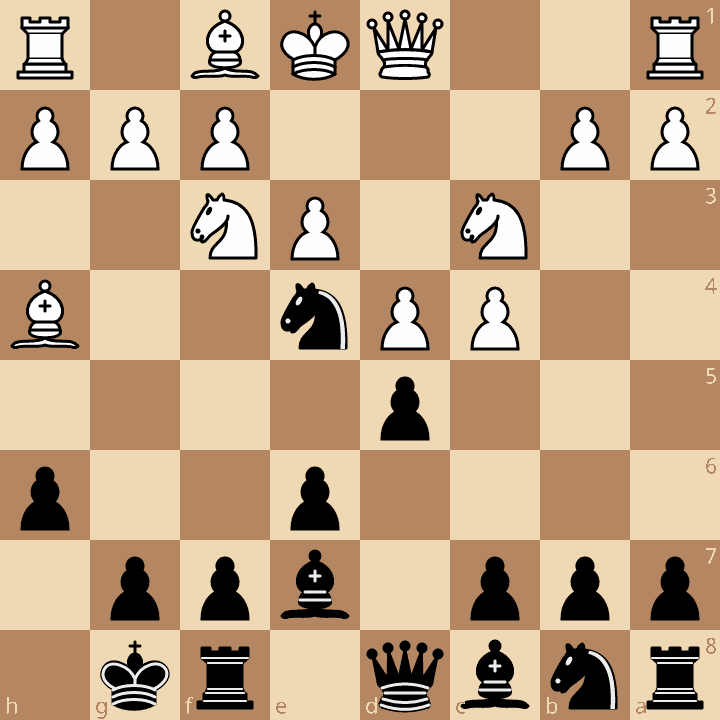
Black simplifies by exchanging bishops on e7. After 8.Bxe7 Qxe7 9.Qc2 Nxc3 10.Qxc3, Black has traded pieces and eased the position.
The QGD is one of the easiest defenses to learn, just develop pieces to their natural squares. Focus on the Orthodox Defense main line.
Add the Lasker Defense for simplification. Against the Exchange Variation, learn the minority attack defense with ...f6-...e5 or rook lifts.
Study the Cambridge Springs and Tartakower for flexibility. Choose your QGD subsystem based on White's move order.
Yes, one of the most beginner-friendly Black defenses. Natural piece development, clear plans, and lower theory than the King's Indian or Grünfeld. A lifetime defense for many players.
After the Exchange Variation (4.cxd5 exd5), White plays b2-b4-b5 to attack Black's c6 pawn, creating a weak isolated c-pawn. Petrosian and Karpov were model practitioners of this plan. Black counters with kingside activity.
QGD for solid structure and slower strategic play. QGA for active pieces and faster development (at the cost of giving up the center temporarily). Both are fully playable at every level.
The Orthodox keeps pieces on the board with ...Nbd7 and prepares ...c5. The Lasker Defense exchanges pieces early with ...Ne4, simplifying the position. Lasker = drawing tendency; Orthodox = rich middlegame play.
Constantly, at every World Championship. Carlsen, Anand, Kramnik, and Caruana have all used it. The Tartakower Defense (6...h6 7.Bh4 b6) and Orthodox main lines remain fixtures of elite chess.
Tomar el peón de c4 y liberar el alfil de casillas blancas: defensa activa a 1.d4.
Un esquema universal contra todas las defensas negras: poca teoría, planes repetibles, arma moderna de Ding Liren.
La defensa de élite contra 1.d4: clavada del caballo de c3 para desequilibrios estructurales inmediatos.
Cada variante de arriba es un ejercicio en ChessAtlas. La repetición espaciada programa cada movimiento para que nunca olvide una línea. Gratis para empezar, sin tarjeta de crédito.