Wie Sie Schacheröffnungen auswendig lernen (ohne sie zu vergessen)
Sie verbringen Stunden mit dem Studium von Linien und stehen drei Tage später am Brett auf dem Schlauch. Hier erfahren Sie, warum das immer wieder passiert, und welche einfache Methode es wirklich behebt.
Kostenlos starten · Keine Kreditkarte · Auf jedem Gerät
Zuletzt aktualisiert: 10. Juli 2026
Warum Sie Eröffnungen immer wieder vergessen
Das Problem ist nicht Ihr Gedächtnis. Es ist, wie Sie lernen.
Hermann Ebbinghaus kartierte 1885 die Vergessenskurve: Nach dem Lernen neuer Inhalte verlieren Sie rund die Hälfte innerhalb von 24 Stunden, sofern Sie sie nicht aktiv abrufen. Ihr Eröffnungsheft zu lesen oder Linien in einer Studie durchzuklicken ist passiv. Ihr Gehirn merkt sie sich als vertraut, kann sie aber nicht abrufen, wenn Sie sie brauchen.
Das zweite Problem ist fehlender Druck einer echten Partie. In einem ruhigen Sessel auswendig zu lernen ist eine Sache. Denselben Zug im 12. Zug gegen einen Fremden zu finden, mit fünf Minuten auf der Uhr, ist eine andere. Wenn Sie nur im Studienmodus üben, schafft das Wissen den Sprung nie.
Deshalb sagen so viele Spieler „Ich kenne die Caro-Kann“ und spielen dann in ihrer nächsten Partie im 7. Zug den falschen Zug. Sie haben sie gelernt, aber nie so trainiert, wie das Gedächtnis wirklich arbeitet.
Die Lösung: verteilte Wiederholung plus Übung an echten Partien
Zwei Ideen, ein eng geschlossener Rückkopplungskreis.
Verteilte Wiederholung zeigt Ihnen jede Stellung genau dann, bevor Sie sie vergessen hätten. Stellungen, die Sie können, werden weiter nach hinten geschoben, die, die Sie verpassen, kommen morgen wieder. Jahrzehnte der Forschung, kürzlich im großen Maßstab durch den FSRS-Algorithmus bestätigt, der auf Hunderten Millionen echter Wiederholungen trainiert wurde, zeigen, dass dies geballtes Lernen bei gleicher Lernzeit um rund 2x übertrifft. Den Mechanismus vertiefen wir auf der Seite verteilte Wiederholung für Schach.
Übung an echten Partien schließt den Kreis. Sie importieren Ihre Partien von Lichess oder Chess.com, ChessAtlas analysiert sie automatisch und markiert den exakten Zug, an dem Sie Ihre Vorbereitung verlassen haben. Diese Korrektur wandert direkt in Ihre Wiederholungs-Warteschlange. Wenn die Stellung das nächste Mal auftaucht, haben Sie die richtige Antwort bereits unter realistischen Bedingungen geübt.
Zusammen ist das der Unterschied zwischen eine Linie wiederzuerkennen und sie wirklich zu spielen. Das eine ist bequem. Das andere gewinnt Partien.
Kurz gesagt
Hören Sie auf, nur zu lesen. Fangen Sie an, aktiv abzurufen. Spielen Sie dann gegen echte Gegner und lassen Sie Ihre Lücken bestimmen, was Sie als Nächstes üben.
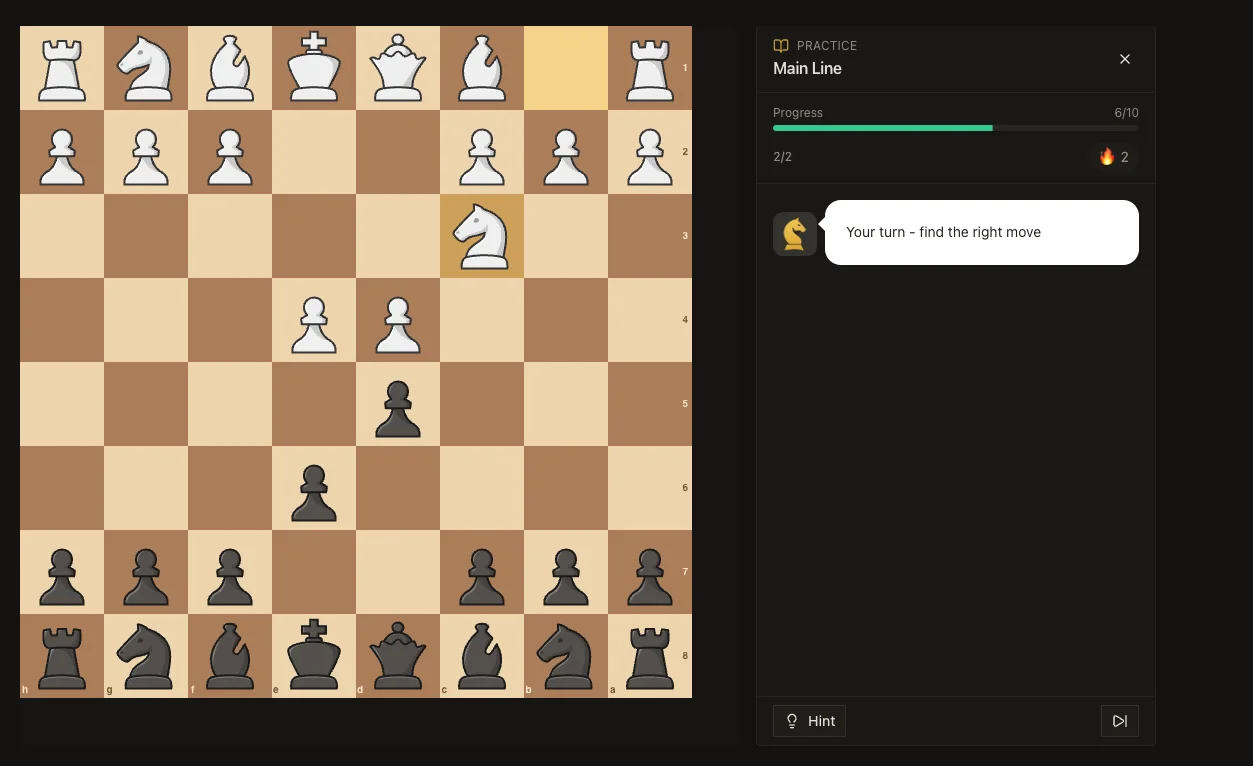
So merken Sie sich Ihre Eröffnungen in 3 Schritten
Ohne System keine Behaltensleistung. Das ist der Ablauf, der funktioniert.
Importieren Sie Ihre echten Partien
Verknüpfen Sie Ihr Lichess- oder Chess.com-Konto, damit ChessAtlas Ihre letzten Partien automatisch abrufen kann. Das ist das Rohmaterial, das Ihnen zeigt, welche Eröffnungen Sie wirklich spielen, wo Ihre Vorbereitung zusammenbricht und welche Linien Priorität haben. Lernen Sie keine Linien auswendig, die Ihnen nie begegnen.
Wählen oder bauen Sie ein Repertoire pro Farbe
Starten Sie aus der Kursbibliothek (Französisch, Caro-Kann, Londoner System, Italienisch, mehr als 21 fertige Repertoires) oder bauen Sie Ihr eigenes im Repertoire-Builder. Eine Hauptlinie mit Weiß und je eine Verteidigung gegen 1.e4 und 1.d4 reichen für den Bereich 1200-1800. Tiefe schlägt Breite.
Wiederholen Sie 10-15 Minuten am Tag
Der Planer holt jede Stellung im richtigen Intervall hervor. Der Abweichungsfinder speist neue Korrekturen aus Ihren Partien ein. Sie wählen nicht aus, was Sie wiederholen, das macht der Algorithmus, sodass Sie Ihre Zeit auf die Stellungen verwenden, die Sie gerade vergessen, und nicht auf die, die Sie längst sicher können.
Tiefer einsteigen
Artikel über Auswendiglernen, Behalten und Repertoiretiefe.
Wie Sie Schacheröffnungen merken und sie wirklich behalten
Mehr erfahren über das Merken von Eröffnungen →
Wie tief Sie Ihre Eröffnungen lernen sollten
Mehr erfahren über die Lerntiefe →
Beste Antwort auf 1.e4 nach Spielstärke
Mehr erfahren über das Lernen nach Spielstärke →
Beste Antwort auf 1.d4 nach Spielstärke
Mehr erfahren über das Behalten von 1.d4-Repertoires →
Wie Sie Ihr erstes Eröffnungsrepertoire aufbauen
Mehr erfahren über den Aufbau eines merkbaren Repertoires →
Trainieren Sie Ihre Brettvisualisierung
Wenn Sie das Brett im Kopf sehen, lassen sich Eröffnungslinien viel leichter merken. DarkSquares, unser Blindschach-Trainer, baut genau diese Fähigkeit auf.
Häufige Fragen
Wie lange dauert es, eine Schacheröffnung auswendig zu lernen?
Mit 10-15 Minuten verteilter Wiederholung pro Tag behalten die meisten Spieler ein grundlegendes Repertoire von 20 bis 30 Zügen nach 3 bis 4 Wochen. Tiefer zu gehen (Nebenvarianten, Zugumstellungen, vollständige Hauptlinien) dauert 2 bis 3 Monate. Der Trick ist Beständigkeit, nicht die Länge der Sitzung. Fünf Minuten jeden Tag schlagen eine Stunde einmal pro Woche, denn es ist die zeitliche Verteilung, die Erinnerungen festigt.
Ist verteilte Wiederholung beim Schach wirklich wirksam?
Ja. Forschung zum verteilten Abruf (Karpicke und Roediger, 2008) zeigt, dass sie das langfristige Behalten gegenüber passivem Wiederholen ungefähr verdoppelt. Beim Schach deckt sich das mit dem, was starke Spieler seit Jahrzehnten intuitiv tun: Linien kurz vor dem Vergessen wiederholen, nicht in massiven Pauk-Sitzungen. ChessAtlas nutzt den FSRS-Algorithmus, um jede Stellung im für Sie optimalen Intervall zu planen.
Kann ich Eröffnungen merken, ohne echte Partien zu spielen?
Sie können die Züge auswendig lernen, aber im echten Spiel vergessen Sie sie schnell. Der Grund: Wiedererkennen (die Stellung auf einer Karte sehen) ist etwas anderes als Abrufen (den Zug finden, während die Uhr läuft). Die Lösung ist, verteilte Wiederholung mit Übung an echten Partien zu kombinieren: Importieren Sie Ihre Partien von Lichess oder Chess.com, sehen Sie genau, wo Sie Ihre Vorbereitung verlassen haben, und fügen Sie die Korrektur wieder in die Warteschlange ein. Dieser Rückkopplungskreis macht aus Buchwissen einen Reflex.
Warum vergesse ich ständig Eröffnungen, die ich gerade gelernt habe?
Das ist die Vergessenskurve am Werk. Nach dem Lernen neuer Inhalte verlieren Sie rund die Hälfte innerhalb von 24 Stunden, wenn Sie sie nicht aktiv abrufen. Die meisten Spieler wiederholen, indem sie ihre Notizen lesen oder Linien am Brett durchgehen, was passiv ist. Aktiver Abruf (nach dem Zug gefragt zu werden und ihn von Grund auf finden zu müssen) festigt die Erinnerung. Trainer für verteilte Wiederholung erzwingen aktiven Abruf im richtigen Intervall, und genau deshalb schlagen sie Notizbücher.
Wie viele Eröffnungen sollte ein Vereinsspieler auswendig lernen?
Eine Hauptlinie für Weiß und je eine Verteidigung gegen 1.e4 und 1.d4 reichen für den Bereich 1200-1800. Tiefe zählt mehr als Breite: 20-25 Züge tief bei drei Eröffnungen schlagen ein oberflächliches Verständnis von zehn. Sehen Sie sich unseren Leitfaden nach Spielstärke für konkrete Empfehlungen an.
Quellen
Fangen Sie an, Ihre Eröffnungen zu merken
Kostenloses Konto, keine Kreditkarte. Importieren Sie Ihre Partien, wählen Sie ein Repertoire, und Ihre erste Wiederholungssitzung ist heute.
Kostenloses Konto erstellenKostenlos · Keine Kreditkarte