How to Build a Complete White Repertoire from Scratch

Table of contents
Disclosure: ChessAtlas is our product. This guide is a practical walkthrough for building a White repertoire; it works with any platform. Readers should weigh the perspective accordingly.
A complete White repertoire covers every Black defense you face, with memorable plans and the right depth for your rating. This guide walks from choosing your first move to maintaining the final file. Expect 2 to 4 weeks of focused work to build the framework, then ongoing maintenance as your games feed back into the repertoire.
This article is a practical walkthrough. For the broader framework on why repertoires stick (not just how to build them), see How to Build a Chess Opening Repertoire That Actually Sticks. For the 30-day execution plan, see the 30-Day Pick-Learn-Drill-Improve framework.
Step 1: Choose Your First Move (1.e4 or 1.d4)
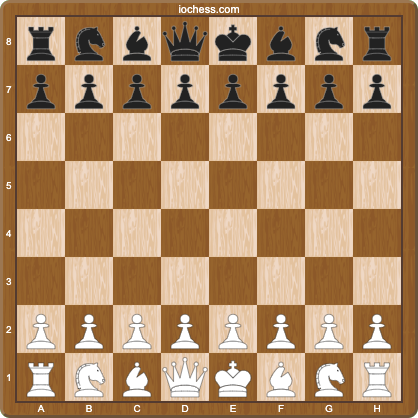
Play 1.e4 if:
- You enjoy open positions with early piece activity and tactical opportunities
- You like clear attacking plans (Italian, Ruy Lopez, Scotch)
- You have time to study Anti-Sicilian theory to handle 1...c5
Play 1.d4 if:
- You prefer slower strategic games and positional pressure
- You want lower total theory load (the London System handles everything)
- You dislike the Sicilian theoretical arms race
Neither is better. Pick based on style, stick with it for at least 6 months before considering a switch.
Step 2: Pick Your Main Systems
The 1.e4 path
- vs 1...e5: Italian Game (most practical, and one of the oldest recorded openings per the Italian Game on Wikipedia) or Ruy Lopez (more ambitious, heavier theory, named for the 16th-century priest who analysed it, see the Ruy Lopez on Wikipedia)
- vs 1...c5 (Sicilian): Anti-Sicilian, Alapin (2.c3) is the simplest; Rossolimo (3.Bb5) for positional players. See How to Beat the Sicilian Defense
- vs 1...e6 (French): 3.Nc3 (Classical) or 3.Nd2 (Tarrasch). Both are solid.
- vs 1...c6 (Caro-Kann): Advance Variation (3.e5) for club players. See How to Beat the Caro-Kann
- vs 1...d5 (Scandinavian): 2.exd5 Qxd5 3.Nc3, standard
- vs 1...Nf6 (Alekhine): 2.e5 Nd5 3.d4 d6 4.Nf3, main line
- vs rare moves (Pirc, Modern, 1...a6): 2.d4 + 3.Nc3 standard setup
The 1.d4 path
- vs 1...d5 (QGD, Slav): 2.c4 (Queen's Gambit), most ambitious
- vs 1...Nf6: 2.c4 committing to mainline theory, or 2.Nf3+3.Bf4 (London transposition)
- vs 1...Nf6 2.c4 g6 (KID): see How to Beat the King's Indian
- vs 1...Nf6 2.c4 e6 3.Nc3 Bb4 (Nimzo): 4.e3 Rubinstein or 4.Qc2 Classical
- Universal backup: the London System (1.d4 + 2.Nf3 + 3.Bf4) works against almost everything, and its system-based setup keeps the theory load low (see the London System on Wikipedia)
Step 3: Build Your Tree in a Repertoire Tool
Use Lichess Studies, ChessAtlas, Chessable, or similar. Organize by Black's reply, not by ECO code (ECO codes are harder to mentally retrieve during games).
For each Black response, record:
- Your chosen main line (8 to 12 moves deep for 1400 to 1800; deeper for higher ratings)
- The core plan in one sentence: "the idea here is..."
- Pawn breaks and key piece placements
- One or two main sideline responses
Step 4: Drill With Spaced Repetition
FSRS spaced repetition via ChessAtlas or Chessdriller handles the review schedule automatically. 15 to 20 minutes daily covers a starter repertoire of 50 to 80 key positions. See why spaced repetition works for chess.
Priority order:
- Week 1: your main line against 1...e5 (or against 1...d5 if playing 1.d4)
- Week 2: your response to the second-most-common Black setup at your rating
- Week 3: coverage of the less common defenses (one plan per defense)
- Week 4: patch gaps from your actual games
Step 5: Close the Loop with Real Games
Every rated game either confirms your repertoire works or reveals a gap. The workflow: play, import, find deviation, patch, drill. See the full deviation detection workflow.
ChessAtlas Deviation Finder automates steps 2 and 3 by parsing your Lichess/Chess.com games against your stored repertoire. Manual alternative: pipe games through Lichess Studies and compare move-by-move.
Common Repertoire-Building Mistakes
Memorizing moves without plans
If you cannot explain why move 7 is what it is, the memory evaporates the first time your opponent plays move 6 differently. Every repertoire line needs a plan. See how to memorize chess openings and actually remember them.
Creating an impractically large repertoire
Trying to prepare for every possible reply creates an unmaintainable file. Cap depth by rating band. See our rating-by-rating depth guide. A 500-line file looks impressive but is impossible to keep fresh.
Studying only master-level theory
Filter the Lichess Opening Explorer to your rating band, not 2400+ master games. Your opponents play different moves than Carlsen's opponents. Coverage of real opponent lines beats coverage of theoretical mainlines.
Not analyzing your own games
Every rated game is data. If you never review, you repeat mistakes and miss gaps. Commit to 5 to 10 minutes of opening analysis after every rated game.
Repertoire Maintenance (Ongoing)
Monthly: spend 1 hour reviewing your last 20 games. Note which defenses appeared, which lines scored well, which positions gave you trouble. Add or fix accordingly. Prune lines that never come up.
Every 3 months: extend depth in frequent lines by 3 to 5 moves; prune unused branches. A lean, frequently-rehearsed file beats a bloated, forgotten one.
Tools
For repertoire building + FSRS drilling + automatic game import: ChessAtlas. For GM-authored courses: Chessable. For free workflow: Lichess Studies + Chessdriller. See Best Chess Opening Trainers 2026 for the complete comparison.
Your Micro-Action Tonight
Decide: 1.e4 or 1.d4. Choose one system against 1...e5 (if 1.e4) or 1...d5 (if 1.d4). Write down the first 10 moves. Drill them tomorrow. Next week, add the second defense. Repeat.
For the full ecosystem: the repertoire framework pillar, the 30-day execution plan, and all opening landing pages with variations and traps. Or create a free ChessAtlas account and start building your White repertoire with automatic game import and FSRS drilling.
Sources and Further Reading
Last updated Jul 24, 2026