Vienna Gambit
1.e4 e5 2.Nc3 2...Nc6 3.f4
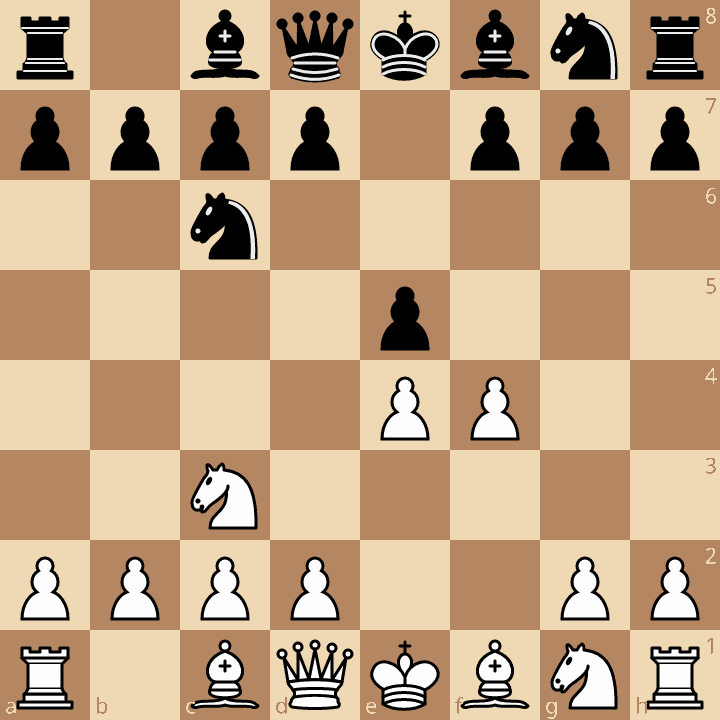
White plays for a King's Gambit-style attack, but with Nc3 already developed. Aggressive and leads to sharp tactical games.
The Vienna Game (1.e4 e5 2.Nc3) is a flexible, aggressive alternative to the Italian and Ruy Lopez, with the Vienna Gambit attack.
1.e4 e5 2.Nc3
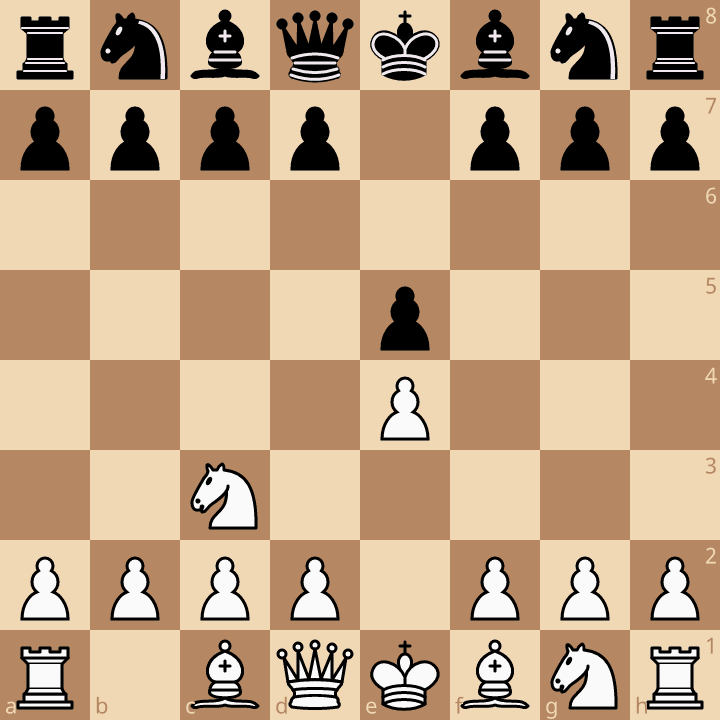
The Vienna Game starts with 1.e4 e5 2.Nc3, developing the queenside knight before the kingside. It's a flexible system: White can transpose to King's Gambit territory with f4 (Vienna Gambit), play a quiet positional game with g3+Bg2, or enter the Mieses setup with d3+g3. Less theory than the Ruy Lopez, sharper than the Italian, and full of tactical traps. Often underestimated, Carlsen has used it in blitz to great effect, and it scores well at club level because Black players frequently treat it as a harmless system.
Each variation below comes with a diagram and the main plan. Click "Train this opening" to drill every line with spaced repetition.
Want to drill the Vienna Game from memory? Practice your openings move by move in the free opening trainer, then come back to the variations you missed.
1.e4 e5 2.Nc3 2...Nc6 3.f4
White plays for a King's Gambit-style attack, but with Nc3 already developed. Aggressive and leads to sharp tactical games.
1.e4 e5 2.Nc3 2...Nf6 3.Bc4
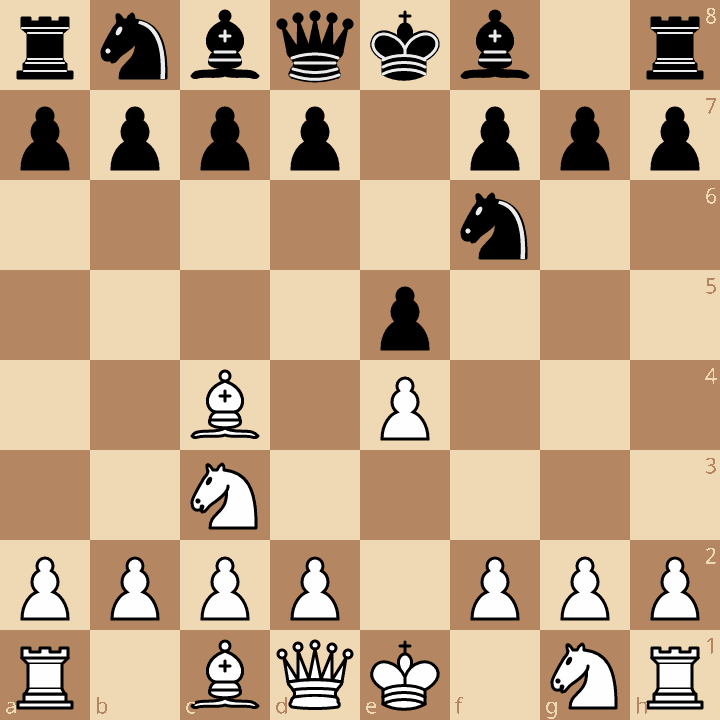
After 3...Nc6 4.d3 (or 4.d4), White builds a flexible setup. Can transpose to the Four Knights Game or stay in pure Vienna territory.
1.e4 e5 2.Nc3 2...Nc6 3.g3
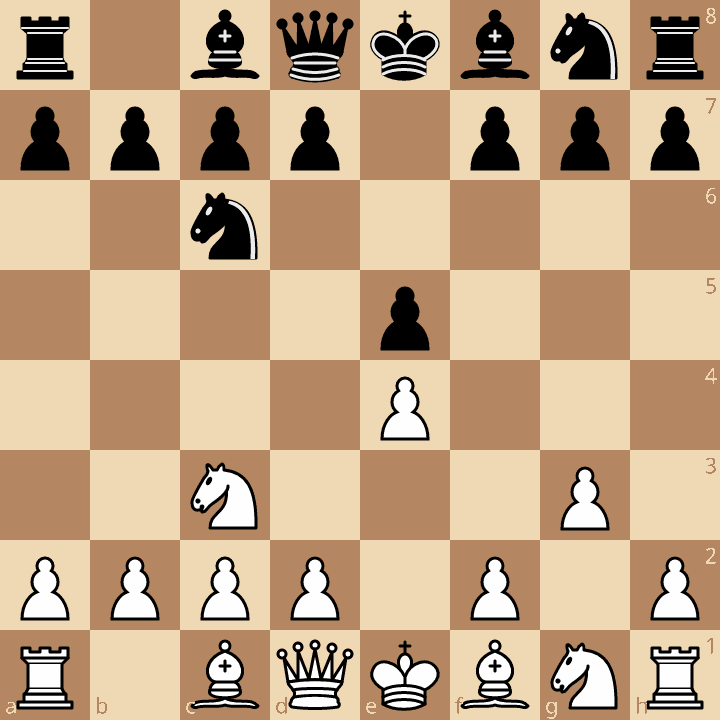
Also known as the Glek System. White fianchettoes with Bg2, then plays Nge2, d3, and prepares f4. A quiet, low-theory alternative that still aims at kingside pressure.
Watch the trap unfold on the board, or step through move by move. These are patterns you can punish in your own games.
A model Vienna Gambit attack. After 5.h4 g4 6.Ng5, White sacrifices another piece on f7 for a crushing attack on Black's exposed king.
1.e4 e5 2.Nc3 Nc6 3.f4 exf4 4.Nf3 g5 5.h4 g4 6.Ng5 h6 7.Nxf7 Kxf7 8.d4 d5 9.Bxf4
Start position
Play the Vienna Gambit (3.f4). The attack is strong and many opponents don't know how to defend it.
Learn the 2...Nf6 lines with both 3.Bc4 and 3.f4 (Vienna Gambit with different move order).
Study the Mieses Variation / Glek System (2...Nc6 3.g3) for a slower, positional approach. Transpose to the Vienna Gambit based on Black's response.
Yes, underrated at every level. Lower theory than Ruy Lopez, more aggressive than the Italian, and with the Vienna Gambit, it's one of the sharpest 1.e4 openings available.
The Vienna Gambit is considered slightly safer because Nc3 is already developed before f4. This means more piece support for the attack and less structural weakness. Both openings are rare at elite classical level; among amateurs the King's Gambit still has a strong following.
No. The 3.g3 line is correctly called the Mieses Variation or Glek System. Weaver W. Adams was a 20th-century American analyst whose name is associated with the 2.Nc3 Nf6 3.Bc4 Nxe4 4.Qh5 line, not 3.g3.
Modern theory recommends 3...d5 (counter-attacking the center) over 3...exf4. After 3...d5 4.fxe5 Nxe4 5.Nf3 Bc5, Black equalizes comfortably. Against the Vienna with 2...Nf6, 3...Nc6 is safest.
Both. The Vienna Gambit (3.f4) is pure attacker territory. The Mieses Variation (3.g3) is positional. The Vienna with 2...Nf6 3.Bc4 is balanced. One of the most flexible 1.e4 systems for any style.
Regularly in blitz and rapid games by Carlsen, Nepomniachtchi, and others. Less common in classical World Championship games, but not because it's unsound, just because Black has reliable defensive resources at the highest level.
Every variation above is a drill on ChessAtlas. Spaced repetition schedules each move so you never forget a line again. Free to start, no credit card.