Vienna Gambit
1.e4 e5 2.Nc3 2...Nc6 3.f4
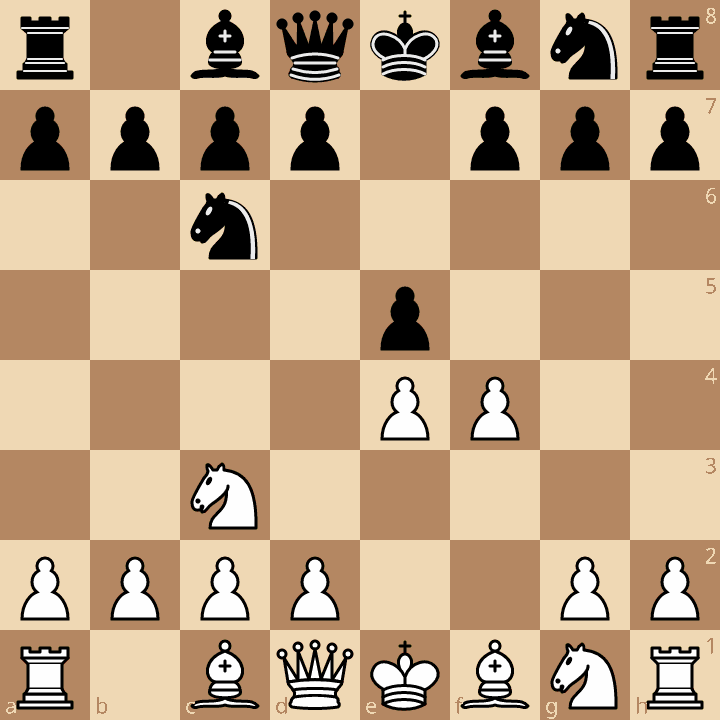
White plays for a King's Gambit-style attack, but with Nc3 already developed. Aggressive and leads to sharp tactical games.
Uma abertura subestimada, cortante ao nível de clube: desenvolvimento clássico com planos de ataque agressivos.
1.e4 e5 2.Nc3
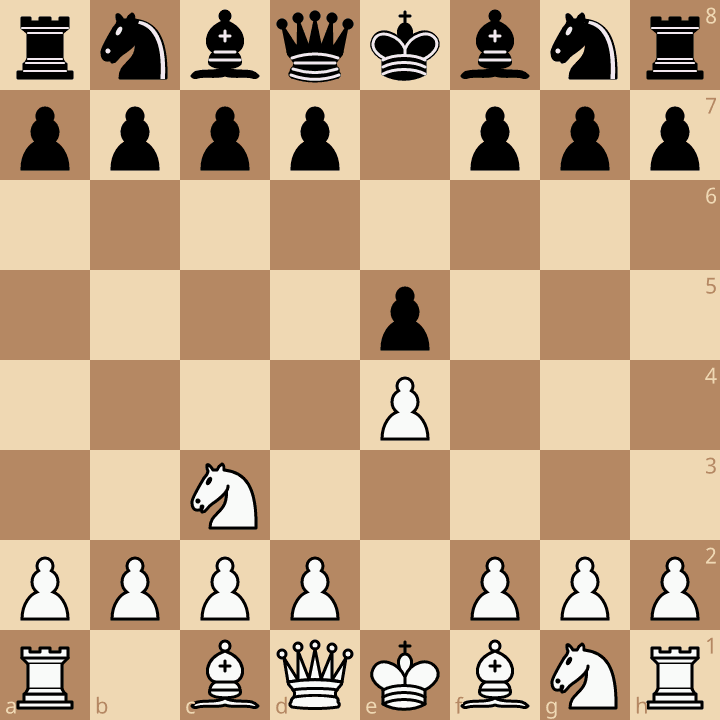
A Vienense (1.e4 e5 2.Cc3) desenvolve o cavalo de c3 antes do cavalo de rei e mantém a flexibilidade para jogar o Gambito Vienense (3.f4, versão vienense do Gambito de Rei) ou planos posicionais com Bc4 e d3. As pretas respondem habitualmente com 2...Cf6 (linha principal), 2...Cc6 ou 2...Bc5. Raramente jogada ao mais alto nível mas extremamente eficaz no clube: a Vienense evita a teoria pesada da Espanhola e da Italiana e oferece fortes possibilidades tácticas.
Cada variação abaixo vem com um diagrama e o plano principal. Clique em «Treine esta abertura» para praticar cada linha com repetição espaçada.
Quer repassar Abertura Vienense de memória? Pratique as suas aberturas lance a lance no treinador gratuito e volte depois às variações que errou.
1.e4 e5 2.Nc3 2...Nc6 3.f4
White plays for a King's Gambit-style attack, but with Nc3 already developed. Aggressive and leads to sharp tactical games.
1.e4 e5 2.Nc3 2...Nf6 3.Bc4
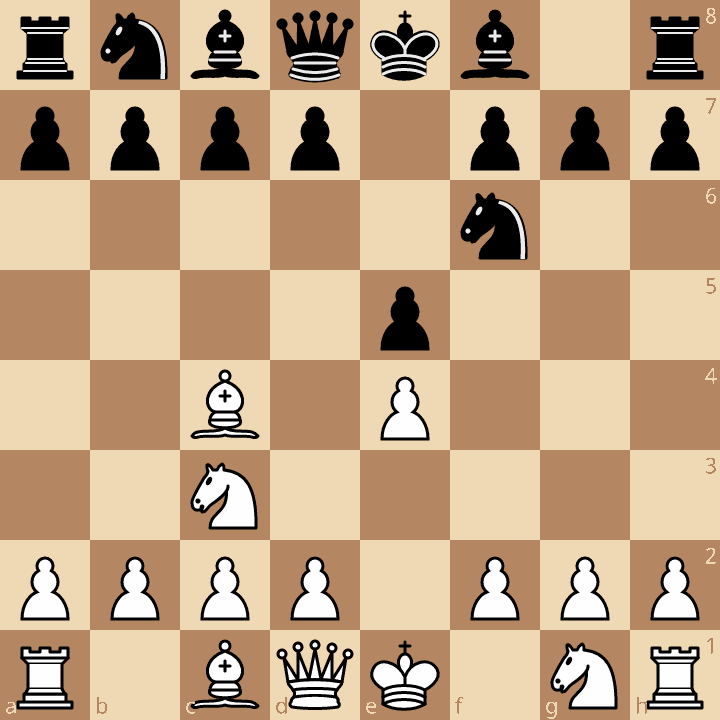
After 3...Nc6 4.d3 (or 4.d4), White builds a flexible setup. Can transpose to the Four Knights Game or stay in pure Vienna territory.
1.e4 e5 2.Nc3 2...Nc6 3.g3
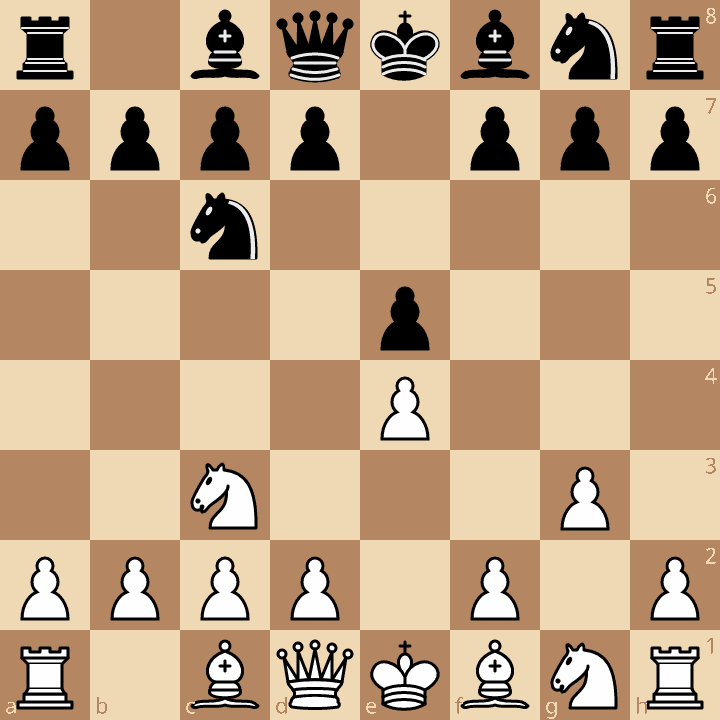
Also known as the Glek System. White fianchettoes with Bg2, then plays Nge2, d3, and prepares f4. A quiet, low-theory alternative that still aims at kingside pressure.
Observe a armadilha acontecer no tabuleiro ou avance lance a lance. São padrões que você pode punir nas suas próprias partidas.
A model Vienna Gambit attack. After 5.h4 g4 6.Ng5, White sacrifices another piece on f7 for a crushing attack on Black's exposed king.
1.e4 e5 2.Nc3 Nc6 3.f4 exf4 4.Nf3 g5 5.h4 g4 6.Ng5 h6 7.Nxf7 Kxf7 8.d4 d5 9.Bxf4
Start position
Play the Vienna Gambit (3.f4). The attack is strong and many opponents don't know how to defend it.
Learn the 2...Nf6 lines with both 3.Bc4 and 3.f4 (Vienna Gambit with different move order).
Study the Mieses Variation / Glek System (2...Nc6 3.g3) for a slower, positional approach. Transpose to the Vienna Gambit based on Black's response.
Yes, underrated at every level. Lower theory than Ruy Lopez, more aggressive than the Italian, and with the Vienna Gambit, it's one of the sharpest 1.e4 openings available.
The Vienna Gambit is considered slightly safer because Nc3 is already developed before f4. This means more piece support for the attack and less structural weakness. Both openings are rare at elite classical level; among amateurs the King's Gambit still has a strong following.
No. The 3.g3 line is correctly called the Mieses Variation or Glek System. Weaver W. Adams was a 20th-century American analyst whose name is associated with the 2.Nc3 Nf6 3.Bc4 Nxe4 4.Qh5 line, not 3.g3.
Modern theory recommends 3...d5 (counter-attacking the center) over 3...exf4. After 3...d5 4.fxe5 Nxe4 5.Nf3 Bc5, Black equalizes comfortably. Against the Vienna with 2...Nf6, 3...Nc6 is safest.
Both. The Vienna Gambit (3.f4) is pure attacker territory. The Mieses Variation (3.g3) is positional. The Vienna with 2...Nf6 3.Bc4 is balanced. One of the most flexible 1.e4 systems for any style.
Regularly in blitz and rapid games by Carlsen, Nepomniachtchi, and others. Less common in classical World Championship games, but not because it's unsound, just because Black has reliable defensive resources at the highest level.
A abertura clássica 1.e4 e5 2.Cf3 Cc6 3.Bc4: princípios sólidos, tácticas ricas.
A abertura romântica por excelência: sacrifício de um peão por centro aberto e ataque imediato.
A abertura mais jogada ao mais alto nível há 500 anos, pressão posicional duradoura a 1.e4.
Cada variação acima é um exercício no ChessAtlas. A repetição espaçada programa cada lance para que você nunca mais esqueça uma linha. Grátis para começar, sem cartão de crédito.