Vienna Gambit
1.e4 e5 2.Nc3 2...Nc6 3.f4
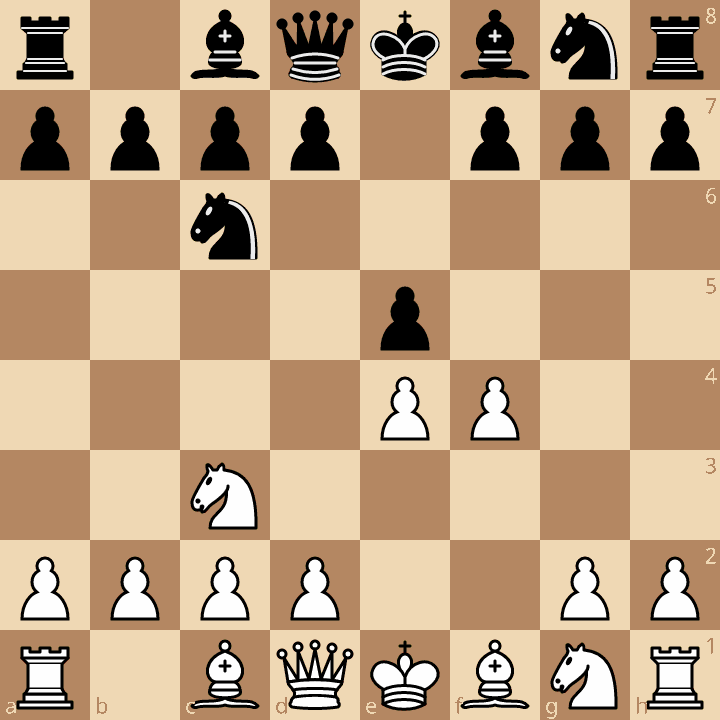
White plays for a King's Gambit-style attack, but with Nc3 already developed. Aggressive and leads to sharp tactical games.
Una apertura subestimada, cortante al nivel de club: desarrollo clásico con planes de ataque agresivos.
1.e4 e5 2.Nc3
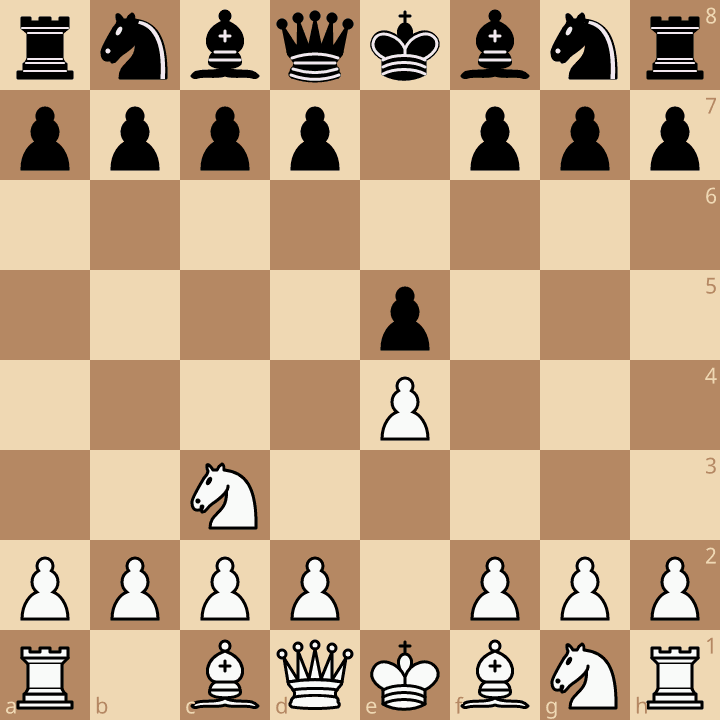
La Vienesa (1.e4 e5 2.Cc3) desarrolla el caballo de c3 antes que el caballo de rey y preserva la flexibilidad para jugar el Gambito Vienés (3.f4, versión vienesa del Gambito de Rey) o planes posicionales con Ac4 y d3. Las negras suelen responder con 2...Cf6 (línea principal), 2...Cc6 o 2...Ac5. La Vienesa se juega poco en la élite pero es extremadamente eficaz en el club: evita la teoría pesada de la Española y la Italiana y ofrece posibilidades tácticas potentes.
Cada variante incluye un diagrama y el plan principal. Haga clic en «Entrene esta apertura» para trabajar cada línea con repetición espaciada.
¿Quiere repasar Apertura Vienesa de memoria? Practique sus aperturas jugada a jugada en el entrenador gratuito y vuelva luego a las variantes que falló.
1.e4 e5 2.Nc3 2...Nc6 3.f4
White plays for a King's Gambit-style attack, but with Nc3 already developed. Aggressive and leads to sharp tactical games.
1.e4 e5 2.Nc3 2...Nf6 3.Bc4
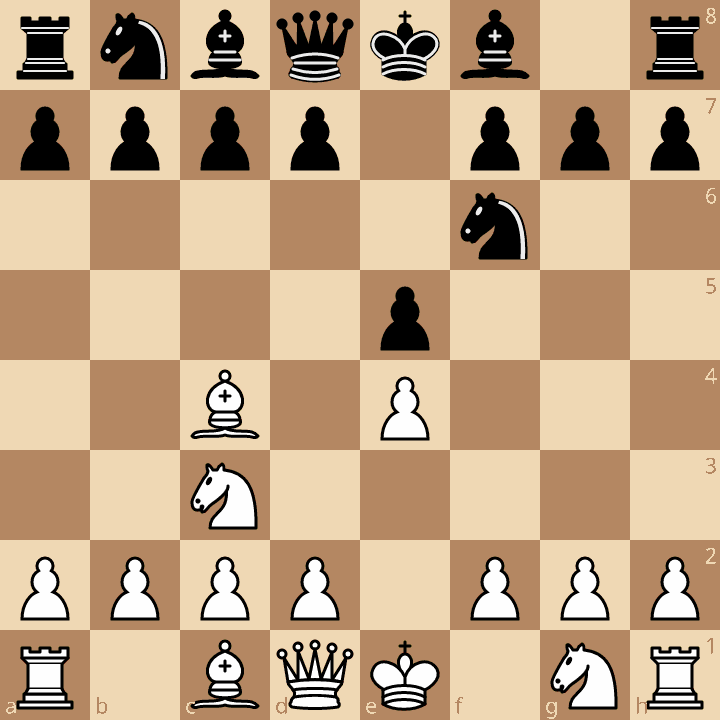
After 3...Nc6 4.d3 (or 4.d4), White builds a flexible setup. Can transpose to the Four Knights Game or stay in pure Vienna territory.
1.e4 e5 2.Nc3 2...Nc6 3.g3
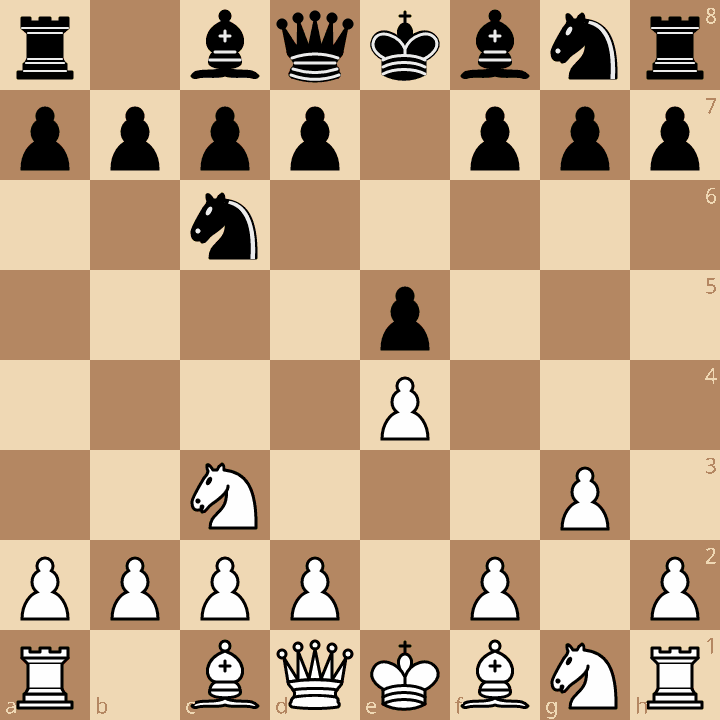
Also known as the Glek System. White fianchettoes with Bg2, then plays Nge2, d3, and prepares f4. A quiet, low-theory alternative that still aims at kingside pressure.
Observe cómo se desarrolla la trampa en el tablero o recórrala movimiento a movimiento. Son patrones que puede castigar en sus propias partidas.
A model Vienna Gambit attack. After 5.h4 g4 6.Ng5, White sacrifices another piece on f7 for a crushing attack on Black's exposed king.
1.e4 e5 2.Nc3 Nc6 3.f4 exf4 4.Nf3 g5 5.h4 g4 6.Ng5 h6 7.Nxf7 Kxf7 8.d4 d5 9.Bxf4
Start position
Play the Vienna Gambit (3.f4). The attack is strong and many opponents don't know how to defend it.
Learn the 2...Nf6 lines with both 3.Bc4 and 3.f4 (Vienna Gambit with different move order).
Study the Mieses Variation / Glek System (2...Nc6 3.g3) for a slower, positional approach. Transpose to the Vienna Gambit based on Black's response.
Yes, underrated at every level. Lower theory than Ruy Lopez, more aggressive than the Italian, and with the Vienna Gambit, it's one of the sharpest 1.e4 openings available.
The Vienna Gambit is considered slightly safer because Nc3 is already developed before f4. This means more piece support for the attack and less structural weakness. Both openings are rare at elite classical level; among amateurs the King's Gambit still has a strong following.
No. The 3.g3 line is correctly called the Mieses Variation or Glek System. Weaver W. Adams was a 20th-century American analyst whose name is associated with the 2.Nc3 Nf6 3.Bc4 Nxe4 4.Qh5 line, not 3.g3.
Modern theory recommends 3...d5 (counter-attacking the center) over 3...exf4. After 3...d5 4.fxe5 Nxe4 5.Nf3 Bc5, Black equalizes comfortably. Against the Vienna with 2...Nf6, 3...Nc6 is safest.
Both. The Vienna Gambit (3.f4) is pure attacker territory. The Mieses Variation (3.g3) is positional. The Vienna with 2...Nf6 3.Bc4 is balanced. One of the most flexible 1.e4 systems for any style.
Regularly in blitz and rapid games by Carlsen, Nepomniachtchi, and others. Less common in classical World Championship games, but not because it's unsound, just because Black has reliable defensive resources at the highest level.
La apertura clásica 1.e4 e5 2.Cf3 Cc6 3.Ac4: principios sólidos, tácticas ricas.
La apertura romántica por excelencia: sacrificio de un peón por un centro abierto y ataque inmediato.
La apertura más jugada al más alto nivel desde hace 500 años, presión posicional duradera a 1.e4.
Cada variante de arriba es un ejercicio en ChessAtlas. La repetición espaciada programa cada movimiento para que nunca olvide una línea. Gratis para empezar, sin tarjeta de crédito.