Vienna Gambit
1.e4 e5 2.Nc3 2...Nc6 3.f4
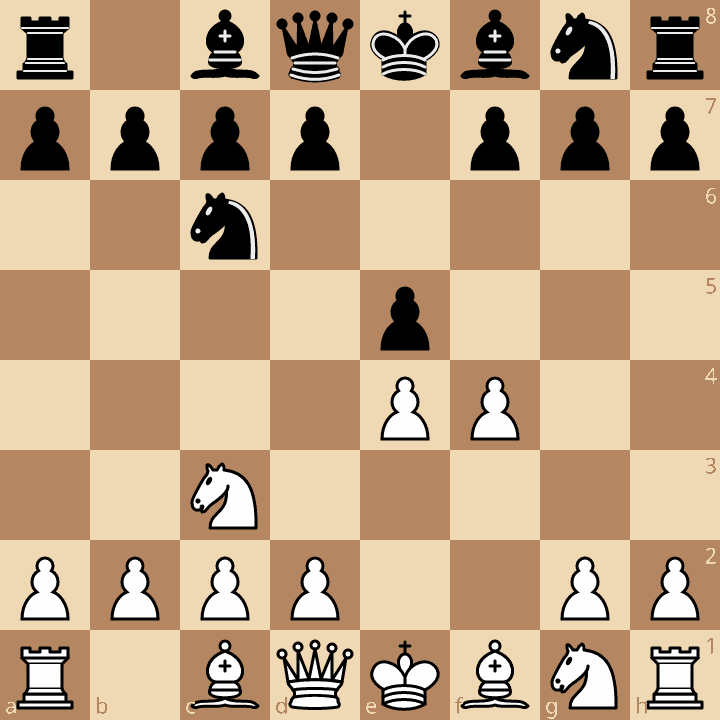
White plays for a King's Gambit-style attack, but with Nc3 already developed. Aggressive and leads to sharp tactical games.
Eine unterschätzte Eröffnung, scharf im Klubschach: klassische Entwicklung mit aggressiven Angriffsplänen.
1.e4 e5 2.Nc3
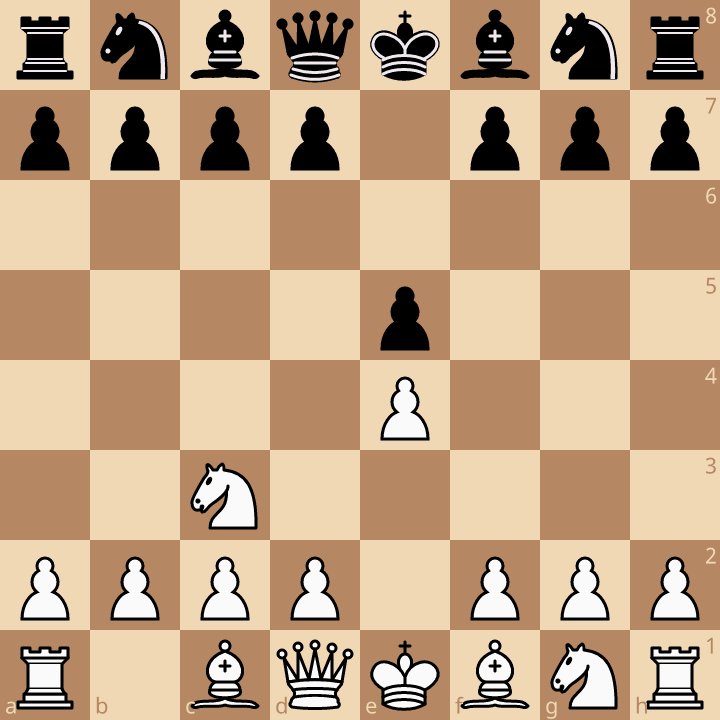
Die Wiener Partie (1.e4 e5 2.Sc3) entwickelt den Sc3 vor dem Königsspringer und hält die Flexibilität für das Wiener Gambit (3.f4, wienerische Version des Königsgambits) oder positionelle Pläne mit Lc4 und d3. Schwarz antwortet meist mit 2...Sf6 (Hauptvariante), 2...Sc6 oder 2...Lc5. Auf Elite-Ebene selten, in der Klubpraxis aber äußerst effektiv: die Wiener umgeht die schwere Theorie der Spanischen und Italienischen und bietet starke taktische Möglichkeiten.
Jede Variante unten kommt mit einem Diagramm und dem Hauptplan. Klicken Sie auf „Diese Eröffnung trainieren“, um jede Variante mit Spaced Repetition zu trainieren.
Möchten Sie Wiener Partie aus dem Gedächtnis spielen? Im kostenlosen Eröffnungstraining üben Sie Zug für Zug und kehren dann zu den Varianten zurück, bei denen Sie Fehler gemacht haben.
1.e4 e5 2.Nc3 2...Nc6 3.f4
White plays for a King's Gambit-style attack, but with Nc3 already developed. Aggressive and leads to sharp tactical games.
1.e4 e5 2.Nc3 2...Nf6 3.Bc4
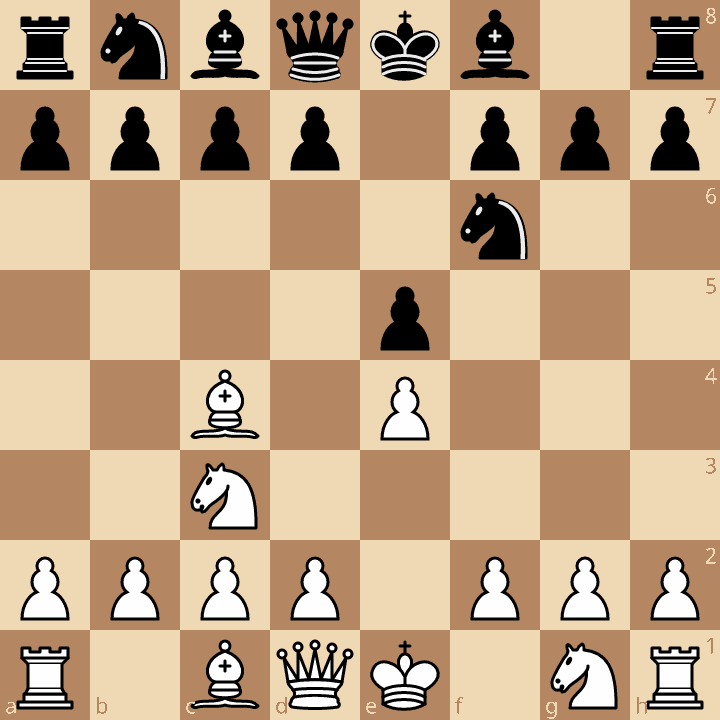
After 3...Nc6 4.d3 (or 4.d4), White builds a flexible setup. Can transpose to the Four Knights Game or stay in pure Vienna territory.
1.e4 e5 2.Nc3 2...Nc6 3.g3
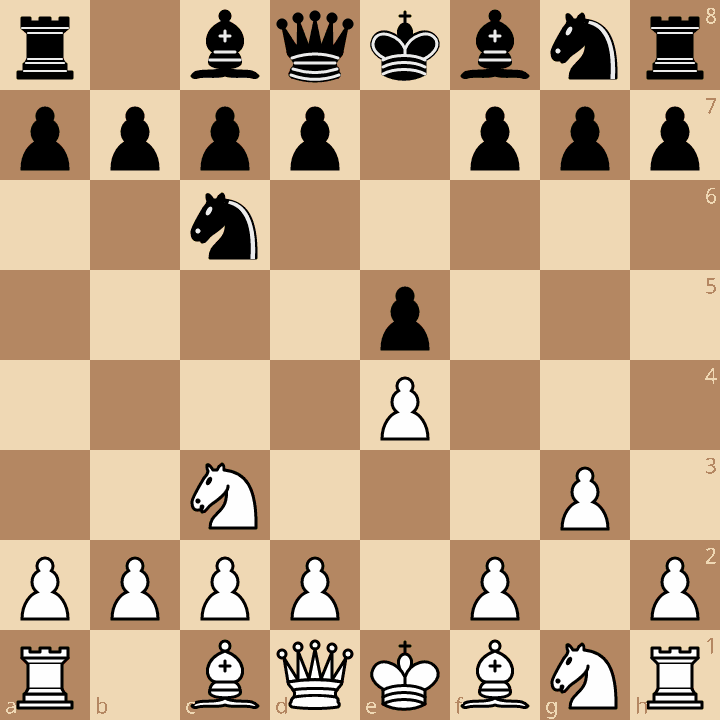
Also known as the Glek System. White fianchettoes with Bg2, then plays Nge2, d3, and prepares f4. A quiet, low-theory alternative that still aims at kingside pressure.
Sehen Sie sich die Falle auf dem Brett an oder gehen Sie sie Zug für Zug durch. Das sind Muster, die Sie in Ihren eigenen Partien bestrafen können.
A model Vienna Gambit attack. After 5.h4 g4 6.Ng5, White sacrifices another piece on f7 for a crushing attack on Black's exposed king.
1.e4 e5 2.Nc3 Nc6 3.f4 exf4 4.Nf3 g5 5.h4 g4 6.Ng5 h6 7.Nxf7 Kxf7 8.d4 d5 9.Bxf4
Start position
Play the Vienna Gambit (3.f4). The attack is strong and many opponents don't know how to defend it.
Learn the 2...Nf6 lines with both 3.Bc4 and 3.f4 (Vienna Gambit with different move order).
Study the Mieses Variation / Glek System (2...Nc6 3.g3) for a slower, positional approach. Transpose to the Vienna Gambit based on Black's response.
Yes, underrated at every level. Lower theory than Ruy Lopez, more aggressive than the Italian, and with the Vienna Gambit, it's one of the sharpest 1.e4 openings available.
The Vienna Gambit is considered slightly safer because Nc3 is already developed before f4. This means more piece support for the attack and less structural weakness. Both openings are rare at elite classical level; among amateurs the King's Gambit still has a strong following.
No. The 3.g3 line is correctly called the Mieses Variation or Glek System. Weaver W. Adams was a 20th-century American analyst whose name is associated with the 2.Nc3 Nf6 3.Bc4 Nxe4 4.Qh5 line, not 3.g3.
Modern theory recommends 3...d5 (counter-attacking the center) over 3...exf4. After 3...d5 4.fxe5 Nxe4 5.Nf3 Bc5, Black equalizes comfortably. Against the Vienna with 2...Nf6, 3...Nc6 is safest.
Both. The Vienna Gambit (3.f4) is pure attacker territory. The Mieses Variation (3.g3) is positional. The Vienna with 2...Nf6 3.Bc4 is balanced. One of the most flexible 1.e4 systems for any style.
Regularly in blitz and rapid games by Carlsen, Nepomniachtchi, and others. Less common in classical World Championship games, but not because it's unsound, just because Black has reliable defensive resources at the highest level.
Die klassische Eröffnung 1.e4 e5 2.Sf3 Sc6 3.Lc4: solide Prinzipien, reiche Taktik.
Die romantische Eröffnung schlechthin: Bauernopfer für offenes Zentrum und sofortigen Angriff.
Seit 500 Jahren die auf Spitzenniveau meistgespielte Eröffnung, langanhaltender positioneller Druck nach 1.e4.
Jede Variante oben ist eine Übung auf ChessAtlas. Verteilte Wiederholung plant jeden Zug so, dass Sie nie wieder eine Variante vergessen. Gratis zum Starten, keine Kreditkarte.