Classical (4...Bc5)
1.e4 e5 2.Nf3 Nc6 3.d4 3...exd4 4.Nxd4 Bc5
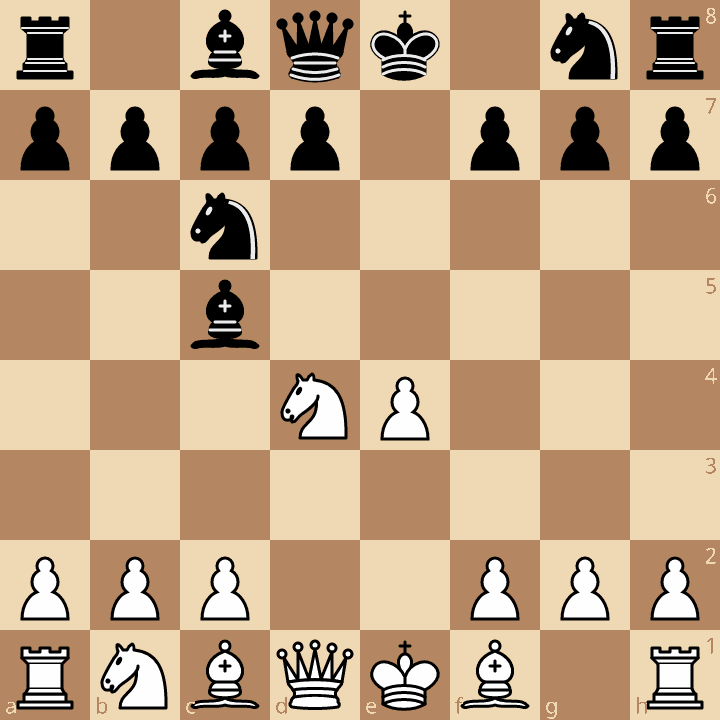
Black develops actively. After 5.Be3 Qf6 6.c3 Nge7, both sides have clear plans. White targets the b-pawn and central control.
The Scotch Game (1.e4 e5 2.Nf3 Nc6 3.d4) is the center-breaking alternative to the Italian, and Kasparov's weapon against Karpov.
1.e4 e5 2.Nf3 Nc6 3.d4
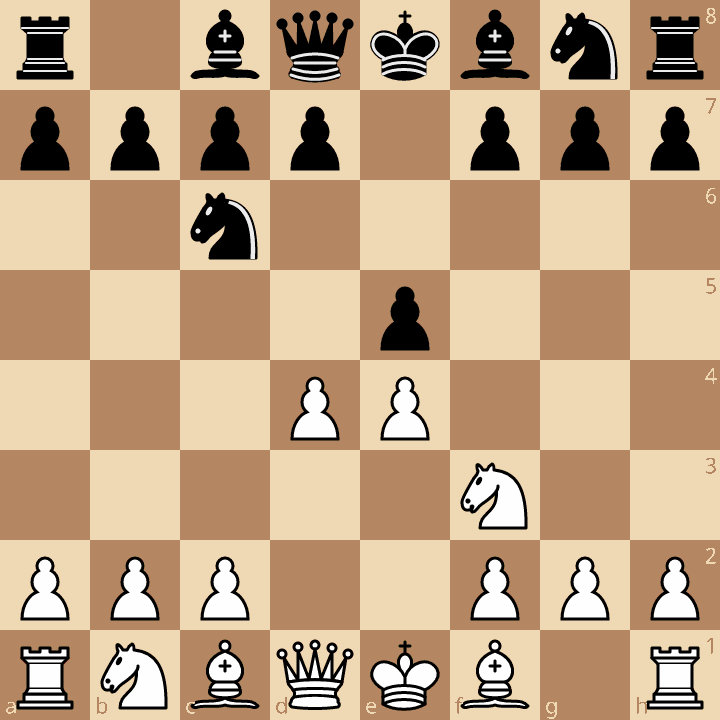
The Scotch Game (1.e4 e5 2.Nf3 Nc6 3.d4) immediately opens the center instead of the slow Italian or Ruy Lopez buildups. After 3...exd4 4.Nxd4, White gets an open game with active piece play and a clear strategic plan: occupy d4, develop rapidly, and attack Black's king. Kasparov revived the Scotch in his 1990 World Championship match against Karpov, and it's remained a serious weapon at every level since. Lower theory load than the Ruy Lopez, sharper than the Italian, a practical choice for players who want to fight for the initiative from move 3.
Each variation below comes with a diagram and the main plan. Click "Train this opening" to drill every line with spaced repetition.
Want to drill the Scotch Game from memory? Practice your openings move by move in the free opening trainer, then come back to the variations you missed.
1.e4 e5 2.Nf3 Nc6 3.d4 3...exd4 4.Nxd4 Bc5
Black develops actively. After 5.Be3 Qf6 6.c3 Nge7, both sides have clear plans. White targets the b-pawn and central control.
1.e4 e5 2.Nf3 Nc6 3.d4 3...exd4 4.Nxd4 Nf6 5.Nxc6 bxc6 6.e5
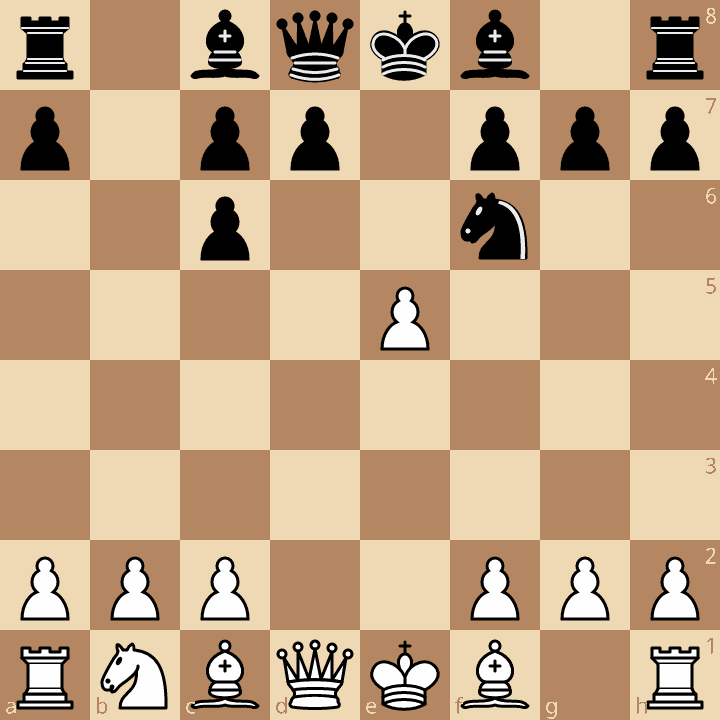
The main modern line. After 6...Qe7 7.Qe2 Nd5 8.c4, White plays for a strong center with c4 and eventually f4.
1.e4 e5 2.Nf3 Nc6 3.d4 3...exd4 4.Bc4
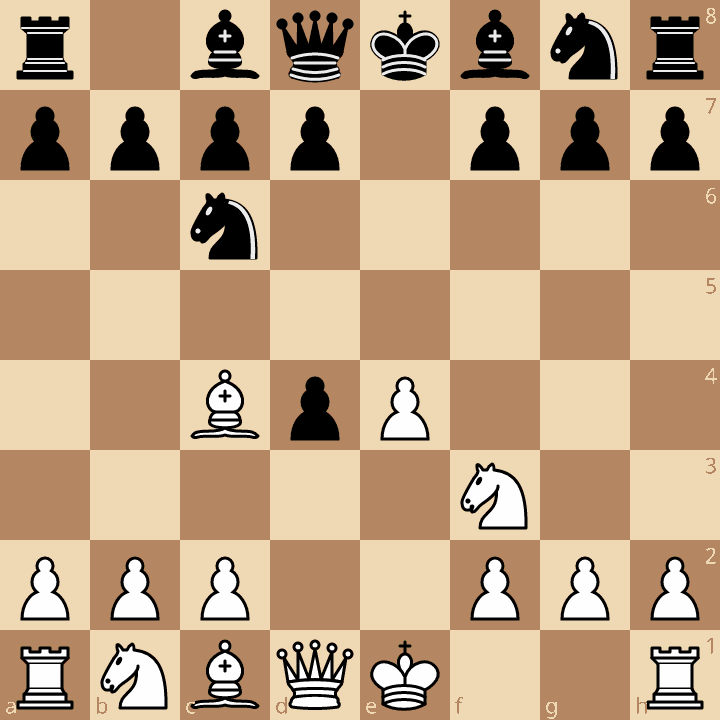
Instead of recapturing, White sacrifices a pawn for rapid development. After 4...Bc5 5.c3, we transpose to Italian territory with extra open lines.
Play the Scotch Gambit (4.Bc4), fast development, open lines, easy to play. Don't memorize deep theory.
Study the Classical (4...Bc5), the main line gives clear plans without deep theory. Learn the c3, Qd2, O-O-O setup.
Add the Schmidt main line (4...Nf6 5.Nxc6). Study Kasparov's Scotch games from the 1990 World Championship.
Yes, a solid, practical opening with less theory than the Ruy Lopez and sharper play than the Italian Game. Kasparov used it at the World Championship level. Very underrated at club level.
The Scotch opens the center on move 3 (d4 exd4 Nxd4), leading to open games with active pieces. The Italian delays the center break (c3+d4 or just piece development), leading to slower positional games. Scotch = faster, sharper; Italian = slower, more strategic.
After 3...exd4, White plays 4.Bc4 (instead of recapturing). White sacrifices a pawn for rapid development and open lines. Very aggressive, good at club level.
It's suitable for intermediate players (1200+). The open positions are tactical, which rewards calculation. The Italian Game is slightly easier to learn, but the Scotch is a great second or third opening to study.
Kasparov (his 1990 match with Karpov), Anand, and Ding Liren have all used the Scotch. It's a respected opening at every level, not just a club-level surprise weapon.
The fastest-developing 1.e4 opening. Aim the bishop at f7 and play for the attack.
The king of 1.e4 openings. Deep theory, long-term pressure, grandmaster-tested.
The 'symmetric' defense. Rock-solid and endorsed at the World Championship level.
Every variation above is a drill on ChessAtlas. Spaced repetition schedules each move so you never forget a line again. Free to start, no credit card.