Classical (4...Bc5)
1.e4 e5 2.Nf3 Nc6 3.d4 3...exd4 4.Nxd4 Bc5
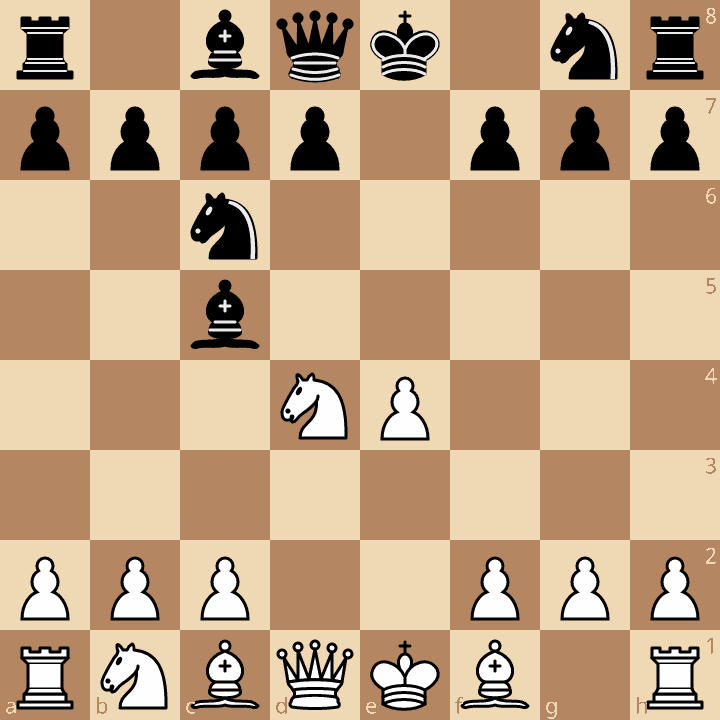
Black develops actively. After 5.Be3 Qf6 6.c3 Nge7, both sides have clear plans. White targets the b-pawn and central control.
La apertura agresiva que abre el centro en el tercer lance, avalada por Kasparov.
1.e4 e5 2.Nf3 Nc6 3.d4
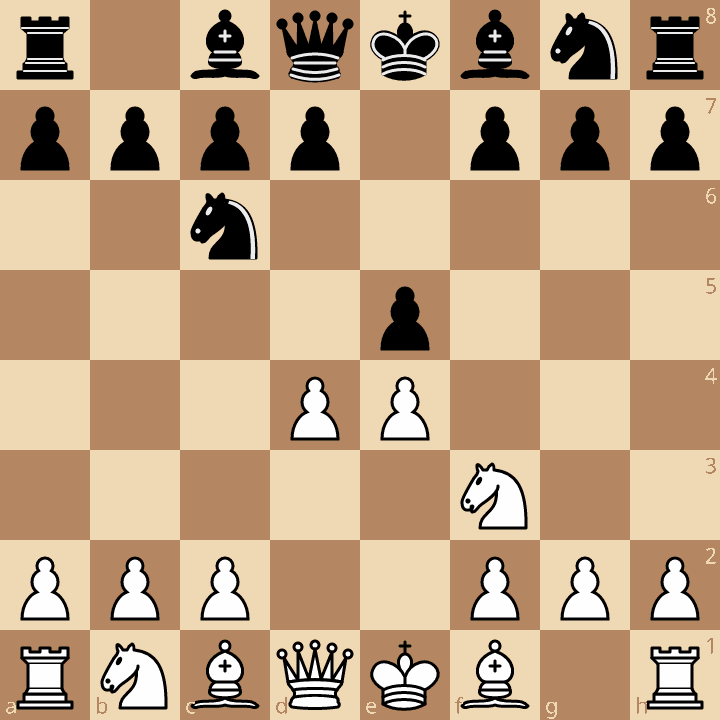
La Escocesa (1.e4 e5 2.Cf3 Cc6 3.d4) abre el centro de inmediato al cambiar el peón de d4 por el peón de e5. Tras 3...exd4 4.Cxd4, las blancas tienen un caballo central activo y fuerzan un juego táctico. Las principales defensas negras son 4...Cf6 (Clásica), 4...Ac5 (Variante Clásica) y 4...Dh4 (gambito antiposicional). Kasparov la resucitó en los años 90 como arma sorpresa contra los especialistas de la Española. Menos teórica que la Española, más combativa que la Italiana, perfecta para jugadores activos entre 1400 y 2200 ELO.
Cada variante incluye un diagrama y el plan principal. Haga clic en «Entrene esta apertura» para trabajar cada línea con repetición espaciada.
¿Quiere repasar Apertura Escocesa de memoria? Practique sus aperturas jugada a jugada en el entrenador gratuito y vuelva luego a las variantes que falló.
1.e4 e5 2.Nf3 Nc6 3.d4 3...exd4 4.Nxd4 Bc5
Black develops actively. After 5.Be3 Qf6 6.c3 Nge7, both sides have clear plans. White targets the b-pawn and central control.
1.e4 e5 2.Nf3 Nc6 3.d4 3...exd4 4.Nxd4 Nf6 5.Nxc6 bxc6 6.e5
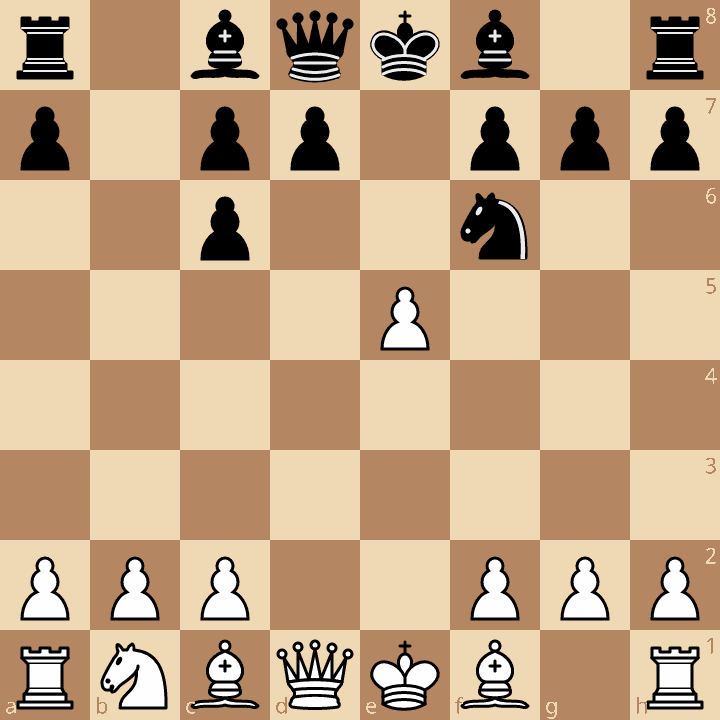
The main modern line. After 6...Qe7 7.Qe2 Nd5 8.c4, White plays for a strong center with c4 and eventually f4.
1.e4 e5 2.Nf3 Nc6 3.d4 3...exd4 4.Bc4
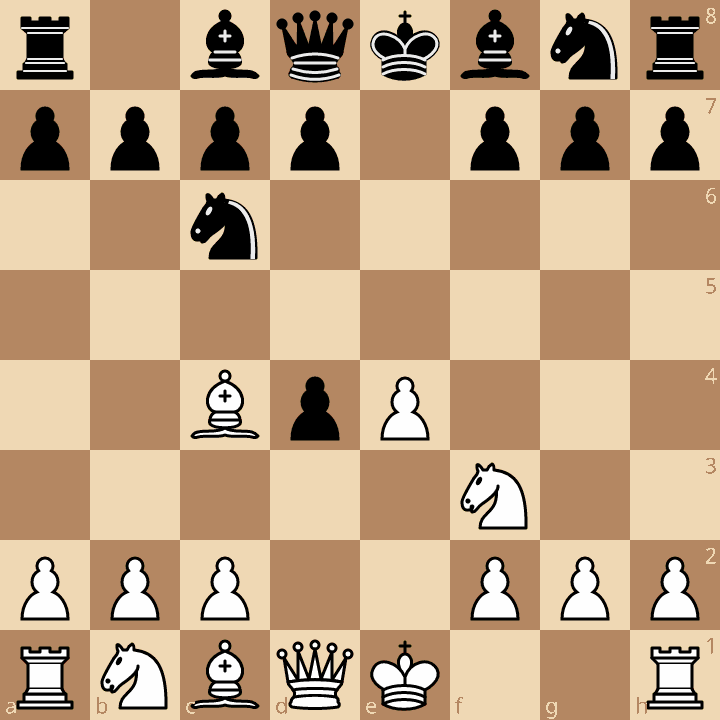
Instead of recapturing, White sacrifices a pawn for rapid development. After 4...Bc5 5.c3, we transpose to Italian territory with extra open lines.
Play the Scotch Gambit (4.Bc4), fast development, open lines, easy to play. Don't memorize deep theory.
Study the Classical (4...Bc5), the main line gives clear plans without deep theory. Learn the c3, Qd2, O-O-O setup.
Add the Schmidt main line (4...Nf6 5.Nxc6). Study Kasparov's Scotch games from the 1990 World Championship.
Yes, a solid, practical opening with less theory than the Ruy Lopez and sharper play than the Italian Game. Kasparov used it at the World Championship level. Very underrated at club level.
The Scotch opens the center on move 3 (d4 exd4 Nxd4), leading to open games with active pieces. The Italian delays the center break (c3+d4 or just piece development), leading to slower positional games. Scotch = faster, sharper; Italian = slower, more strategic.
After 3...exd4, White plays 4.Bc4 (instead of recapturing). White sacrifices a pawn for rapid development and open lines. Very aggressive, good at club level.
It's suitable for intermediate players (1200+). The open positions are tactical, which rewards calculation. The Italian Game is slightly easier to learn, but the Scotch is a great second or third opening to study.
Kasparov (his 1990 match with Karpov), Anand, and Ding Liren have all used the Scotch. It's a respected opening at every level, not just a club-level surprise weapon.
La apertura clásica 1.e4 e5 2.Cf3 Cc6 3.Ac4: principios sólidos, tácticas ricas.
La apertura más jugada al más alto nivel desde hace 500 años, presión posicional duradera a 1.e4.
La defensa a 1.e4 e5 más sólida: simétrica, equilibrada y difícil de batir.
Cada variante de arriba es un ejercicio en ChessAtlas. La repetición espaciada programa cada movimiento para que nunca olvide una línea. Gratis para empezar, sin tarjeta de crédito.