Classical (4...Bc5)
1.e4 e5 2.Nf3 Nc6 3.d4 3...exd4 4.Nxd4 Bc5
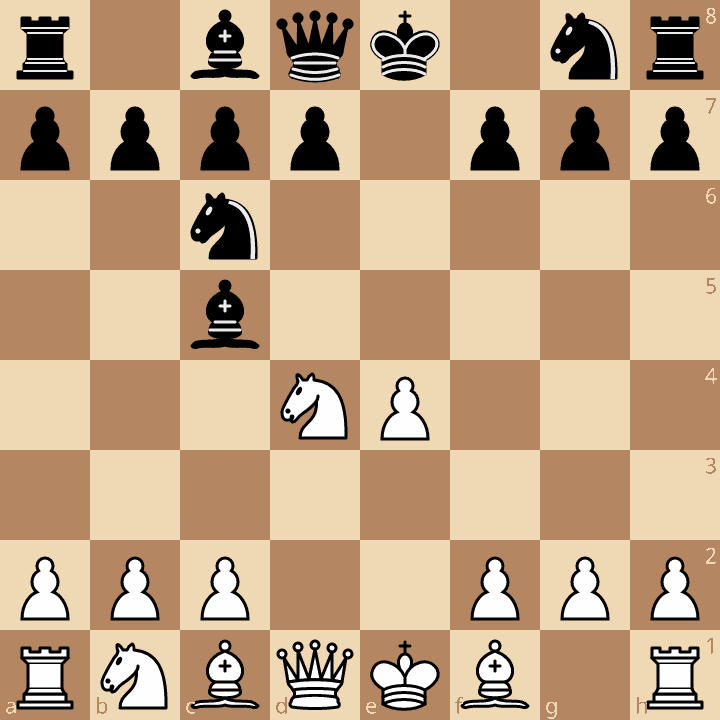
Black develops actively. After 5.Be3 Qf6 6.c3 Nge7, both sides have clear plans. White targets the b-pawn and central control.
Die aggressive Eröffnung, die das Zentrum im dritten Zug öffnet, von Kasparow geadelt.
1.e4 e5 2.Nf3 Nc6 3.d4
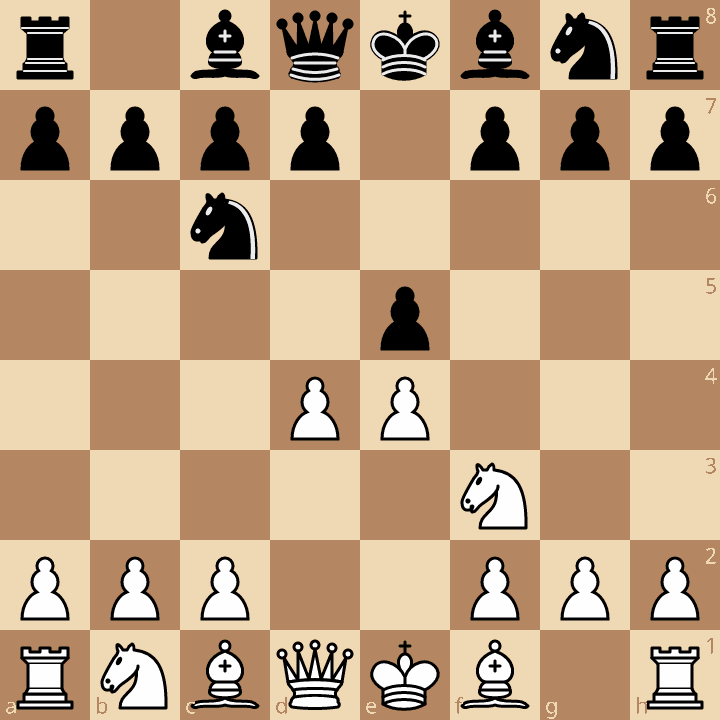
Die Schottische (1.e4 e5 2.Sf3 Sc6 3.d4) öffnet das Zentrum sofort, indem sie den d4-Bauern gegen den e5-Bauern tauscht. Nach 3...exd4 4.Sxd4 haben die Weißen einen aktiven Zentralspringer und erzwingen taktisches Spiel. Die Hauptverteidigungen von Schwarz sind 4...Sf6 (Klassisch), 4...Lc5 (klassische Variante) und 4...Dh4 (antipositionelles Gambit). Kasparow belebte sie in den 1990er-Jahren als Überraschungswaffe gegen Spanisch-Spezialisten. Weniger theorielastig als die Spanische, kämpferischer als die Italienische, perfekt für aktive Spieler zwischen 1400 und 2200 Elo.
Jede Variante unten kommt mit einem Diagramm und dem Hauptplan. Klicken Sie auf „Diese Eröffnung trainieren“, um jede Variante mit Spaced Repetition zu trainieren.
Möchten Sie Schottische Partie aus dem Gedächtnis spielen? Im kostenlosen Eröffnungstraining üben Sie Zug für Zug und kehren dann zu den Varianten zurück, bei denen Sie Fehler gemacht haben.
1.e4 e5 2.Nf3 Nc6 3.d4 3...exd4 4.Nxd4 Bc5
Black develops actively. After 5.Be3 Qf6 6.c3 Nge7, both sides have clear plans. White targets the b-pawn and central control.
1.e4 e5 2.Nf3 Nc6 3.d4 3...exd4 4.Nxd4 Nf6 5.Nxc6 bxc6 6.e5
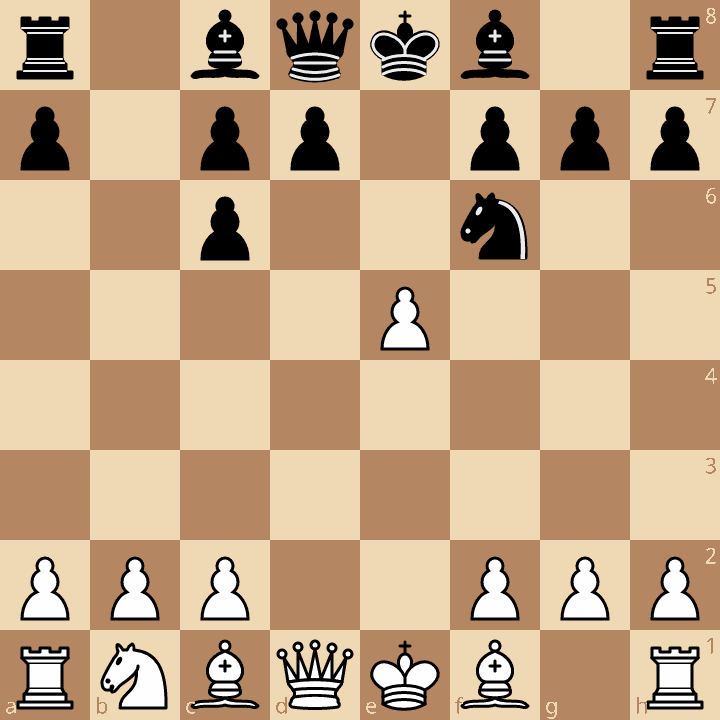
The main modern line. After 6...Qe7 7.Qe2 Nd5 8.c4, White plays for a strong center with c4 and eventually f4.
1.e4 e5 2.Nf3 Nc6 3.d4 3...exd4 4.Bc4
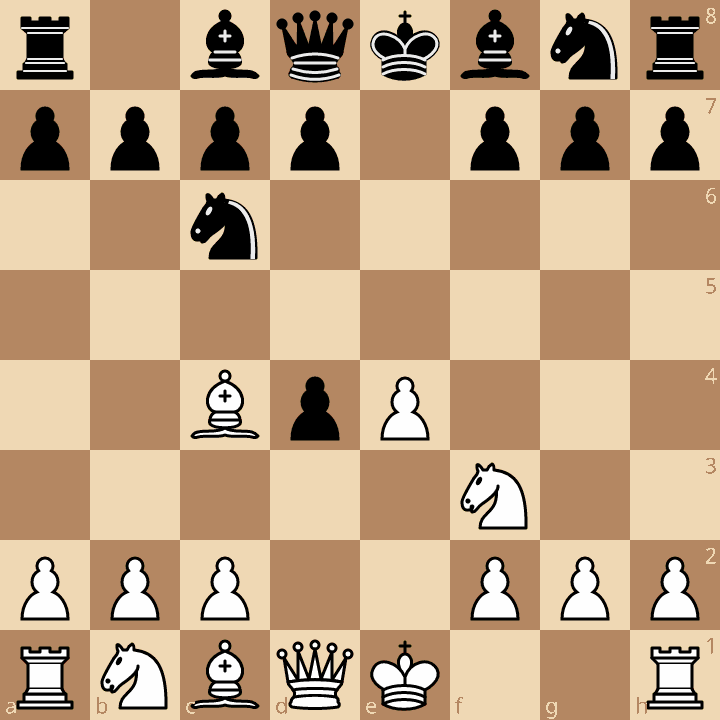
Instead of recapturing, White sacrifices a pawn for rapid development. After 4...Bc5 5.c3, we transpose to Italian territory with extra open lines.
Play the Scotch Gambit (4.Bc4), fast development, open lines, easy to play. Don't memorize deep theory.
Study the Classical (4...Bc5), the main line gives clear plans without deep theory. Learn the c3, Qd2, O-O-O setup.
Add the Schmidt main line (4...Nf6 5.Nxc6). Study Kasparov's Scotch games from the 1990 World Championship.
Yes, a solid, practical opening with less theory than the Ruy Lopez and sharper play than the Italian Game. Kasparov used it at the World Championship level. Very underrated at club level.
The Scotch opens the center on move 3 (d4 exd4 Nxd4), leading to open games with active pieces. The Italian delays the center break (c3+d4 or just piece development), leading to slower positional games. Scotch = faster, sharper; Italian = slower, more strategic.
After 3...exd4, White plays 4.Bc4 (instead of recapturing). White sacrifices a pawn for rapid development and open lines. Very aggressive, good at club level.
It's suitable for intermediate players (1200+). The open positions are tactical, which rewards calculation. The Italian Game is slightly easier to learn, but the Scotch is a great second or third opening to study.
Kasparov (his 1990 match with Karpov), Anand, and Ding Liren have all used the Scotch. It's a respected opening at every level, not just a club-level surprise weapon.
Die klassische Eröffnung 1.e4 e5 2.Sf3 Sc6 3.Lc4: solide Prinzipien, reiche Taktik.
Seit 500 Jahren die auf Spitzenniveau meistgespielte Eröffnung, langanhaltender positioneller Druck nach 1.e4.
Die soliteste Antwort auf 1.e4 e5: symmetrisch, ausgeglichen, schwer zu schlagen.
Jede Variante oben ist eine Übung auf ChessAtlas. Verteilte Wiederholung plant jeden Zug so, dass Sie nie wieder eine Variante vergessen. Gratis zum Starten, keine Kreditkarte.