Classical (3.Nxe5)
1.e4 e5 2.Nf3 Nf6 3.Nxe5 d6 4.Nf3 Nxe4
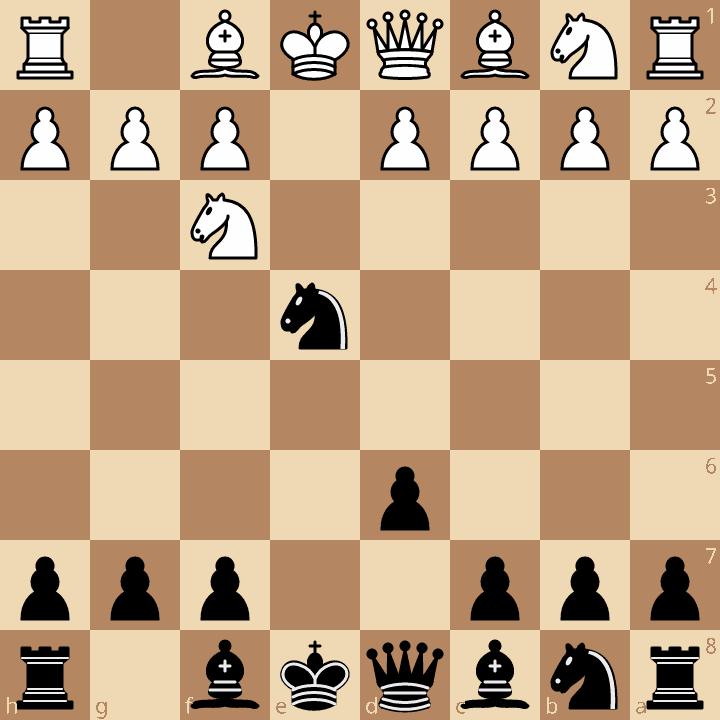
The main line. After 5.d4 d5 6.Bd3 Bd6 7.O-O O-O, both sides have developed symmetrically. White typically plays c4 to break the symmetry.
Die soliteste Antwort auf 1.e4 e5: symmetrisch, ausgeglichen, schwer zu schlagen.
1.e4 e5 2.Nf3 Nf6
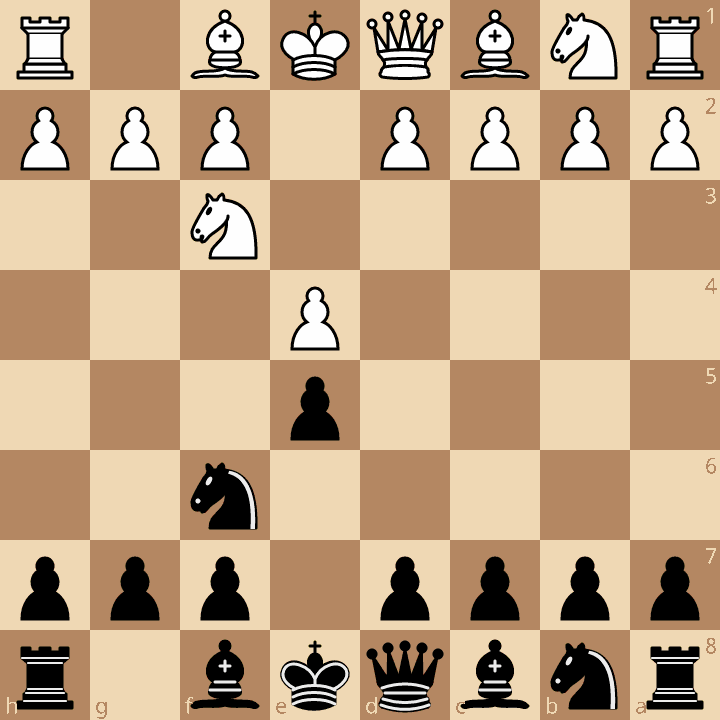
Die Russische (1.e4 e5 2.Sf3 Sf6) greift den e4-Bauern gespiegelt an und erzeugt eine hypersymmetrische Struktur. Weiß kann den Klassischen Angriff (3.Sxe5) spielen oder die Spannung mit 3.d4 halten. In beiden Fällen stützt der schwarze Springer auf f6 einen ausgeglichenen Gegenangriff, und die Russische ist dafür bekannt, auf Spitzenniveau zu Remis zu führen. Kramnik und Caruana haben sie übernommen, um 1.e4 mit Schwarz zu neutralisieren. Für Spieler, die absolute Solidität suchen, wahrscheinlich die optimale Wahl.
Jede Variante unten kommt mit einem Diagramm und dem Hauptplan. Klicken Sie auf „Diese Eröffnung trainieren“, um jede Variante mit Spaced Repetition zu trainieren.
Möchten Sie Russische Verteidigung aus dem Gedächtnis spielen? Im kostenlosen Eröffnungstraining üben Sie Zug für Zug und kehren dann zu den Varianten zurück, bei denen Sie Fehler gemacht haben.
1.e4 e5 2.Nf3 Nf6 3.Nxe5 d6 4.Nf3 Nxe4
The main line. After 5.d4 d5 6.Bd3 Bd6 7.O-O O-O, both sides have developed symmetrically. White typically plays c4 to break the symmetry.
1.e4 e5 2.Nf3 Nf6 3.Nxe5 d6 4.Nxf7
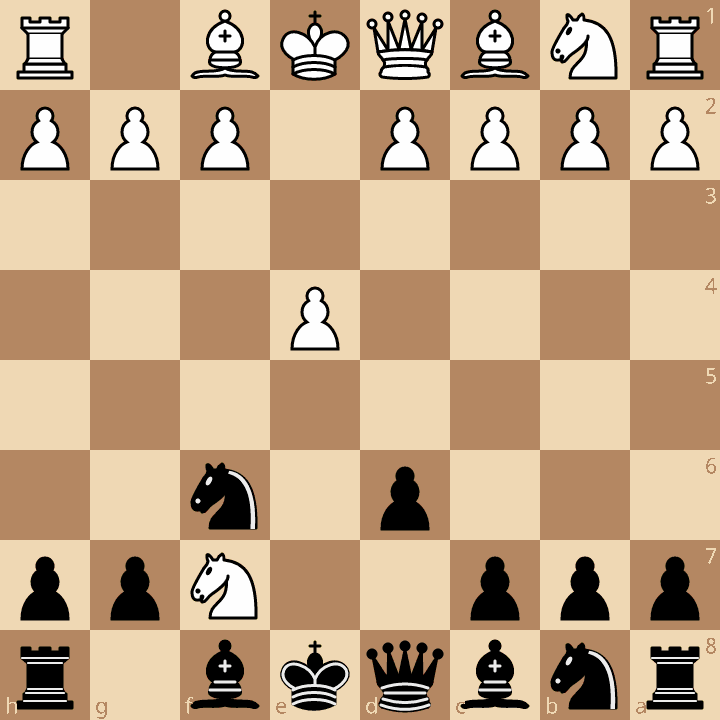
White sacrifices a knight for two pawns and Black's exposed king. After 4...Kxf7 5.d4, White plays for the attack. Risky but surprisingly dangerous at club level.
1.e4 e5 2.Nf3 Nf6 3.d4 Nxe4 4.Bd3
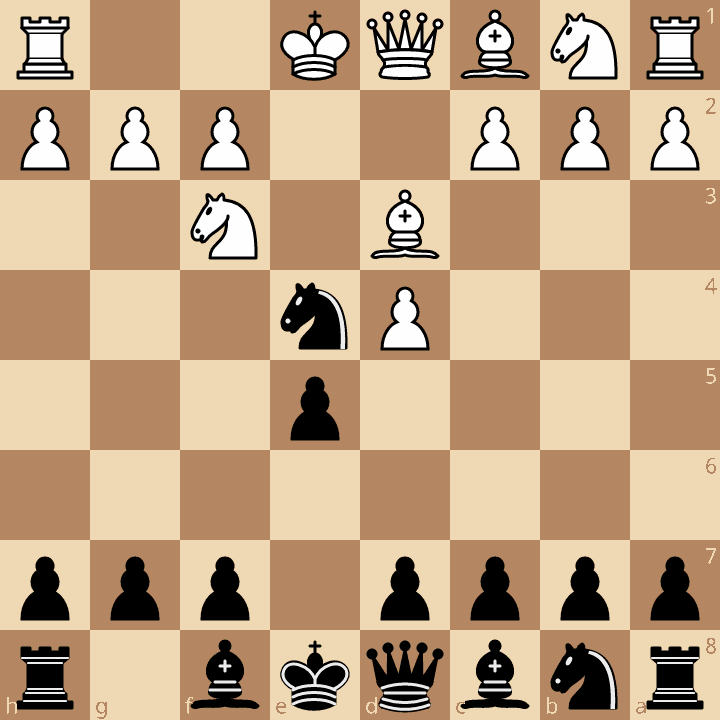
White avoids the queen trade and plays for an attack. A practical line to avoid the Petrov's drawish main line.
Focus on the Classical main line. Know that after 3.Nxe5 d6 4.Nf3, you recapture with 4...Nxe4; never grab the pawn immediately, because 3...Nxe4?? 4.Qe2! threatens the discovered check Nc6+ winning the queen.
Study the 5.d4 d5 main line to move 12. The symmetry often breaks with a c4 break from White.
Learn the Cochrane Gambit defense carefully, at club level it wins games for White. Also master the Italian Attack (3.d4) to handle anti-Petrov players.
The Petrov has a solid reputation, but it's not automatic-draw. Modern engines show that White can retain a small edge, and Black must play accurately. It's used at the top level precisely because it's reliable, but wins for Black happen regularly at club level.
3...Nxe4?? (capturing too early) runs into 4.Qe2!, threatening the discovered check 5.Nc6+. If Black defends naturally with 4...Nf6??, then 5.Nc6+ wins the queen. Black's only move is 4...Qe7 5.Qxe4 d6, regaining the piece — but White stays clearly better. The key point: after 3.Nxe5 always play 3...d6 first to drive the knight back, then 4...Nxe4 is safe.
It's suitable for intermediate players (1400+). Beginners learn more from open positions (Italian Game, Ruy Lopez) where tactics are more frequent. The Petrov rewards strategic understanding.
After 3.Nxe5 d6 4.Nxf7 Kxf7 5.d4, centralize your king and return the material if needed. Key idea: ...Kg8-h8 with ...Re8 and ...d5, or ...Ke8-f8 consolidating. At high levels the gambit is dubious, but club-level Cochrane is dangerous if unprepared.
Yes. Anand, Kramnik, Carlsen, and Caruana have all played the Petrov in World Championship matches. Its reputation as 'the boring defense' is misleading, it's one of Black's most theoretically sound answers to 1.e4.
Seit 500 Jahren die auf Spitzenniveau meistgespielte Eröffnung, langanhaltender positioneller Druck nach 1.e4.
Die klassische Eröffnung 1.e4 e5 2.Sf3 Sc6 3.Lc4: solide Prinzipien, reiche Taktik.
Die solide Antwort auf 1.e4, in der der weißfeldrige Läufer echte Arbeit bekommt.
Jede Variante oben ist eine Übung auf ChessAtlas. Verteilte Wiederholung plant jeden Zug so, dass Sie nie wieder eine Variante vergessen. Gratis zum Starten, keine Kreditkarte.