Classical (3.Nxe5)
1.e4 e5 2.Nf3 Nf6 3.Nxe5 d6 4.Nf3 Nxe4
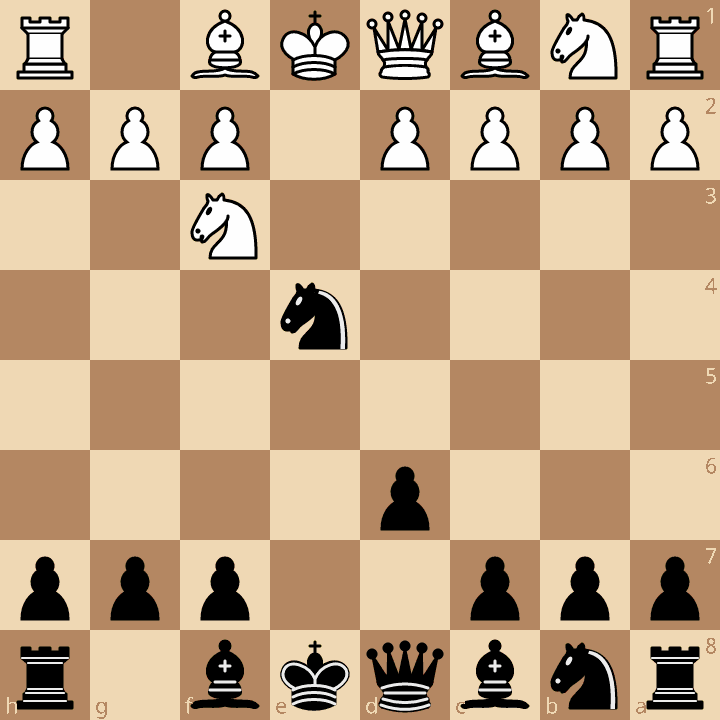
The main line. After 5.d4 d5 6.Bd3 Bd6 7.O-O O-O, both sides have developed symmetrically. White typically plays c4 to break the symmetry.
A defesa mais sólida a 1.e4 e5: simétrica, equilibrada, difícil de bater.
1.e4 e5 2.Nf3 Nf6
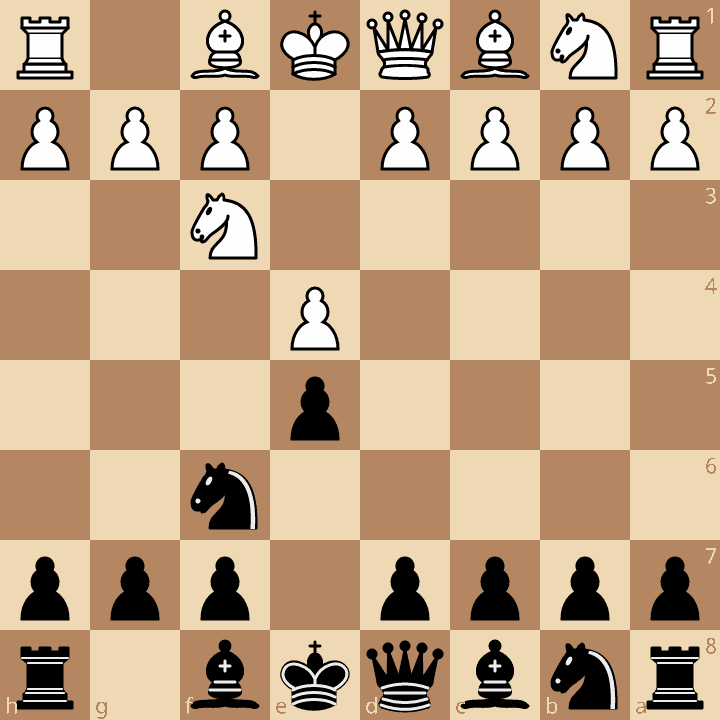
A Petrov (1.e4 e5 2.Cf3 Cf6) ataca o peão de e4 em espelho e cria uma estrutura hipersimétrica. As brancas podem jogar o Ataque Clássico (3.Cxe5) ou manter a tensão com 3.d4. Em ambos os casos o cavalo preto de f6 sustenta um contra-ataque equilibrado, e a Petrov é famosa por levar a empates ao mais alto nível. Kramnik e Caruana adoptaram-na para neutralizar 1.e4 com pretas. Para um jogador que procura solidez absoluta, é provavelmente a escolha óptima.
Cada variação abaixo vem com um diagrama e o plano principal. Clique em «Treine esta abertura» para praticar cada linha com repetição espaçada.
Quer repassar Defesa Petrov de memória? Pratique as suas aberturas lance a lance no treinador gratuito e volte depois às variações que errou.
1.e4 e5 2.Nf3 Nf6 3.Nxe5 d6 4.Nf3 Nxe4
The main line. After 5.d4 d5 6.Bd3 Bd6 7.O-O O-O, both sides have developed symmetrically. White typically plays c4 to break the symmetry.
1.e4 e5 2.Nf3 Nf6 3.Nxe5 d6 4.Nxf7
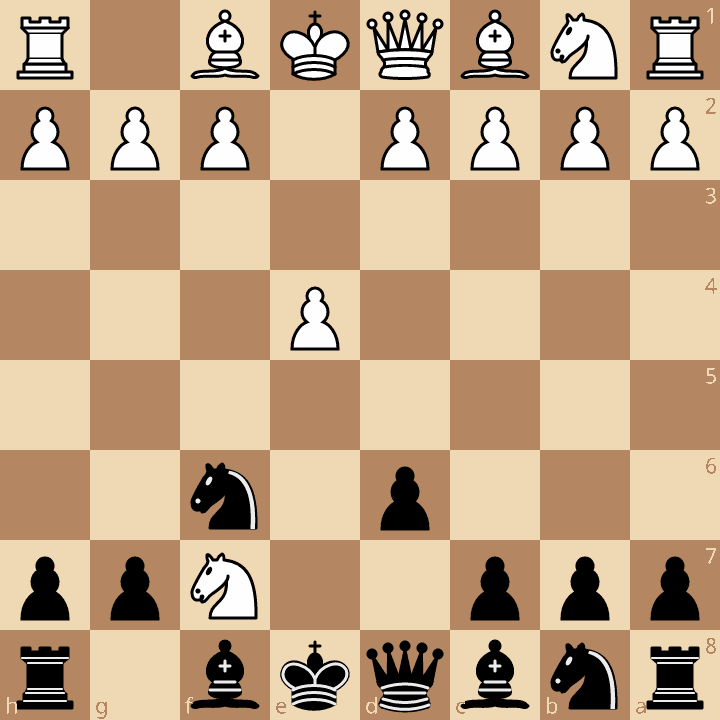
White sacrifices a knight for two pawns and Black's exposed king. After 4...Kxf7 5.d4, White plays for the attack. Risky but surprisingly dangerous at club level.
1.e4 e5 2.Nf3 Nf6 3.d4 Nxe4 4.Bd3
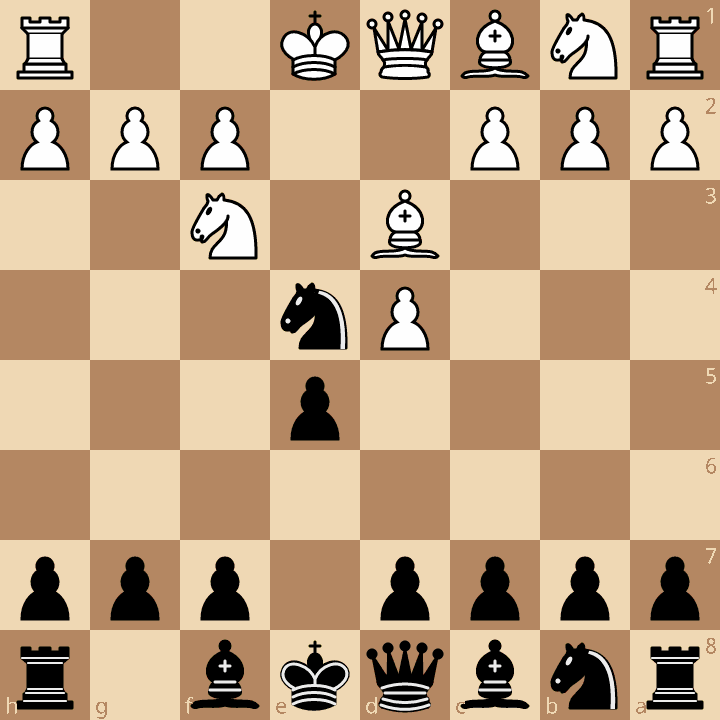
White avoids the queen trade and plays for an attack. A practical line to avoid the Petrov's drawish main line.
Focus on the Classical main line. Know that after 3.Nxe5 d6 4.Nf3, you recapture with 4...Nxe4; never grab the pawn immediately, because 3...Nxe4?? 4.Qe2! threatens the discovered check Nc6+ winning the queen.
Study the 5.d4 d5 main line to move 12. The symmetry often breaks with a c4 break from White.
Learn the Cochrane Gambit defense carefully, at club level it wins games for White. Also master the Italian Attack (3.d4) to handle anti-Petrov players.
The Petrov has a solid reputation, but it's not automatic-draw. Modern engines show that White can retain a small edge, and Black must play accurately. It's used at the top level precisely because it's reliable, but wins for Black happen regularly at club level.
3...Nxe4?? (capturing too early) runs into 4.Qe2!, threatening the discovered check 5.Nc6+. If Black defends naturally with 4...Nf6??, then 5.Nc6+ wins the queen. Black's only move is 4...Qe7 5.Qxe4 d6, regaining the piece — but White stays clearly better. The key point: after 3.Nxe5 always play 3...d6 first to drive the knight back, then 4...Nxe4 is safe.
It's suitable for intermediate players (1400+). Beginners learn more from open positions (Italian Game, Ruy Lopez) where tactics are more frequent. The Petrov rewards strategic understanding.
After 3.Nxe5 d6 4.Nxf7 Kxf7 5.d4, centralize your king and return the material if needed. Key idea: ...Kg8-h8 with ...Re8 and ...d5, or ...Ke8-f8 consolidating. At high levels the gambit is dubious, but club-level Cochrane is dangerous if unprepared.
Yes. Anand, Kramnik, Carlsen, and Caruana have all played the Petrov in World Championship matches. Its reputation as 'the boring defense' is misleading, it's one of Black's most theoretically sound answers to 1.e4.
A abertura mais jogada ao mais alto nível há 500 anos, pressão posicional duradoura a 1.e4.
A abertura clássica 1.e4 e5 2.Cf3 Cc6 3.Bc4: princípios sólidos, tácticas ricas.
A defesa sólida a 1.e4 onde o bispo das casas brancas consegue trabalho real.
Cada variação acima é um exercício no ChessAtlas. A repetição espaçada programa cada lance para que você nunca mais esqueça uma linha. Grátis para começar, sem cartão de crédito.