Classical (3.Nxe5)
1.e4 e5 2.Nf3 Nf6 3.Nxe5 d6 4.Nf3 Nxe4
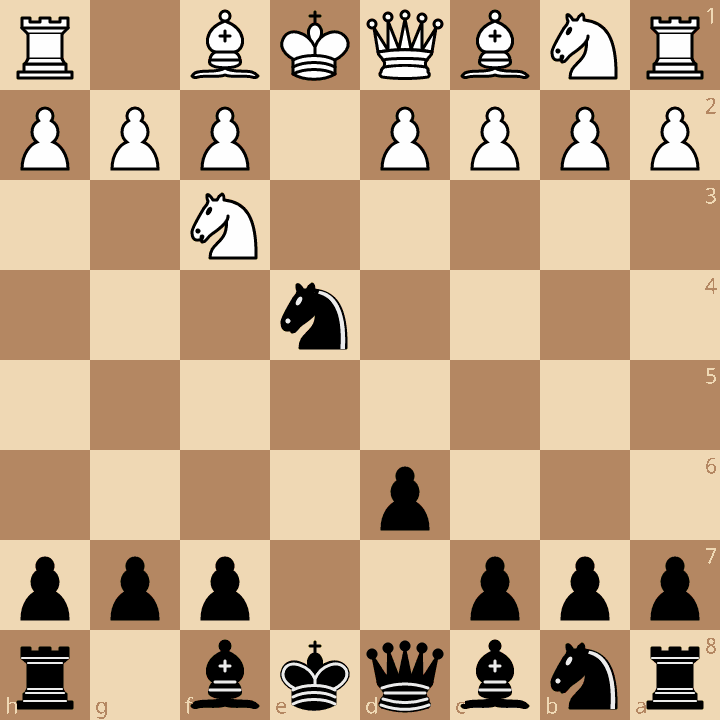
The main line. After 5.d4 d5 6.Bd3 Bd6 7.O-O O-O, both sides have developed symmetrically. White typically plays c4 to break the symmetry.
The 'symmetric' defense. Rock-solid and endorsed at the World Championship level.
1.e4 e5 2.Nf3 Nf6
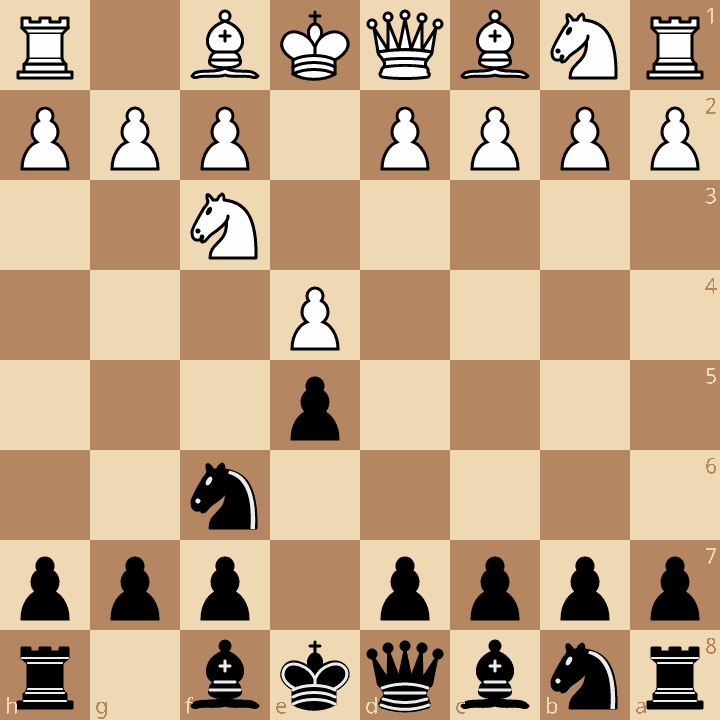
The Petrov Defense counters 1.e4 e5 2.Nf3 with 2...Nf6, ignoring the threat to e5 by counter-attacking e4. The logic: if White takes with 3.Nxe5, Black plays 3...d6 driving the knight back, then 4...Nxe4 equalizing material. The Petrov has a reputation as a drawing weapon, Kramnik, Anand, and Caruana have used it to neutralize 1.e4 at the top level. But it's not just defensive: the symmetry can be broken at any moment with ...d5...Nc5, or ...Bc5, leading to rich positional games.
pages.openingDetail.mainVariationsIntro
1.e4 e5 2.Nf3 Nf6 3.Nxe5 d6 4.Nf3 Nxe4
The main line. After 5.d4 d5 6.Bd3 Bd6 7.O-O O-O, both sides have developed symmetrically. White typically plays c4 to break the symmetry.
1.e4 e5 2.Nf3 Nf6 3.Nxe5 d6 4.Nxf7
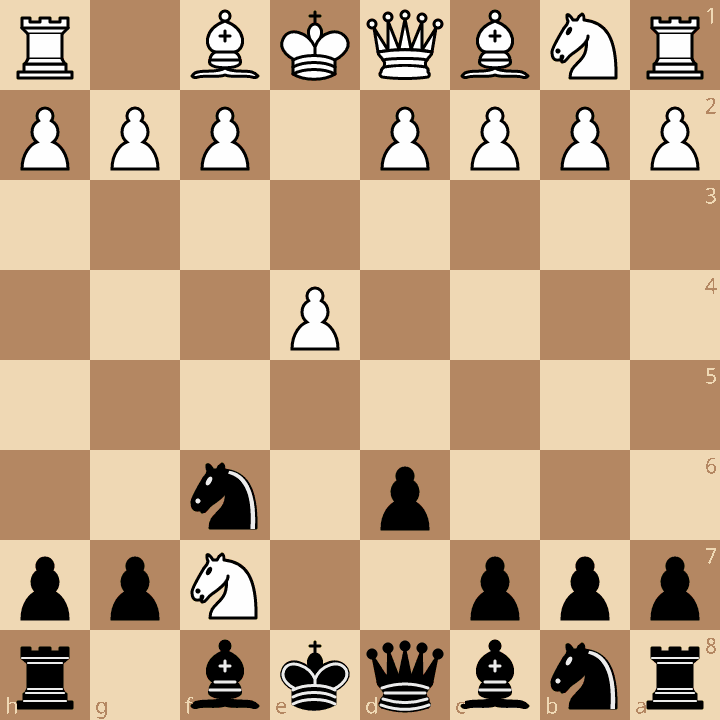
White sacrifices a knight for two pawns and Black's exposed king. After 4...Kxf7 5.d4, White plays for the attack. Risky but surprisingly dangerous at club level.
1.e4 e5 2.Nf3 Nf6 3.d4 Nxe4 4.Bd3
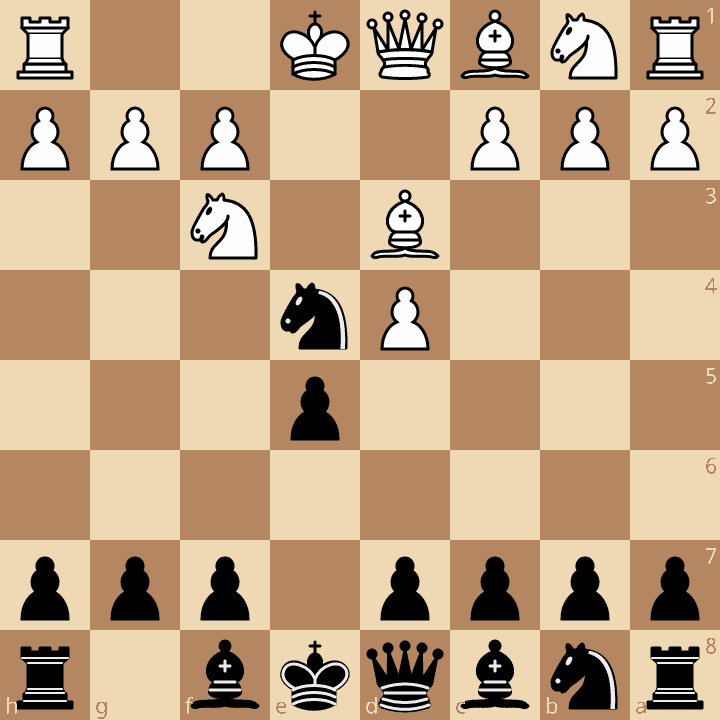
White avoids the queen trade and plays for an attack. A practical line to avoid the Petrov's drawish main line.
Focus on the Classical main line. Know that after 3.Nxe5 d6 4.Nf3, you recapture with 4...Nxe4; never grab the pawn immediately, because 3...Nxe4?? 4.Qe2! threatens the discovered check Nc6+ winning the queen.
Study the 5.d4 d5 main line to move 12. The symmetry often breaks with a c4 break from White.
Learn the Cochrane Gambit defense carefully, at club level it wins games for White. Also master the Italian Attack (3.d4) to handle anti-Petrov players.
The Petrov has a solid reputation, but it's not automatic-draw. Modern engines show that White can retain a small edge, and Black must play accurately. It's used at the top level precisely because it's reliable, but wins for Black happen regularly at club level.
3...Nxe4?? (capturing too early) runs into 4.Qe2!, threatening the discovered check 5.Nc6+. If Black defends naturally with 4...Nf6??, then 5.Nc6+ wins the queen. Black's only move is 4...Qe7 5.Qxe4 d6, regaining the piece — but White stays clearly better. The key point: after 3.Nxe5 always play 3...d6 first to drive the knight back, then 4...Nxe4 is safe.
It's suitable for intermediate players (1400+). Beginners learn more from open positions (Italian Game, Ruy Lopez) where tactics are more frequent. The Petrov rewards strategic understanding.
After 3.Nxe5 d6 4.Nxf7 Kxf7 5.d4, centralize your king and return the material if needed. Key idea: ...Kg8-h8 with ...Re8 and ...d5, or ...Ke8-f8 consolidating. At high levels the gambit is dubious, but club-level Cochrane is dangerous if unprepared.
Yes. Anand, Kramnik, Carlsen, and Caruana have all played the Petrov in World Championship matches. Its reputation as 'the boring defense' is misleading, it's one of Black's most theoretically sound answers to 1.e4.
The king of 1.e4 openings. Deep theory, long-term pressure, grandmaster-tested.
The fastest-developing 1.e4 opening. Aim the bishop at f7 and play for the attack.
Solid, resilient, and a Karpov classic still played at the top by Firouzja and Ding Liren. The structure-first answer to 1.e4.
pages.openingDetail.finalCtaText