Main Line (3.Nf3 Nf6)
1.d4 d5 2.c4 dxc4 3.Nf3 Nf6 4.e3 e6 5.Bxc4
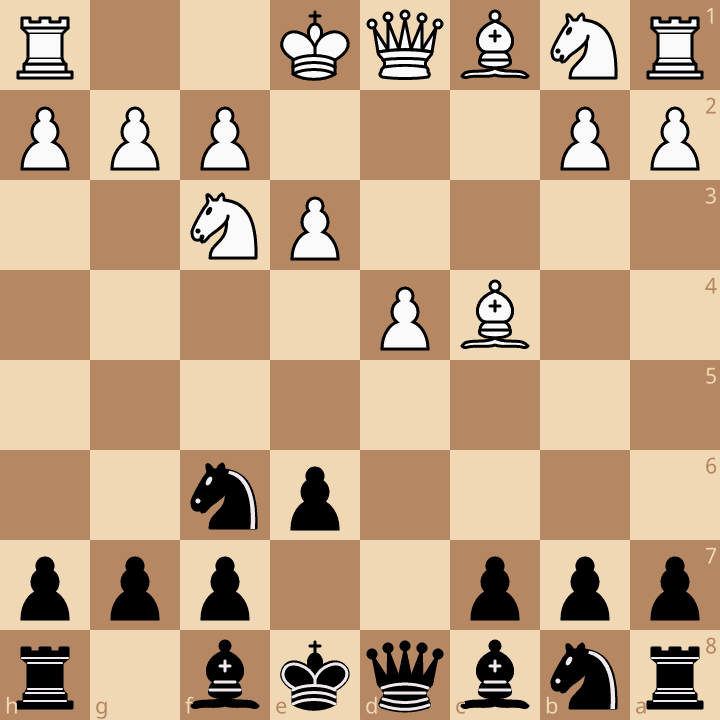
White regains the pawn. Black develops with ...c5...a6...b5...Bb7, and fights for ...c5-c4 or ...d5 breaks. Solid and reliable.
Accept the gambit pawn and get an open, playable middlegame. A reliable Black defense.
1.d4 d5 2.c4 dxc4
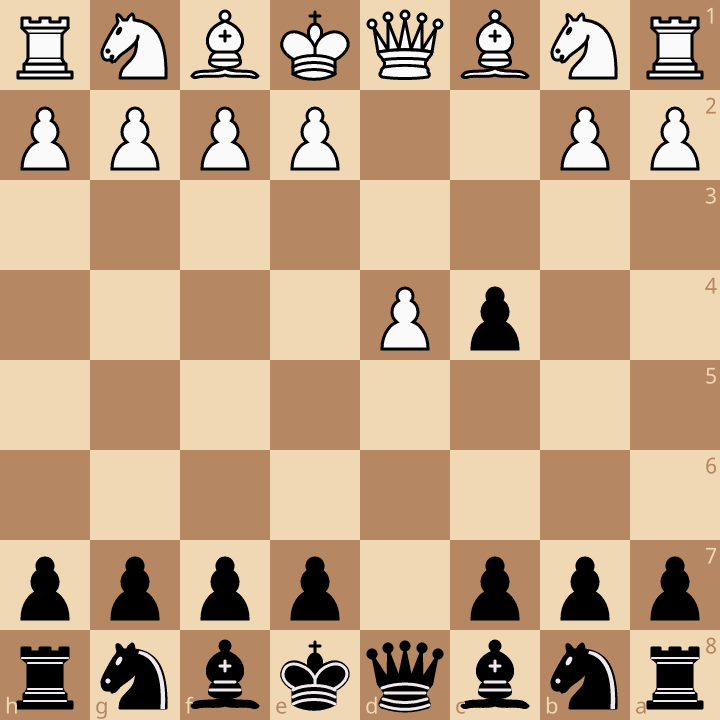
The Queen's Gambit Accepted starts with 1.d4 d5 2.c4 dxc4, where Black takes the gambit pawn instead of declining with 2...e6 or 2...c6. Despite the name, it's rarely a real sacrifice, White regains the c4 pawn with 3.Nf3, 3.e3, and 4.Bxc4. What Black gets in return: a free light-squared bishop (unlike the QGD's blocked Bc8) and faster development. The Queen's Gambit has been analyzed since the late 15th century (Lucena, 1497) and remains a mainstay of elite chess, from Capablanca to Carlsen.
pages.openingDetail.mainVariationsIntro
1.d4 d5 2.c4 dxc4 3.Nf3 Nf6 4.e3 e6 5.Bxc4
White regains the pawn. Black develops with ...c5...a6...b5...Bb7, and fights for ...c5-c4 or ...d5 breaks. Solid and reliable.
1.d4 d5 2.c4 dxc4 3.e4
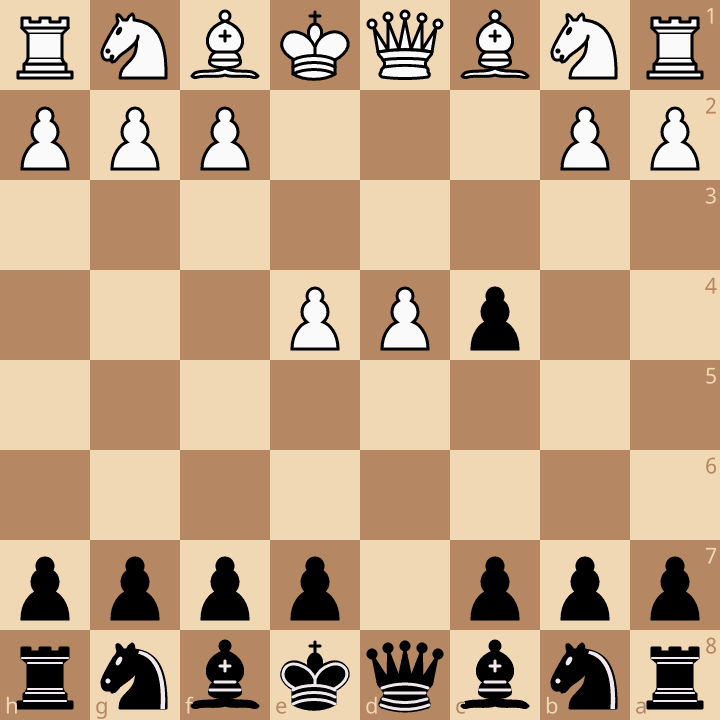
White claims the entire center. Sharp play after 3...Nf6 4.e5 Nd5 or 3...e5 (counter-attack). Requires preparation from both sides.
1.d4 d5 2.c4 dxc4 3.Nf3 a6
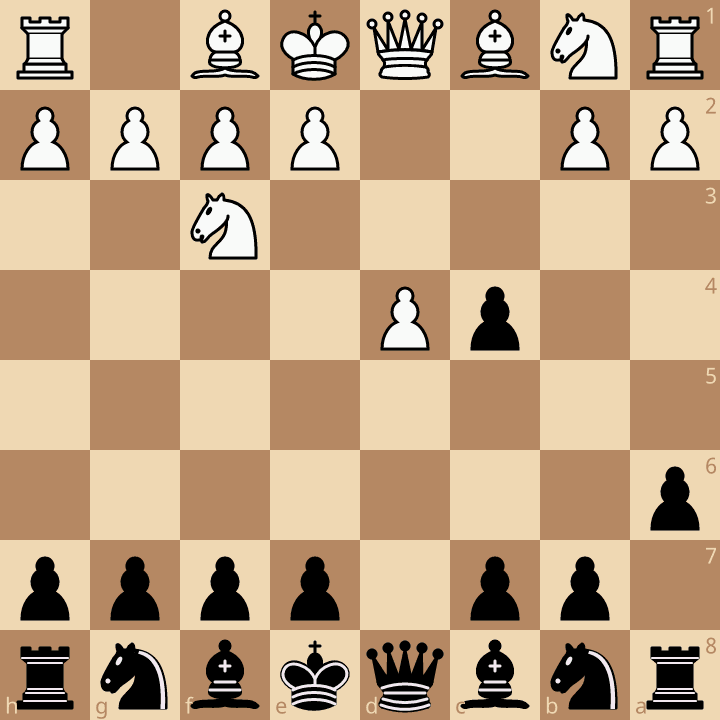
Black prepares ...b5 to hold the c4 pawn. A flexible but slower system. White plays 4.e3 and chases the c4 pawn.
If you face 1.d4 d5 2.c4, just take with 2...dxc4, it's the simplest response. Develop your pieces naturally and don't try to hold the c4 pawn.
Study the ...c5 plan in the Main Line. Black's main break is ...c5-c4 at the right moment.
Learn the Central Variation (3.e4) defense carefully. Also add the Alekhine Variation with 3...a6 to your repertoire for variety.
No, White always recovers the c4 pawn with 3.e3 and 4.Bxc4 (or 3.Nf3 and later e3). Attempts to hold the pawn with ...b5 leave Black with structural weaknesses on the queenside.
Both are fully playable. QGA (accepting) is faster, Black gets piece activity and avoids the French Bishop problem. QGD (declining with 2...e6) is solid but slower. Choose QGA for active play, QGD for rock-solid structure.
The Main Line with 3.Nf3 Nf6 4.e3 e6 5.Bxc4 c5 is the most reliable. Black plays for ...a6...b5...Bb7 and fights for a ...c5-c4 break.
Both avoid the French-style blocked bishop. The Slav (2...c6) keeps the d5 pawn solid but limits Black's central flexibility. The QGA gives up the center temporarily but gets faster development. Most modern masters prefer the QGA or Slav over the QGD for dynamic play.
Constantly. From Capablanca to Kramnik, Anand, Carlsen, and Caruana, the Queen's Gambit (in all forms) remains the main 1.d4 battleground at every World Championship match.
The bulletproof answer to 1.d4. Rock-solid structure and World Championship pedigree.
The ultimate low-maintenance opening. One setup against everything.
Aron Nimzowitsch's hypermodern masterpiece. Control the center with pieces, not pawns.
pages.openingDetail.finalCtaText