Main Line (3.Nf3 Nf6)
1.d4 d5 2.c4 dxc4 3.Nf3 Nf6 4.e3 e6 5.Bxc4
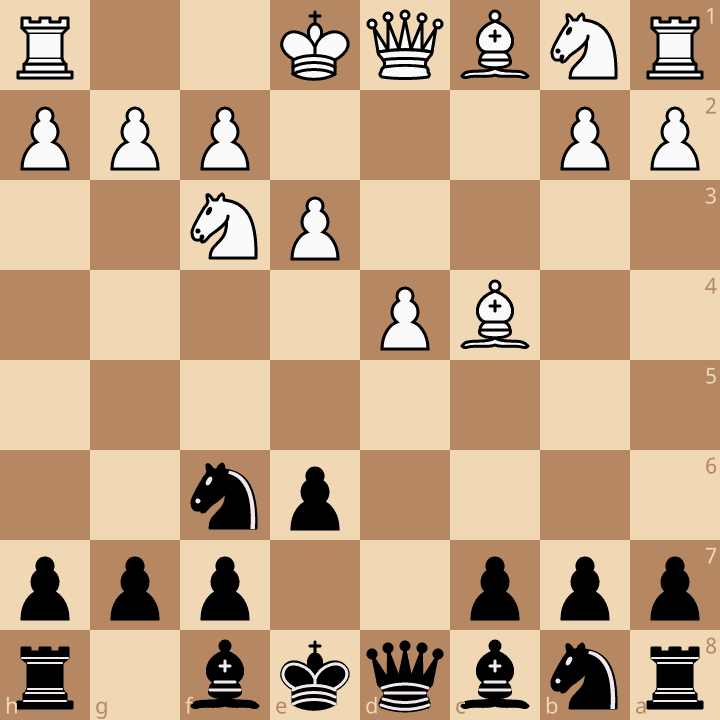
White regains the pawn. Black develops with ...c5...a6...b5...Bb7, and fights for ...c5-c4 or ...d5 breaks. Solid and reliable.
Den c4-Bauern schlagen und den weißfeldrigen Läufer befreien: aktive Verteidigung gegen 1.d4.
1.d4 d5 2.c4 dxc4
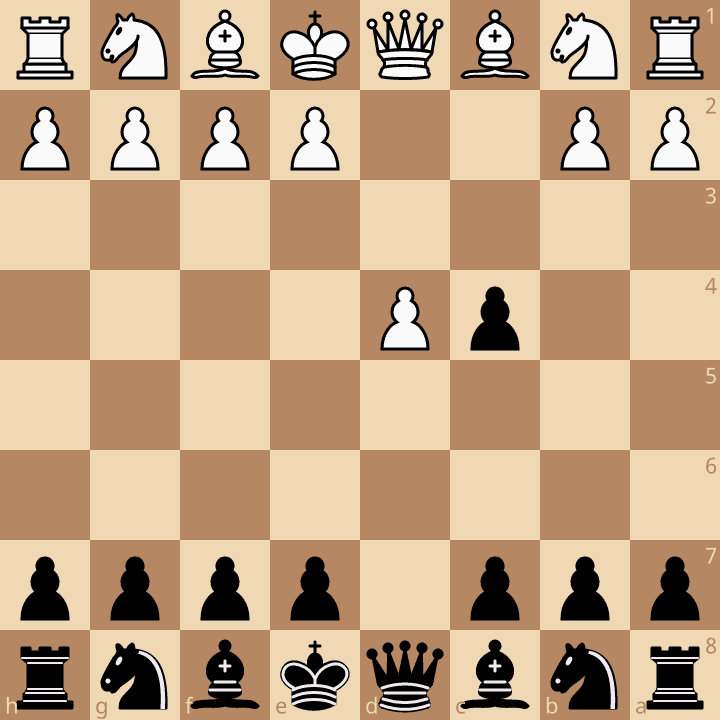
Das Angenommene Damengambit entsteht nach 1.d4 d5 2.c4 dxc4. Anders als im QGD schlagen die Schwarzen den Bauern und geben das Zentrum vorübergehend auf, um den c8-Läufer frei nach f5 oder g4 zu entwickeln. Weiß holt sich den Bauern mit Lxc4 zurück (nach 3.Sf3 und 4.e3 oder 4.e4), und das Spiel erinnert an gespiegelte QGD-Strukturen. Eine zuverlässige Verteidigung, die Carlsen und Anand gespielt haben: dynamischer als das QGD, weniger theorielastig als die Slawische.
Jede Variante unten kommt mit einem Diagramm und dem Hauptplan. Klicken Sie auf „Diese Eröffnung trainieren“, um jede Variante mit Spaced Repetition zu trainieren.
Möchten Sie Angenommenes Damengambit aus dem Gedächtnis spielen? Im kostenlosen Eröffnungstraining üben Sie Zug für Zug und kehren dann zu den Varianten zurück, bei denen Sie Fehler gemacht haben.
1.d4 d5 2.c4 dxc4 3.Nf3 Nf6 4.e3 e6 5.Bxc4
White regains the pawn. Black develops with ...c5...a6...b5...Bb7, and fights for ...c5-c4 or ...d5 breaks. Solid and reliable.
1.d4 d5 2.c4 dxc4 3.e4
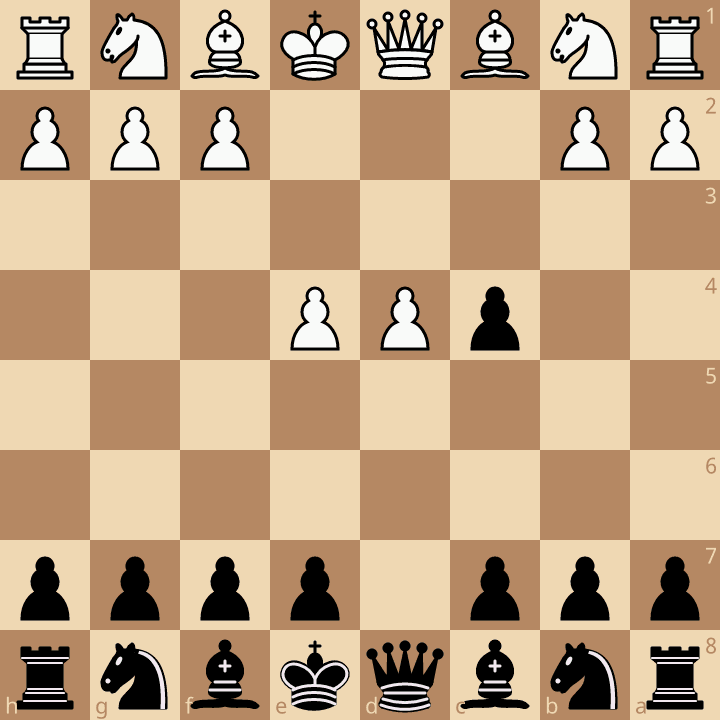
White claims the entire center. Sharp play after 3...Nf6 4.e5 Nd5 or 3...e5 (counter-attack). Requires preparation from both sides.
1.d4 d5 2.c4 dxc4 3.Nf3 a6
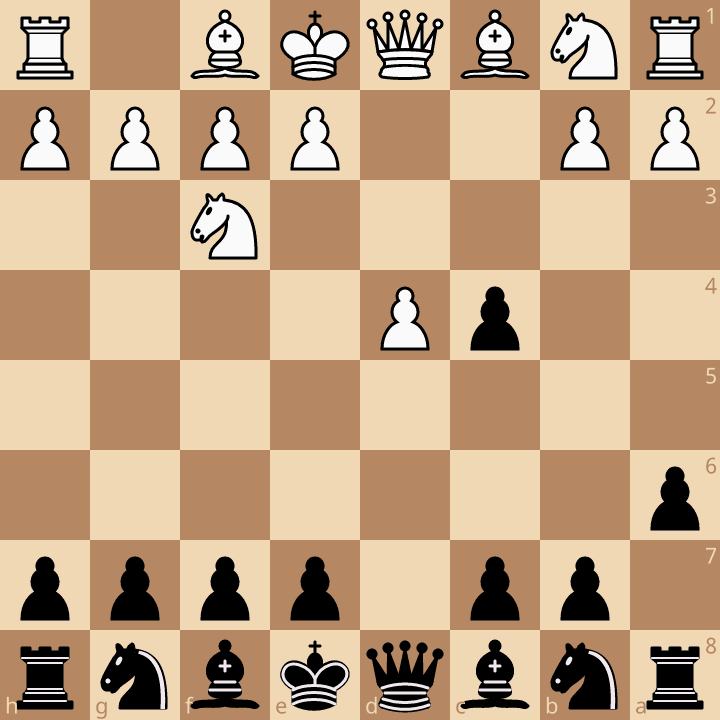
Black prepares ...b5 to hold the c4 pawn. A flexible but slower system. White plays 4.e3 and chases the c4 pawn.
If you face 1.d4 d5 2.c4, just take with 2...dxc4, it's the simplest response. Develop your pieces naturally and don't try to hold the c4 pawn.
Study the ...c5 plan in the Main Line. Black's main break is ...c5-c4 at the right moment.
Learn the Central Variation (3.e4) defense carefully. Also add the Alekhine Variation with 3...a6 to your repertoire for variety.
No, White always recovers the c4 pawn with 3.e3 and 4.Bxc4 (or 3.Nf3 and later e3). Attempts to hold the pawn with ...b5 leave Black with structural weaknesses on the queenside.
Both are fully playable. QGA (accepting) is faster, Black gets piece activity and avoids the French Bishop problem. QGD (declining with 2...e6) is solid but slower. Choose QGA for active play, QGD for rock-solid structure.
The Main Line with 3.Nf3 Nf6 4.e3 e6 5.Bxc4 c5 is the most reliable. Black plays for ...a6...b5...Bb7 and fights for a ...c5-c4 break.
Both avoid the French-style blocked bishop. The Slav (2...c6) keeps the d5 pawn solid but limits Black's central flexibility. The QGA gives up the center temporarily but gets faster development. Most modern masters prefer the QGA or Slav over the QGD for dynamic play.
Constantly. From Capablanca to Kramnik, Anand, Carlsen, and Caruana, the Queen's Gambit (in all forms) remains the main 1.d4 battleground at every World Championship match.
Die soliteste und am häufigsten gespielte Verteidigung gegen 1.d4, klassische Strategie in ihrer besten Form.
Ein universelles Schema gegen alle schwarzen Verteidigungen: wenig Theorie, wiederverwendbare Pläne, moderne Waffe Ding Lirens.
Die Elite-Verteidigung gegen 1.d4: Fesselung des c3-Springers für sofortige strukturelle Ungleichgewichte.
Jede Variante oben ist eine Übung auf ChessAtlas. Verteilte Wiederholung plant jeden Zug so, dass Sie nie wieder eine Variante vergessen. Gratis zum Starten, keine Kreditkarte.