Classical Variation
1.d4 Nf6 2.c4 e6 3.Nc3 Bb4 4.Qc2
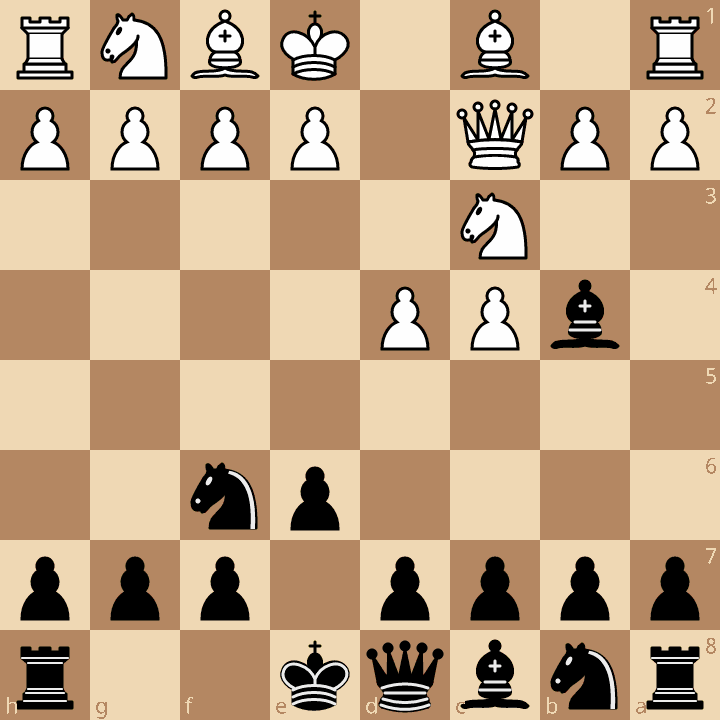
White protects c3 with the queen, avoiding doubled pawns. Black plays ...O-O...d5, or ...c5 for counterplay. The modern main line at the elite level.
Die Elite-Verteidigung gegen 1.d4: Fesselung des c3-Springers für sofortige strukturelle Ungleichgewichte.
1.d4 Nf6 2.c4 e6 3.Nc3 Bb4
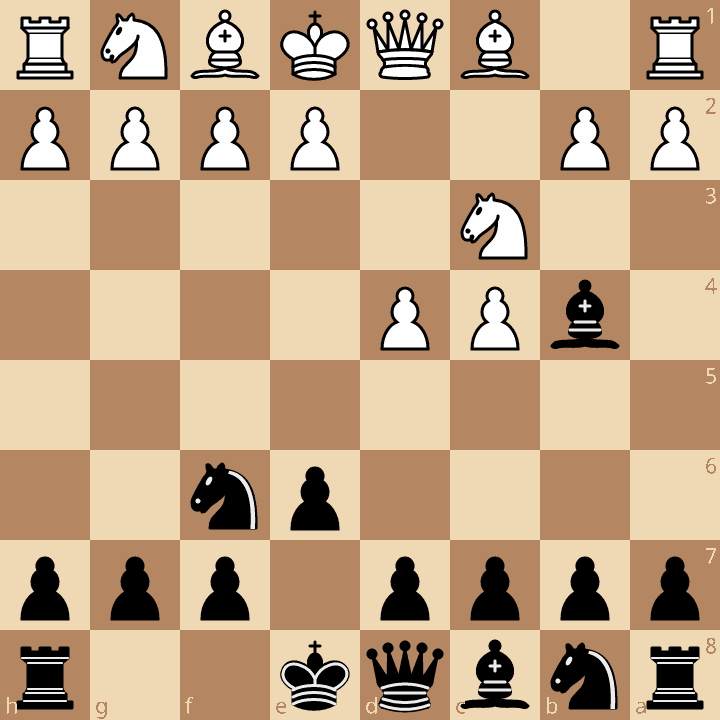
Die Nimzoindische (1.d4 Sf6 2.c4 e6 3.Sc3 Lb4) fesselt sofort den Springer auf c3 und droht präzise strukturelle Verschiebungen (Lxc3 erzeugt weiße Doppelbauern auf c3). Von Aron Nimzowitsch erfunden, ist sie seit einem Jahrhundert die Lieblingsverteidigung der Elite: Botwinnik, Karpow, Kasparow, Caruana. Reiche Pläne und tiefe Theorie, aber Verständnis zuerst: Schwarz tauscht seinen schwarzfeldrigen Läufer gegen den Springer auf c3, bricht das weiße Zentrum auf und kompensiert mit Figurenaktivität. Erfordert mindestens 1600 Elo, um korrekt gespielt zu werden.
Jede Variante unten kommt mit einem Diagramm und dem Hauptplan. Klicken Sie auf „Diese Eröffnung trainieren“, um jede Variante mit Spaced Repetition zu trainieren.
Möchten Sie Nimzoindische Verteidigung aus dem Gedächtnis spielen? Im kostenlosen Eröffnungstraining üben Sie Zug für Zug und kehren dann zu den Varianten zurück, bei denen Sie Fehler gemacht haben.
1.d4 Nf6 2.c4 e6 3.Nc3 Bb4 4.Qc2
White protects c3 with the queen, avoiding doubled pawns. Black plays ...O-O...d5, or ...c5 for counterplay. The modern main line at the elite level.
1.d4 Nf6 2.c4 e6 3.Nc3 Bb4 4.e3
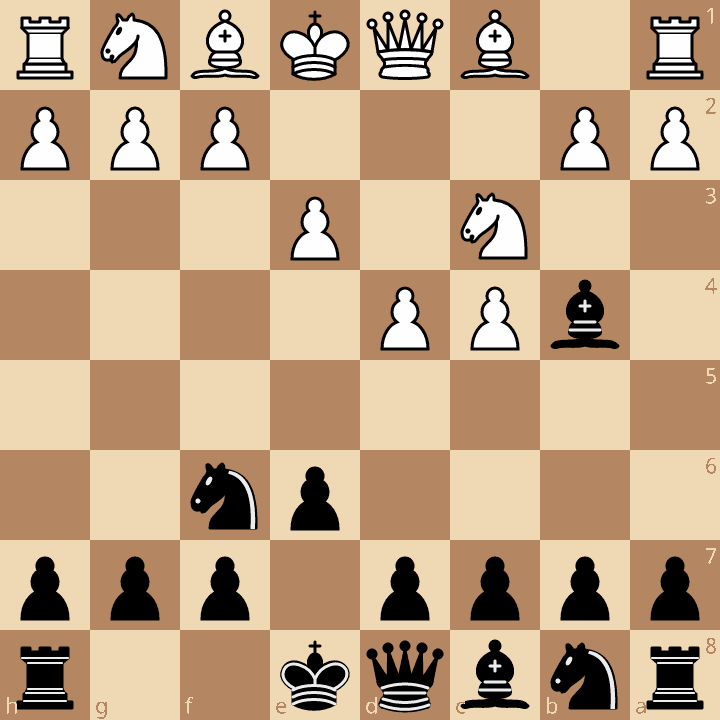
The solid classical response. White accepts potential doubled pawns but develops rapidly. Black plays ...O-O...d5...c5 or ...b6+...Bb7.
1.d4 Nf6 2.c4 e6 3.Nc3 Bb4 4.a3
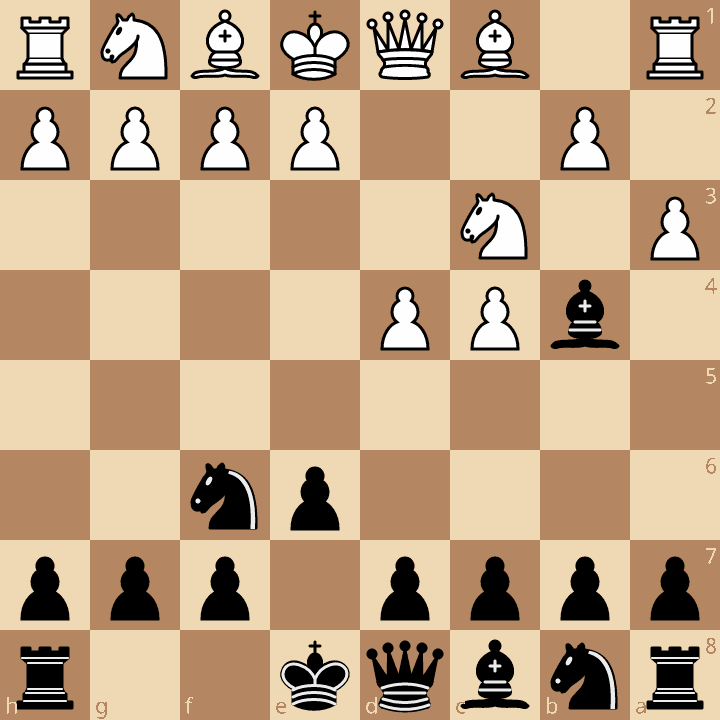
White forces Bxc3+ to get the bishop pair. After 4...Bxc3+ 5.bxc3 c5, both sides have clear plans, White plays f3+e4 and attacks, Black targets the doubled c-pawns.
The Nimzo-Indian is hard. Consider the QGD or Slav first. If you play it, focus on the Rubinstein (4.e3) main lines.
Learn the Classical (4.Qc2) response carefully, it's the elite main line. Study how to play with 4...O-O 5.a3 Bxc3+ 6.Qxc3 b6.
Add all three main White responses (Qc2, e3, a3) to your repertoire. The Nimzo requires deep theoretical preparation at every level.
It directly addresses 1.d4's strategic goals. By pinning the c3 knight, Black prevents e4 and hypermodern-izes the position. Whether Black keeps the bishop pair or trades it for doubled pawns, the strategic battle favors Black's long-term chances.
Depends on the line. In 4.a3, Black has no choice, 4...Bxc3+ is forced. In 4.Qc2 or 4.e3, Black can keep the bishop and develop normally. Modern theory often favors Bxc3 only when it doubles White's pawns.
No, the theoretical complexity is high and the strategic nuances (when to give up the bishop pair, when to challenge the center with ...c5 or ...d5) require experience. Beginners should play the QGD or Slav first.
Almost every elite player, Karpov, Kasparov, Kramnik, Anand, Carlsen, Caruana. The Nimzo is considered one of Black's most theoretically sound defenses against 1.d4. A lifetime choice for many world champions.
The Nimzo is more strategic and positional; the King's Indian is sharper and more tactical. Nimzo = piece play and doubled-pawn strategy. KID = opposite-wing attacks and kingside storms. Both are top-tier elite defenses.
Die soliteste und am häufigsten gespielte Verteidigung gegen 1.d4, klassische Strategie in ihrer besten Form.
Die scharfe Waffe von Fischer und Kasparow gegen 1.d4: asymmetrischer Gegenangriff mit Fianchetto und ...e5.
Den c4-Bauern schlagen und den weißfeldrigen Läufer befreien: aktive Verteidigung gegen 1.d4.
Jede Variante oben ist eine Übung auf ChessAtlas. Verteilte Wiederholung plant jeden Zug so, dass Sie nie wieder eine Variante vergessen. Gratis zum Starten, keine Kreditkarte.