Classical Variation
1.d4 Nf6 2.c4 e6 3.Nc3 Bb4 4.Qc2
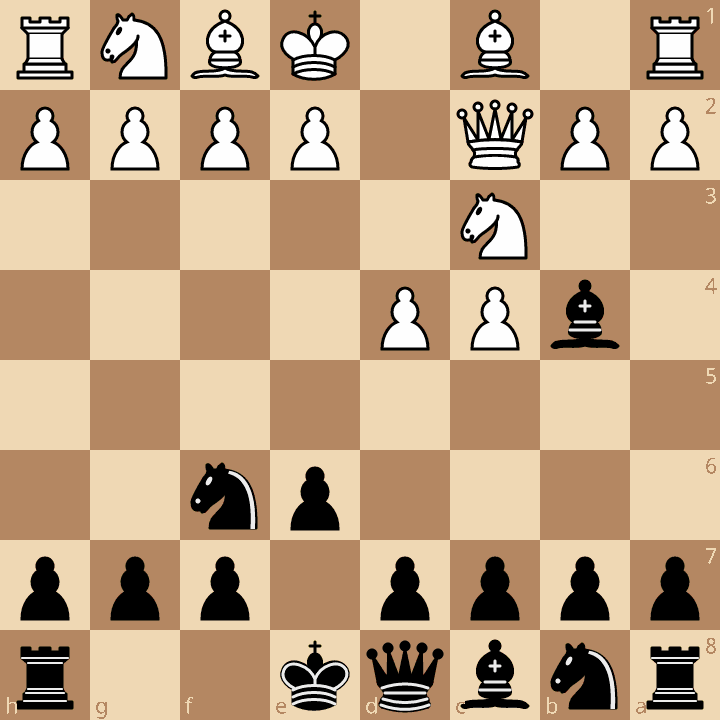
White protects c3 with the queen, avoiding doubled pawns. Black plays ...O-O...d5, or ...c5 for counterplay. The modern main line at the elite level.
Aron Nimzowitsch's hypermodern masterpiece. Control the center with pieces, not pawns.
1.d4 Nf6 2.c4 e6 3.Nc3 Bb4
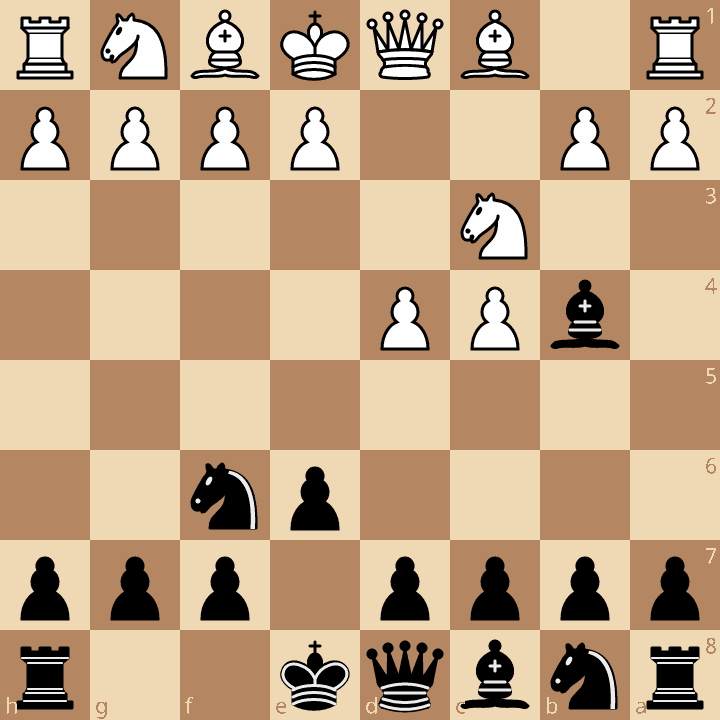
The Nimzo-Indian Defense (1.d4 Nf6 2.c4 e6 3.Nc3 Bb4) is the crown jewel of hypermodern chess. Aron Nimzowitsch introduced 3...Bb4 in a 1913 Wiener Schachzeitung article, and it became a mainstream elite weapon during the 1920s (Bogoljubow, Spielmann, Sämisch). Black pins the c3 knight, preventing e4 and ensuring White doesn't establish an ideal center. The main strategic idea: Black gives up the bishop pair (with Bxc3) to inflict doubled c-pawns on White, a long-term positional advantage in endgames. Favored by Karpov, Kasparov, Kramnik, Anand, and Carlsen. One of the most theoretically complex openings, but also one of the most reliable answers to 1.d4.
pages.openingDetail.mainVariationsIntro
1.d4 Nf6 2.c4 e6 3.Nc3 Bb4 4.Qc2
White protects c3 with the queen, avoiding doubled pawns. Black plays ...O-O...d5, or ...c5 for counterplay. The modern main line at the elite level.
1.d4 Nf6 2.c4 e6 3.Nc3 Bb4 4.e3
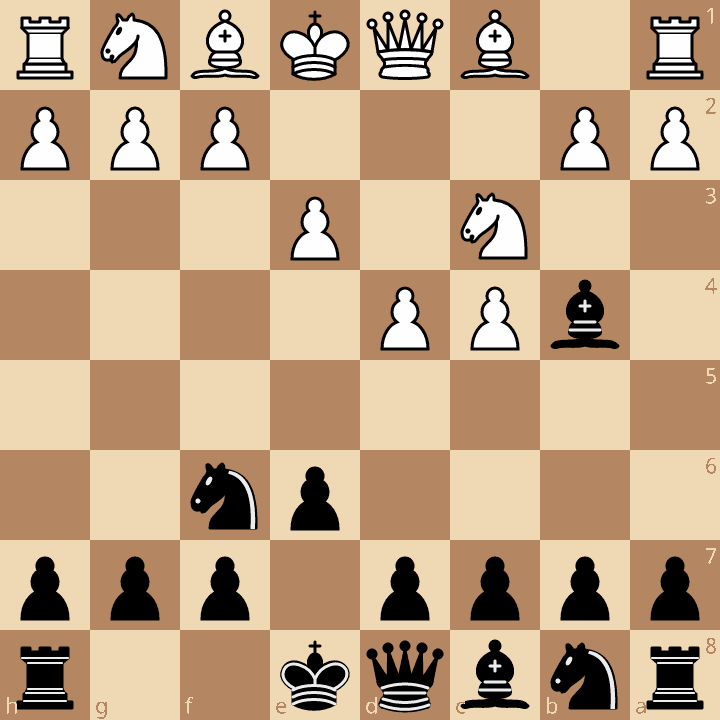
The solid classical response. White accepts potential doubled pawns but develops rapidly. Black plays ...O-O...d5...c5 or ...b6+...Bb7.
1.d4 Nf6 2.c4 e6 3.Nc3 Bb4 4.a3
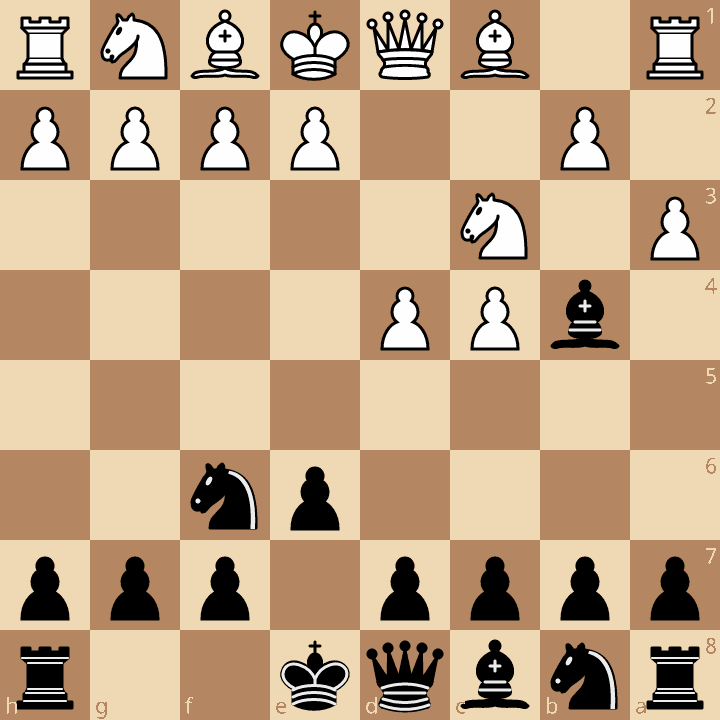
White forces Bxc3+ to get the bishop pair. After 4...Bxc3+ 5.bxc3 c5, both sides have clear plans, White plays f3+e4 and attacks, Black targets the doubled c-pawns.
The Nimzo-Indian is hard. Consider the QGD or Slav first. If you play it, focus on the Rubinstein (4.e3) main lines.
Learn the Classical (4.Qc2) response carefully, it's the elite main line. Study how to play with 4...O-O 5.a3 Bxc3+ 6.Qxc3 b6.
Add all three main White responses (Qc2, e3, a3) to your repertoire. The Nimzo requires deep theoretical preparation at every level.
It directly addresses 1.d4's strategic goals. By pinning the c3 knight, Black prevents e4 and hypermodern-izes the position. Whether Black keeps the bishop pair or trades it for doubled pawns, the strategic battle favors Black's long-term chances.
Depends on the line. In 4.a3, Black has no choice, 4...Bxc3+ is forced. In 4.Qc2 or 4.e3, Black can keep the bishop and develop normally. Modern theory often favors Bxc3 only when it doubles White's pawns.
No, the theoretical complexity is high and the strategic nuances (when to give up the bishop pair, when to challenge the center with ...c5 or ...d5) require experience. Beginners should play the QGD or Slav first.
Almost every elite player, Karpov, Kasparov, Kramnik, Anand, Carlsen, Caruana. The Nimzo is considered one of Black's most theoretically sound defenses against 1.d4. A lifetime choice for many world champions.
The Nimzo is more strategic and positional; the King's Indian is sharper and more tactical. Nimzo = piece play and doubled-pawn strategy. KID = opposite-wing attacks and kingside storms. Both are top-tier elite defenses.
The bulletproof answer to 1.d4. Rock-solid structure and World Championship pedigree.
The ultimate fighting defense. Give White the center, then storm the kingside.
Accept the gambit pawn and get an open, playable middlegame. A reliable Black defense.
pages.openingDetail.finalCtaText