Classical Variation
1.d4 Nf6 2.c4 e6 3.Nc3 Bb4 4.Qc2
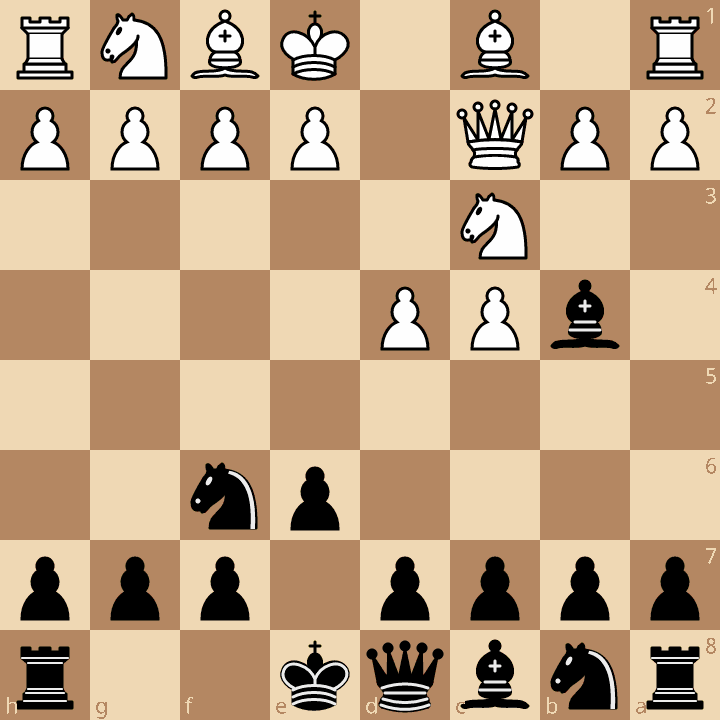
White protects c3 with the queen, avoiding doubled pawns. Black plays ...O-O...d5, or ...c5 for counterplay. The modern main line at the elite level.
La defensa de élite contra 1.d4: clavada del caballo de c3 para desequilibrios estructurales inmediatos.
1.d4 Nf6 2.c4 e6 3.Nc3 Bb4
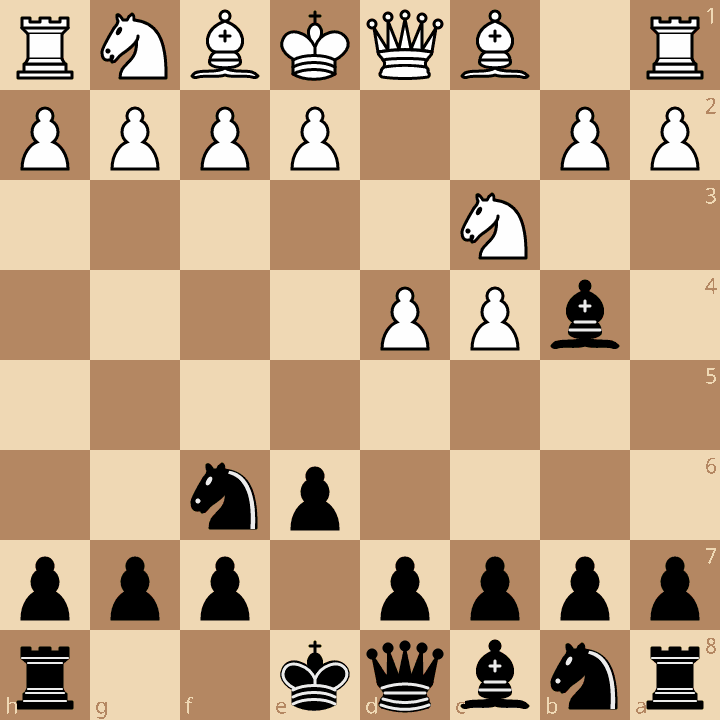
La Nimzo-India (1.d4 Cf6 2.c4 e6 3.Cc3 Ab4) clava inmediatamente el caballo de c3 y amenaza desequilibrios estructurales precisos (Axc3 crea peones doblados en c3 para las blancas). Inventada por Aron Nimzowitsch, es la defensa favorita de la élite desde hace un siglo: Botvinnik, Karpov, Kasparov, Caruana. Planes ricos, teoría profunda pero prioridad a la comprensión: las negras cambian su alfil de casillas negras por el caballo de c3 para romper el centro blanco y usan la actividad de las piezas para compensar. Requiere 1600+ ELO para jugarse correctamente.
Cada variante incluye un diagrama y el plan principal. Haga clic en «Entrene esta apertura» para trabajar cada línea con repetición espaciada.
¿Quiere repasar Defensa Nimzo-India de memoria? Practique sus aperturas jugada a jugada en el entrenador gratuito y vuelva luego a las variantes que falló.
1.d4 Nf6 2.c4 e6 3.Nc3 Bb4 4.Qc2
White protects c3 with the queen, avoiding doubled pawns. Black plays ...O-O...d5, or ...c5 for counterplay. The modern main line at the elite level.
1.d4 Nf6 2.c4 e6 3.Nc3 Bb4 4.e3
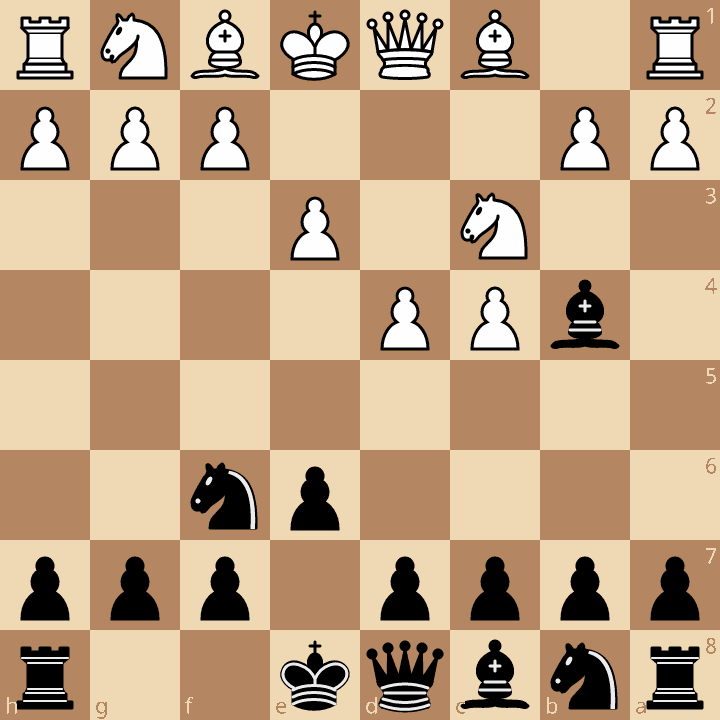
The solid classical response. White accepts potential doubled pawns but develops rapidly. Black plays ...O-O...d5...c5 or ...b6+...Bb7.
1.d4 Nf6 2.c4 e6 3.Nc3 Bb4 4.a3
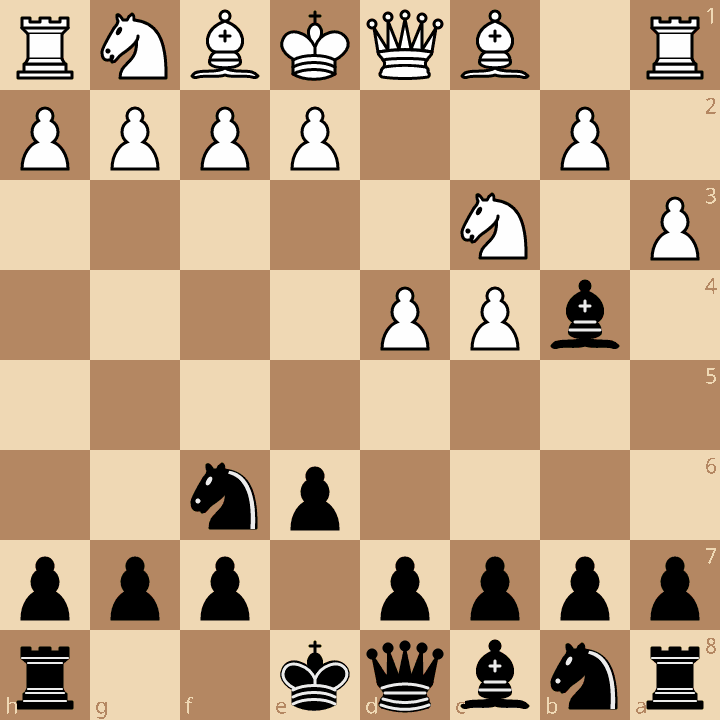
White forces Bxc3+ to get the bishop pair. After 4...Bxc3+ 5.bxc3 c5, both sides have clear plans, White plays f3+e4 and attacks, Black targets the doubled c-pawns.
The Nimzo-Indian is hard. Consider the QGD or Slav first. If you play it, focus on the Rubinstein (4.e3) main lines.
Learn the Classical (4.Qc2) response carefully, it's the elite main line. Study how to play with 4...O-O 5.a3 Bxc3+ 6.Qxc3 b6.
Add all three main White responses (Qc2, e3, a3) to your repertoire. The Nimzo requires deep theoretical preparation at every level.
It directly addresses 1.d4's strategic goals. By pinning the c3 knight, Black prevents e4 and hypermodern-izes the position. Whether Black keeps the bishop pair or trades it for doubled pawns, the strategic battle favors Black's long-term chances.
Depends on the line. In 4.a3, Black has no choice, 4...Bxc3+ is forced. In 4.Qc2 or 4.e3, Black can keep the bishop and develop normally. Modern theory often favors Bxc3 only when it doubles White's pawns.
No, the theoretical complexity is high and the strategic nuances (when to give up the bishop pair, when to challenge the center with ...c5 or ...d5) require experience. Beginners should play the QGD or Slav first.
Almost every elite player, Karpov, Kasparov, Kramnik, Anand, Carlsen, Caruana. The Nimzo is considered one of Black's most theoretically sound defenses against 1.d4. A lifetime choice for many world champions.
The Nimzo is more strategic and positional; the King's Indian is sharper and more tactical. Nimzo = piece play and doubled-pawn strategy. KID = opposite-wing attacks and kingside storms. Both are top-tier elite defenses.
La defensa más sólida y jugada contra 1.d4, estrategia clásica en su mejor versión.
El arma cortante de Fischer y Kasparov contra 1.d4: contraataque asimétrico con fianchetto y ...e5.
Tomar el peón de c4 y liberar el alfil de casillas blancas: defensa activa a 1.d4.
Cada variante de arriba es un ejercicio en ChessAtlas. La repetición espaciada programa cada movimiento para que nunca olvide una línea. Gratis para empezar, sin tarjeta de crédito.