Main Line (3.Nf3 Nf6)
1.d4 d5 2.c4 dxc4 3.Nf3 Nf6 4.e3 e6 5.Bxc4
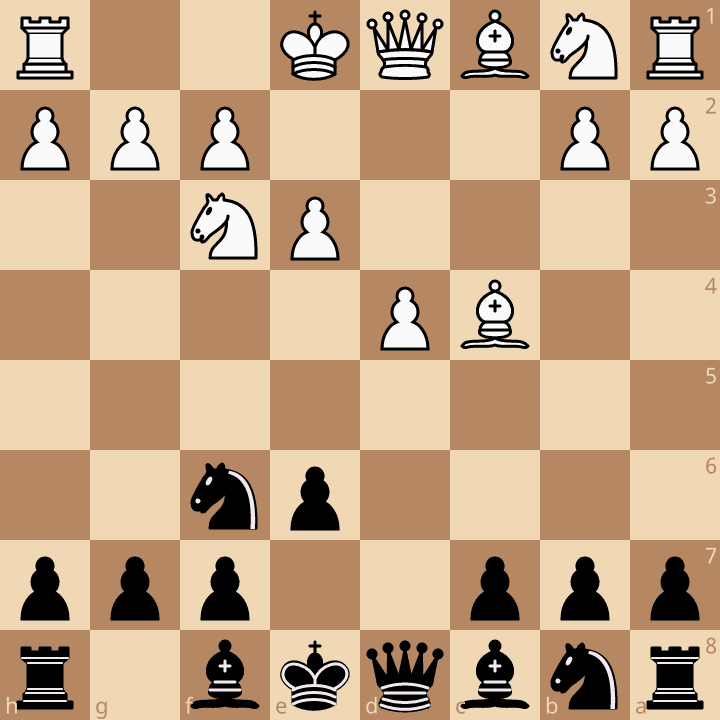
White regains the pawn. Black develops with ...c5...a6...b5...Bb7, and fights for ...c5-c4 or ...d5 breaks. Solid and reliable.
Tomar el peón de c4 y liberar el alfil de casillas blancas: defensa activa a 1.d4.
1.d4 d5 2.c4 dxc4
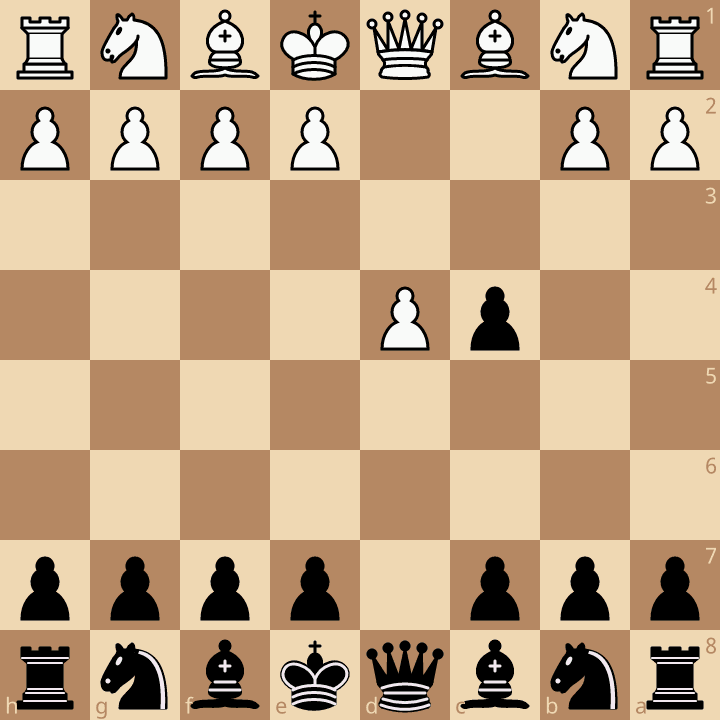
El Gambito de Dama Aceptado surge tras 1.d4 d5 2.c4 dxc4. A diferencia del QGD, las negras capturan el peón y aceptan ceder temporalmente el centro a cambio del desarrollo libre del alfil de c8 hacia f5 o g4. Las blancas recuperan el peón con Axc4 (tras 3.Cf3 y 4.e3 o 4.e4), y el juego pasa a estructuras parecidas al QGD con colores invertidos. Defensa fiable jugada por Carlsen y Anand: más dinámica que el QGD, menos teórica que la Eslava.
Cada variante incluye un diagrama y el plan principal. Haga clic en «Entrene esta apertura» para trabajar cada línea con repetición espaciada.
¿Quiere repasar Gambito de Dama Aceptado de memoria? Practique sus aperturas jugada a jugada en el entrenador gratuito y vuelva luego a las variantes que falló.
1.d4 d5 2.c4 dxc4 3.Nf3 Nf6 4.e3 e6 5.Bxc4
White regains the pawn. Black develops with ...c5...a6...b5...Bb7, and fights for ...c5-c4 or ...d5 breaks. Solid and reliable.
1.d4 d5 2.c4 dxc4 3.e4
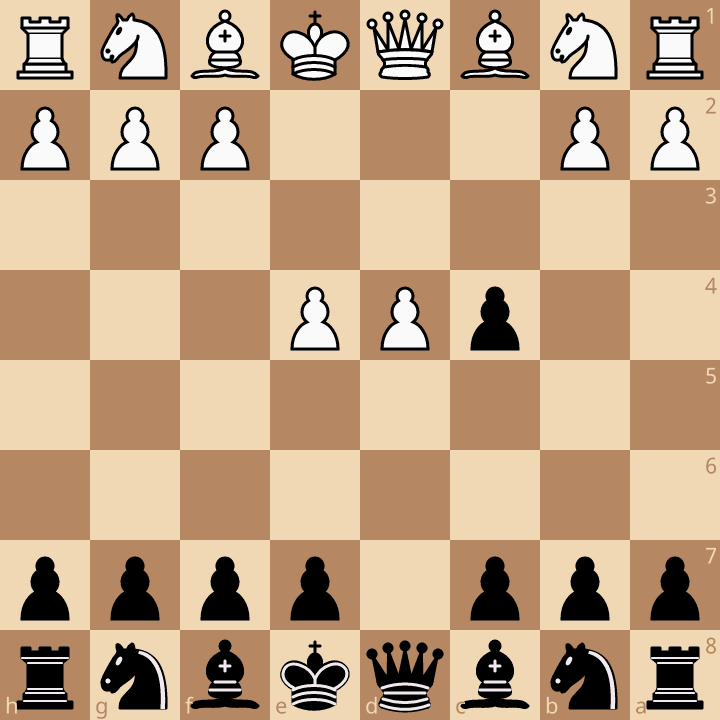
White claims the entire center. Sharp play after 3...Nf6 4.e5 Nd5 or 3...e5 (counter-attack). Requires preparation from both sides.
1.d4 d5 2.c4 dxc4 3.Nf3 a6
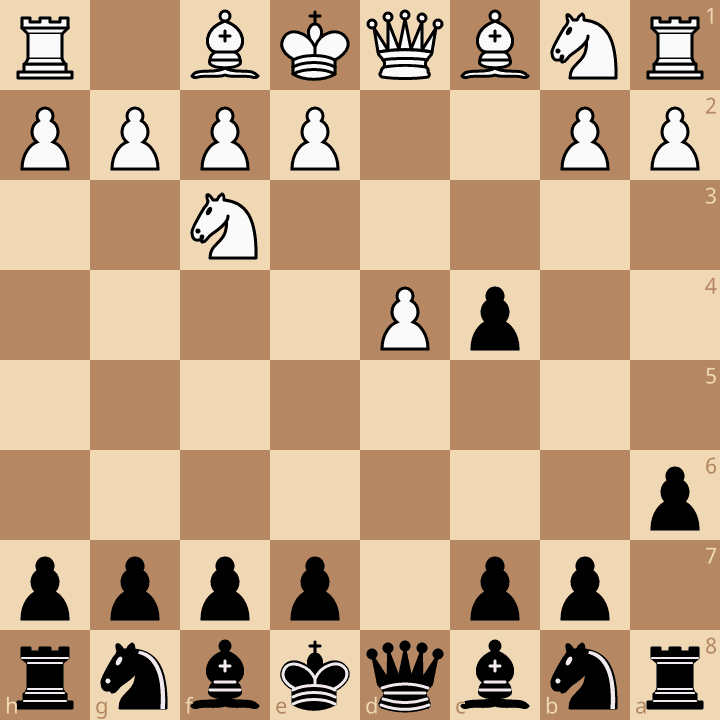
Black prepares ...b5 to hold the c4 pawn. A flexible but slower system. White plays 4.e3 and chases the c4 pawn.
If you face 1.d4 d5 2.c4, just take with 2...dxc4, it's the simplest response. Develop your pieces naturally and don't try to hold the c4 pawn.
Study the ...c5 plan in the Main Line. Black's main break is ...c5-c4 at the right moment.
Learn the Central Variation (3.e4) defense carefully. Also add the Alekhine Variation with 3...a6 to your repertoire for variety.
No, White always recovers the c4 pawn with 3.e3 and 4.Bxc4 (or 3.Nf3 and later e3). Attempts to hold the pawn with ...b5 leave Black with structural weaknesses on the queenside.
Both are fully playable. QGA (accepting) is faster, Black gets piece activity and avoids the French Bishop problem. QGD (declining with 2...e6) is solid but slower. Choose QGA for active play, QGD for rock-solid structure.
The Main Line with 3.Nf3 Nf6 4.e3 e6 5.Bxc4 c5 is the most reliable. Black plays for ...a6...b5...Bb7 and fights for a ...c5-c4 break.
Both avoid the French-style blocked bishop. The Slav (2...c6) keeps the d5 pawn solid but limits Black's central flexibility. The QGA gives up the center temporarily but gets faster development. Most modern masters prefer the QGA or Slav over the QGD for dynamic play.
Constantly. From Capablanca to Kramnik, Anand, Carlsen, and Caruana, the Queen's Gambit (in all forms) remains the main 1.d4 battleground at every World Championship match.
La defensa más sólida y jugada contra 1.d4, estrategia clásica en su mejor versión.
Un esquema universal contra todas las defensas negras: poca teoría, planes repetibles, arma moderna de Ding Liren.
La defensa de élite contra 1.d4: clavada del caballo de c3 para desequilibrios estructurales inmediatos.
Cada variante de arriba es un ejercicio en ChessAtlas. La repetición espaciada programa cada movimiento para que nunca olvide una línea. Gratis para empezar, sin tarjeta de crédito.