Advance Variation
1.e4 e6 2.d4 d5 3.e5
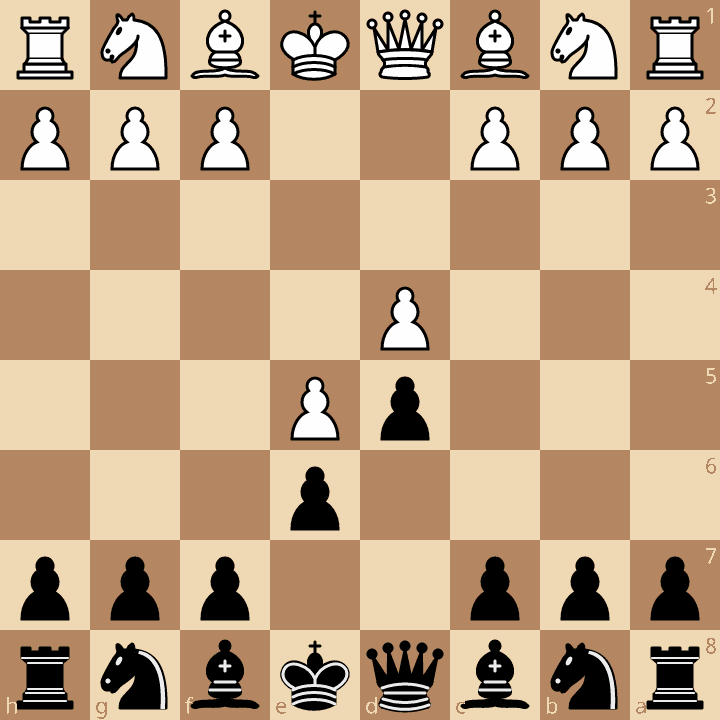
White claims space with a c2–d4–e5 pawn chain. Black attacks the chain's base with ...c5, followed by ...Nc6 and ...Qb6 targeting d4 and b2.
A solid, strategic answer to 1.e4 with a clear game plan.
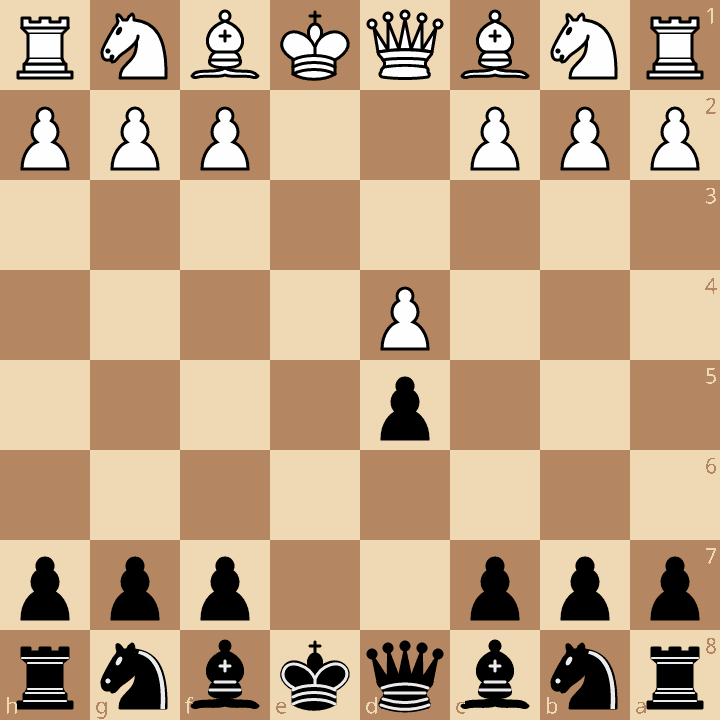
1.e4 e6 2.d4 d5
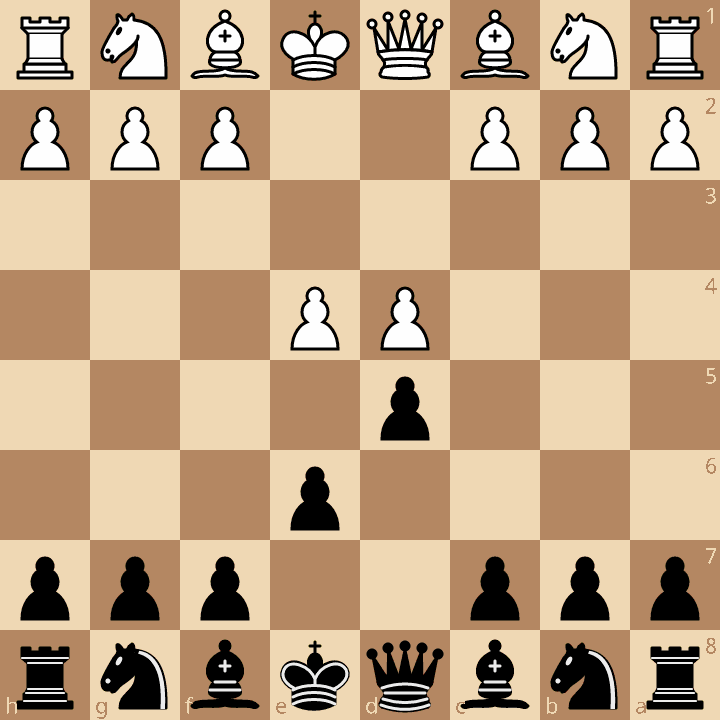
The French Defense starts with 1...e6 and 2...d5, striking e4 and d4 while keeping a firm pawn structure. Instead of fighting for direct central control like 1...e5, Black builds a resilient chain and aims for counterplay with ...c5 and ...f6. The opening produces semi-closed positions where maneuvering and plan execution decide the game, rewarding players who understand structures over those who just memorize moves. Named after the 1834 London–Paris correspondence match, the French has been a fixture of grandmaster and club play ever since.
pages.openingDetail.mainVariationsIntro
1.e4 e6 2.d4 d5 3.e5
White claims space with a c2–d4–e5 pawn chain. Black attacks the chain's base with ...c5, followed by ...Nc6 and ...Qb6 targeting d4 and b2.
1.e4 e6 2.d4 d5 3.Nd2
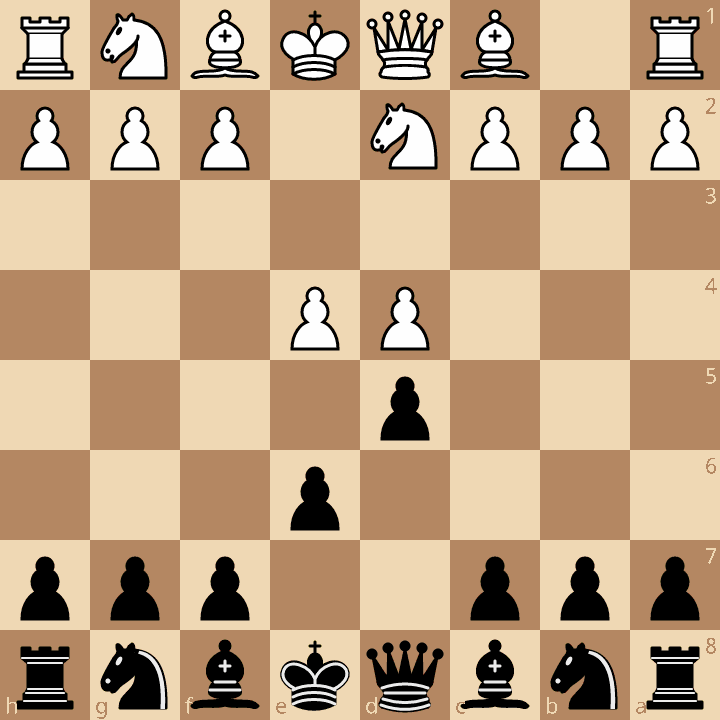
White avoids the Bb4 pin and plays for a flexible setup. Black responds with ...c5 and rapid development, usually recapturing with the queen after 4.exd5 Qxd5.
1.e4 e6 2.d4 d5 3.Nc3 Bb4
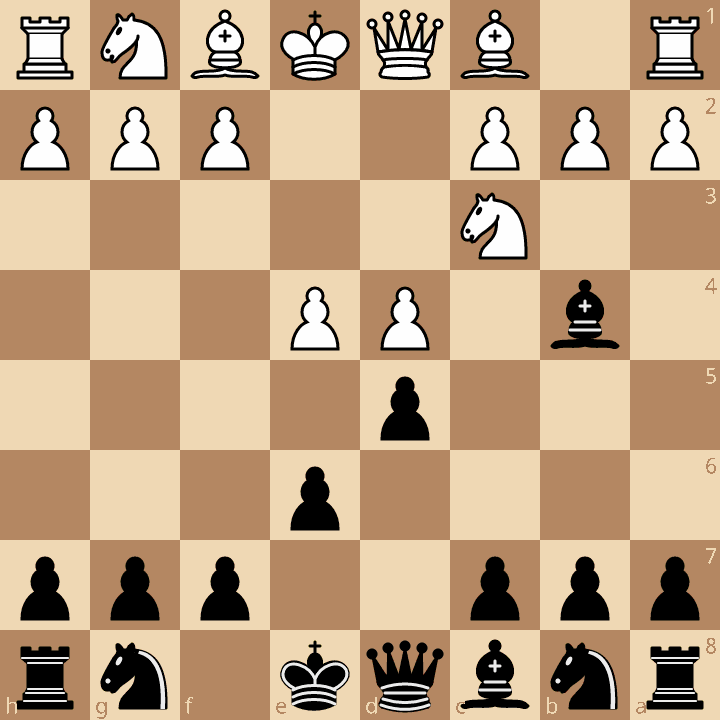
The sharpest main line. Black pins the c3 knight and provokes structural damage. After 4.e5 c5 5.a3 Bxc3+ 6.bxc3, White has the bishop pair and a big center; Black targets the doubled c-pawns.
1.e4 e6 2.d4 d5 3.exd5 exd5
Often labeled "boring", it isn't. Black gets fully symmetric structure and can out-develop a careless White with ...Nc6...Bd6...Nge7–f5 and ...Bf5, activating the light-squared bishop early.
pages.openingDetail.commonTrapsIntro
After White's casual 6.Bd3, Black wins a clean pawn on d4 because the queen on b6 already overloads the defense.
1.e4 e6 2.d4 d5 3.e5 c5 4.c3 Nc6 5.Nf3 Qb6 6.Bd3 cxd4 7.cxd4 Nxd4 8.Nxd4 Qxd4
Start position
Just learn the plan: ...c5...Nc6...Qb6, attack d4. Don't worry about deep theory.
Pick ONE system against 3.Nc3 (Winawer or Classical) and go deep. Learn the Advance Variation's main line to move 10.
Study the critical Advance lines with 7...cxd4 8.Nxd4 Qb6 9.Qd2 and the McCutcheon.
Yes, the French is one of the most plan-based openings, which makes it easier to play correctly without memorizing long lines. Beginners do well learning the ...c5 break and the ...Qb6/...Nc6 setup against the Advance Variation.
No, though it's often called so. The French leads to sharp counterattacks once Black plays ...c5 and ...f6, and the Winawer is one of the most double-edged openings in chess. The opening is structure-first, not passive.
The c8 bishop is often hemmed in by the e6 pawn. Good French players solve this by developing it early (Winawer ...Bb4), rerouting via d7–c6 (Fort Knox), or opening lines with ...c5 and ...f6 before the bishop matters.
Both are solid 1.e4 defenses that keep the pawn structure intact. The Caro-Kann lets Black develop the light-squared bishop outside the pawn chain (...Bf5), while the French accepts the bad bishop in exchange for a slightly more flexible central pawn structure and sharper counterplay options.
Yes. The French is regularly played by grandmasters, including Morozevich, Korchnoi, Short, and Caruana. Recent engine-era refinement has made the Winawer and Classical lines viable at the very highest levels.
Solid, resilient, and a Karpov classic still played at the top by Firouzja and Ding Liren. The structure-first answer to 1.e4.
The fighting answer to 1.e4 that gives Black real winning chances from move one.
Accept the gambit pawn and get an open, playable middlegame. A reliable Black defense.
pages.openingDetail.finalCtaText