Advance Variation
1.e4 e6 2.d4 d5 3.e5
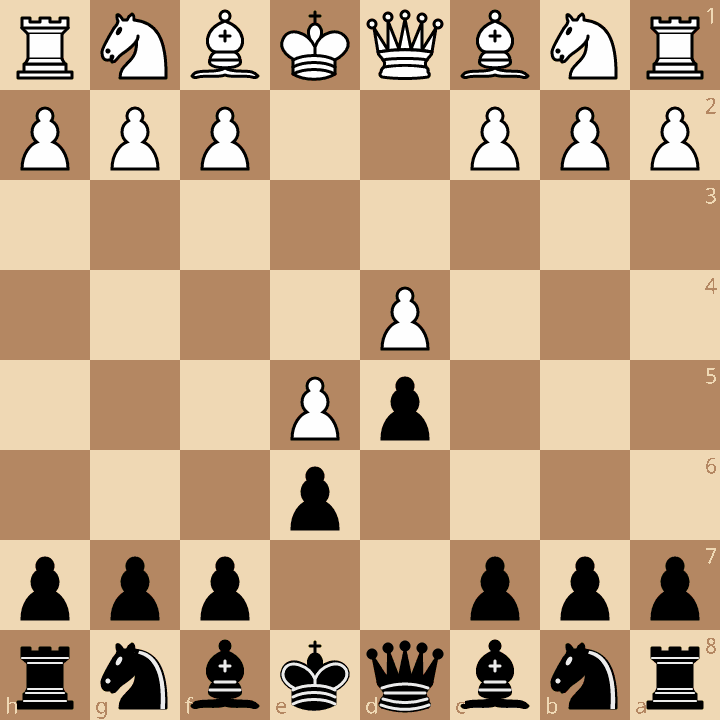
White claims space with a c2–d4–e5 pawn chain. Black attacks the chain's base with ...c5, followed by ...Nc6 and ...Qb6 targeting d4 and b2.
Eine solide, strategische Antwort auf 1.e4 mit einem klaren Spielplan.
1.e4 e6 2.d4 d5
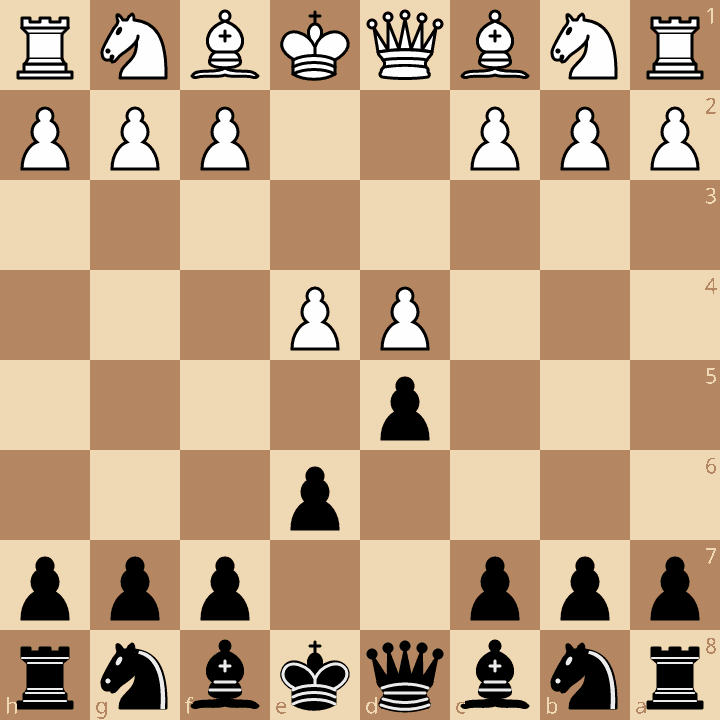
Die Französische Verteidigung beginnt mit 1...e6, gefolgt von 2...d5, greift e4 und d4 an und bewahrt eine kompakte Bauernstruktur. Statt wie bei 1...e5 um die direkte Kontrolle des Zentrums zu kämpfen, bauen die Schwarzen eine widerstandsfähige Kette auf und suchen Gegenspiel mit ...c5 und ...f6. Die Eröffnung führt zu halboffenen Stellungen, in denen Manöver und Planumsetzung die Partie entscheiden, ein Vorteil für Spieler, die Strukturen verstehen statt nur Züge zu lernen. Benannt nach dem Fernschachmatch London-Paris von 1834 ist die Französische seit fast zwei Jahrhunderten eine Säule des Klub- und Großmeisterschachs.
Jede Variante unten kommt mit einem Diagramm und dem Hauptplan. Klicken Sie auf „Diese Eröffnung trainieren“, um jede Variante mit Spaced Repetition zu trainieren.
Möchten Sie Französische Verteidigung aus dem Gedächtnis spielen? Im kostenlosen Eröffnungstraining üben Sie Zug für Zug und kehren dann zu den Varianten zurück, bei denen Sie Fehler gemacht haben.
1.e4 e6 2.d4 d5 3.e5
White claims space with a c2–d4–e5 pawn chain. Black attacks the chain's base with ...c5, followed by ...Nc6 and ...Qb6 targeting d4 and b2.
1.e4 e6 2.d4 d5 3.Nd2
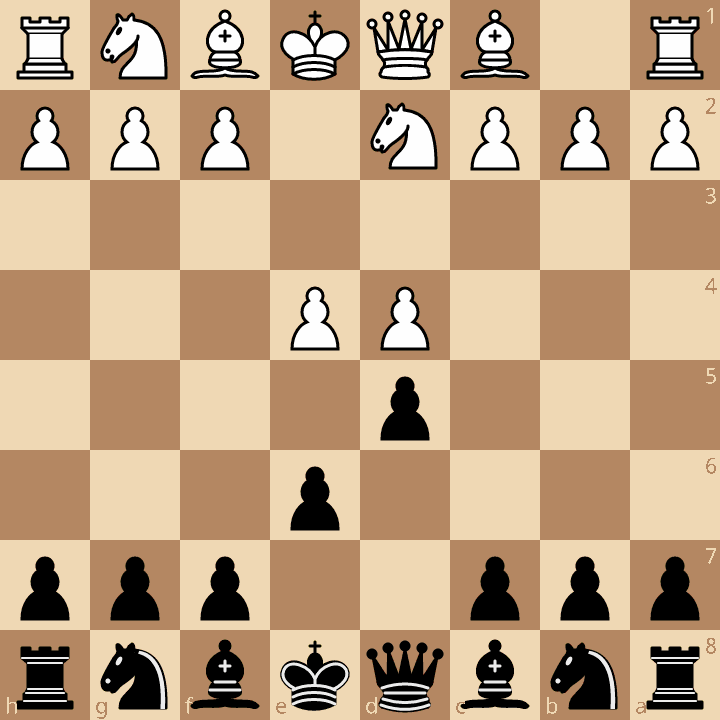
White avoids the Bb4 pin and plays for a flexible setup. Black responds with ...c5 and rapid development, usually recapturing with the queen after 4.exd5 Qxd5.
1.e4 e6 2.d4 d5 3.Nc3 Bb4
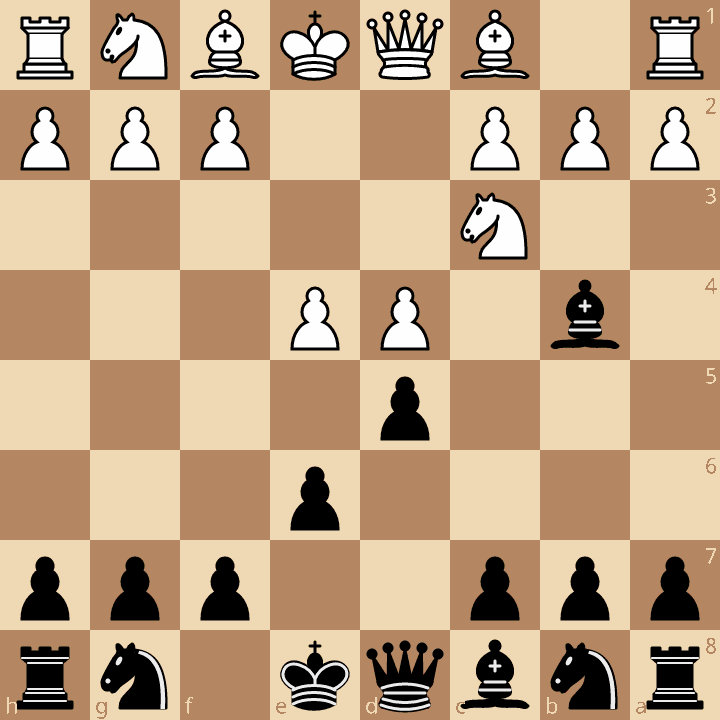
The sharpest main line. Black pins the c3 knight and provokes structural damage. After 4.e5 c5 5.a3 Bxc3+ 6.bxc3, White has the bishop pair and a big center; Black targets the doubled c-pawns.
1.e4 e6 2.d4 d5 3.exd5 exd5
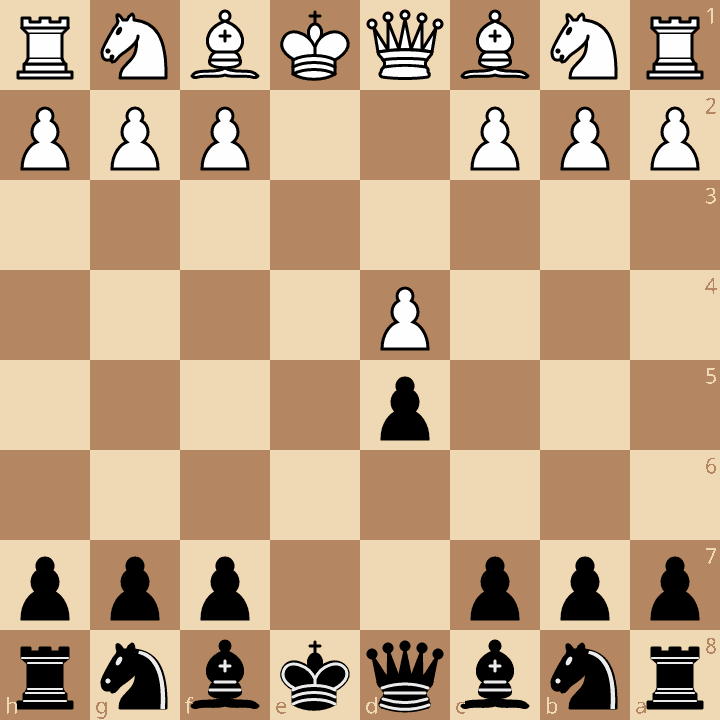
Often labeled "boring", it isn't. Black gets fully symmetric structure and can out-develop a careless White with ...Nc6...Bd6...Nge7–f5 and ...Bf5, activating the light-squared bishop early.
Sehen Sie sich die Falle auf dem Brett an oder gehen Sie sie Zug für Zug durch. Das sind Muster, die Sie in Ihren eigenen Partien bestrafen können.
After White's casual 6.Bd3, Black wins a clean pawn on d4 because the queen on b6 already overloads the defense.
1.e4 e6 2.d4 d5 3.e5 c5 4.c3 Nc6 5.Nf3 Qb6 6.Bd3 cxd4 7.cxd4 Nxd4 8.Nxd4 Qxd4
Start position
Just learn the plan: ...c5...Nc6...Qb6, attack d4. Don't worry about deep theory.
Pick ONE system against 3.Nc3 (Winawer or Classical) and go deep. Learn the Advance Variation's main line to move 10.
Study the critical Advance lines with 7...cxd4 8.Nxd4 Qb6 9.Qd2 and the McCutcheon.
Yes, the French is one of the most plan-based openings, which makes it easier to play correctly without memorizing long lines. Beginners do well learning the ...c5 break and the ...Qb6/...Nc6 setup against the Advance Variation.
No, though it's often called so. The French leads to sharp counterattacks once Black plays ...c5 and ...f6, and the Winawer is one of the most double-edged openings in chess. The opening is structure-first, not passive.
The c8 bishop is often hemmed in by the e6 pawn. Good French players solve this by developing it early (Winawer ...Bb4), rerouting via d7–c6 (Fort Knox), or opening lines with ...c5 and ...f6 before the bishop matters.
Both are solid 1.e4 defenses that keep the pawn structure intact. The Caro-Kann lets Black develop the light-squared bishop outside the pawn chain (...Bf5), while the French accepts the bad bishop in exchange for a slightly more flexible central pawn structure and sharper counterplay options.
Yes. The French is regularly played by grandmasters, including Morozevich, Korchnoi, Short, and Caruana. Recent engine-era refinement has made the Winawer and Classical lines viable at the very highest levels.
Die solide Antwort auf 1.e4, in der der weißfeldrige Läufer echte Arbeit bekommt.
Die kämpferische Antwort auf 1.e4, die Schwarz von Zug eins an echte Gewinnchancen gibt.
Den c4-Bauern schlagen und den weißfeldrigen Läufer befreien: aktive Verteidigung gegen 1.d4.
Jede Variante oben ist eine Übung auf ChessAtlas. Verteilte Wiederholung plant jeden Zug so, dass Sie nie wieder eine Variante vergessen. Gratis zum Starten, keine Kreditkarte.