Danish Gambit Accepted
1.e4 e5 2.d4 exd4 3.c3 3...dxc3 4.Bc4 cxb2 5.Bxb2
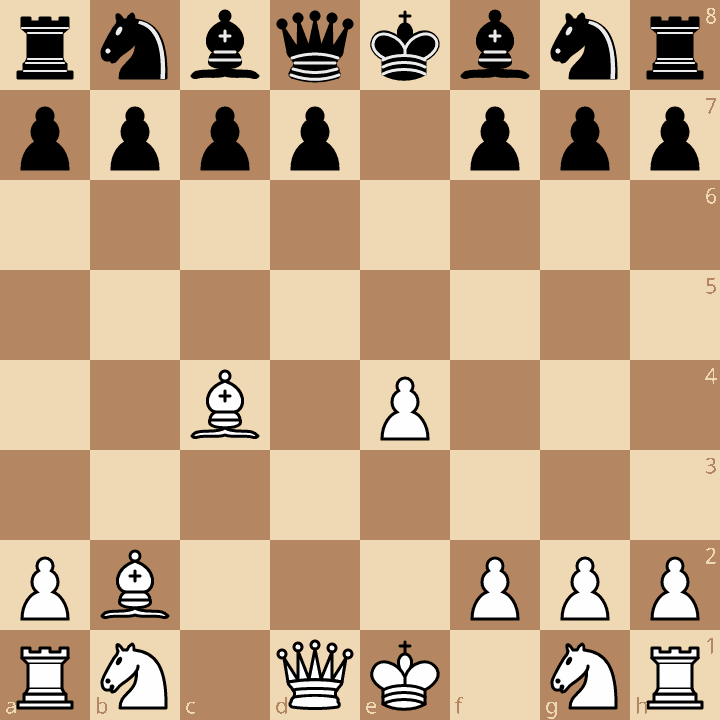
White sacrifices two pawns for blazing development. Typical attack: Nc3, Qh5 (or Qb3), Nf3, O-O-O, and a crushing assault on f7 or the center.
Sacrifice two pawns for lightning-fast development and an open e-file attack.
1.e4 e5 2.d4 exd4 3.c3
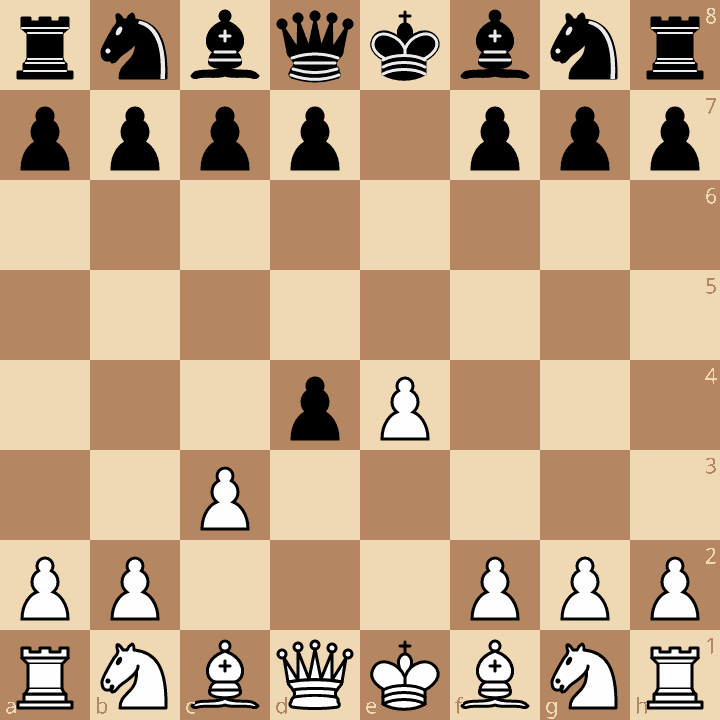
The Danish Gambit (1.e4 e5 2.d4 exd4 3.c3) is one of chess's most aggressive pawn sacrifices. After 3...dxc3 4.Bc4 cxb2 5.Bxb2, White has given up two pawns for rapid development, two open files (c and e), and a raging attack aimed at f7. The gambit was popular in the 19th century and faded because Black has reliable defenses (3...d5!) at the top level. But at club level it remains a devastating weapon, if Black accepts both pawns, White's attack often wins in under 20 moves.
pages.openingDetail.mainVariationsIntro
1.e4 e5 2.d4 exd4 3.c3 3...dxc3 4.Bc4 cxb2 5.Bxb2
White sacrifices two pawns for blazing development. Typical attack: Nc3, Qh5 (or Qb3), Nf3, O-O-O, and a crushing assault on f7 or the center.
1.e4 e5 2.d4 exd4 3.c3 3...d5 4.exd5 Qxd5
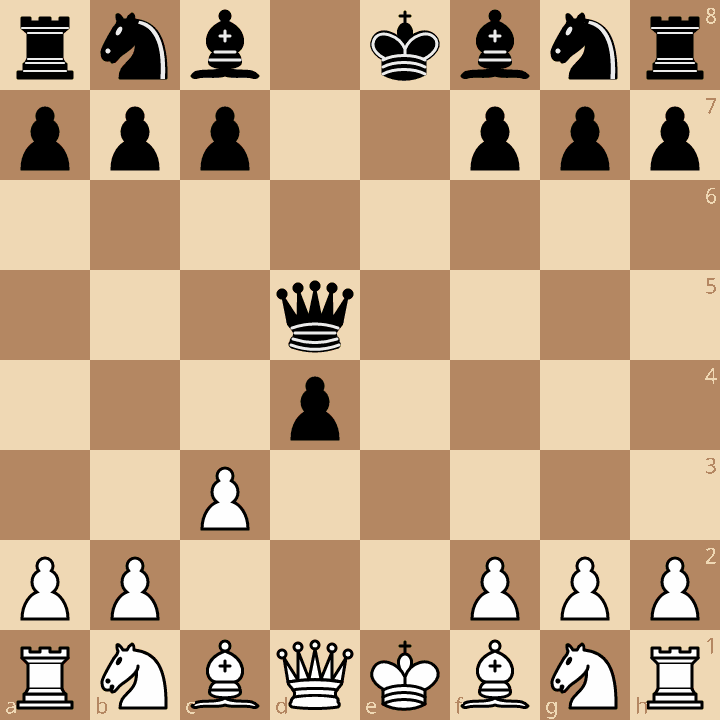
The best defense. Black returns the gambit pawn to neutralize White's attack. After 5.cxd4 Nc6, Black reaches a comfortable Scandinavian-type position.
pages.openingDetail.commonTrapsIntro
A sample Danish Gambit attack. White plays for the e-file and c-file open, with f7 as the target.
1.e4 e5 2.d4 exd4 3.c3 dxc3 4.Bc4 cxb2 5.Bxb2 Nf6 6.e5 d5 7.Bb5+ Bd7 8.Bxd7+ Nbxd7
Start position
The Danish Gambit wins games at club level. Play 4.Bc4 (accepting) and attack with Qh5/Bxf7+ tactics.
Study the Danish Declined (3...d5) carefully, this is where most club opponents go wrong. If they decline, don't force the gambit.
At this level, strong players know 3...d5. Use the Danish as a surprise weapon in rapid/blitz, or transpose to the Scotch Gambit (3.Nf3) instead.
Against best play (3...d5!), Black equalizes comfortably. Against 3...dxc3 4.Bc4 cxb2 5.Bxb2, modern theory gives White compensation but not more, the attack has been worked out. At club level, however, Black rarely plays optimally and the gambit remains effective.
Play 3...d5!, don't take both pawns. After 4.exd5 Qxd5 5.cxd4 Nc6, Black has a safe Scandinavian-style position with active pieces. If you must accept, 3...dxc3 4.Bc4 cxb2 5.Bxb2 Nf6 is necessary, and then play carefully with ...d5 to return material and simplify.
The Scotch Gambit is 1.e4 e5 2.Nf3 Nc6 3.d4 exd4 4.Bc4, White develops the knight first and sacrifices only one pawn. The Danish is 2.d4 directly and sacrifices TWO pawns for faster development. Danish = more material sacrificed, sharper play.
Rarely in classical games because 3...d5! is well-known. It appears occasionally in rapid/blitz as a surprise weapon. Not a serious choice for master-level classical play.
Yes, if they enjoy attacking chess and are comfortable with sacrificial play. The ideas (open center, target f7, develop rapidly) are instructive and transfer to other sharp openings.
The romantic gambit. Sacrifice a pawn for the ultimate attacking chess.
Kasparov's revived gambit. Sacrifice a pawn for development and a crushing center.
The center-breaking alternative to the Italian. Kasparov's weapon against Karpov.
pages.openingDetail.finalCtaText