Danish Gambit Accepted
1.e4 e5 2.d4 exd4 3.c3 3...dxc3 4.Bc4 cxb2 5.Bxb2
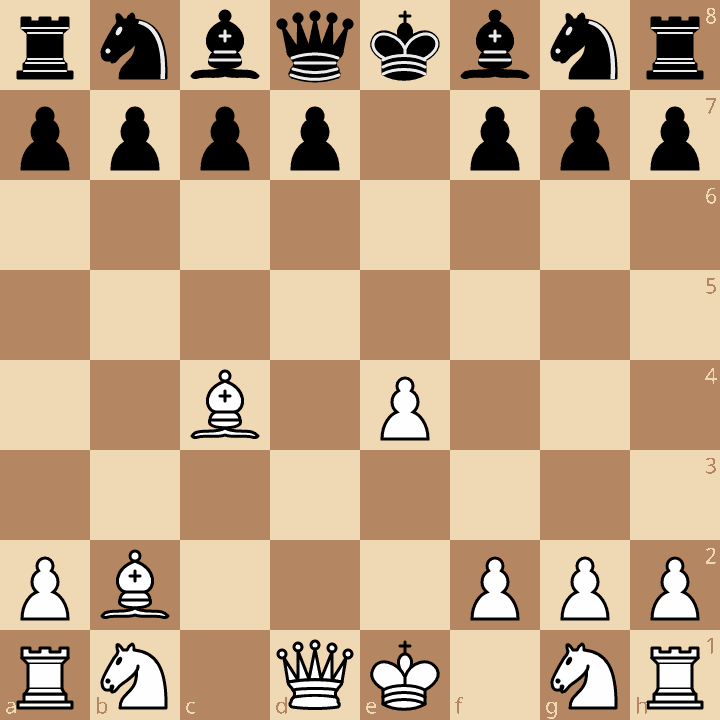
White sacrifices two pawns for blazing development. Typical attack: Nc3, Qh5 (or Qb3), Nf3, O-O-O, and a crushing assault on f7 or the center.
Sacrificio de dos peones por un desarrollo fulgurante y ataque inmediato al rey.
1.e4 e5 2.d4 exd4 3.c3
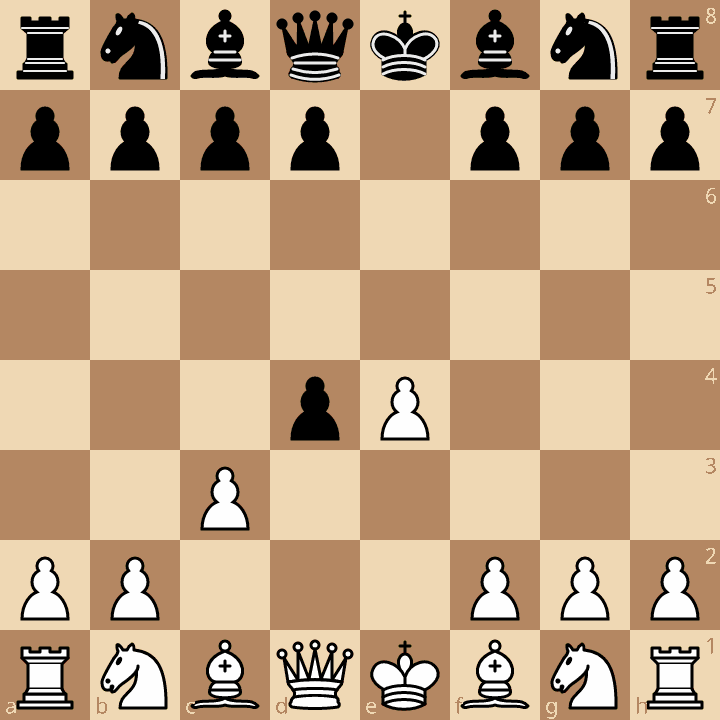
El Gambito Danés (1.e4 e5 2.d4 exd4 3.c3) ofrece un primer peón en d4 y después un segundo con 3...dxc3 4.Ac4 cxb2 5.Axb2. Las blancas sacrifican dos peones por un desarrollo rápido y dos alfiles apuntando al rey negro. El ataque es clásico de la era romántica del siglo XIX, popularizado por el danés Martin Severin From en París 1867 (tras partidas anteriores del sueco Hans Lindehn). Teóricamente dudoso contra defensa precisa (las negras igualan con 3...d5!), pero terriblemente eficaz al nivel de club donde pocos jugadores conocen la respuesta exacta.
Cada variante incluye un diagrama y el plan principal. Haga clic en «Entrene esta apertura» para trabajar cada línea con repetición espaciada.
¿Quiere repasar Gambito Danés de memoria? Practique sus aperturas jugada a jugada en el entrenador gratuito y vuelva luego a las variantes que falló.
1.e4 e5 2.d4 exd4 3.c3 3...dxc3 4.Bc4 cxb2 5.Bxb2
White sacrifices two pawns for blazing development. Typical attack: Nc3, Qh5 (or Qb3), Nf3, O-O-O, and a crushing assault on f7 or the center.
1.e4 e5 2.d4 exd4 3.c3 3...d5 4.exd5 Qxd5
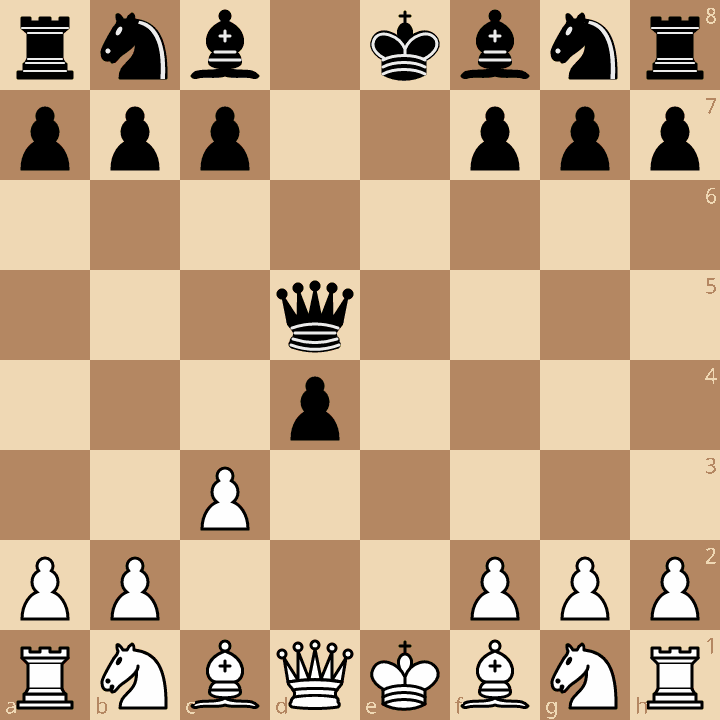
The best defense. Black returns the gambit pawn to neutralize White's attack. After 5.cxd4 Nc6, Black reaches a comfortable Scandinavian-type position.
Observe cómo se desarrolla la trampa en el tablero o recórrala movimiento a movimiento. Son patrones que puede castigar en sus propias partidas.
A sample Danish Gambit attack. White plays for the e-file and c-file open, with f7 as the target.
1.e4 e5 2.d4 exd4 3.c3 dxc3 4.Bc4 cxb2 5.Bxb2 Nf6 6.e5 d5 7.Bb5+ Bd7 8.Bxd7+ Nbxd7
Start position
The Danish Gambit wins games at club level. Play 4.Bc4 (accepting) and attack with Qh5/Bxf7+ tactics.
Study the Danish Declined (3...d5) carefully, this is where most club opponents go wrong. If they decline, don't force the gambit.
At this level, strong players know 3...d5. Use the Danish as a surprise weapon in rapid/blitz, or transpose to the Scotch Gambit (3.Nf3) instead.
Against best play (3...d5!), Black equalizes comfortably. Against 3...dxc3 4.Bc4 cxb2 5.Bxb2, modern theory gives White compensation but not more, the attack has been worked out. At club level, however, Black rarely plays optimally and the gambit remains effective.
Play 3...d5!, don't take both pawns. After 4.exd5 Qxd5 5.cxd4 Nc6, Black has a safe Scandinavian-style position with active pieces. If you must accept, 3...dxc3 4.Bc4 cxb2 5.Bxb2 Nf6 is necessary, and then play carefully with ...d5 to return material and simplify.
The Scotch Gambit is 1.e4 e5 2.Nf3 Nc6 3.d4 exd4 4.Bc4, White develops the knight first and sacrifices only one pawn. The Danish is 2.d4 directly and sacrifices TWO pawns for faster development. Danish = more material sacrificed, sharper play.
Rarely in classical games because 3...d5! is well-known. It appears occasionally in rapid/blitz as a surprise weapon. Not a serious choice for master-level classical play.
Yes, if they enjoy attacking chess and are comfortable with sacrificial play. The ideas (open center, target f7, develop rapidly) are instructive and transfer to other sharp openings.
La apertura romántica por excelencia: sacrificio de un peón por un centro abierto y ataque inmediato.
El gambito italiano de la tradición romántica: sacrificio del peón de b4 para un desarrollo fulgurante.
La apertura agresiva que abre el centro en el tercer lance, avalada por Kasparov.
Cada variante de arriba es un ejercicio en ChessAtlas. La repetición espaciada programa cada movimiento para que nunca olvide una línea. Gratis para empezar, sin tarjeta de crédito.