Evans Gambit Accepted
1.e4 e5 2.Nf3 Nc6 3.Bc4 Bc5 4.b4 4...Bxb4 5.c3 Ba5 6.d4
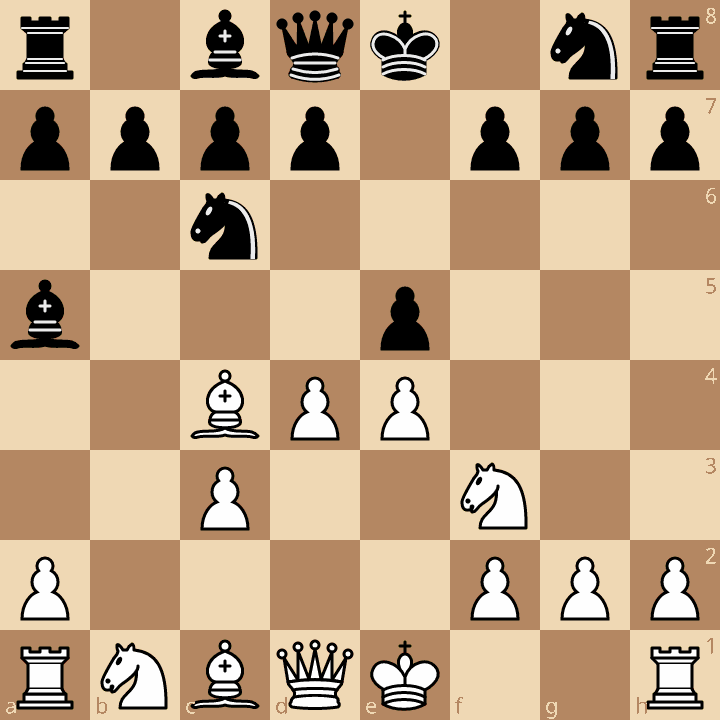
The main line. White plays c3+d4 to build a big center. Black's retreat ...Ba5 maintains a slight lead in development but White has massive central control.
The Evans Gambit (1.e4 e5 2.Nf3 Nc6 3.Bc4 Bc5 4.b4) is Kasparov's revived gambit: a pawn sacrificed for development and a crushing center.
1.e4 e5 2.Nf3 Nc6 3.Bc4 Bc5 4.b4
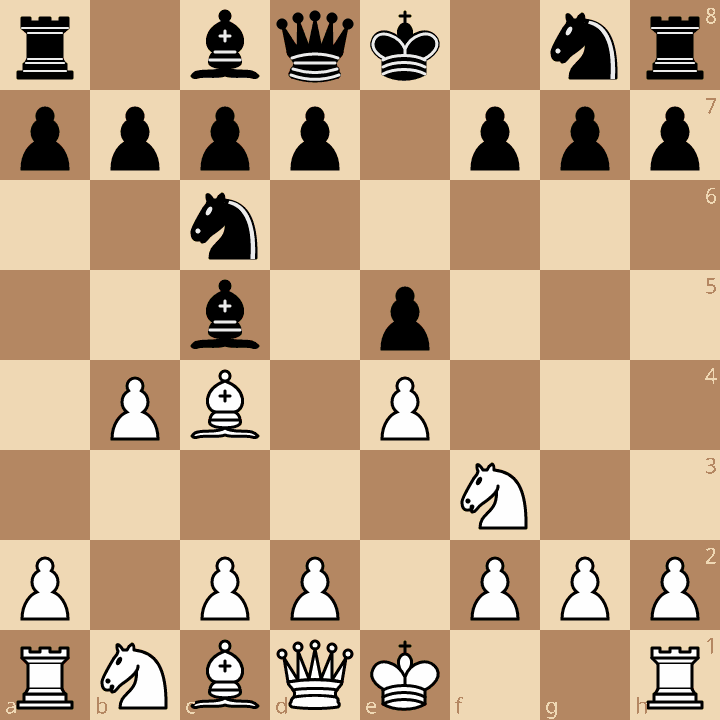
The Evans Gambit (1.e4 e5 2.Nf3 Nc6 3.Bc4 Bc5 4.b4) is one of the most aggressive Italian Game variations. White sacrifices the b-pawn to gain crucial tempo (attacking the Bc5 bishop) and build a strong center with c3+d4. Captain William Davies Evans introduced it in 1827, and Kasparov revived it at the top level in the 1990s, using it to beat Anand and others. At club level it's devastating, most opponents don't know the defensive moves, and White typically gets a massive attack for the pawn.
Each variation below comes with a diagram and the main plan. Click "Train this opening" to drill every line with spaced repetition.
Want to drill the Evans Gambit from memory? Practice your openings move by move in the free opening trainer, then come back to the variations you missed.
1.e4 e5 2.Nf3 Nc6 3.Bc4 Bc5 4.b4 4...Bxb4 5.c3 Ba5 6.d4
The main line. White plays c3+d4 to build a big center. Black's retreat ...Ba5 maintains a slight lead in development but White has massive central control.
1.e4 e5 2.Nf3 Nc6 3.Bc4 Bc5 4.b4 4...Bb6
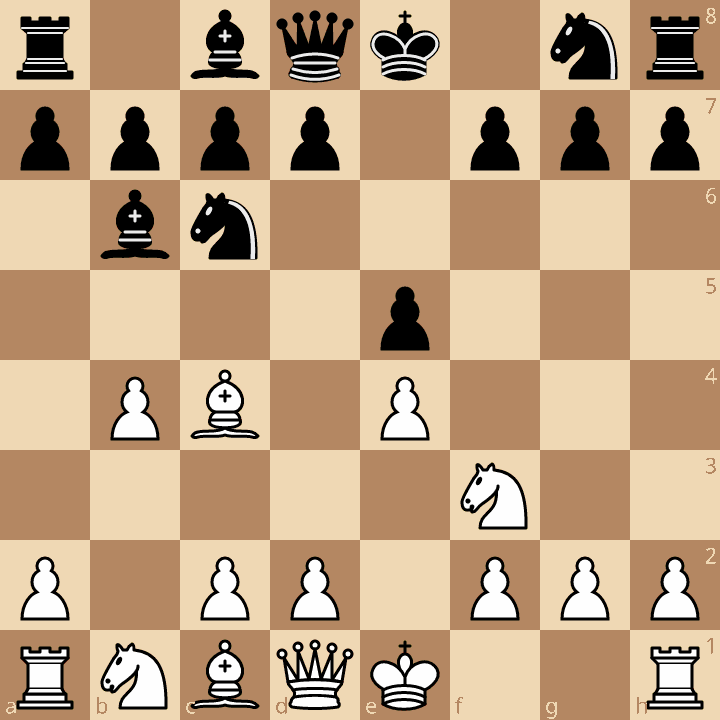
Black refuses the gambit. After 5.a4 a6 6.Nc3, White maintains pressure but without the central dominance of the accepted lines.
1.e4 e5 2.Nf3 Nc6 3.Bc4 Bc5 4.b4 4...Bxb4 5.c3 Ba5 6.d4 exd4 7.O-O d6
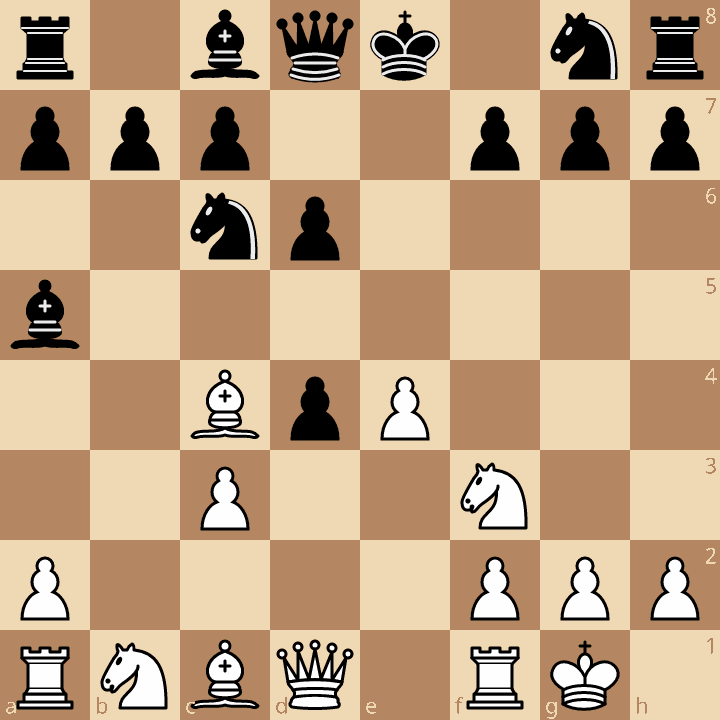
Black plays a solid setup with ...d6...Nf6, and eventually ...O-O. White plays for the attack with Qb3, Bxf7+ tactics, and rook lifts.
The Evans Gambit scores very well at club level. Study the 5.c3 Ba5 6.d4 main line and the typical Qb3+Bxf7 attacking patterns.
Learn the Evans Gambit Declined (4...Bb6) in case opponents avoid the gambit. Also study Kasparov's Evans Gambit games.
Add the Lasker Defense 7...d6 8.cxd4 Bb6, considered Black's best according to modern theory. White retains practical chances but no objective advantage.
The Evans Gambit is close to equal with best play, but White has strong practical chances. At club level, it scores well because most Black players don't know the precise defensive moves. Kasparov revived it at the top level with great success.
Yes, accepting with 4...Bxb4 is correct. Declining with 4...Bb6 gives White good pressure without the tempo compensation. If you accept, play 5...Ba5 and be ready for the d4 break.
After 4...Bxb4 5.c3 Ba5 6.d4 exd4 7.O-O, Black's most accurate is 7...d6 (Anderssen Variation) or 7...Nge7. Avoid 7...dxc3? which gives White a huge lead in development.
Kasparov used it successfully in the 1990s. Modern top players sometimes play it in rapid/blitz (Nakamura, Nepomniachtchi). In classical games it's rare because modern defenses are well-known, but it's not refuted.
Excellent for beginners once they're comfortable with the Italian Game. The attacking ideas (d4 break, Bxf7+ sacrifices, open files) are instructive and win a lot of games at lower levels.
The fastest-developing 1.e4 opening. Aim the bishop at f7 and play for the attack.
The most famous attacking line in chess. A knight sacrifice for a devastating king hunt.
The romantic gambit. Sacrifice a pawn for the ultimate attacking chess.
Every variation above is a drill on ChessAtlas. Spaced repetition schedules each move so you never forget a line again. Free to start, no credit card.