Danish Gambit Accepted
1.e4 e5 2.d4 exd4 3.c3 3...dxc3 4.Bc4 cxb2 5.Bxb2
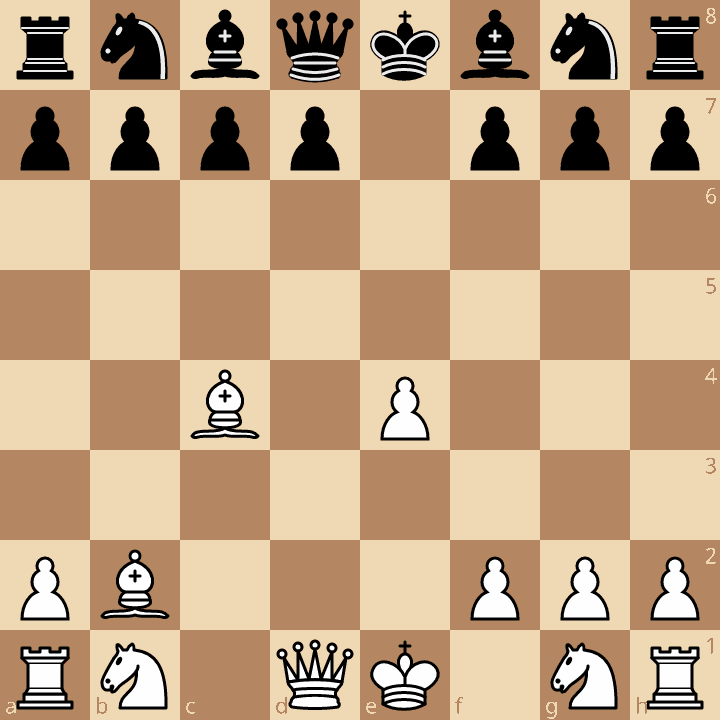
White sacrifices two pawns for blazing development. Typical attack: Nc3, Qh5 (or Qb3), Nf3, O-O-O, and a crushing assault on f7 or the center.
Opfer von zwei Bauern für rasante Entwicklung und sofortigen Königsangriff.
1.e4 e5 2.d4 exd4 3.c3
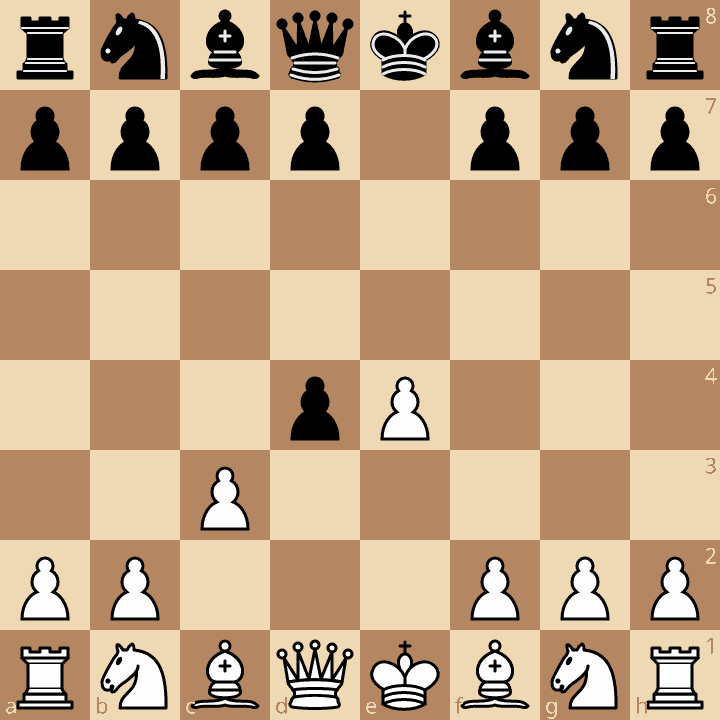
Das Dänische Gambit (1.e4 e5 2.d4 exd4 3.c3) opfert erst den d4-Bauern und nach 3...dxc3 4.Lc4 cxb2 5.Lxb2 einen zweiten. Weiß gibt zwei Bauern für schnelle Entwicklung und zwei auf den schwarzen König gerichtete Läufer. Ein klassischer Angriff aus der romantischen Ära des 19. Jahrhunderts. Theoretisch bei präziser Verteidigung zweifelhaft (Schwarz kann mit 5...d5! einen Bauern zurückgeben), im Klub aber brandgefährlich, weil wenige die genaue Antwort kennen. Eine Blitz-Lieblingswaffe von Morozewitsch.
Jede Variante unten kommt mit einem Diagramm und dem Hauptplan. Klicken Sie auf „Diese Eröffnung trainieren“, um jede Variante mit Spaced Repetition zu trainieren.
Möchten Sie Dänisches Gambit aus dem Gedächtnis spielen? Im kostenlosen Eröffnungstraining üben Sie Zug für Zug und kehren dann zu den Varianten zurück, bei denen Sie Fehler gemacht haben.
1.e4 e5 2.d4 exd4 3.c3 3...dxc3 4.Bc4 cxb2 5.Bxb2
White sacrifices two pawns for blazing development. Typical attack: Nc3, Qh5 (or Qb3), Nf3, O-O-O, and a crushing assault on f7 or the center.
1.e4 e5 2.d4 exd4 3.c3 3...d5 4.exd5 Qxd5
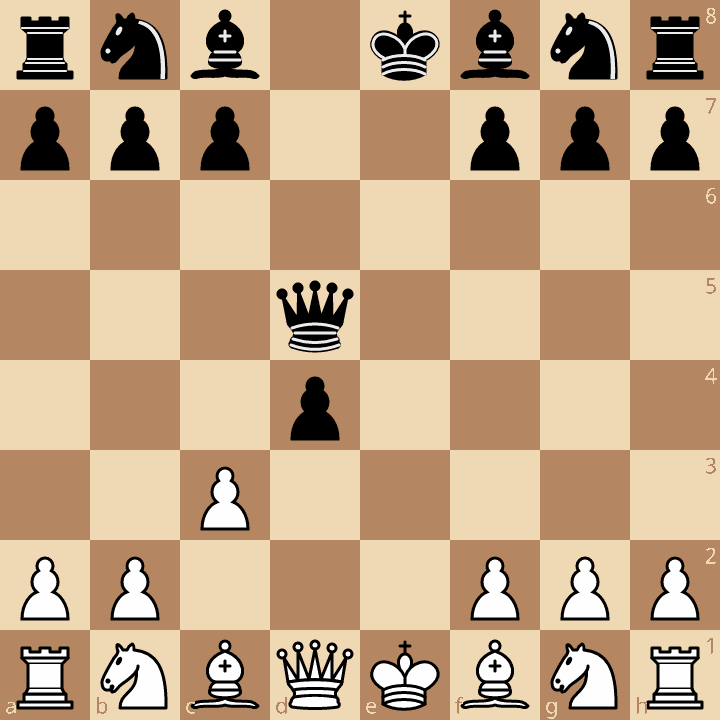
The best defense. Black returns the gambit pawn to neutralize White's attack. After 5.cxd4 Nc6, Black reaches a comfortable Scandinavian-type position.
Sehen Sie sich die Falle auf dem Brett an oder gehen Sie sie Zug für Zug durch. Das sind Muster, die Sie in Ihren eigenen Partien bestrafen können.
A sample Danish Gambit attack. White plays for the e-file and c-file open, with f7 as the target.
1.e4 e5 2.d4 exd4 3.c3 dxc3 4.Bc4 cxb2 5.Bxb2 Nf6 6.e5 d5 7.Bb5+ Bd7 8.Bxd7+ Nbxd7
Start position
The Danish Gambit wins games at club level. Play 4.Bc4 (accepting) and attack with Qh5/Bxf7+ tactics.
Study the Danish Declined (3...d5) carefully, this is where most club opponents go wrong. If they decline, don't force the gambit.
At this level, strong players know 3...d5. Use the Danish as a surprise weapon in rapid/blitz, or transpose to the Scotch Gambit (3.Nf3) instead.
Against best play (3...d5!), Black equalizes comfortably. Against 3...dxc3 4.Bc4 cxb2 5.Bxb2, modern theory gives White compensation but not more, the attack has been worked out. At club level, however, Black rarely plays optimally and the gambit remains effective.
Play 3...d5!, don't take both pawns. After 4.exd5 Qxd5 5.cxd4 Nc6, Black has a safe Scandinavian-style position with active pieces. If you must accept, 3...dxc3 4.Bc4 cxb2 5.Bxb2 Nf6 is necessary, and then play carefully with ...d5 to return material and simplify.
The Scotch Gambit is 1.e4 e5 2.Nf3 Nc6 3.d4 exd4 4.Bc4, White develops the knight first and sacrifices only one pawn. The Danish is 2.d4 directly and sacrifices TWO pawns for faster development. Danish = more material sacrificed, sharper play.
Rarely in classical games because 3...d5! is well-known. It appears occasionally in rapid/blitz as a surprise weapon. Not a serious choice for master-level classical play.
Yes, if they enjoy attacking chess and are comfortable with sacrificial play. The ideas (open center, target f7, develop rapidly) are instructive and transfer to other sharp openings.
Die romantische Eröffnung schlechthin: Bauernopfer für offenes Zentrum und sofortigen Angriff.
Das italienische Gambit der romantischen Tradition: Bauernopfer auf b4 für rasante Entwicklung.
Die aggressive Eröffnung, die das Zentrum im dritten Zug öffnet, von Kasparow geadelt.
Jede Variante oben ist eine Übung auf ChessAtlas. Verteilte Wiederholung plant jeden Zug so, dass Sie nie wieder eine Variante vergessen. Gratis zum Starten, keine Kreditkarte.