Danish Gambit Accepted
1.e4 e5 2.d4 exd4 3.c3 3...dxc3 4.Bc4 cxb2 5.Bxb2
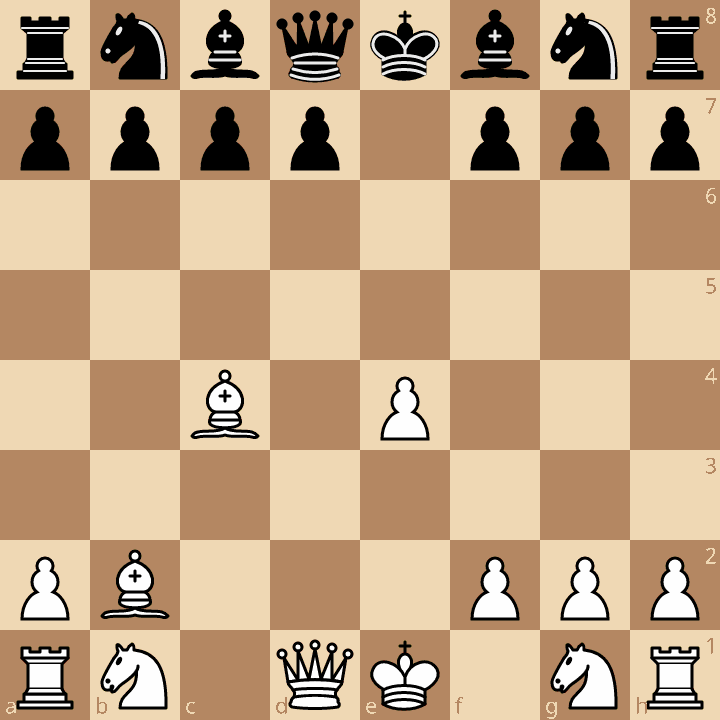
White sacrifices two pawns for blazing development. Typical attack: Nc3, Qh5 (or Qb3), Nf3, O-O-O, and a crushing assault on f7 or the center.
Sacrifício de dois peões por desenvolvimento fulgurante e ataque imediato ao rei.
1.e4 e5 2.d4 exd4 3.c3
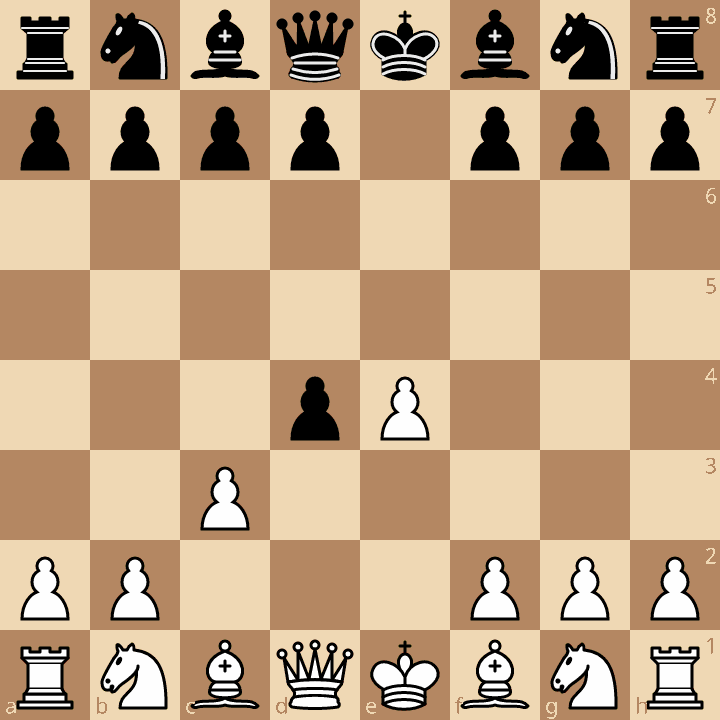
O Gambito Dinamarquês (1.e4 e5 2.d4 exd4 3.c3) oferece um primeiro peão em d4 e depois um segundo com 3...dxc3 4.Bc4 cxb2 5.Bxb2. As brancas sacrificam dois peões por um desenvolvimento rápido e dois bispos apontados ao rei preto. O ataque é clássico da era romântica do século XIX, popularizado pelo dinamarquês Martin Severin From em Paris 1867 (após partidas anteriores do sueco Hans Lindehn). Teoricamente duvidoso contra defesa precisa (as pretas igualam com 3...d5!), mas terrivelmente eficaz ao nível de clube onde poucos jogadores conhecem a resposta exacta.
Cada variação abaixo vem com um diagrama e o plano principal. Clique em «Treine esta abertura» para praticar cada linha com repetição espaçada.
Quer repassar Gambito Dinamarquês de memória? Pratique as suas aberturas lance a lance no treinador gratuito e volte depois às variações que errou.
1.e4 e5 2.d4 exd4 3.c3 3...dxc3 4.Bc4 cxb2 5.Bxb2
White sacrifices two pawns for blazing development. Typical attack: Nc3, Qh5 (or Qb3), Nf3, O-O-O, and a crushing assault on f7 or the center.
1.e4 e5 2.d4 exd4 3.c3 3...d5 4.exd5 Qxd5
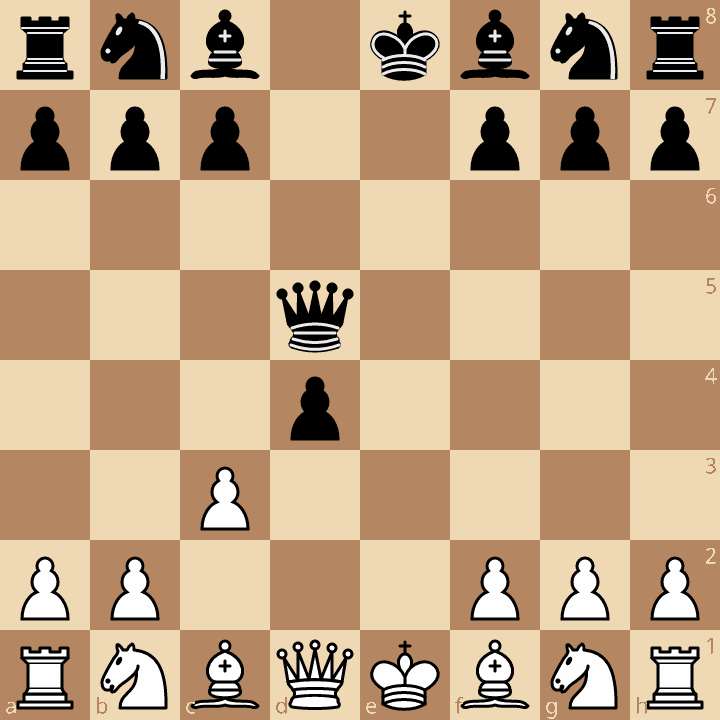
The best defense. Black returns the gambit pawn to neutralize White's attack. After 5.cxd4 Nc6, Black reaches a comfortable Scandinavian-type position.
Observe a armadilha acontecer no tabuleiro ou avance lance a lance. São padrões que você pode punir nas suas próprias partidas.
A sample Danish Gambit attack. White plays for the e-file and c-file open, with f7 as the target.
1.e4 e5 2.d4 exd4 3.c3 dxc3 4.Bc4 cxb2 5.Bxb2 Nf6 6.e5 d5 7.Bb5+ Bd7 8.Bxd7+ Nbxd7
Start position
The Danish Gambit wins games at club level. Play 4.Bc4 (accepting) and attack with Qh5/Bxf7+ tactics.
Study the Danish Declined (3...d5) carefully, this is where most club opponents go wrong. If they decline, don't force the gambit.
At this level, strong players know 3...d5. Use the Danish as a surprise weapon in rapid/blitz, or transpose to the Scotch Gambit (3.Nf3) instead.
Against best play (3...d5!), Black equalizes comfortably. Against 3...dxc3 4.Bc4 cxb2 5.Bxb2, modern theory gives White compensation but not more, the attack has been worked out. At club level, however, Black rarely plays optimally and the gambit remains effective.
Play 3...d5!, don't take both pawns. After 4.exd5 Qxd5 5.cxd4 Nc6, Black has a safe Scandinavian-style position with active pieces. If you must accept, 3...dxc3 4.Bc4 cxb2 5.Bxb2 Nf6 is necessary, and then play carefully with ...d5 to return material and simplify.
The Scotch Gambit is 1.e4 e5 2.Nf3 Nc6 3.d4 exd4 4.Bc4, White develops the knight first and sacrifices only one pawn. The Danish is 2.d4 directly and sacrifices TWO pawns for faster development. Danish = more material sacrificed, sharper play.
Rarely in classical games because 3...d5! is well-known. It appears occasionally in rapid/blitz as a surprise weapon. Not a serious choice for master-level classical play.
Yes, if they enjoy attacking chess and are comfortable with sacrificial play. The ideas (open center, target f7, develop rapidly) are instructive and transfer to other sharp openings.
A abertura romântica por excelência: sacrifício de um peão por centro aberto e ataque imediato.
O gambito italiano da tradição romântica: sacrifício do peão de b4 para um desenvolvimento fulgurante.
A abertura agressiva que abre o centro no terceiro lance, endossada por Kasparov.
Cada variação acima é um exercício no ChessAtlas. A repetição espaçada programa cada lance para que você nunca mais esqueça uma linha. Grátis para começar, sem cartão de crédito.