Para Negras· ECO C20· principiante

Ataque Parham

La dama blanca sale en la segunda jugada. Defiende e5 y f7, desarróllate ganando tiempos sobre la dama y toma la iniciativa.

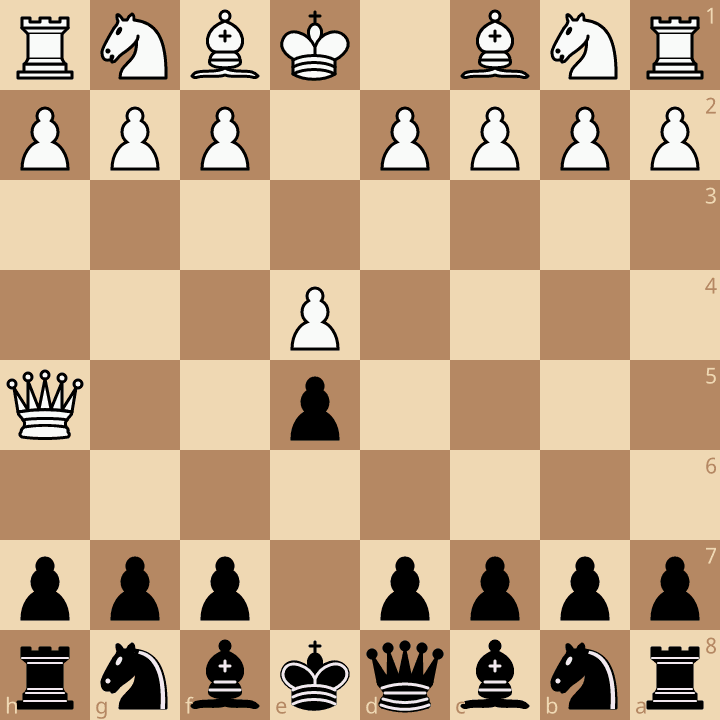
1.e4 e5 2.Qh5

Ataque Parham: posición inicial tras 1.e4 e5 2.Qh5

¿Qué es Ataque Parham?

El Ataque Parham (1.e4 e5 2.Dh5), llamado Wayward Queen Attack en inglés y a veces Apertura Patzer, saca la dama blanca en la segunda jugada para atacar el peón de e5 y, cuando el alfil llega a c4, el peón de f7. Se conoce sobre todo como el camino al mate del pastor, pero es una apertura real que algunos jugadores fuertes usan como sorpresa en blitz en línea. La tarea de las negras es sencilla: defender e5 y f7 primero (2...Cc6, y luego 3...g6 o 3...De7) y después desarrollarse persiguiendo a la dama con ...g6, ...Cf6 y ...Cd4. Los módulos valoran la posición como buena para las negras, incluso algo mejor, pero 2.Dh5 no está refutado: si las negras solo se defienden pasivamente, las blancas obtienen una partida normal.

Variaciones principales

Cada variación incluye un diagrama y el plan principal. Haga clic en «Entrene esta apertura» para trabajar cada línea con repetición espaciada.

¿Quiere repasar Ataque Parham de memoria? Practique sus aperturas jugada a jugada en el entrenador gratuito y vuelva luego a las variantes que falló.

Main defense: 3...g6 and 4...Nf6

1.e4 e5 2.Qh5 2...Nc6 3.Bc4 g6 4.Qf3 Nf6
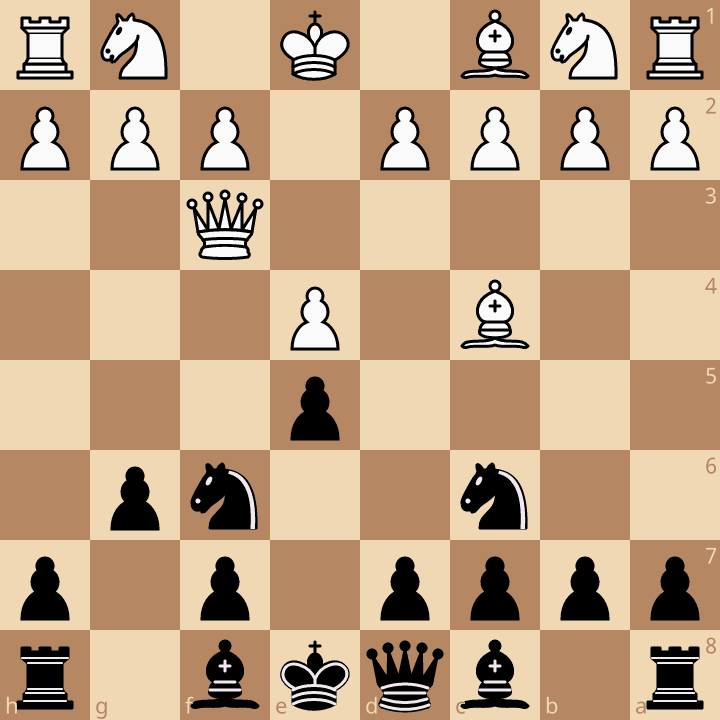
Ataque Parham Main defense: 3...g6 and 4...Nf6 tras 2...Nc6 3.Bc4 g6 4.Qf3 Nf6
Línea principal: 5.Ne2 Bg7 6.Nbc3 d6 7.d3 O-O

The standard plan. 2...Nc6 guards e5, 3...g6 kicks the queen, and when 4.Qf3 renews the threat on f7, 4...Nf6 blocks the f-file while developing. Black continues with ...Bg7, ...d6 and castles; White usually settles for Ne2, Nbc3 and d3, and Black is at least equal.
Queen guard: 3...Qe7

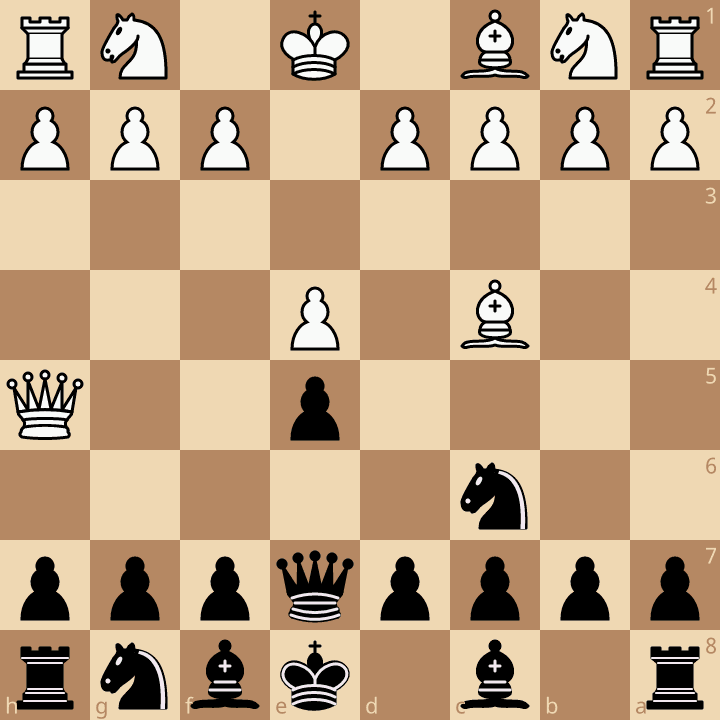
1.e4 e5 2.Qh5 2...Nc6 3.Bc4 Qe7

Ataque Parham Queen guard: 3...Qe7 tras 2...Nc6 3.Bc4 Qe7
Línea principal: 4.Nc3 Nd4 5.Qd1 c6

A simpler defense: the queen covers f7 and e5 at once, without the ...g6 weakening. Black then aims ...Nd4 at c2 and plays ...Nf6 with tempo on the queen. The queen blocks the f8 bishop for a while, so Black untangles later with ...c6, ...d6 or ...g6.

Punishing 5.Qb3?: 5...Nd4!

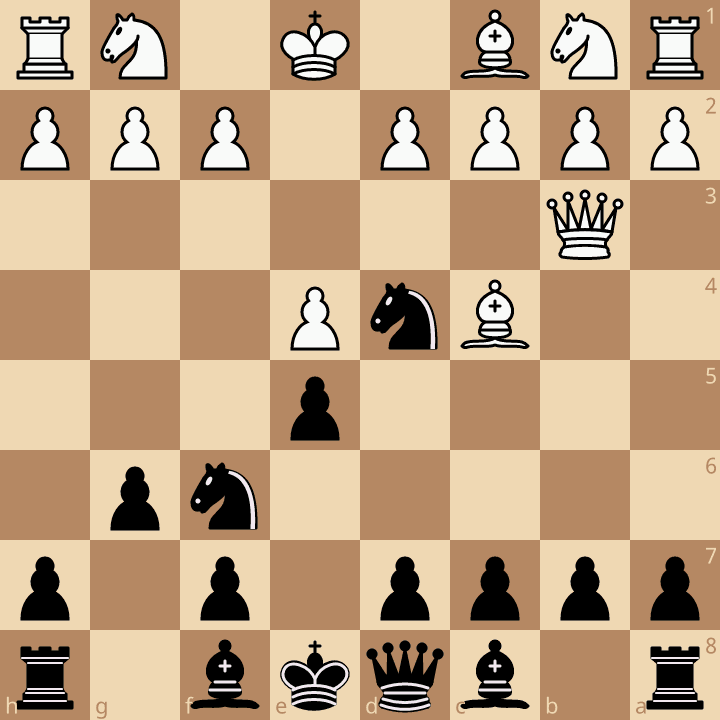
1.e4 e5 2.Qh5 2...Nc6 3.Bc4 g6 4.Qf3 Nf6 5.Qb3 Nd4

Ataque Parham Punishing 5.Qb3?: 5...Nd4! tras 2...Nc6 3.Bc4 g6 4.Qf3 Nf6 5.Qb3 Nd4
Línea principal: 6.Bxf7+ Ke7 7.Qc4 b5

Renewing the attack on f7 with 5.Qb3? is a common club mistake. 5...Nd4! hits the queen and the c2 pawn. If White grabs the pawn with 6.Bxf7+ Ke7 7.Qc4, then 7...b5! attacks the queen while the king attacks the f7 bishop, and Black wins a piece.

Trampas habituales

Observe cómo se desarrolla la trampa en el tablero o recórrala movimiento a movimiento. Son patrones que puede castigar en sus propias partidas.

Scholar's Mate: 3...Nf6??

The trap every beginner meets: 3...Nf6?? develops and attacks the queen but ignores the threat, and 4.Qxf7 is mate. Against an early queen, check what the queen and the c4 bishop attack together before every move.

1.e4 e5 2.Qh5 Nc6 3.Bc4 Nf6 4.Qxf7#

0/7

Start position

2...g6?? loses the rook

Kicking the queen too early backfires: 2...g6?? leaves e5 undefended and opens the long diagonal, so 3.Qxe5+ forks the king and the h8 rook. Play 2...Nc6 first, so e5 is protected, and only then ...g6.

1.e4 e5 2.Qh5 g6 3.Qxe5+ Qe7 4.Qxh8

0/7

Start position

Counter-trap: 5.g4? Nd4!

White sometimes pushes 5.g4 to chase the f6 knight. 5...Nd4! hits the queen and c2, and after 6.Qd1 d5! Black opens lines against a king still stuck in the centre, with the g4 pawn hanging. Engines give Black a winning position.

1.e4 e5 2.Qh5 Nc6 3.Bc4 g6 4.Qf3 Nf6 5.g4 Nd4 6.Qd1 d5

0/12

Start position

¿Hasta dónde conviene estudiarla?

Below 1000

Learn one set-up and stick to it: 2...Nc6, 3...g6, 4...Nf6. Before each move, check whether f7 is attacked twice.

1000–1400

Use the queen as a target: ...g6, ...Nf6 and ...Nd4 all gain time. Know the 5.Qb3? Nd4! and 5.g4? Nd4! punishments, they come up often at this level.

1400+

Expect sensible play (Ne2, Nbc3, d3). Don't overreach: develop, castle, and use your extra time for a central break with ...d5 when it is safe.

Preguntas frecuentes

Is the Wayward Queen Attack the same as Scholar's Mate?

No. Scholar's Mate is the four-move checkmate 4.Qxf7# that can arise from it. The Wayward Queen Attack is the opening 1.e4 e5 2.Qh5 itself, which goes on for many moves once Black defends correctly. Our blog has a dedicated guide to stopping Scholar's Mate; this page covers the opening and how to exploit the early queen.

Is 2.Qh5 a bad opening?

It is dubious but not losing. Engines rate the position as roughly equal or slightly better for Black: the queen comes out early and gets chased, but White has no structural weakness. Against careful defense it leads to a normal game, which is why it survives as a surprise weapon in blitz.

What is the best defense against 2.Qh5?

2...Nc6, defending e5, is the most common and sound reply. Then 3.Bc4 g6 4.Qf3 Nf6, or 3...Qe7. Avoid 2...g6?? (3.Qxe5+ wins the rook) and 3...Nf6?? (4.Qxf7 mate).

Can Black answer 2.Qh5 with 2...Nf6?

2...Nf6 3.Qxe5+ Be7 gives up the e5 pawn for quick development, and engines consider it playable, but it is a gamble you don't need: 2...Nc6 keeps the material and still gains time on the queen.

How do I practise the defense?

Drill the three or four lines on this page until the replies are automatic. ChessAtlas uses spaced repetition, so each line comes back just before you would forget it, and you meet 2.Qh5 over the board already knowing the punishment.

¿Listo para entrenar Ataque Parham?

Cada variación de arriba es un ejercicio en ChessAtlas. La repetición espaciada programa cada movimiento para que nunca olvide una línea. Gratis para empezar, sin tarjeta de crédito.