Najdorf
1.e4 c5 2.Nf3 d6 3.d4 cxd4 4.Nxd4 Nf6 5.Nc3 a6
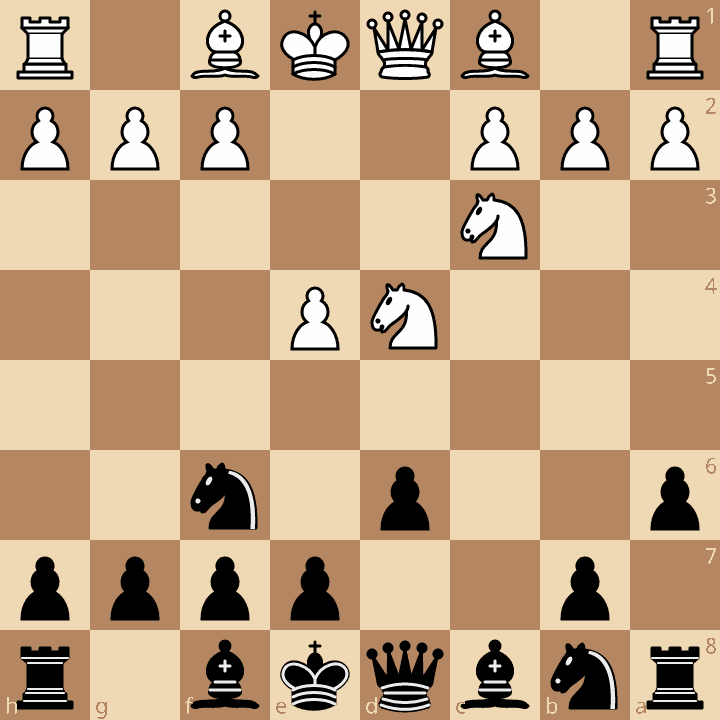
The most popular Sicilian, used by Fischer and Kasparov. ...a6 prepares ...e5 or ...b5 and gives Black maximum flexibility against White's setup.
La respuesta combativa a 1.e4 que da a las negras posibilidades reales de victoria desde la primera jugada.
1.e4 c5
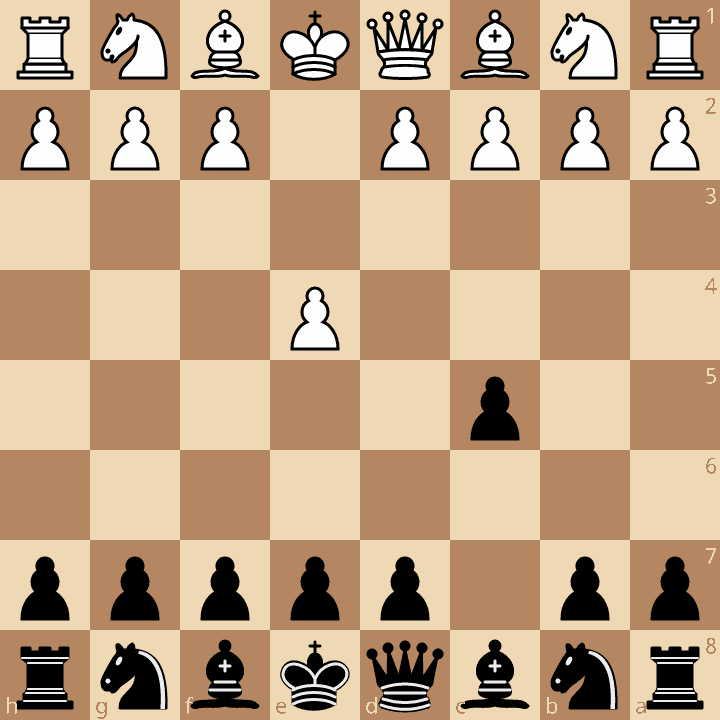
1...c5 crea una asimetría inmediata: el peón de c5 controla d4 sin ayudar a las blancas a construir un centro ideal e4/d4. Esto obliga a las blancas a ir hacia la Siciliana Abierta (2.Cf3 y 3.d4) con sus batallas tácticas cortantes, o hacia alguna de las numerosas Anti-Sicilianas (Alapin, Gran Premio, Cerrada). La columna c semiabierta se convierte en el arma a largo plazo de las negras y apoya un contraataque en el flanco dama que a menudo supera los planes blancos en el flanco de rey en las líneas de enroques opuestos. La Siciliana es una de las defensas más probadas del ajedrez, desde Fischer hasta Carlsen sigue siendo la respuesta más ambiciosa de las negras a 1.e4.
Cada variante incluye un diagrama y el plan principal. Haga clic en «Entrene esta apertura» para trabajar cada línea con repetición espaciada.
¿Quiere repasar Defensa Siciliana de memoria? Practique sus aperturas jugada a jugada en el entrenador gratuito y vuelva luego a las variantes que falló.
1.e4 c5 2.Nf3 d6 3.d4 cxd4 4.Nxd4 Nf6 5.Nc3 a6
The most popular Sicilian, used by Fischer and Kasparov. ...a6 prepares ...e5 or ...b5 and gives Black maximum flexibility against White's setup.
1.e4 c5 2.Nf3 d6 3.d4 cxd4 4.Nxd4 Nf6 5.Nc3 g6
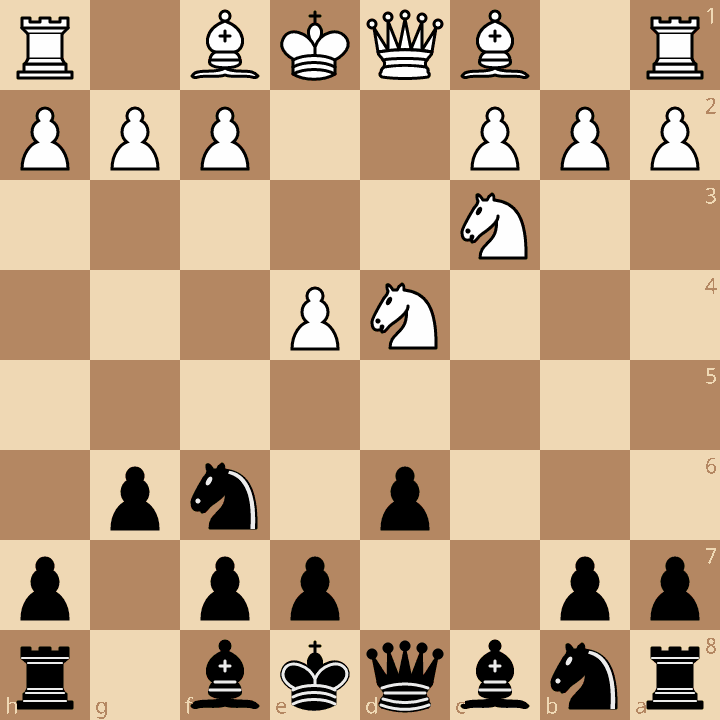
Black fianchettoes the g7 bishop on the long diagonal. Against the Yugoslav Attack (6.Be3 Bg7 7.f3 O-O 8.Qd2), Black races White's kingside attack with ...d5 and queenside rooks.
1.e4 c5 2.Nf3 d6 3.d4 cxd4 4.Nxd4 Nf6 5.Nc3 e6
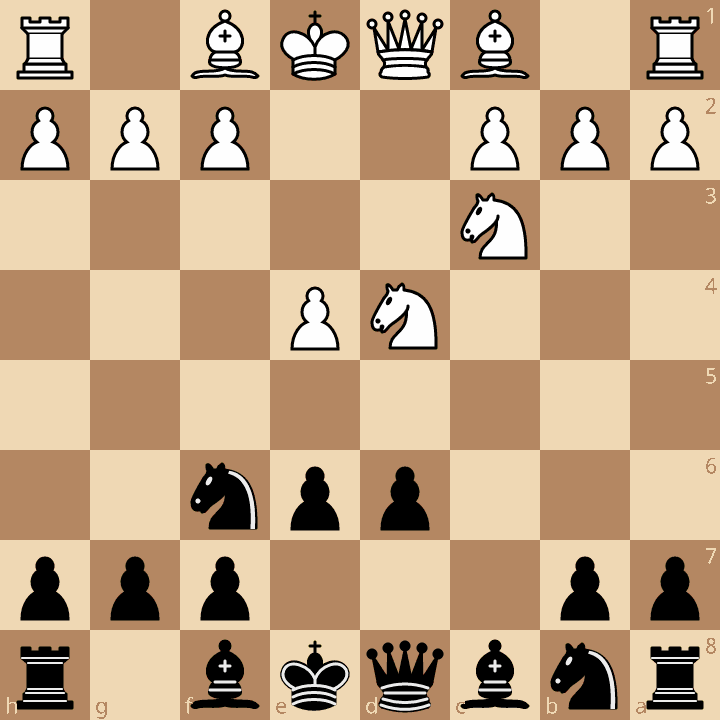
A positional system where Black builds a solid ...d6-e6 structure and fights for ...d5 later. Less theory-heavy than the Najdorf, ideal for maneuvering players.
1.e4 c5 2.Nf3 Nc6 3.d4 cxd4 4.Nxd4 Nf6 5.Nc3 e5
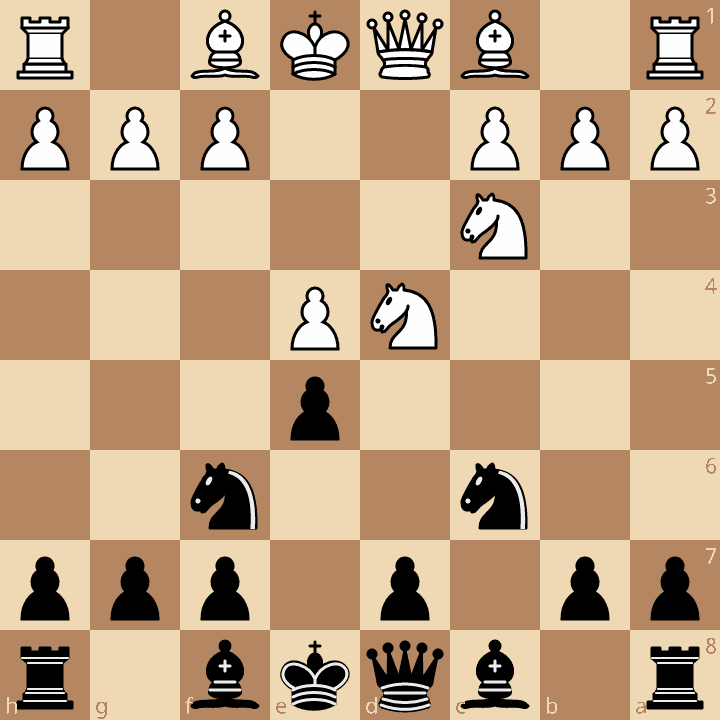
Black accepts a backward d6 pawn and a weak d5 square in exchange for active piece play. White targets the d5 outpost while Black pursues queenside counterplay.
1.e4 c5 2.c3
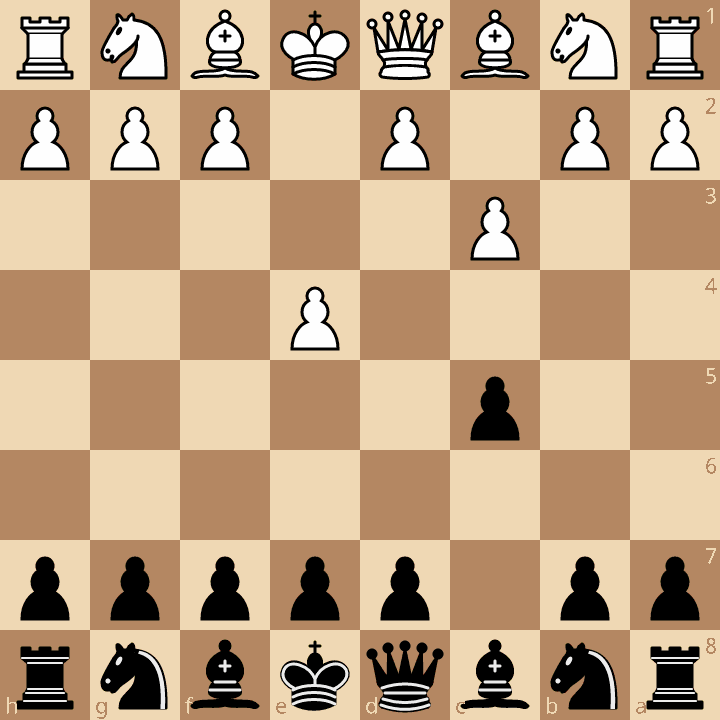
White avoids Open Sicilian theory by preparing d4. Black usually responds with 2...Nf6 or 2...d5 to challenge the center immediately.
Start with the Kan (4...e6 5.Nc3 a6) or Accelerated Dragon (4...g6). Both have simple, flexible structures and far less theory than the Najdorf or Open Dragon.
Pick the Classical Sicilian (5...Nc6) or Kan. Avoid the Dragon's Yugoslav Attack at this level — it's one of the most theory-heavy lines in chess.
Invest in the Najdorf. Learn the English Attack (6.Be3 e5) and the Poisoned Pawn (6.Bg5 e6 7.f4 Qb6).
The Sicilian has a steep learning curve because every variation demands different preparation. Beginners are better served by solid defenses like the Caro-Kann or French. Once you reach 1400+ and want real winning chances with Black, the Sicilian becomes worth the investment.
For club players: the Scheveningen (...e6...d6 setup) or Kan (4...e6 5.Nc3 a6). Both use flexible pawn structures and don't require memorizing deep tactics. The Najdorf and Dragon come later when you're comfortable with the Sicilian's general plans.
In many Open Sicilian lines, White's setup (Be3, Qd2, O-O-O) points the king to the queenside, while Black's fianchetto or ...a6/...b5 advance works toward the kingside. Opposite castling means both sides race with pawn storms, White pushes f4-f5 or g4-g5 while Black advances ...b5-b4 and ...a5-a4.
Black develops a step slower than in ...e5 openings. If you don't know typical move orders, White's early pressure on d4 and central control can lead to a lost position before move 15. The Sicilian rewards preparation and punishes lazy play.
Yes, it's one of Black's primary weapons at the grandmaster level. Fischer, Kasparov, and Anand built their careers around the Najdorf, and Carlsen has used it occasionally at the top level. The Sveshnikov was Carlsen's main weapon as Black in his 2018 World Championship match vs Caruana (Games 8, 10, and 12). The Sicilian remains the most-played response to 1.e4 in elite chess.
Una respuesta sólida y estratégica a 1.e4 con un plan de juego claro.
La defensa sólida a 1.e4 donde el alfil de casillas blancas consigue un trabajo real.
La apertura más jugada al más alto nivel desde hace 500 años, presión posicional duradera a 1.e4.
Cada variante de arriba es un ejercicio en ChessAtlas. La repetición espaciada programa cada movimiento para que nunca olvide una línea. Gratis para empezar, sin tarjeta de crédito.