Giuoco Piano
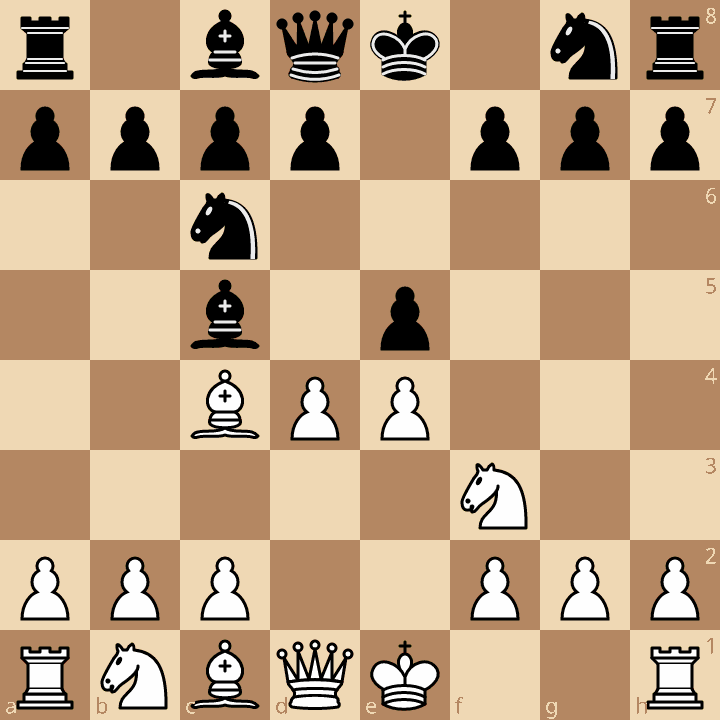
1.e4 e5 2.Nf3 Nc6 3.Bc4 3...Bc5 4.c3 Nf6 5.d4
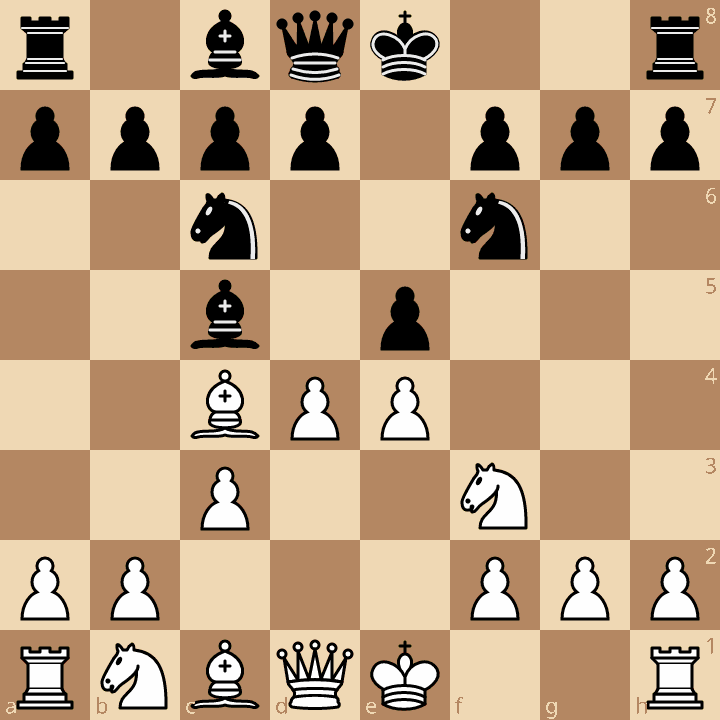
The 'quiet game' that becomes very sharp after 5.d4. White builds a big center; Black counters with ...exd4 and piece play.
The fastest-developing 1.e4 opening. Aim the bishop at f7 and play for the attack.
1.e4 e5 2.Nf3 Nc6 3.Bc4
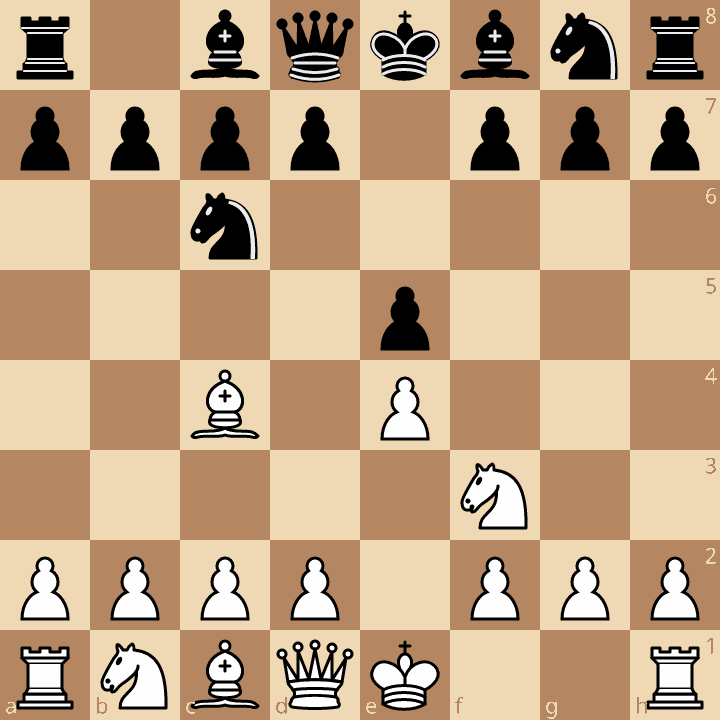
The Italian Game dates to the 16th century and remains one of the most popular 1.e4 openings at every level. After 1.e4 e5 2.Nf3 Nc6 3.Bc4, White develops rapidly, aims the bishop at f7 (Black's weakest square), and plans either quick d4 to open the center or slower c3+d4 (Giuoco Piano) for a classical attack. Theory load is lower than the Ruy Lopez, which is why it's the go-to choice for club players under 2000 — yet the modern Giuoco Pianissimo (slow d3, c3, Nbd2 buildup) is a regular super-GM weapon for Carlsen, Caruana, and So, proving it scales to the highest level.
pages.openingDetail.mainVariationsIntro
1.e4 e5 2.Nf3 Nc6 3.Bc4 3...Bc5 4.c3 Nf6 5.d4
The 'quiet game' that becomes very sharp after 5.d4. White builds a big center; Black counters with ...exd4 and piece play.
1.e4 e5 2.Nf3 Nc6 3.Bc4 3...Nf6 4.Ng5
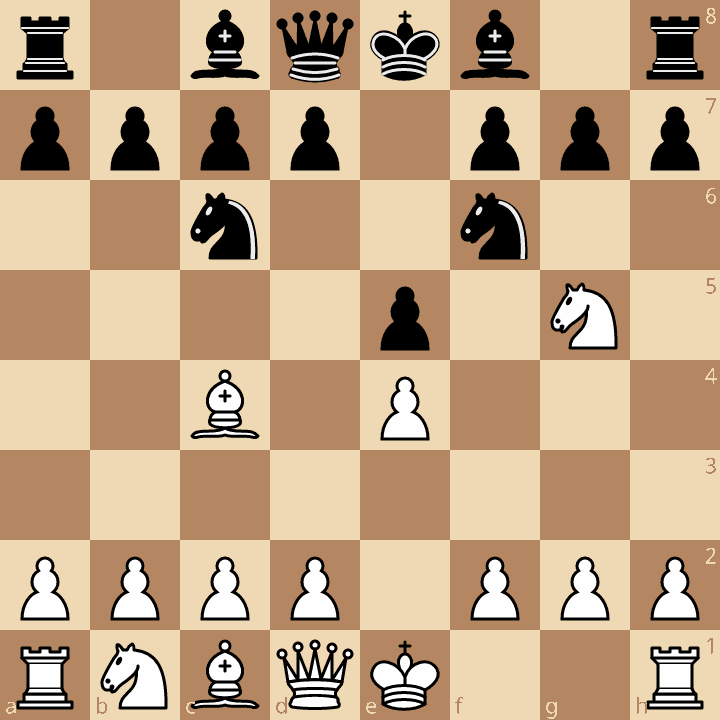
The sharp Fried Liver territory. White attacks f7 immediately, leading to wild tactical complications.
1.e4 e5 2.Nf3 Nc6 3.Bc4 3...Bc5 4.b4
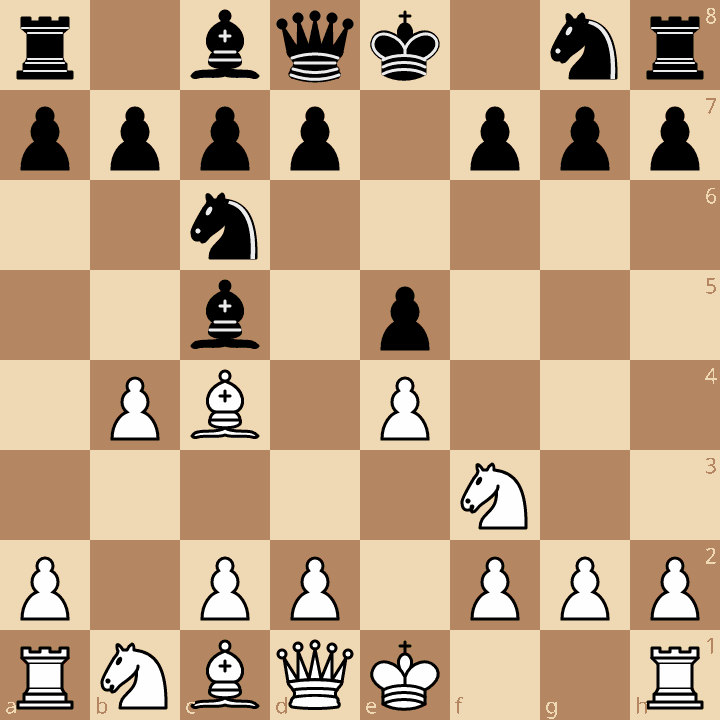
White sacrifices a b-pawn for rapid development and a crushing center. Revived by Kasparov at the top level.
1.e4 e5 2.Nf3 Nc6 3.Bc4 3...Bc5 4.d4
Immediate center break. After 4...exd4 5.O-O, White plays for rapid attack on the f-file and e-file.
pages.openingDetail.commonTrapsIntro
Blackburne's famous tavern trap. If White greedily grabs e5 with 4.Nxe5??, Black's queen sortie wins the knight, picks off e4, and delivers a smothered mate on f3. White's safe reply is 4.Nxd4 exd4 5.c3, keeping a solid extra central pawn.
1.e4 e5 2.Nf3 Nc6 3.Bc4 Nd4?! 4.Nxe5?? Qg5! 5.Nxf7 Qxg2 6.Rf1 Qxe4+ 7.Be2 Nf3#
Start position
Stick to the Giuoco Piano (3...Bc5 4.c3). Focus on developing, castling, and timing d4 when Black isn't ready.
Learn the Two Knights Defense carefully, Fried Liver Attack (4.Ng5) is your attacking weapon against 3...Nf6.
Add the Evans Gambit to your arsenal. It scores very well at club level and Kasparov revived it at the top.
Yes, one of the best openings for beginners. Development is natural, tactics are frequent, and the theory load is manageable. Most top-level players learned the Italian Game first before moving to the Ruy Lopez.
The Italian Game refers to any line after 1.e4 e5 2.Nf3 Nc6 3.Bc4 (including 3...Nf6 Two Knights). The Giuoco Piano is specifically 3...Bc5, the 'quiet game'. All Giuoco Pianos are Italian Games; not all Italian Games are Giuoco Pianos.
Italian is better under 2000 (lower theory, clearer attacks). Ruy Lopez is better at 2000+ (strategic depth, higher ceiling). For most club players, the Italian gives faster returns with less study time.
After 1.e4 e5 2.Nf3 Nc6 3.Bc4 Nf6 4.Ng5 d5 5.exd5 Nxd5? (a mistake, better is 5...Na5), White plays 6.Nxf7!! Kxf7 7.Qf3+ winning the piece back with a devastating attack. It's a classic attacking pattern every Italian Game player should know.
Yes. The modern Italian with slow setups (d3, Nbd2, a4) has become a real super-GM weapon — Carlsen, Caruana, and So all play the Giuoco Pianissimo, and Italian-style structures appear regularly at the highest level when White wants a deep positional fight rather than a forcing theoretical duel.
The king of 1.e4 openings. Deep theory, long-term pressure, grandmaster-tested.
The center-breaking alternative to the Italian. Kasparov's weapon against Karpov.
The most famous attacking line in chess. A knight sacrifice for a devastating king hunt.
pages.openingDetail.finalCtaText