King's Gambit Accepted (KGA)
1.e4 e5 2.f4 2...exf4
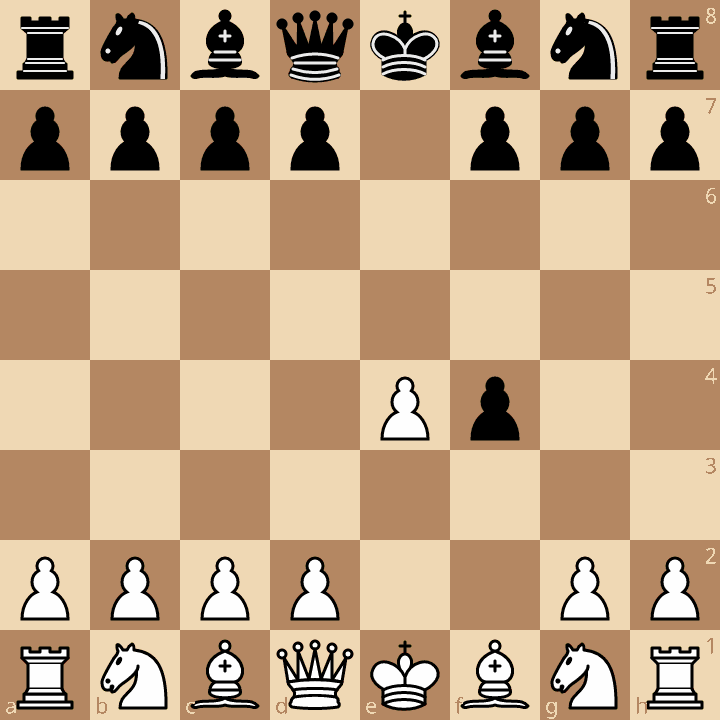
Black takes the pawn. White plays 3.Nf3 (most common) or 3.Bc4 (Bishop Gambit) for rapid development. After 3.Nf3 g5 (classical KGA), White sacrifices more material with h4 or Nc3.
La apertura romántica por excelencia: sacrificio de un peón por un centro abierto y ataque inmediato.
1.e4 e5 2.f4
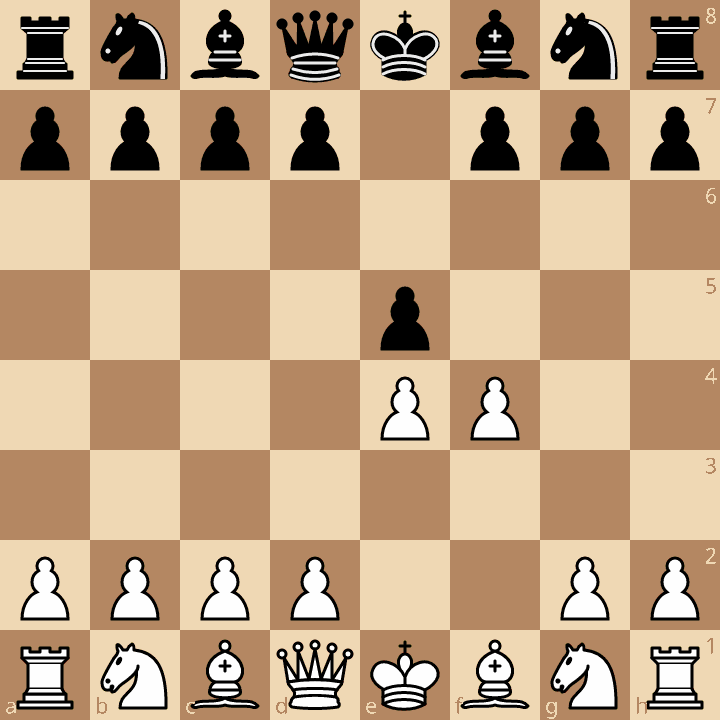
El Gambito de Rey (1.e4 e5 2.f4) es la apertura más antigua y agresiva a 1.e4. Las blancas ofrecen el peón de f4 a cambio de un centro abierto y ataque al rey negro. Tras 2...exf4 (Gambito Aceptado), las líneas principales son 3.Cf3 (Gambito de Caballo) con Ac4 y O-O, o 3.Ac4 (Gambito de Alfil). Las negras también pueden rehusar con 2...Ac5 (Gambito Rehusado) o contragambitar con 2...d5 (Falkbeer). Considerado dudoso por los motores modernos, sigue siendo terriblemente eficaz en el club (hasta 2000 ELO) porque arrastra a las negras poco preparadas a terreno desconocido.
Cada variante incluye un diagrama y el plan principal. Haga clic en «Entrene esta apertura» para trabajar cada línea con repetición espaciada.
¿Quiere repasar Gambito de Rey de memoria? Practique sus aperturas jugada a jugada en el entrenador gratuito y vuelva luego a las variantes que falló.
1.e4 e5 2.f4 2...exf4
Black takes the pawn. White plays 3.Nf3 (most common) or 3.Bc4 (Bishop Gambit) for rapid development. After 3.Nf3 g5 (classical KGA), White sacrifices more material with h4 or Nc3.
1.e4 e5 2.f4 2...d5
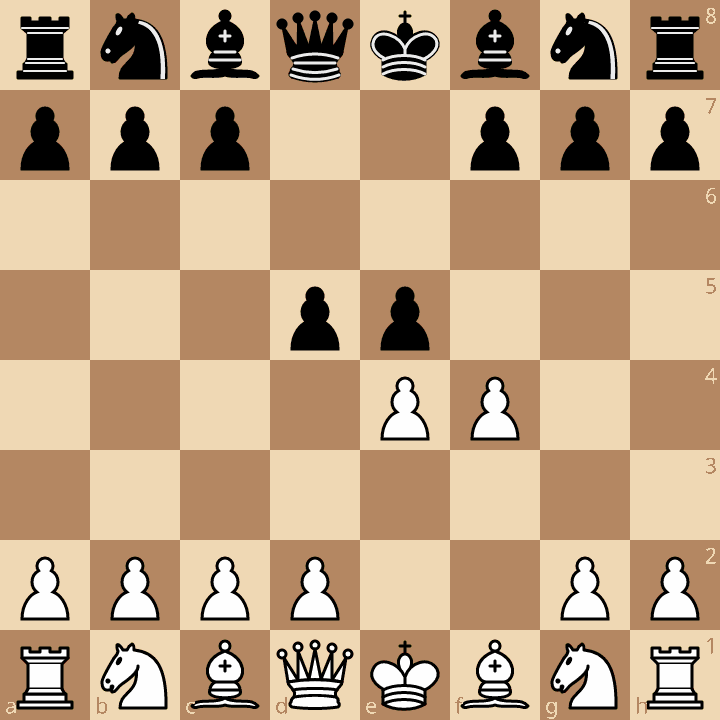
Black counter-gambits instead of accepting. After 3.exd5 e4, Black stakes a claim in the center and attacks White's uncoordinated pieces.
1.e4 e5 2.f4 2...Bc5
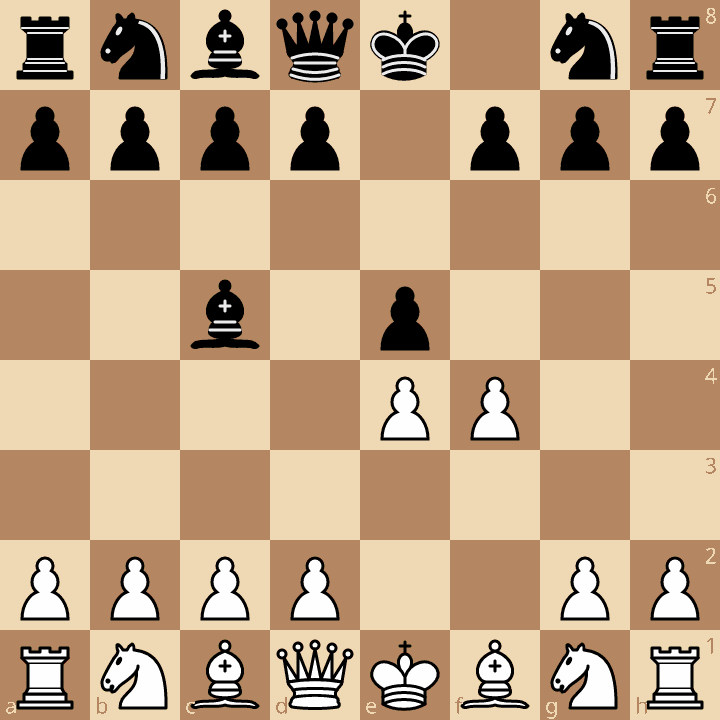
Black refuses the gambit and develops normally. After 3.Nf3 d6 4.Nc3 (or 4.c3), a quieter game ensues with White retaining a slight edge.
Play the King's Gambit! At club level it wins games, most opponents don't know how to defend accurately.
Focus on 3.Nf3 main lines. Study the Muzio Gambit (3.Nf3 g5 4.Bc4 g4 5.O-O!?) for an extreme attacking weapon.
At this level, strong players know the defenses. Use it as a surprise weapon in rapid/blitz, not as a main classical choice.
Against best play, modern engines give Black a small edge. But 'sound' at the top level doesn't mean much at club level, the gambit remains extremely dangerous for players under 2000 ELO.
Two main options: accept with 2...exf4 (classical) or counter-attack with 2...d5 (Falkbeer). Both are fully playable. Accepting requires knowing the defensive ...g5 and ...Bg7 lines; declining with 2...Bc5 is safer but passive.
Rarely in classical chess today, Ian Nepomniachtchi and Hikaru Nakamura have used it in online blitz. Spassky played it against Fischer in 1960 and won. Historically Morphy, Anderssen, and Steinitz employed it regularly.
The King's Gambit Accepted with 3.Nf3 is most principled, White develops rapidly and plans Bc4, Nc3, and castling kingside (or queenside for a storm). Against 2...d5, play 3.exd5 and develop naturally.
Not recommended. The gambit requires precise calculation, understanding of attacking principles, and comfort with sacrificial play. Beginners should learn the Italian Game first, then add the King's Gambit as a surprise weapon once their tactical vision is strong.
Una apertura subestimada, cortante al nivel de club: desarrollo clásico con planes de ataque agresivos.
La apertura clásica 1.e4 e5 2.Cf3 Cc6 3.Ac4: principios sólidos, tácticas ricas.
El gambito italiano de la tradición romántica: sacrificio del peón de b4 para un desarrollo fulgurante.
Cada variante de arriba es un ejercicio en ChessAtlas. La repetición espaciada programa cada movimiento para que nunca olvide una línea. Gratis para empezar, sin tarjeta de crédito.