King's Gambit Accepted (KGA)
1.e4 e5 2.f4 2...exf4
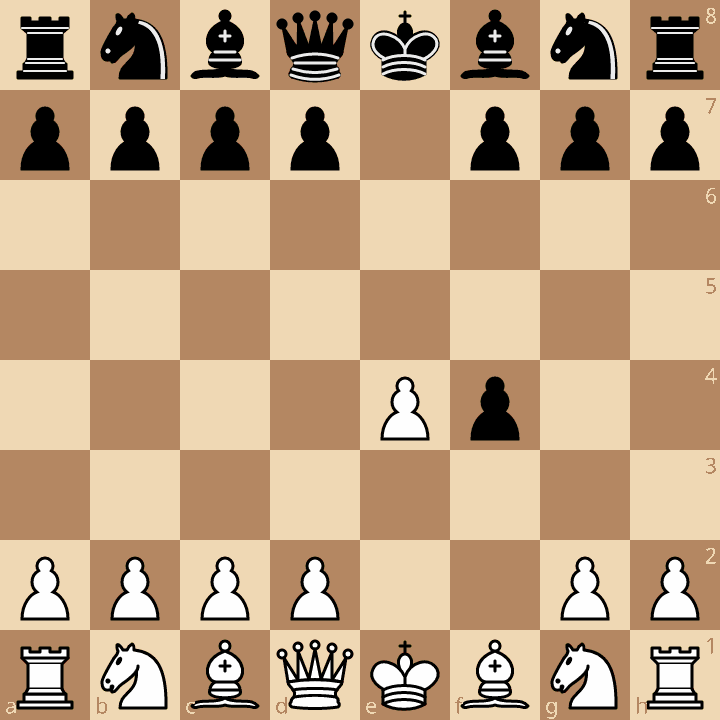
Black takes the pawn. White plays 3.Nf3 (most common) or 3.Bc4 (Bishop Gambit) for rapid development. After 3.Nf3 g5 (classical KGA), White sacrifices more material with h4 or Nc3.
Die romantische Eröffnung schlechthin: Bauernopfer für offenes Zentrum und sofortigen Angriff.
1.e4 e5 2.f4
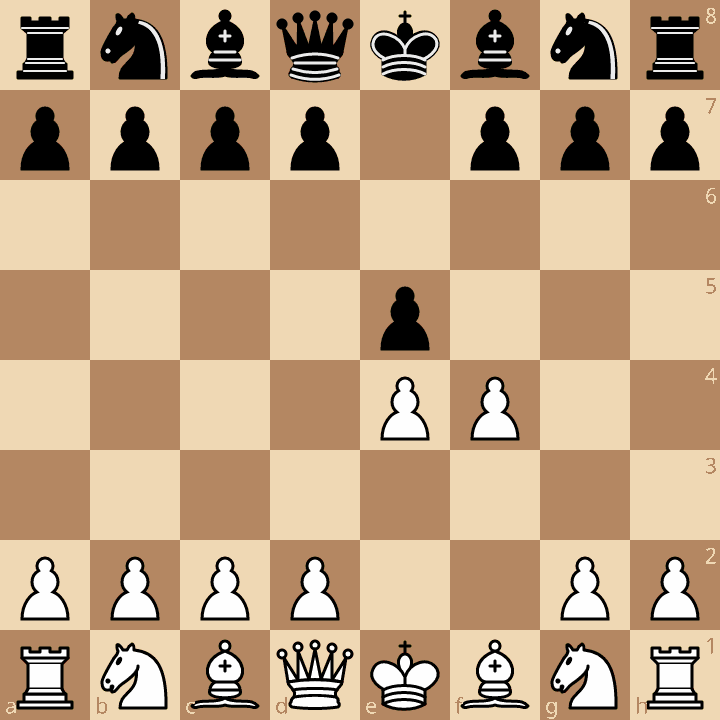
Das Königsgambit (1.e4 e5 2.f4) ist die älteste und aggressivste 1.e4-Eröffnung. Weiß bietet den f-Bauern für ein offenes Zentrum und einen Angriff auf den schwarzen König. Nach 2...exf4 (angenommen) sind die Hauptvarianten 3.Sf3 (Springergambit) mit Lc4 und O-O oder 3.Lc4 (Läufergambit). Schwarz kann auch mit 2...Lc5 ablehnen oder mit 2...d5 (Falkbeer) kontern. Moderne Engines halten es für zweifelhaft, in der Klubpraxis aber bleibt es bis etwa 2000 Elo brandgefährlich, weil es unvorbereitete Schwarze in unbekanntes Terrain zwingt.
Jede Variante unten kommt mit einem Diagramm und dem Hauptplan. Klicken Sie auf „Diese Eröffnung trainieren“, um jede Variante mit Spaced Repetition zu trainieren.
Möchten Sie Königsgambit aus dem Gedächtnis spielen? Im kostenlosen Eröffnungstraining üben Sie Zug für Zug und kehren dann zu den Varianten zurück, bei denen Sie Fehler gemacht haben.
1.e4 e5 2.f4 2...exf4
Black takes the pawn. White plays 3.Nf3 (most common) or 3.Bc4 (Bishop Gambit) for rapid development. After 3.Nf3 g5 (classical KGA), White sacrifices more material with h4 or Nc3.
1.e4 e5 2.f4 2...d5
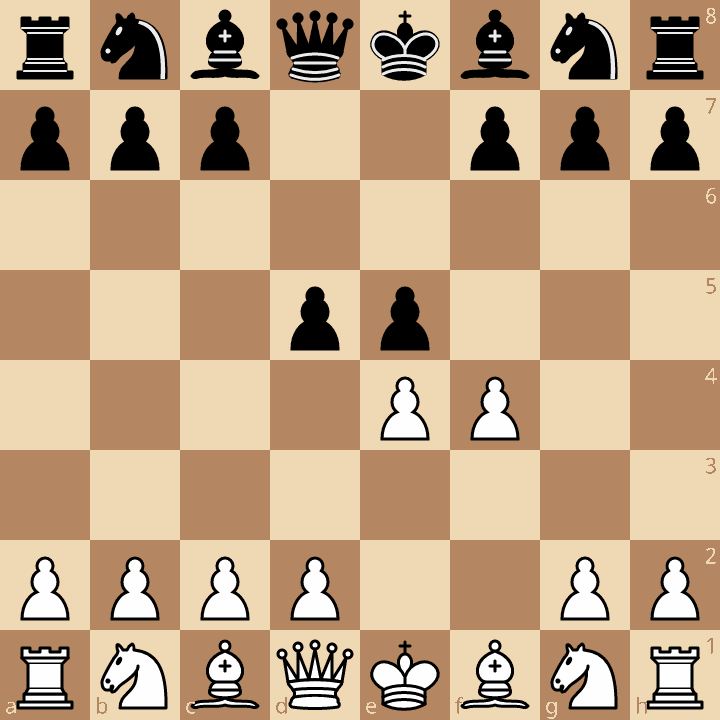
Black counter-gambits instead of accepting. After 3.exd5 e4, Black stakes a claim in the center and attacks White's uncoordinated pieces.
1.e4 e5 2.f4 2...Bc5
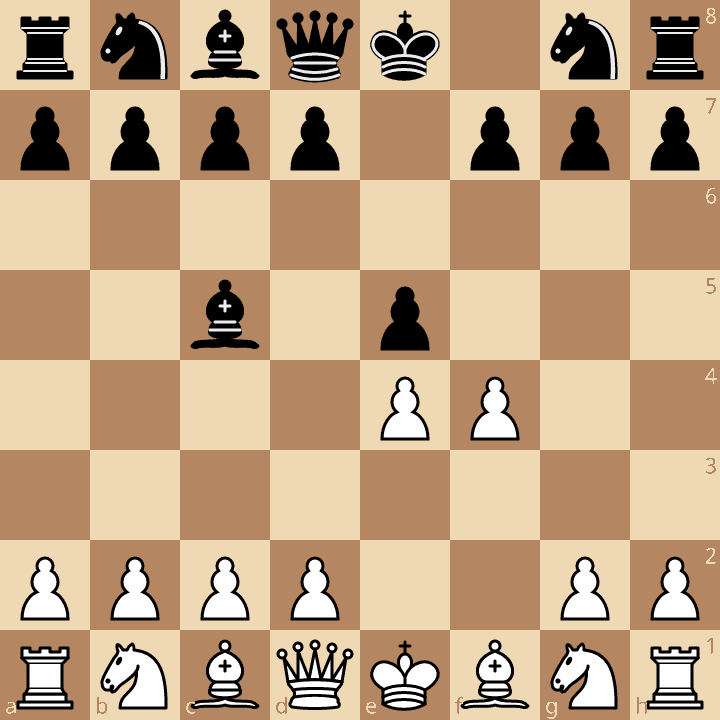
Black refuses the gambit and develops normally. After 3.Nf3 d6 4.Nc3 (or 4.c3), a quieter game ensues with White retaining a slight edge.
Play the King's Gambit! At club level it wins games, most opponents don't know how to defend accurately.
Focus on 3.Nf3 main lines. Study the Muzio Gambit (3.Nf3 g5 4.Bc4 g4 5.O-O!?) for an extreme attacking weapon.
At this level, strong players know the defenses. Use it as a surprise weapon in rapid/blitz, not as a main classical choice.
Against best play, modern engines give Black a small edge. But 'sound' at the top level doesn't mean much at club level, the gambit remains extremely dangerous for players under 2000 ELO.
Two main options: accept with 2...exf4 (classical) or counter-attack with 2...d5 (Falkbeer). Both are fully playable. Accepting requires knowing the defensive ...g5 and ...Bg7 lines; declining with 2...Bc5 is safer but passive.
Rarely in classical chess today, Ian Nepomniachtchi and Hikaru Nakamura have used it in online blitz. Spassky played it against Fischer in 1960 and won. Historically Morphy, Anderssen, and Steinitz employed it regularly.
The King's Gambit Accepted with 3.Nf3 is most principled, White develops rapidly and plans Bc4, Nc3, and castling kingside (or queenside for a storm). Against 2...d5, play 3.exd5 and develop naturally.
Not recommended. The gambit requires precise calculation, understanding of attacking principles, and comfort with sacrificial play. Beginners should learn the Italian Game first, then add the King's Gambit as a surprise weapon once their tactical vision is strong.
Eine unterschätzte Eröffnung, scharf im Klubschach: klassische Entwicklung mit aggressiven Angriffsplänen.
Die klassische Eröffnung 1.e4 e5 2.Sf3 Sc6 3.Lc4: solide Prinzipien, reiche Taktik.
Das italienische Gambit der romantischen Tradition: Bauernopfer auf b4 für rasante Entwicklung.
Jede Variante oben ist eine Übung auf ChessAtlas. Verteilte Wiederholung plant jeden Zug so, dass Sie nie wieder eine Variante vergessen. Gratis zum Starten, keine Kreditkarte.