Englund Gambit Main Line
1.d4 e5 2.dxe5 Nc6 3.Nf3 Qe7
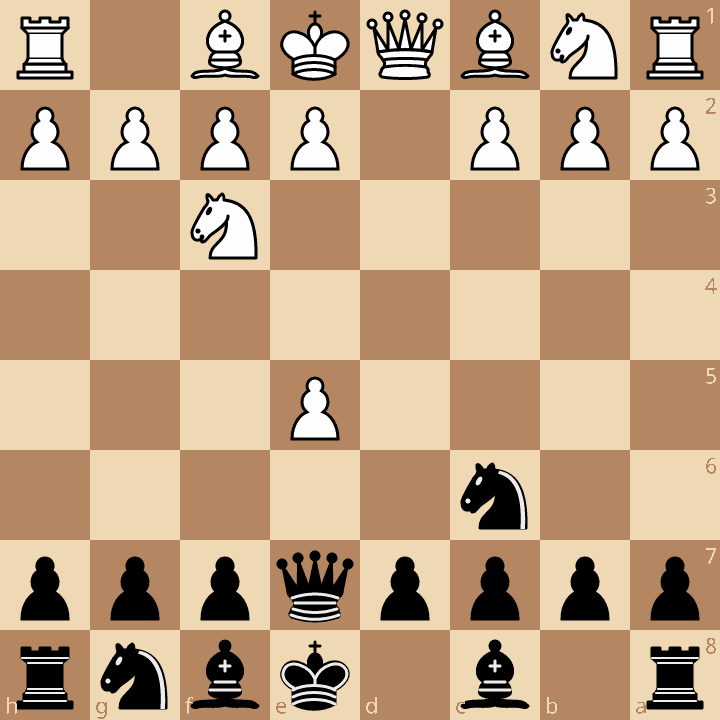
Black develops the queen early, attacking e5. White's cleanest refutation is 4.Nc3! Nxe5 5.Nxe5 Qxe5 6.Nd5! threatening a fork on c7 — Black is simply worse.
El gambito choque anti-1.d4: sacrificio de un peón en e5, legendaria trampa Db4+ y cero teoría.
1.d4 e5
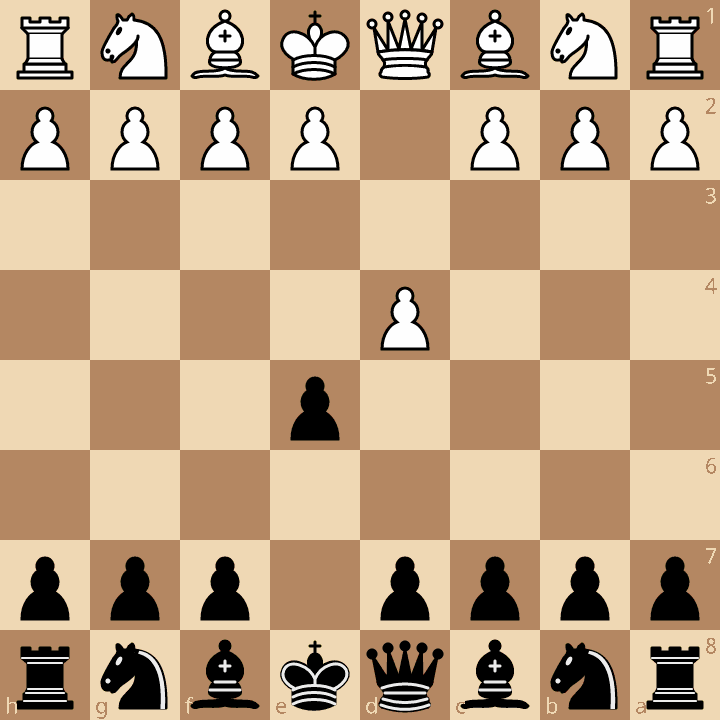
El Gambito Englund (1.d4 e5) intenta romper de inmediato el control central blanco sacrificando el peón de e5. Tras 2.dxe5 Cc6 3.Cf3 De7 4.Af4 Db4+, las negras preparan la famosa secuencia táctica de recuperación con doble ataque sobre b2 y el alfil de f4. Objetivamente dudoso frente a defensa precisa (las blancas ganan con 5.Cc3 Dxb2 6.Ad2!), el Englund sigue siendo un arma sorpresa temible al nivel de club (hasta 1800 ELO) donde pocos jugadores de 1.d4 conocen la respuesta correcta. Cero teoría del lado negro.
Cada variante incluye un diagrama y el plan principal. Haga clic en «Entrene esta apertura» para trabajar cada línea con repetición espaciada.
¿Quiere repasar Gambito Englund de memoria? Practique sus aperturas jugada a jugada en el entrenador gratuito y vuelva luego a las variantes que falló.
1.d4 e5 2.dxe5 Nc6 3.Nf3 Qe7
Black develops the queen early, attacking e5. White's cleanest refutation is 4.Nc3! Nxe5 5.Nxe5 Qxe5 6.Nd5! threatening a fork on c7 — Black is simply worse.
1.d4 e5 2.dxe5 d6
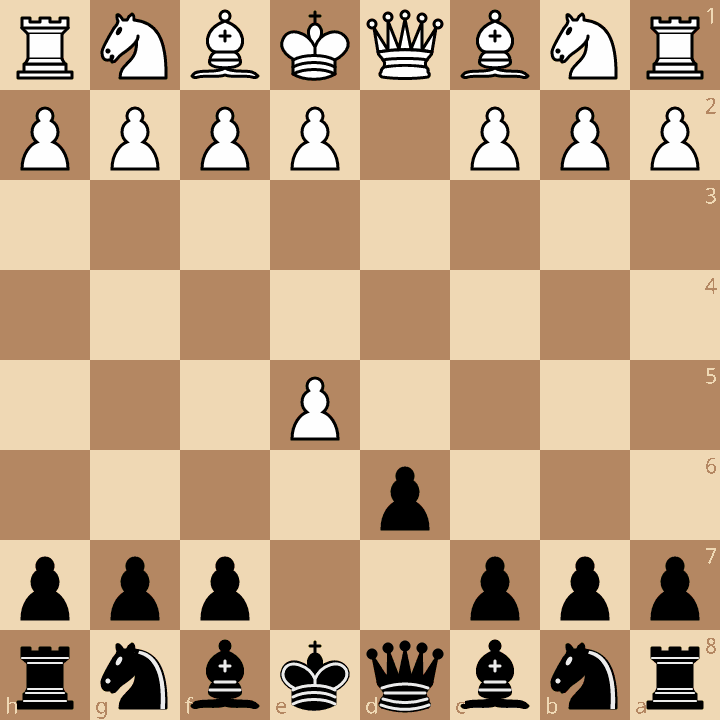
An alternative to the main line. Black plays for quick development and central play. After 3.exd6 Bxd6, Black has active pieces but is still down a pawn.
Observe cómo se desarrolla la trampa en el tablero o recórrala movimiento a movimiento. Son patrones que puede castigar en sus propias partidas.
Black's queen raid on b2 looks strong until 6.Nc3! hits back: ...Bb4 pins nothing (the c3 knight is defended), 7.Rb1! evicts the queen and 8.Nd5! attacks both the queen and the bishop. Black loses the queen for insufficient material. This is why strong players don't play 5...Qxb2.
1.d4 e5 2.dxe5 Nc6 3.Nf3 Qe7 4.Bf4 Qb4+ 5.Bd2 Qxb2 6.Nc3! Bb4 7.Rb1! Qa3 8.Nd5!
Start position
At club level the Englund scores surprisingly well. Know the main trap sequence (Qe7, Qb4+, Qxb2) and the queen traps that result.
Use the Englund as a surprise weapon in rapid/blitz. Don't rely on it in classical games, strong opponents know the defensive moves.
The Englund is unsound at this level. White simply plays 2.dxe5 and keeps the pawn with precise defense. Use a mainstream 1.d4 defense instead.
No, the Englund is objectively losing with correct play from White. After 2.dxe5 Nc6 3.Nf3 Qe7 4.Qd5 (or 4.Bf4 with precise play), Black has no real compensation for the pawn.
As a surprise weapon at club level. Many opponents don't know the defensive moves and fall into the Qe7+Qb4+Qxb2 trap. In rapid/blitz especially, the Englund wins games on confusion alone.
After 1.d4 e5 2.dxe5 Nc6 3.Nf3 Qe7 4.Bf4 Qb4+ 5.Bd2 Qxb2, Black wins the b-pawn and often traps White's rook. If White plays carefully (4.Qd5 or correct 4.Bf4 lines), the trap is avoided.
Never in serious classical chess. Occasionally in rapid/blitz as a joke or surprise weapon by players like Magnus Carlsen. It's a pure club-level surprise, not a theoretically sound defense.
Only as a surprise weapon in online blitz/rapid against unprepared opponents. For a serious Black repertoire, choose the QGD, King's Indian, Nimzo-Indian, or Slav Defense.
La defensa más sólida y jugada contra 1.d4, estrategia clásica en su mejor versión.
El arma cortante de Fischer y Kasparov contra 1.d4: contraataque asimétrico con fianchetto y ...e5.
Un esquema universal contra todas las defensas negras: poca teoría, planes repetibles, arma moderna de Ding Liren.
Cada variante de arriba es un ejercicio en ChessAtlas. La repetición espaciada programa cada movimiento para que nunca olvide una línea. Gratis para empezar, sin tarjeta de crédito.