For Black· ECO E60–E99· advanced

Königsindische Verteidigung

Die scharfe Waffe von Fischer und Kasparow gegen 1.d4: asymmetrischer Gegenangriff mit Fianchetto und ...e5.

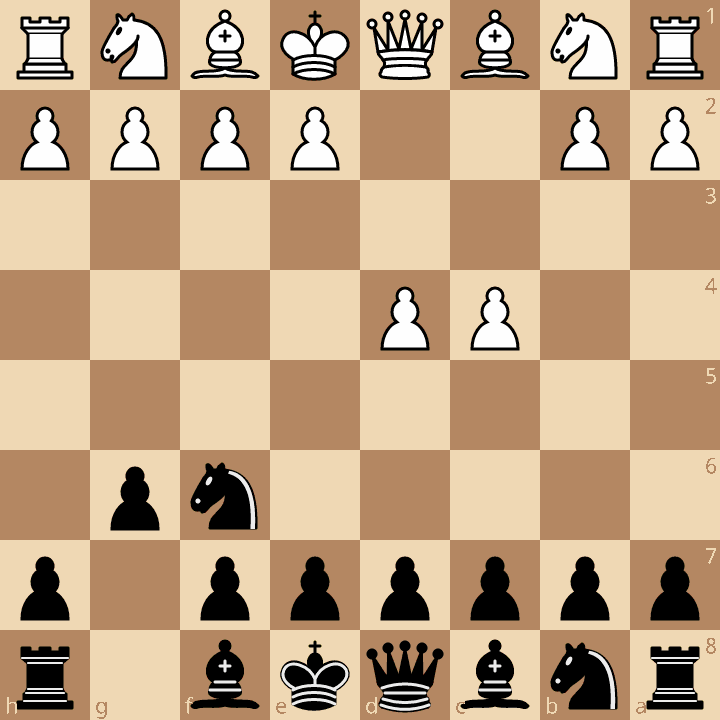
1.d4 Nf6 2.c4 g6

Königsindische Verteidigung starting position after 1.d4 Nf6 2.c4 g6

What is the Königsindische Verteidigung?

Die Königsindische Verteidigung (1.d4 Sf6 2.c4 g6) gibt das Zentrum vorübergehend auf, um mit ...Lg7 ein Fianchetto aufzubauen und den Gegenangriff mit ...e5 oder ...c5 vorzubereiten. Die Schwarzen rochieren schnell und starten mit ...f5...g4...h4 einen Königsangriff, der ihrer Aggression am Königsflügel den weißen Raumgewinn am Damenflügel entgegensetzt. Die taktische Verteidigung schlechthin gegen 1.d4, die Hauptwaffe von Fischer, Kasparow, Radjabow und Nakamura. Theorielastig, aber reich an Chancen auf echte Gewinnstellungen.

Main variations

Each variation below comes with a diagram and the main plan. Click "Train this opening" to drill every line with spaced repetition.

Mar del Plata (Classical)

1.d4 Nf6 2.c4 g6 3.Nc3 Bg7 4.e4 d6 5.Nf3 O-O 6.Be2 e5 7.O-O Nc6 8.d5 Ne7 9.b4 Nh5
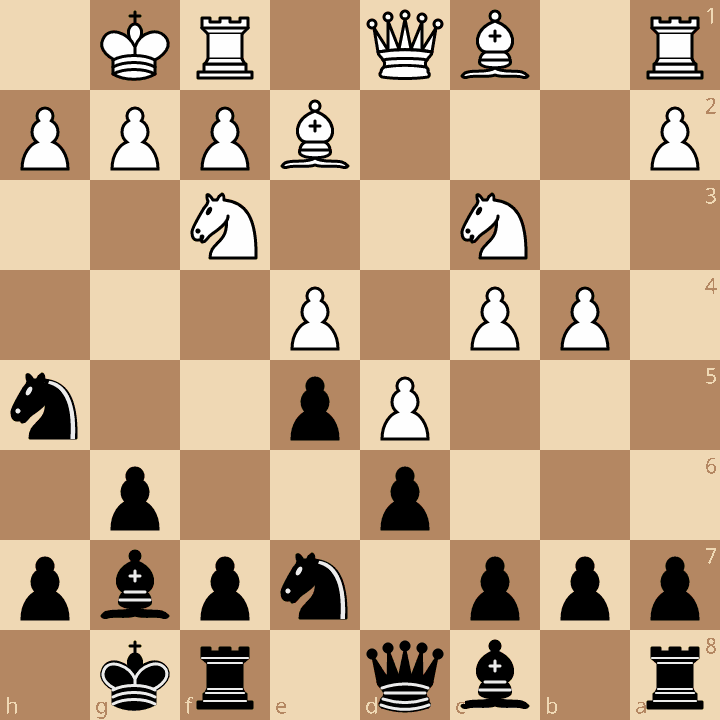
Königsindische Verteidigung Mar del Plata (Classical) after 3.Nc3 Bg7 4.e4 d6 5.Nf3 O-O 6.Be2 e5 7.O-O Nc6 8.d5 Ne7 9.b4 Nh5
Main line: 10.Nd2 f5 11.c5 Nf6 12.f3 f4

The main line. Black plays ...f5 next, then ...f4 and a kingside storm. White races on the queenside with c5, b5, a4. Opposite wings attack, whoever gets there first wins.
Sämisch Variation

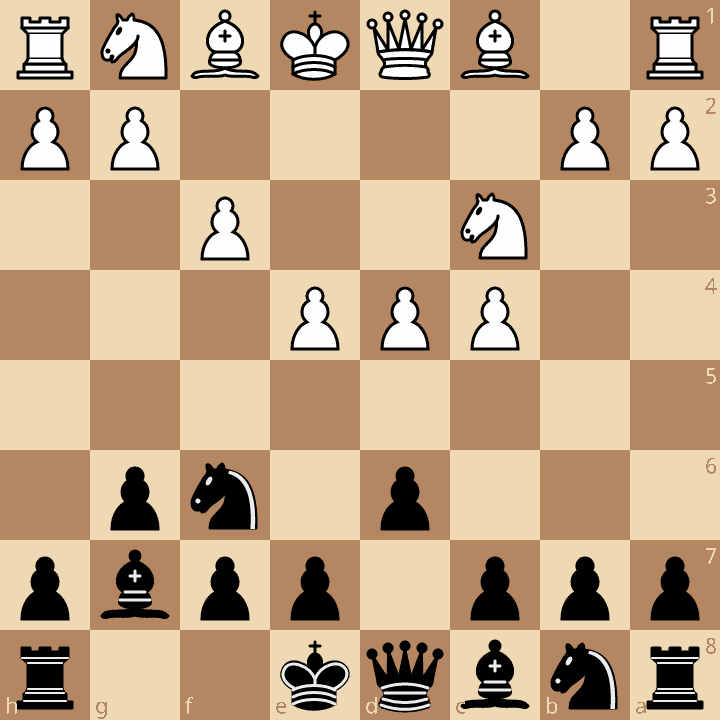
1.d4 Nf6 2.c4 g6 3.Nc3 Bg7 4.e4 d6 5.f3

Königsindische Verteidigung Sämisch Variation after 3.Nc3 Bg7 4.e4 d6 5.f3

White prepares Be3, Qd2, and a queenside pawn storm with c5 or an early a3+b4. Slow positional chess with long-term pressure.

Fianchetto Variation

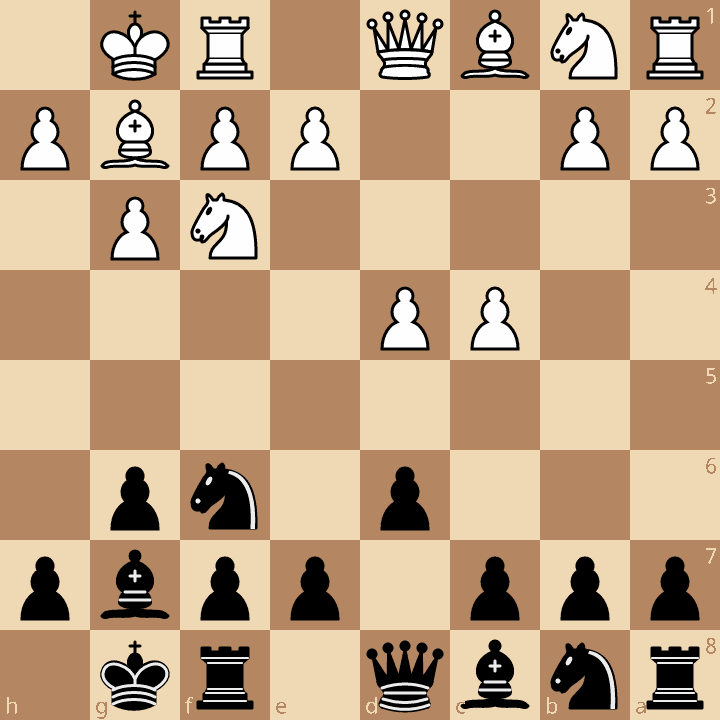
1.d4 Nf6 2.c4 g6 3.Nf3 Bg7 4.g3 O-O 5.Bg2 d6 6.O-O

Königsindische Verteidigung Fianchetto Variation after 3.Nf3 Bg7 4.g3 O-O 5.Bg2 d6 6.O-O

White fianchettoes the bishop. The positions become more positional, less attacking play, more structure and long-term pressure.

How deep should you study this?

Below 1600

The King's Indian is hard. Consider the Slav or QGD first. If you must play the KID, stick to the Mar del Plata main line and study attacking patterns.

1600–2000

Learn the ...f5 kingside attack deeply. Study Kasparov's Mar del Plata games for move-order understanding.

2000+

Add the Sämisch defense and Fianchetto responses. The KID requires precise preparation at every level, commit to studying it thoroughly.

Frequently asked questions

Is the King's Indian good for beginners?

Not recommended. The KID requires precise calculation, understanding of opposite-wing attacks, and deep theoretical preparation. Beginners should play the Slav Defense (1.d4 d5 2.c4 c6) or QGD instead.

Why is the King's Indian so aggressive?

Black lets White build a huge center, then undermines it with ...e5 or ...c5 and launches a kingside pawn storm with ...f5-f4...g5-g4, and knight sacrifices on h3/g3. The asymmetry between Black's kingside attack and White's queenside play creates sharp races.

What is the Mar del Plata?

The main line of the King's Indian: 5.Nf3 O-O 6.Be2 e5 7.O-O Nc6 8.d5 Ne7 9.b4 Nh5. Black locks the center with ...e5 and prepares ...f5 and a kingside attack, while White prepares a queenside storm with b4, c5, and bxc6.

Who plays the King's Indian at the top level?

Fischer (lifelong main defense), Kasparov (during his World Championship years), Nakamura, Radjabov, and Azmaiparashvili. Today less common at elite classical but still a major fighter's choice.

Is the King's Indian objectively sound?

Modern engines give White a small edge against best play, but the defensive practical problems for White are significant, especially at club level. Many grandmasters have made it their lifelong main defense.

Ready to train the Königsindische Verteidigung?

Every variation above is a drill on ChessAtlas. Spaced repetition schedules each move so you never forget a line again. Free to start — no credit card.